

Liberman seeks to revoke residency of Palestinian stabber’s wife
Defense minister takes steps to prevent Hadera al-Saudi, whose husband knifed two in Netanya last month, from seeking Israeli citizenship in future
 Add ToI as a Preferred Source on Google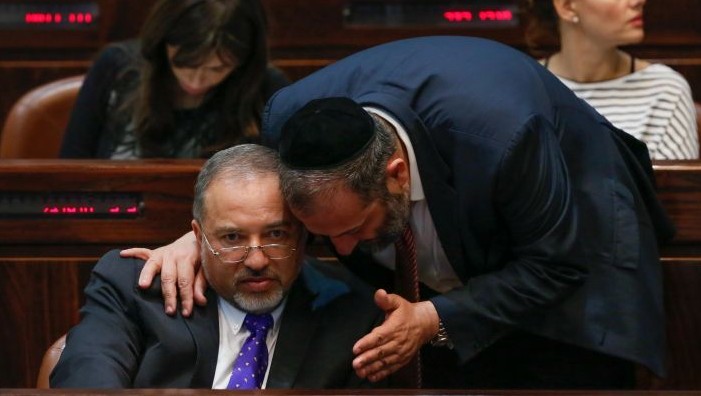
Defense Minister Avigdor Liberman on Sunday asked Interior Minister Aryeh Deri to revoke the Israeli residency of the widow of a Palestinian man who carried out a stabbing attack last month.
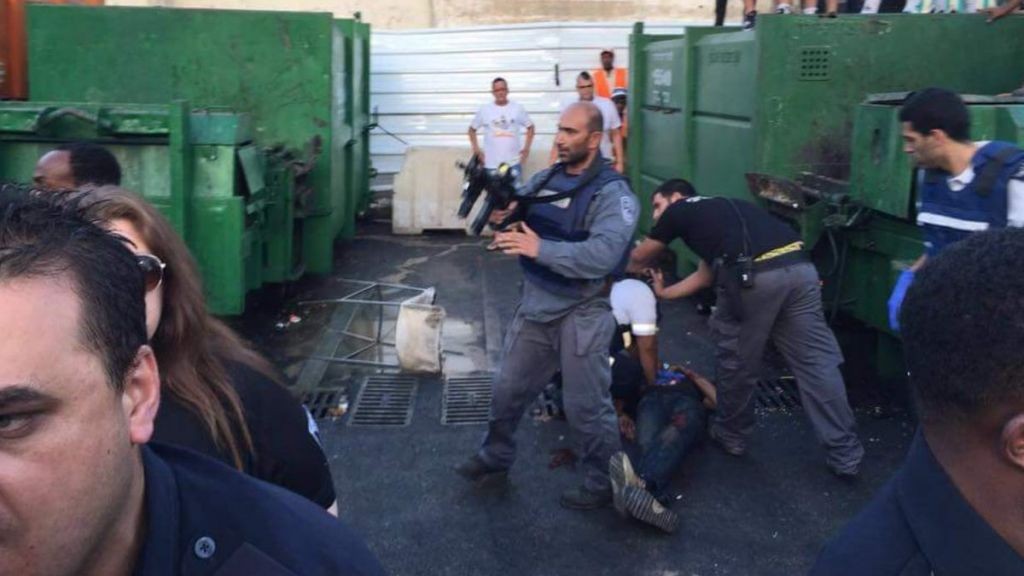
Wael Abu Saleh, 40, from the West Bank city of Tulkarem, stabbed two Israelis in the coastal city of Netanya on June 30 before he was shot dead by a civilian guard.
His wife, Hadera al-Saudi, also from Tulkarem, holds Israeli residency from her first marriage in 1995. As a result of her earlier marriage, she was allowed to reside in the Israeli town of Taibe. She divorced her first husband in 2013 and married Abu Saleh in 2016.
Under Israeli law, West Bank Palestinians who have family members in Israel can apply for residency status, in a process known as family reunification.
Liberman sent a letter to Deri on Sunday asking him to “exert your authority and revoke the residency of Hadera al-Saudi, and bar future requests for family reunification or Israeli citizenship.”
Deri responded by saying he took the preliminary step of barring Saudi from applying for family reunification on behalf of future spouses.
Last month, Deri moved to strip two residents of East Jerusalem of their Israeli citizenship and residency status for their involvement with the Islamic State terror group.
In late June, Deri asked Attorney General Avichai Mandelblit to revoke the citizenship of Luqman Atun, 24, who is a resident of the East Jerusalem neighborhood of Tsur Baher.
Khalil was convicted in December 2015 of attempting to join the Islamic State and seeking to fight for the group in Syria. Atun flew to Turkey in October 2014, but didn’t have enough money to be taken to the Syrian border. The interior minister also requested that the permanent residency status of East Jerusalemite Khalil Adel Khalil, 26, convicted of the same crime, be revoked.
Permanent residency is the status of most of East Jerusalem’s approximately 300,000 Arabs, who are not Israeli citizens, although they can apply for citizenship if they so choose.
The Israeli news site Ynet reported that Deri’s late June request was the most advanced move taken so far to strip Arabs in Israel of citizenship or residency for connection with the Islamic State. Previous interior ministers have called for similar measures against Israeli IS recruits, but no action has ever been carried out.
In November 2015, after a group of seven residents from the northern Israeli Arab town of Jaljulia were charged with plotting to make their way to Syria and fight alongside IS, Prime Minister Benjamin Netanyahu called for revocation of their citizenship.
“Whoever joins Islamic State will not be an Israeli citizen, and if he leaves the country’s borders he will not return,” Netanyahu said, and noted that the concept of revoking citizenship for those who join IS was becoming more accepted in the international community.
Dov Lieber contributed to this report.


The Times of Israel Community.