

Liberman unveils Israel’s future stealth fighter: The F-35
Defense minister says aircraft will serve as a deterrent for years to come; jet to be delivered by year’s end
 Add ToI as a Preferred Source on Google
Judah Ari Gross is The Times of Israel's religions and Diaspora affairs correspondent.
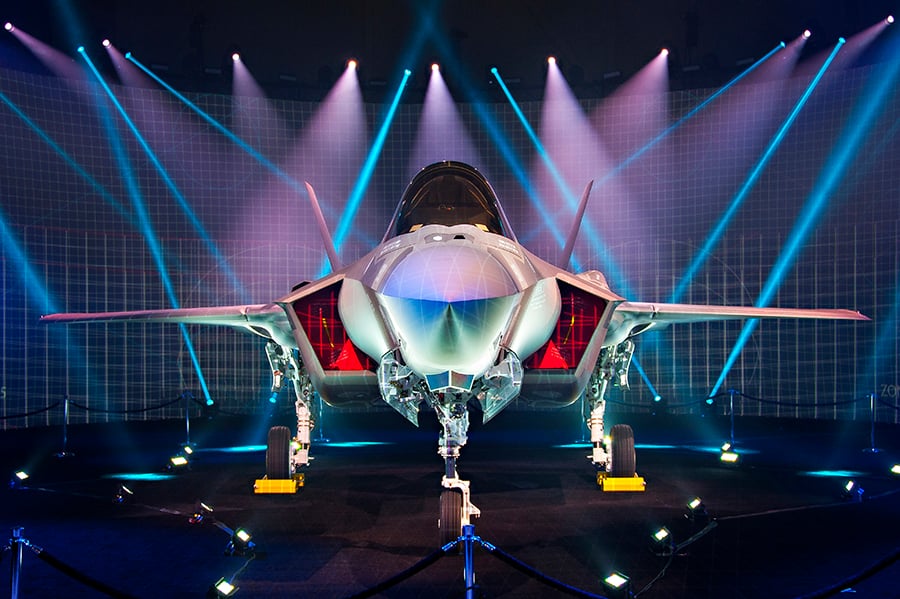
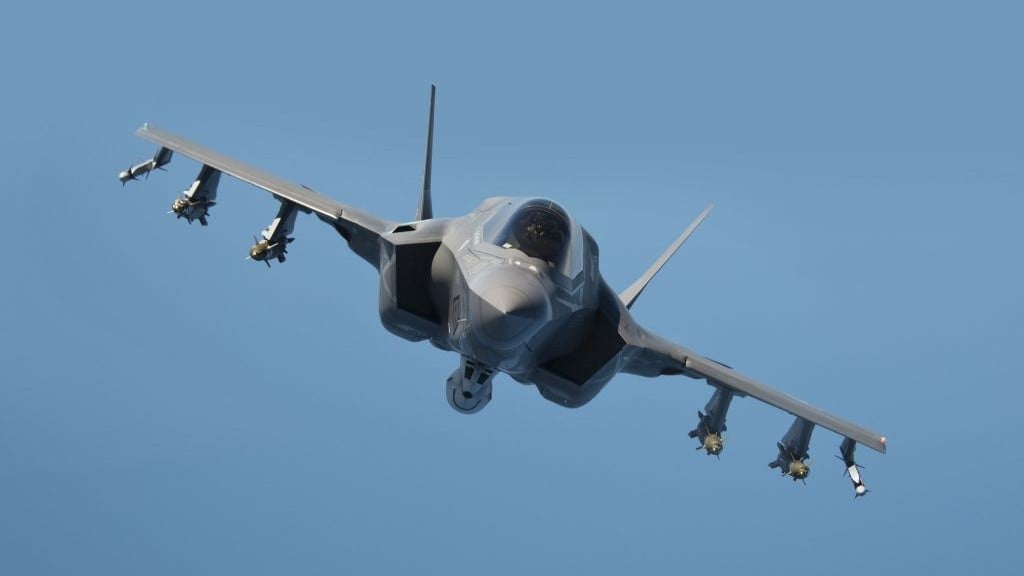
In Fort Worth, Texas, the world caught a glimpse of the future of the Israeli Air Force on Wednesday with the unveiling of the F-35 stealth fighter jet, the next big thing in avionics.
The fifth generation F-35 Lightning II — known in Israel as the Adir in Hebrew, meaning “awesome” or “mighty” — will remain in the United States until December, when the first two planes will make their journey across the Atlantic to their new home in Israel. Between six and seven more planes will make the trip each following year.
“Today Israel is surrounded by unprecedented military threats,” Defense Minister Avigdor Liberman said during the ceremony.
“The airplanes will improve the IDF’s ability to protect Israel from the region’s growing threats,” he said.
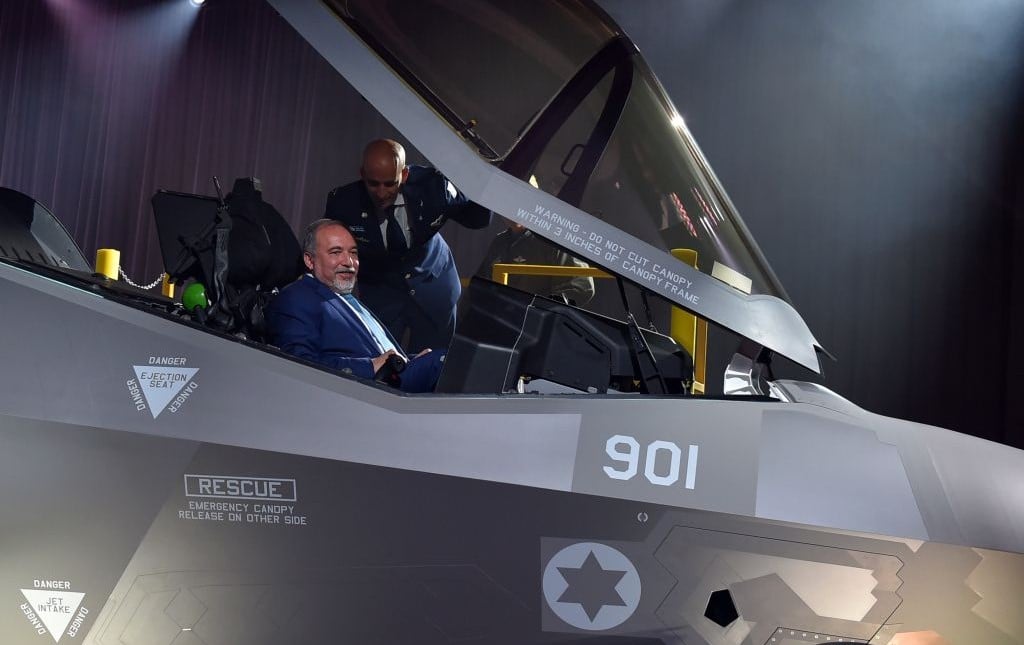
“It is clear and obvious to us, and to the entire region, that the new F-35 — the Adir — will create real deterrence and enhance our capabilities for a long time,” Liberman said.
Thanking US President Barack Obama, US Secretary of Defense Ashton Carter and the US Congress, Liberman stressed the special bond shared by Israel and America, despite the occasional “disputes.”
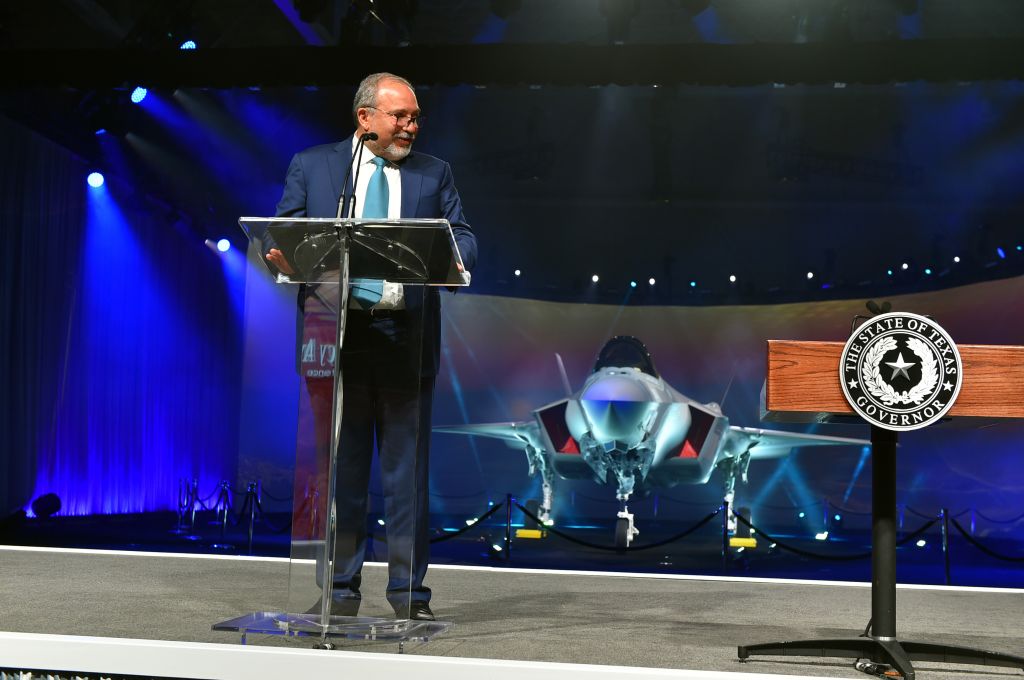
As proof, Liberman said, “Israel will be the first country outside of the US to receive [an F-35].”
The defense minister was joined by IAF Chief of Staff Brig. Gen. Tal Kelman, along with Minister without portfolio Tzachi Hanegbi, a delegation from the Defense Ministry and senior officials from the US Department of Defense.
“I had the privilege of flying the F-35 simulator in Fort Worth, and it was like holding the future in my hands,” Kelman said during the ceremony.
“[Today] symbolizes a leap in the strategic capabilities of the State of Israel and it symbolizes the partnership and the unbreakable commitment between the United States and Israel,” Kelman said.
Israel has purchased 33 of these fighter jets so far, but the Israeli Air Force has expressed interest in more than twice that. IDF Chief of Staff Gadi Eisenkot has already approved the purchase of 17 more planes for a total of 50, but Kelman and the IAF want to bring that number up to 75 in the years to come.
“The Israeli F-35 is the first fifth generation fighter to arrive in the Middle East, and it will allow us to open a significant gap in our abilities when facing all of the elements in the area,” Kelman said ahead of the unveiling.
However, top of the line doesn’t come cheap.
Today, an F-35 fighter jet costs over $100 million (NIS 385 million), and each hour of flight time costs over $30,000 (NIS 115,000). But as Lockheed Martin gets more orders, the price of the aircraft is expected to drop to a mere $85 million (NIS 327 million), according to the company.

“Advancing toward a new deal depends of course on the American aid deal which is being discussed currently,” the defense minister said. “But my stance is clearly in favor of purchasing the jets”.
In addition to attending the rollout ceremony in Texas, Liberman has been holding high-level talks with Carter and other members of the US Department of Defense as part of negotiations over the defense aid package, also known as the Memorandum of Understanding, which is expected to be signed shortly.
‘The best jet in existence’
The F-35 comes equipped with stealth technology and operational capabilities that are far superior to those of the country’s current fleet of F-15 and F-16 jets.
The fifth generation fighter jet is also designed to perform a variety of missions — bombing runs, close air support to protect troops on the ground, air-to-air combat and reconnaissance.
“It doesn’t do one thing or another thing, it does many things,” F-35 chief test pilot Alan Norman said at a conference held in Tel Aviv in April.
“Every opinion I have heard says that this is the best jet in existence today,” Liberman said in a statement before the unveiling.
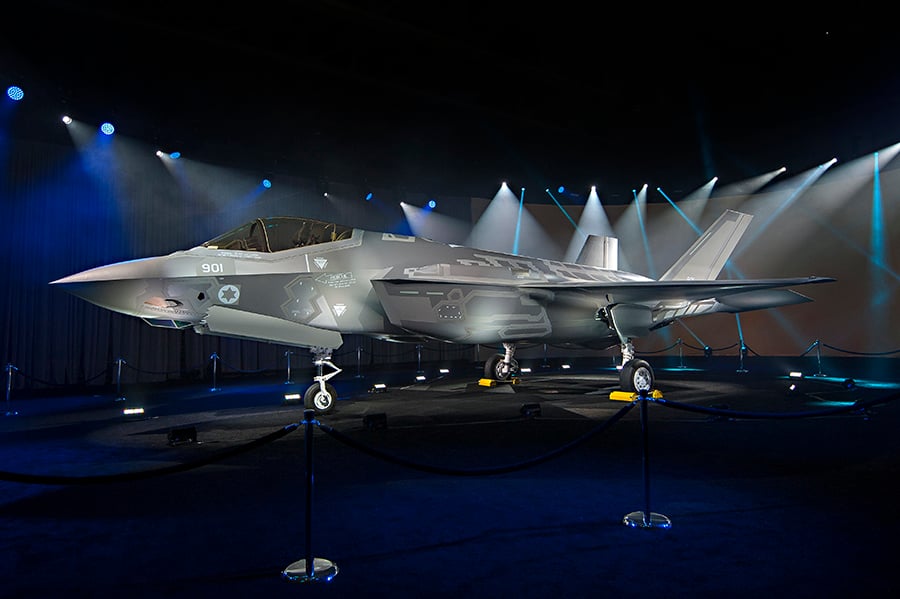
However, though the F-35 likely will be “the best jet” in the sky once it becomes fully operational, it is not yet at that stage. Though the aircraft will be delivered in December and may be used operationally as early as 2017, according to the IAF, the F-35 is projected to become fully operational in 2021.
In the meantime, the aircraft is far from perfect — but it is constantly improving.
Earlier this year, Dr. J. Michael Gilmore, the Pentagon’s chief weapons tester, known as the Director of Operational Test and Evaluation, or DOT&E, identified 91 “Category 1” or “Category 2” deficiencies in the F-35 platform as of October 2015, as he revealed in a scathing, if jargon-heavy, 48-page report.
A Category 1 deficiency — of which there were 27 — “may cause death, severe injury, or severe occupational illness; may cause loss or major damage to a weapon system; critically restrict the combat readiness capabilities of the using organization; or result in a production line stoppage,” according to the report, which was formally presented to the US House Armed Services Committee in March.
The remaining 64 Category 2 deficiencies “impede or constrain successful mission accomplishment,” but are not life-threatening to the pilot or as detrimental to mission success as Category 1 deficiencies.
Lt.-Gen. Chris Bogdan, executive officer of the F-35 program, called Gilmore’s report “factually accurate” but potentially misleading.
“While not highlighted by the DOT&E report, for each issue cited the F-35 Program has a dedicated effort underway to resolve or otherwise mitigate the issue,” Bogdan told the US House Armed Services Committee last month.
After a rocky start marred by budget issues and delays, the F-35 program is now back on track and meeting its goals.
In the few months since the DOT&E report, Lockheed Martin announced the F-35’s software has already been upgraded and that fixes for many of the issues noted in the document were being rolled out in the near future.









The Times of Israel Community.