

Likud to expel 1,000 members, probe 7,000 more, amid intensifying power struggle
Party accuses members of New Likudniks faction of being leftist infiltrators; Netanyahu slams Israel Katz, accuses him of supporting group in exchange for primary votes
 Add ToI as a Preferred Source on Google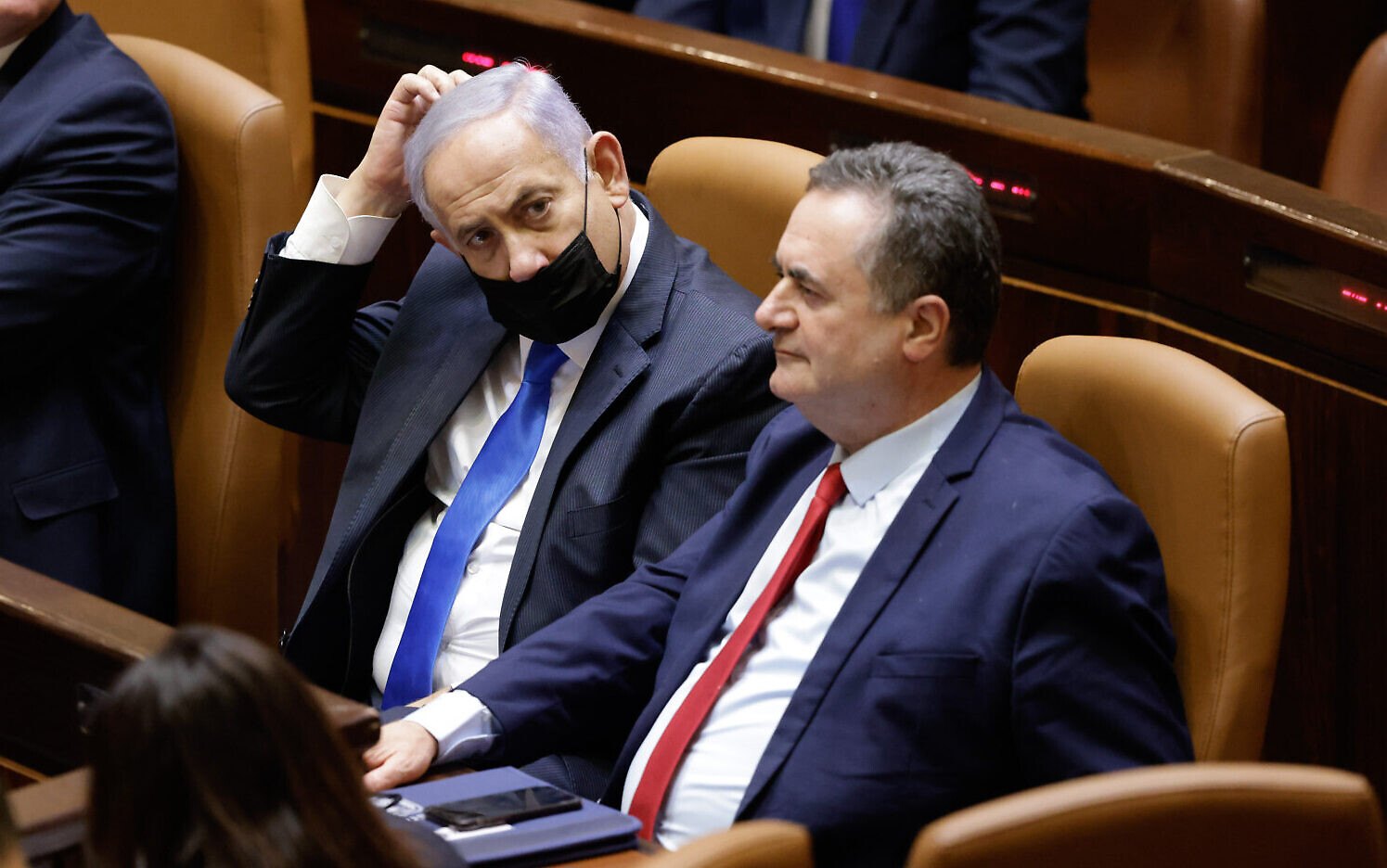
An internal court of the opposition Likud party decided Wednesday to expel some 1,000 members affiliated with the New Likudniks group and examine the status of 7,000 other members amid a growing power struggle in the party.
The court said that there was overwhelming evidence to remove those 1,000 members, but ruled against a demand to expel the entire New Likudniks group and said that members would be individually reviewed.
Members of the faction say they aim to move the Likud back to its original liberal values, but opponents say they are leftist infiltrators, trying to bring down the party from within.
The court ruling comes as longtime party leader Benjamin Netanyahu faces mounting dissent over the way he lost power in March and a looming leadership challenge.
Netanyahu on Tuesday used the case to slam rival Israel Katz, the powerful former finance minister and chair of the party secretariat.
In a Facebook post attached to a video of an old news interview in which New Likudnik members acknowledged supporting the left-wing Meretz party, Netanyahu said the “New Likudniks are radical leftists acting as a Trojan horse to destroy Likud from within.”
He then accused Katz of collaborating with the group.
“While most Likud members are struggling against this movement, there are some who prefer to use them for votes in the primaries at the expense of the state and the party,” Netanyahu wrote, alluding to Katz.
“I expected all Likud members, including the party leaders, to use all their power to work to expel them from the movement. Everyone did this except for Israel Katz, who has worked in the opposite direction,” he said.

Katz is widely expected to challenge Netanyahu for the party leadership when primaries are held, although he has yet to declare this officially. However, he has been openly critical of Netanyahu, accusing him of choosing to lead Likud into the opposition rather than let someone else lead the party and keep it in power.
So far, only former health minister Yuli Edelstein has declared his candidacy to challenge Netanyahu. No date has been set for the primaries.
Some of the parties that joined the coalition that eventually ousted Netanyahu from power are politically aligned with Likud but refused to enter a government with the party if it were still being led by Netanyahu, who is on trial in three corruption cases.
The New Likudniks, founded in 2011 after mass protests over the cost of living, say they are seeking to push “the economic interests of the middle class” and the “preservation of liberal democracy” from within the party. The faction does not take a position on the Israeli-Palestinian conflict.

The group saw a surge of support at the start of nationwide protests against Netanyahu over his corruption cases, and Netanyahu and his allies have repeatedly accused it of seeking to move the party leftward and push him out as its leader, saying members of the group are undercover leftists desperately seeking to compensate for their diminished status in Israeli politics.
Members of the New Likudniks have played into this criticism: Numerous members and even officials have told Israeli reporters that they are Meretz voters and have no intention of voting for Likud in a general election.
In a further sign of growing disharmony in the party, faction head Yariv Levin publicly “shamed” six party lawmakers for missing crucial votes in the plenum.
Publishing their names, Levin accused them of being responsible for the failure to pass a bill brought by the far-right Jewish Home party.
Former science minister Ofir Akunis, one of those named in the post, called Levin a “snitch” in response.

Despite the turmoil in the party, support for Netanyahu remains strong and his most open challengers do not have a lot of support even if he were to quit the party.
A recent TV poll found former Mossad chief Yossi Cohen is Likud voters’ preferred candidate to succeed Netanyahu if the former premier left politics. Cohen has not yet formally entered the political arena.
Asked who they would back as Likud leader if Netanyahu were to retire, 27 percent of Likud respondents said Cohen, followed by Likud MK Nir Barkat with 16%, according to the Channel 12 news poll.
After Barkat, the poll gave Israel’s Ambassador to the United Nations Gilad Erdan the backing of 8% of respondents, followed by Katz with 5% and Edelstein with 5%.









The Times of Israel Community.