

Mario Levi is a wondering Turkish Jew
The ‘Istanbul Was a Fairy Tale’ author speaks of how 500 years of exile have imprinted identity-shaping memories on Turkey’s disenfranchised Jewish community
 Add ToI as a Preferred Source on Google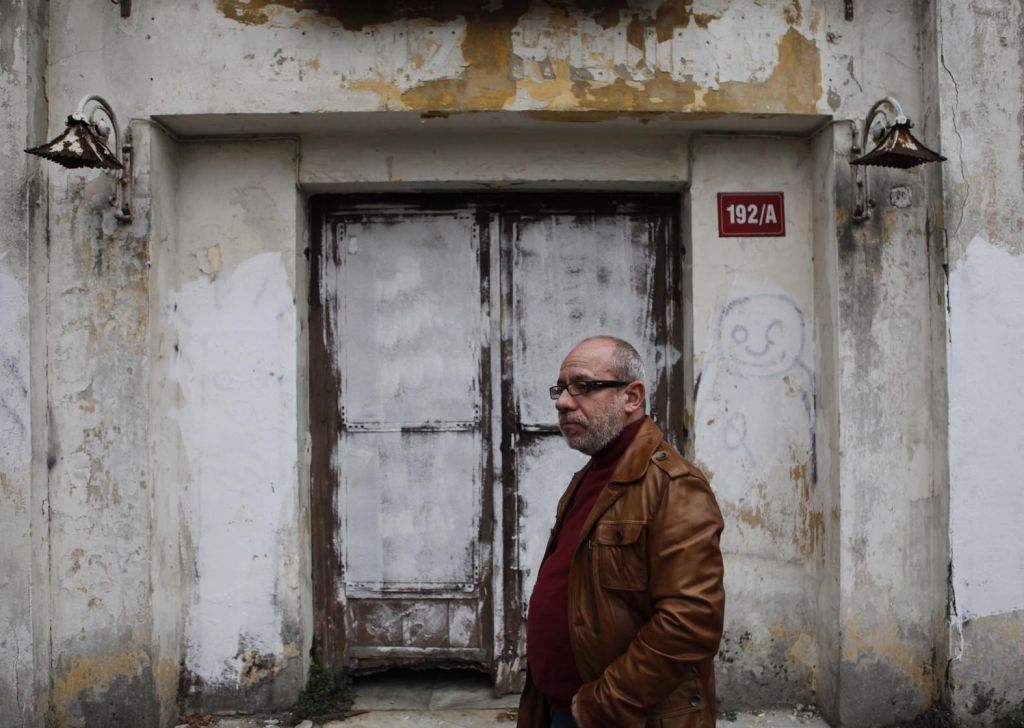
LONDON — In the prologue to “Istanbul Was a Fairy Tale” Mario Levi describes his longing for a sense of identity as a Jewish writer: “After all I was a wandering Jew whose aim it was to give birth to a land of his own, to discover it and live in it. Just like any other Jew, I was a stateless person.”
Beginning my conversation with the Turkish writer, I ask him if he always felt a sense of estrangement as a Jew who was raised in Turkey.
“Yes, that is definitely my feeling. It’s why I often say that the majority of Jews — if you can make an analogy with music — are good violinists, and not pianists. They are all over the world, and they travel,” says Levi with a smile.
Even within his own familial setting, Levi says he felt culturally isolated as a child.
“When you grow up speaking Turkish, but your whole family, including your grandparents, are all speaking Ladino, a language they have been using for over 500 years, it is strange. Also, the Jewishness that is transmitted with all these memories of exile has shaped my identity.”
Levi and I are sitting in an empty conference room in North London with a picturesque view of Regent’s Canal. He’s in the UK to promote “Istanbul Was a Fairy Tale,” a book that was published in Turkey in 1999 but only last year became available for the first time in English, when Ender Gürol completed a translation for Dalkey Archive Press.
The narrative weaves together the stories of three generations of a Jewish family. It covers a period that begins at the end of World War I and ends in the 1980s. Over the course of this period the reader encounters nearly fifty characters at a very intimate level.
Told in the first person — by a narrator who remains nameless — the lyrical style of Levi’s prose is heavily influenced by classic Yiddish literature, as well as leaders of the modernist movement: people like Virginia Woolf, Marcel Proust, and James Joyce.
It’s the latter writer, Levi confesses, who has been the greatest influence on his own work. This may have something to do with the fact that Leopold Bloom, the main protagonist in Ulysses, is also a wandering Jew. It’s more likely, however, that Levi draws parallels with Joyce’s permanent sense of exile, and how he uses a city to build an entire universe.
“The story of my city is a sad story, just like Joyce’s Dublin is,” Levi explains. “But it’s also inspiring at the same time. This is why I believe Dublin produced a writer as talented as James Joyce, because this feeling of melancholy and estrangement gives to a writer a very deep and wide universe to rediscover by writing.”
While Istanbul is very much home to the many protagonists Levi introduces us to in his epic novel, it’s also a place where people live in a constant state of isolation from the surrounding society they are a part of.
“If you look at the history of Istanbul, it’s also the city of migrations. For centuries people arrived here in a search for a new land,” says Levi, attempting to explain the inherent paradox of his hometown.
“Many people came here at the beginning of the 20th century, after the Balkan Wars. Or further back [Jewish] people like my family came from Spain at the end of the 15th century. In this process of exile a memory is transmitted to you.”
Levi was born in Istanbul in 1957. He was brought up in a non-Orthodox Jewish family, which he describes as “slightly Conservative.”
‘In this process of exile a memory is transmitted to you’
“I am a secular Jew, but I do have a big respect for the Bible,” he says. “Not particularly to the rituals existing in it, but the soul of the book. I can adapt my life, and my own existence from the Bible.
“For example if you look at the very first rule of the Ten Commandments, God says: you should never forget that I have [liberated] from Egypt. My personal interpretation of this is that you should always look for freedom. This for me really is the soul of Judaism.”
Levi describes the abuse and bullying he faced as a Jew growing up in a predominantly Muslim country.
“It was difficult just because of my name. When I was in my primary school I suffered a lot of anti-Semitism, from both my teacher and my classmates. I have never forgotten that. Even today there are still definitely discriminations against Jews in Turkey. They are not official but they are still there. From time to time I have to admit that I do face some embarrassing situations as a Jew in Turkey.”
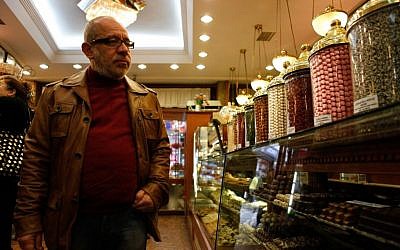
“But I also see that anti-Semitism exists in other parts of Europe also, France being a particularly bad case. I always joke that one of the particularities of my own Jewishness is to feel a stranger wherever you go. When I am in my country I am Jewish, but if I go to Israel I will be Turkish,” he adds with a slight grin on his face.
As both a Turkish national, and a Jew, Levi says that he finds it hard sometimes to firmly place an allegiance to either Turkey or Israel: particularly given the rocky relationship that has evolved between the two countries over the last number of years.
“I’ve always had a deep sympathy for the existence of the state of Israel,” Levi professes. “And when people criticize Israel I say: you cannot understand what Israel means to a Jew if you are not Jewish.
“In terms of my national identity though, I do feel very much Turkish. But I also have a Jewish identity that I appreciate immensely.”
Despite acknowledging his own cultural heritage, Levi isn’t shy in professing his personal political views. It’s an opinion that will no doubt irk some of his Israeli readers, but he feels he’s entitled to criticize any government, regardless of what country they are from, he says.
“I’m not in favor of the current policies of the Israeli government, which I think go against the traditions of the Jewish morals. And I wouldn’t be very happy if I was living in Israel in this situation today.”









The Times of Israel Community.