

Ministers to mull localized virus rules, ask MKs to extend state of emergency
Cabinet warns there is still a ‘real risk of a widespread outbreak’; Gantz says his party will support virus czar’s ‘traffic light’ plan, ahead of key discussion Sunday evening
 Add ToI as a Preferred Source on Google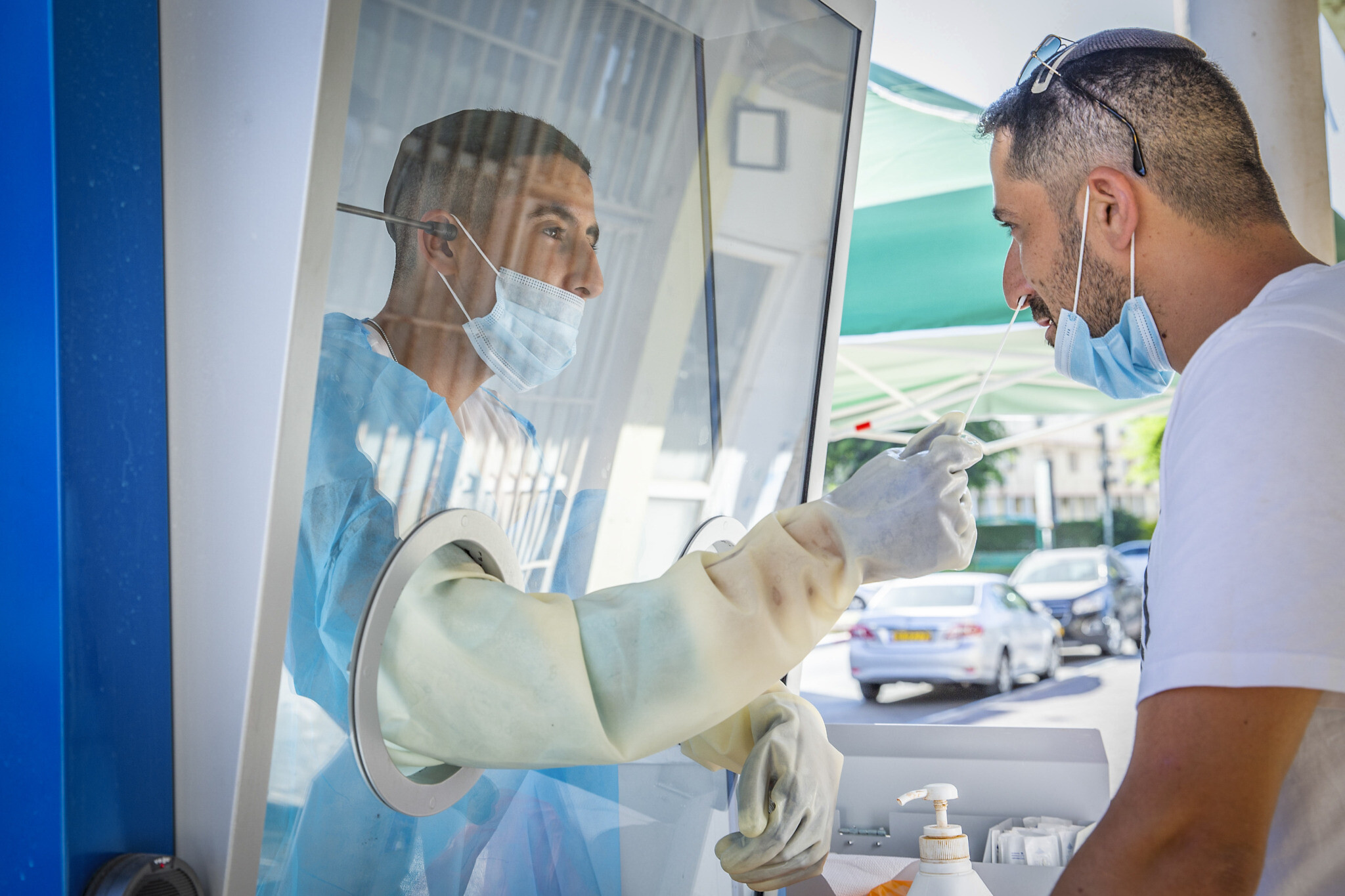
Ministers agreed Sunday to extend the state of emergency currently in place due to the coronavirus pandemic, with Israel continuing to have one of the highest rates of new infections in the world.
A joint statement from the Prime Minister’s Office said ministers would now ask the Knesset’s Constitution, Law, and Justice Committee to grant final approval to extending the state of emergency until November 7.
The state of emergency was scheduled to expire on September 6.
The decision approved by ministers cited “the fact there is still a real risk of a widespread outbreak of the coronavirus and significant harm to public health” as the reason the state of emergency needed to be extended.
Since early July, Israel has seen between 1,500 and 2,000 new daily cases of the coronavirus and on Sunday recorded 113,648 total cases since the start of the pandemic.
The COVID-19 death toll continued to climb Sunday morning, with three more deaths bringing the total fatalities to 909, according to Health Ministry figures.
Of the 20,151 active patients, 441 were in serious condition including 121 on ventilators.

The so-called coronavirus cabinet was expected Sunday evening to discuss coronavirus czar Ronni Gamzu’s “traffic light” plan, which last week, for a third time, they refused to approve. The refusal was reportedly due to opposition from ultra-Orthodox ministers, who are against restrictions that could shutter synagogues in high-infection areas.
Gamzu’s plan outlines restrictions to be imposed during the High Holiday period, which begins September 18. The plan would only place restrictions on cities with high morbidity rates, where the rate of infection is not slowed by September 10. The restrictions would take effect starting from Rosh Hashanah until October 11, after the Sukkot holiday.
Defense Minister Benny Gantz said Sunday that ministers of his Blue and White party would back Gamzu’s plan.
Housing Minister Yaakov Litzman said in an interview published Friday that his United Torah Judaism party would consider leaving the coalition if a nationwide lockdown is imposed over the holiday period.

Gamzu has vowed to do everything in his power to avoid a lockdown, instead relying on localized restrictions and swift contact-tracing, but plans for the latter were faced with a challenge Sunday as around 2,000 laboratory workers at some 400 public medical labs started an open-ended strike thanks to a salary dispute with the treasury.
Coronavirus testing will continue during the labor action, but only those who test positive will be notified, so that epidemiological surveys can be carried out. Those who test negative for COVID-19 will not be updated.
However, the head of the union of biochemists and laboratory workers, Esther Admon, threatened that if there was no progress by late Sunday, they would also stop notifying individuals who were found to be carriers of the virus.
It was unclear if the labs could be compelled to give out positive results given the possible damage during a public health crisis.
Health Ministry Director General Chezy Levy on Sunday morning chided the lab workers over the strike. “I respect the lab workers, but you don’t go on strike in the middle of a war. I hope it ends today,” he told Army Radio.




The Times of Israel Community.