

More than 9.2-million canceled stamps later, Holocaust postage project recognized in Boston
For 8 years, students at a Massachusetts charter school have collected stamps to learn about the Shoah — and push back on bullying
 Add ToI as a Preferred Source on Google
Reporter at The Times of Israel
BOSTON — For teachers tasked with introducing the Holocaust to children, a question often heard is, “How many people is six million?”
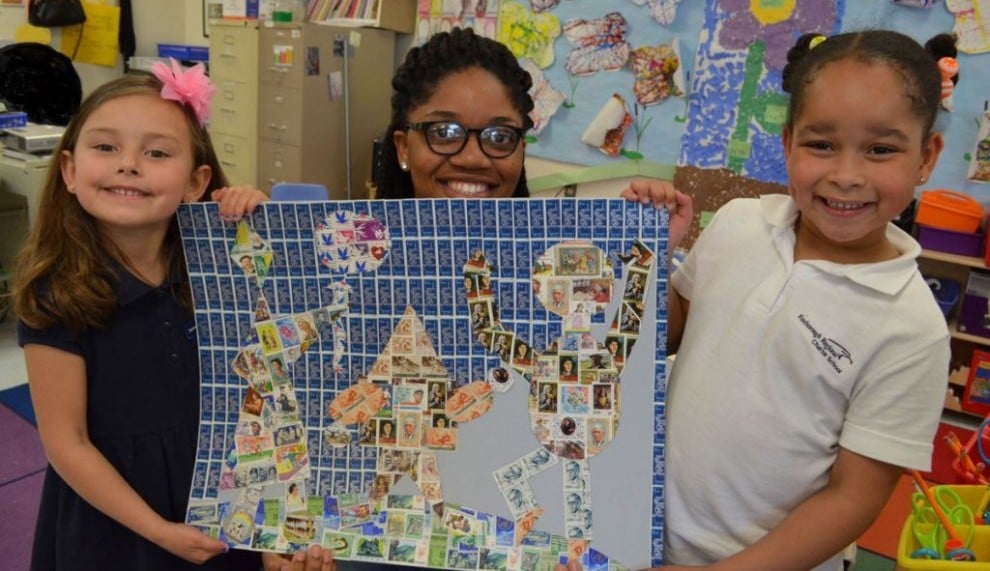
Since 2009, a charter school southwest of Boston has implemented a project to answer that question. From kindergarten to high school, students at the Foxboro Regional Charter School are working to gather 11-million canceled postage stamps from around the world — one for each victim of the Nazis’ genocidal policies, including the Shoah’s six-million Jewish victims.
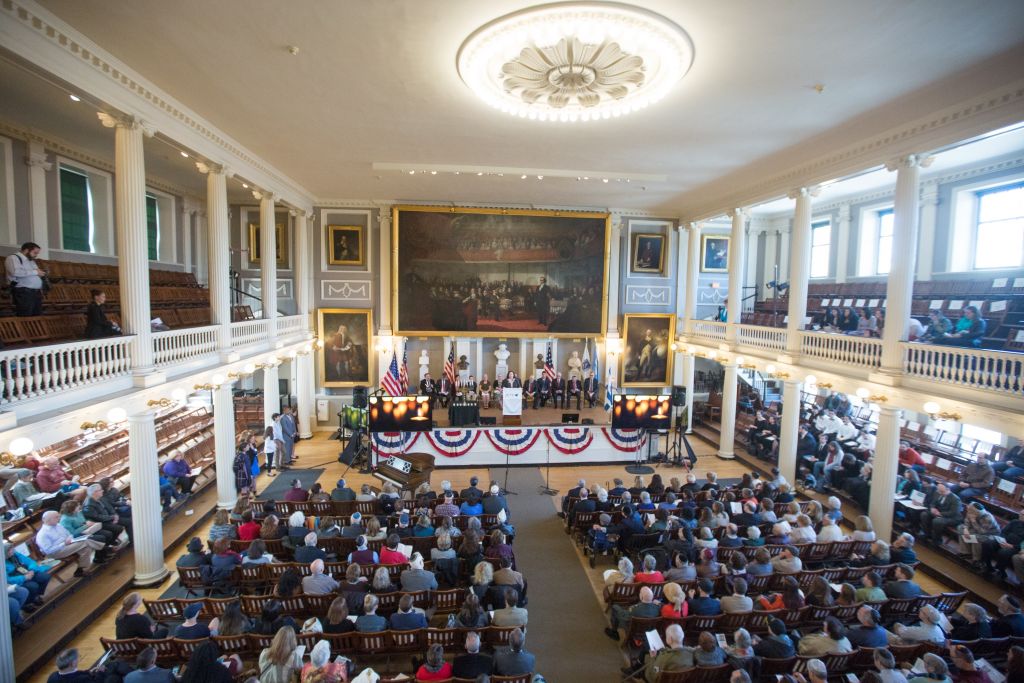
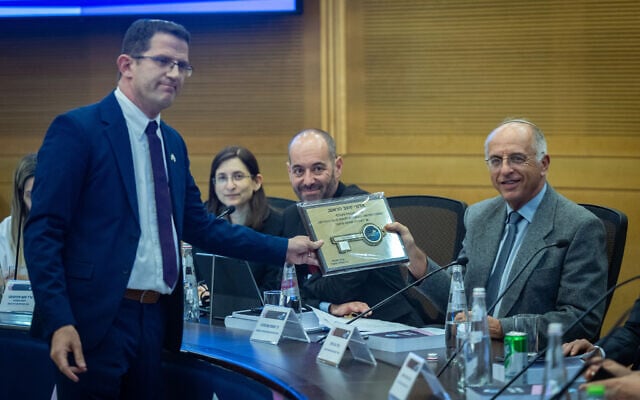
During its annual Yom HaShoah Holocaust commemoration on Sunday, two of the school’s teachers received a Holocaust education award from Boston’s Jewish Community Relations Council. Taking place inside historic Faneuil Hall, the gathering was addressed by local survivors and diplomats from Israel and Germany, as well as the teachers behind the Holocaust Stamps Project.
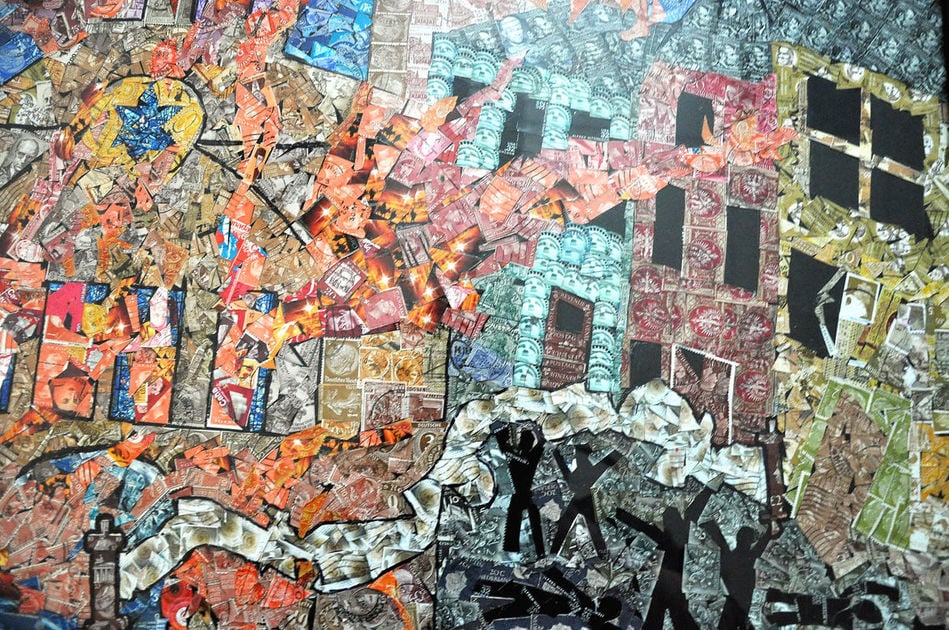
Since 2011, a select few of the 9.2-million (and counting) stamps have been used to create Holocaust-related collages, with topics including music as resistance and the “kindertransport” rescue of Jewish children. Finished works are shown at events in schools around town, ensuring that Shoah education takes place year-round in Foxboro, best known as home to football’s New England Patriots.
“Most of our middle and high school students have clipped and sorted stamps with us at some point,” said Jamie Droste, director of the project and the school’s service-learning coordinator.
In accepting the award, Droste spoke about the project’s ability to engage students of any age, as well as “a small army of adult volunteers” who help with cutting and sorting. The teacher also shared how the endeavor has filled other corners of her life, including when members of her church pass on their canceled postage stamps to her each week.
According to project founder Charlotte Sheer, the classrooms of the Foxboro school “are racially and culturally diverse.” Some of the school’s 1,300 students are learning English as a second language, and the Holocaust is not a topic that every student has heard of, said Sheer during her remarks as co-honoree.
“This has been the most significant initiative of my career as an educator,” said Sheer, who in 2009 challenged her fifth grade students to collect one canceled postage stamp for each victim. Having typically deployed historical fiction to teach students about the Holocaust, Sheer led her class to collect a very real 25,000 stamps during the project’s first year.
After involving other teachers in the effort, Sheer tasked students with creating Shoah-related collages using select groups of stamps. Although she has since left the school, the long-time educator hopes the project she started will eventually land a permanent exhibition space for the evolving series of 18 collages, as well as documents related to the project including donor letters, photographs and — of course — the 11-million stamps in memory of Hitler’s victims.
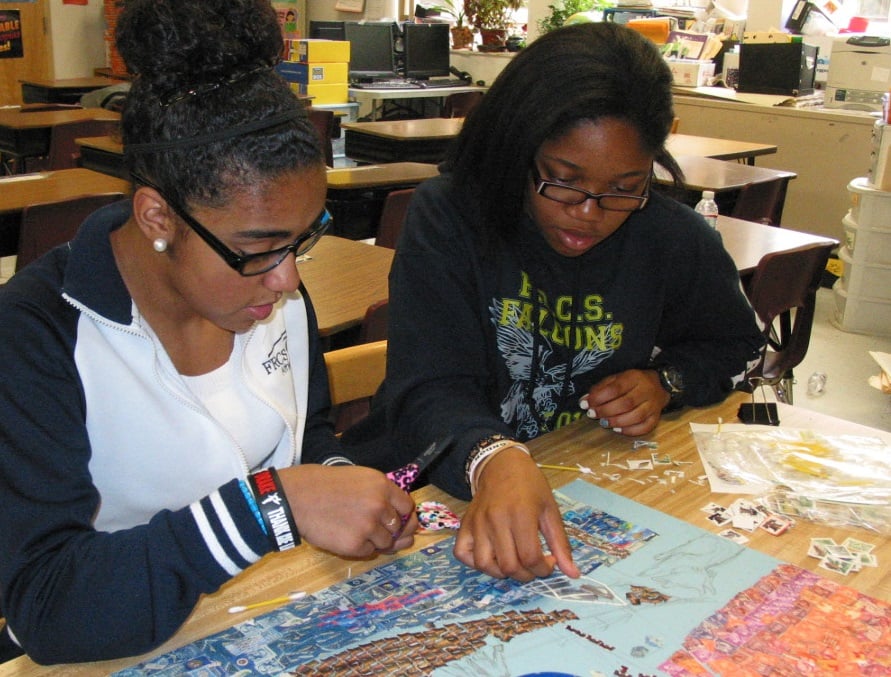
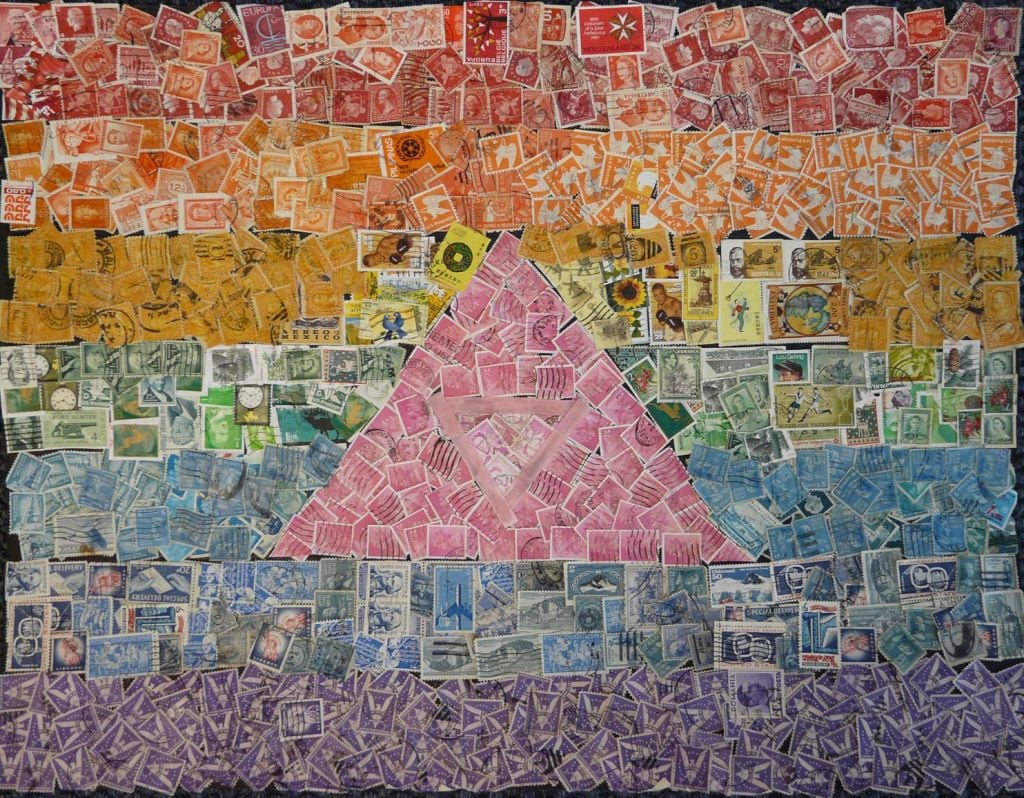
In one stamp collage made by the school’s gay-straight alliance, students focused on the sometimes violent struggle for human rights using stamps with militaristic themes. Their “Pink Triangle” college used stamps depicting boxing, fencing, and various weapons. For a collage about the “Kristallnacht” pogrom of 1938, students cut-up stamps of Marc Chagall’s famous windows to depict a synagogue on fire and mayhem in the streets.
A stated goal of the stamp project is for the school to use Shoah education in the struggle against bullying, including by learning about other cultures through their stamps. Israeli and American Hanukkah stamps were used to form an Israeli flag in a “Peace” collage, and stamps from European countries formed part of the partisan camp of the Bielski brothers in “The Forest that Saved Lives.” To depict the Danish flag in a collage about the rescue of Jews in Denmark, red “Love” stamps were used.
With eight years of momentum behind it, the project receives envelopes with canceled stamps from schools in Israel, Australia and Europe. Closer to home, one Massachusetts man donated 10,000 envelops he had stored in his attic since the 1980s. Some Holocaust survivors and their descendants have sent in stamps for each member of their family lost, while churches and synagogues occasionally send in hundreds of donations at once.
“For eight years, the Holocaust Stamps Project has served as a springboard for using world history to teach tolerance, acceptance, and respect for differences,” according to the Jewish Community Relations Council’s statement on the project. “Both [teachers] Charlotte Sheer and Jamie Droste have opened the minds and hearts of students, teachers and community members, inspiring colleagues to bring their teachings into their own classrooms.”








- Jewish Times
- Holocaust
- Yom Hashoah
- education
- antisemitism
- memory research
- art
- stamps
- Massachusetts
- Boston
- Kindertransport
- youth
- children
- Kristallnacht
- bullying
- United States
- Nazis
- teachers
- charter schools
- Germany
- Israel
- Denmark
- Zeev Bielski
- resistance
- Righteous Among the Nations
- New England Patriots
- Hanukkah
- Adolf Hitler
- Holocaust survivors
- Jewish Community Relations Council
- Marc Chagall
- peace
- LGBTQ
The Times of Israel Community.