

Moshe Kahlon needs voters to put their mouths where their money is
Israelis may want him as finance minister, but the million-dollar question for Kulanu is will they finally vote on the economy
 Add ToI as a Preferred Source on Google
Haviv Rettig Gur is The Times of Israel's senior analyst.

‘The coming elections won’t be between right and left, but between those who can solve the housing crisis and those who can’t, those who want to solve the problem and those who don’t.”
So says — or perhaps, hopes — Kulanu leader Moshe Kahlon, who spoke to The Times of Israel this week.
But while voters consistently confirm to pollsters that the economy is by far the most important issue of the campaign, more than Iran and the Palestinians put together, that sentiment has not translated into a dramatic rejection of traditional left-right fault lines. The most popular parties, according to polls, remain the center-right Likud and center-left Zionist Union.
Kahlon, 54, is one of Israel’s best-liked politicians. Credited with the dramatic reforms that brought down the high cost of cellular phone service in the country, he consistently leads polls that ask Israelis who they trust to handle the economy.
Indeed, Kahlon’s lead is dramatic. A Channel 2 survey earlier this month asked, “Which of these people will do the best job tackling the housing crisis?” Kahlon was at the top of the heap with 29 percent, followed by former finance minister Yair Lapid with 13%, Zionist Union leader Isaac Herzog with 9%, Prime Minister Benjamin Netanyahu with 7% and Economy Minister Naftali Bennett with just 6%.
And asked who was “most fit to be finance minister,” Kahlon led with 19% of respondents, ahead of the Zionist Union’s Manuel Trajtenberg with 18%; then came Likud’s Yuval Steinitz and Lapid, with 8% each.
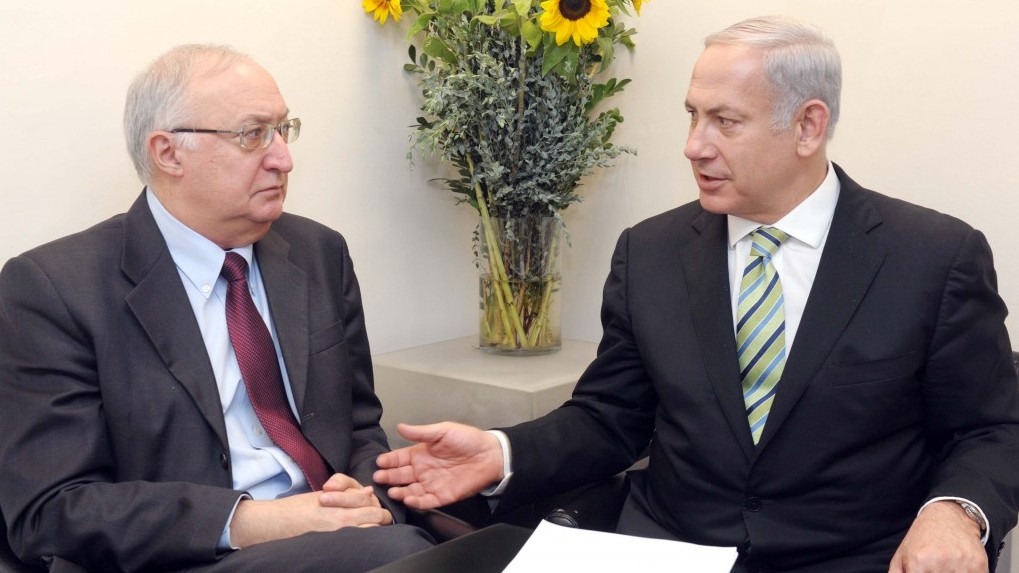
Trajtenberg is one of the country’s most highly regarded economists, with a stature that transcends the political divide. He was head of the eponymous committee appointed by Netanyahu to propose policies to deal with Israel’s soaring cost of living, and is currently the Zionist Union’s declared candidate for finance minister.
Kahlon is the only professional politician who beats Trajtenberg in polls that ask Israelis to choose the next steward of their economy.
And Kahlon is eager for the job. His public declaration that he will seek the Finance Ministry in the next coalition government forms a major plank of his party’s campaign.
“The Finance Ministry can bring about real social change,” he said.
But whether Kahlon can actually win the ministry is an open question. Widespread trust in him personally has not translated into the kind of lead in the polls that might enable him to demand the lofty cabinet post. Kulanu is averaging about eight seats in recent polls, reaching as high as 10 over the weekend.
Still, he remains upbeat.
Many compare his electoral showing to his centrist competitor Yesh Atid, which is polling at a slightly higher average of 11 or so seats.
But “we started at zero,” not Yesh Atid’s 19 seats, he noted. “I’m very satisfied with the campaign. I think we have clear, sharp messaging.”
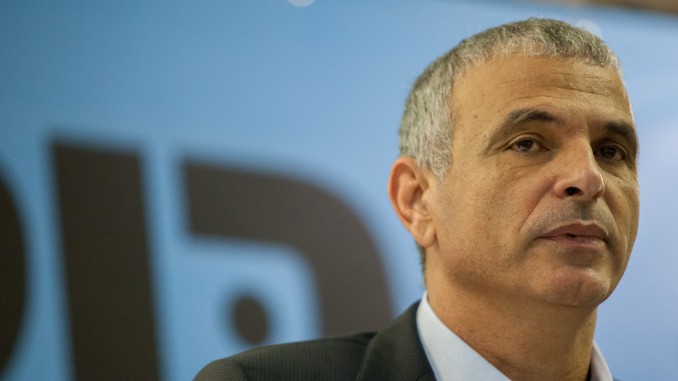
A veteran of three Knessets, a former minister of welfare and communications, and a former chairman of the Knesset Economics Committee, Kahlon brings to his party of relatively inexperienced politicians the hard parliamentary know-how that was so conspicuously lacking in Yesh Atid’s first term.
Yesh Atid fought hard to win control of most of the major domestic policy posts in the last government, taking the ministries of finance, health, education, welfare and science. But it neglected the Knesset during the coalition negotiations, viewing legislative work as less decisive and influential than executive action. Once in power, Yesh Atid discovered the gravity of its mistake the hard way. Its initiatives were constantly stymied by political rivals who controlled the Knesset committees, such as Finance, Foreign Affairs and Defense and Internal Affairs, without which major policies cannot be enacted.
Kahlon doesn’t intend to make the same mistake.
His party list, selected by him, is intended to showcase a cross-section of Israeli society — women alongside men, poverty activists alongside corporate CEOs, native-born Israelis alongside immigrants, residents of outlying towns such as Kiryat Shmona and Arad together with those of central metropolises like Tel Aviv, an IDF general and an ambassador alongside an at-risk youth activist.
The diverse identities of the candidates, together with the party’s name, which translates to “all of us,” is its political narrative. “I believe in professionalism, less in politicians,” said Kahlon, the consummate politician who leads the group.
This strangely apolitical party — “I don’t rule out anybody” as coalition partners, Kahlon insisted — believes it has risen above the partisan fray, and devoted itself to a straightforward program of troubleshooting the national economy.
“These are good, quality people,” Kahlon said of his Knesset slate. Indeed, Eli Alaluf (#3) won Israel’s highest civilian honor, the Israel Prize, for his work on poverty. Maj. Gen. (res.) Yoav Galant (#2), a former head of the IDF’s Southern Command, is one of Israel’s most prominent military figures. Arad mayor Tali Ploskov (#6) arrived in Israel from Moldova in 1991 and began working as a hotel maid, a humble origin for a mayor and near certain shoo-in to the Knesset. Ambassador Michael Oren (#4) is a Princeton-trained historian and New York Times bestselling author.
They were chosen for their expertise, says Kahlon. “These are people who understand socioeconomic issues, diplomatic issues. I feel very comfortable that in [Knesset] committees we’re placing people who know what they’re talking about.”
His focus on Knesset committees and his campaign promise to seek the Treasury post — traditionally viewed as the ministry where political careers go to die, as it is the finance minister who is often forced to cut welfare benefits — signal his belief in his ability to deliver on his promises to reform the housing market and lower the cost of living.
But lofty campaign promises have not entirely dulled his political acumen. The Times of Israel asked what cabinet posts he would seek if he could not win the Treasury, a question Kahlon answered with the pragmatism born of political experience: “It would be the greatest mistake to conduct the [coalition] negotiations now. I don’t even know the number of seats I’ll have.”
Kulanu’s political hopes depend a great deal on the theme of the final weeks of the campaign. As long as the conversation focuses on Iran, the Palestinians or Prime Minister Benjamin Netanyahu’s spending on ice cream and sushi, Kulanu’s message will struggle to be heard.
In an effort to ensure that doesn’t happen, the Kulanu campaign has turned aggressive in recent weeks. A recent video showed Netanyahu, now in his sixth consecutive year as prime minister, promising time and again to enact policies that would lower the cost of housing, while a red line on a superimposed graph shows the persistent rise in that cost over the course of the two most recent Netanyahu administrations.
Posted by משה כחלון on Sunday, February 15, 2015
Kahlon hopes the campaign — and voters — will ultimately turn to economic issues, where concern is high and his own popularity is even higher.
“The other issues are issues that come and go, but they’re not the subject of the elections,” he maintained. “I have no doubt that the public will give its trust to those with the knowledge and ability to solve the housing crisis. At the end of the day, Lapid, Bennett and Netanyahu had their chance in the last term, had their opportunity, and didn’t do it.”








- Real Estate Israel
- Moshe Kahlon
- Kulanu party
- 2015 Israeli elections
- housing crisis
- housing prices
- Finance Ministry
- Knesset
- Isaac Herzog
- Benjamin Netanyahu
- Yesh Atid party
- Yair Lapid
- Naftali Bennett
- cost of living
- Knesset Finance Committee
- Knesset Economics Committee
- Knesset Foreign Affairs and Defense Committee
- Manuel Trajtenberg
- Trajtenberg Committee
- Yuval Steinitz
- Michael Oren
- Arad
- Tali Ploskov
- Yoav Gallant
The Times of Israel Community.