

Opposition head Lapid: Deal averting election means another 120 days of failure
Netanyahu ‘playing politics’ amid ‘extreme health and economic crisis,’ Yair Lapid charges, as coalition parties continue sniping
 Add ToI as a Preferred Source on Google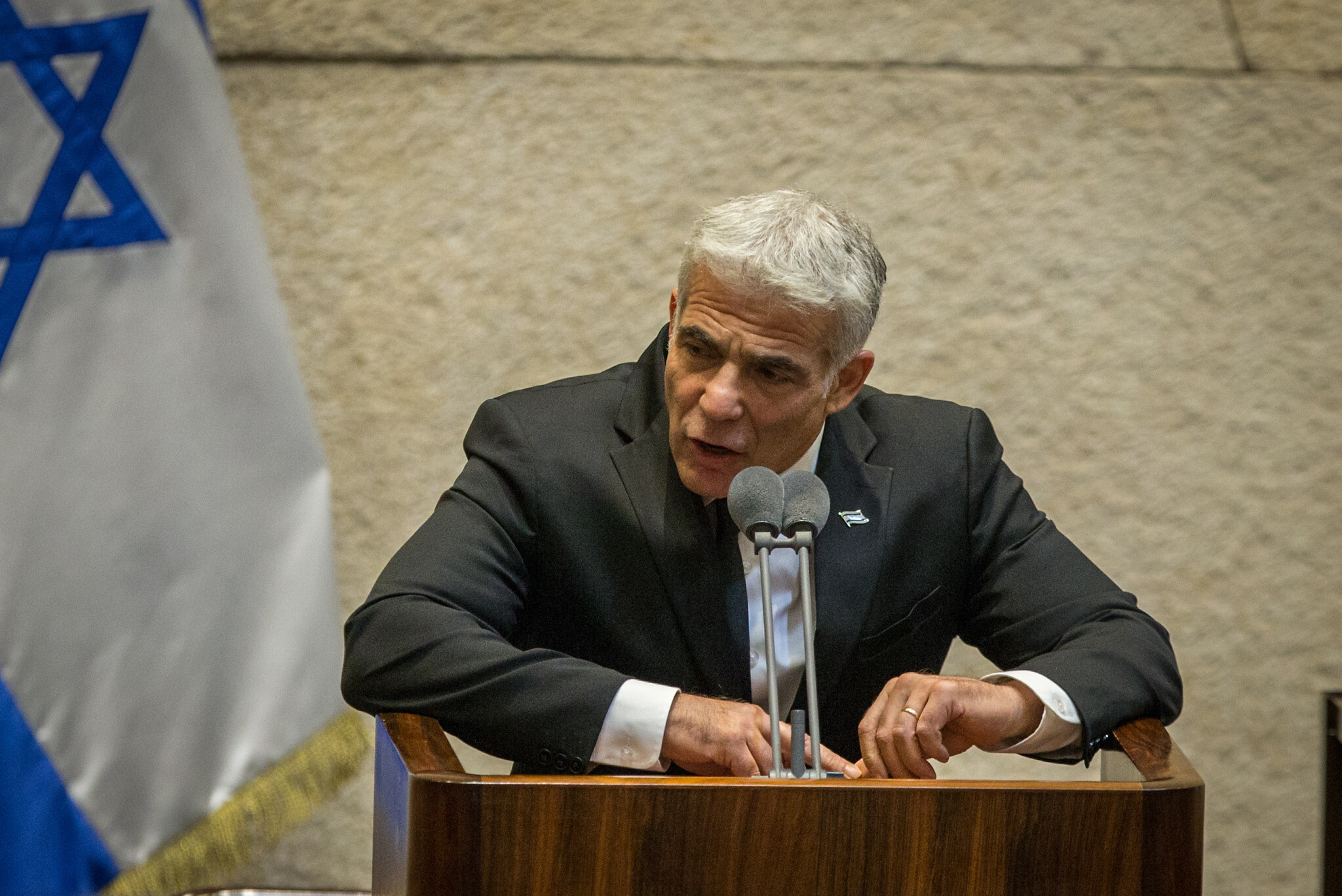
Opposition chief MK Yair Lapid slammed the late Monday agreement of Likud and Blue and White to delay the deadline for a state budget till the end of December.
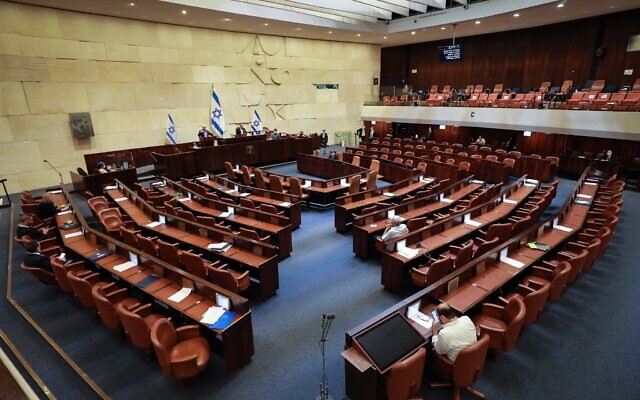
The deal, passed into law on Monday night, gives the government 120 more days — up to December 23 — to pass a state budget for the 2020 fiscal year. Passage of the law prevented the automatic collapse of the government and early elections.
Likud and Blue and White, meanwhile, continued sniping at each other after the law was passed on Monday night, including leveling accusations of corruption against each other.
Though elections were averted, many analysts believe the government is still on life support and will not survive beyond the next deadline. If, come the new December 23 deadline, the coalition still fails to agree on a budget, the country will head to new elections in March, with Netanyahu keeping his seat throughout the process.
Lapid, who heads the parliamentary opposition, derided the delay as “another 120 days of failure.”
“They’re not even pretending that they’ll do anything different,” he charged in comments at a late-night faction meeting after the postponement was approved by parliament.
“Another 120 days without a budget, another 120 days of the disaster known as the unpaid leave framework [which has left many Israelis without incomes due to the pandemic] and still without a proper plan for starting the school year.”
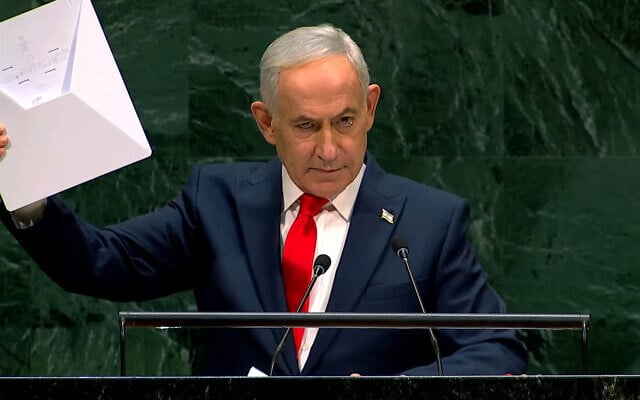
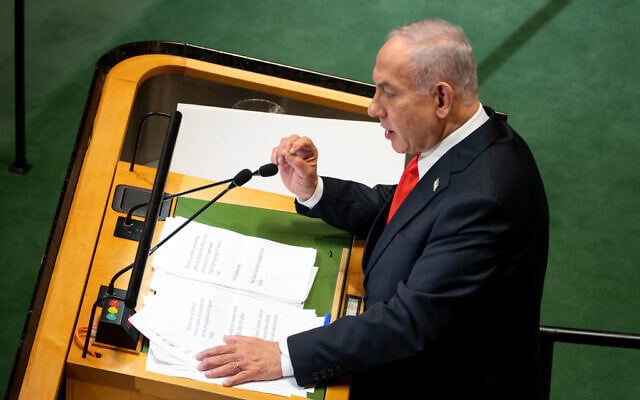
Lapid accused: “During an extreme health and economic crisis, the government of Israel decided that its only plan is to delay everything by 120 days. During an extreme health and economic crisis, [Prime Minister Benjamin] Netanyahu is still doing only one thing – playing politics.”
The opposition Yisrael Beytenu party also derided the delay, tweeting Tuesday: “A summary of last night’s events: The State of Israel remained without a budget to stabilize the economy during an economic crisis, and again the ultra-Orthodox parties got the money they wanted.”
The Monday night breakthrough happened after Prime Minister Benjamin Netanyahu and Defense Minister Benny Gantz both said their parties would vote in favor of the delay, after a day of their respective Likud and Blue and White parties hurling accusations and recriminations at each other.
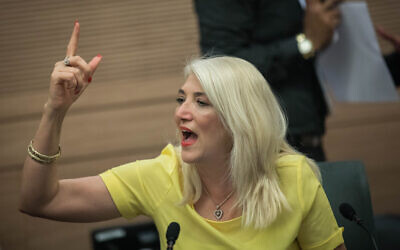
The mudslinging continued on Tuesday morning, with Likud MK Osnat Mark, a Netanyahu loyalist, accusing Justice Minister Avi Nissenkorn of Blue and White, a former labor union leader, of using “Bolshevik silencing and scare mechanisms.”
Nissenkorn had complained to Army Radio after an outspoken right-wing journalist, Erel Segal, claimed that Attorney General Avichai Mandelblit had closed a case into alleged improprieties in Nissenkorn’s 2017 Histadrut labor federation election campaign. Nissenkorn’s defense of Mandelblit against Likud attacks over the Netanyahu corruption cases were repayment for that alleged protection, Segal had claimed. Mandelblit, Nissenkorn and the Justice Ministry all denied the report, saying the case had been closed before Nissenkorn was ever considered for the Justice Ministry post.
Nissenkorn’s complaint to Army Radio’s governing body — i.e., the IDF’s Manpower Directorate — was “a threat against journalists,” Mark said.
Meanwhile, some coalition members on Tuesday defended the agreement to delay the budget deadline.
Communications Minister Yoaz Hendel, whose Derech Eretz faction would likely be erased in an election, said a vote would be a “disaster” — “not for me personally, but for the country.”
It was Derech Eretz’s second lawmaker, MK Zvi Hauser, who penned the delay compromise passed on Monday night.

“We must not go to elections now,” Hendel insisted in a statement Tuesday morning. “We have to release budgets to ministries and nonprofits, we have to grapple with the vast economic crisis that I’ve experienced up close, including in my immediate family. We chose to join a unity government because I believed Israel had no alternative. That was the compromise.”
He added: “I know this government isn’t functioning well, I don’t intend to hide that but to fix and improve.”
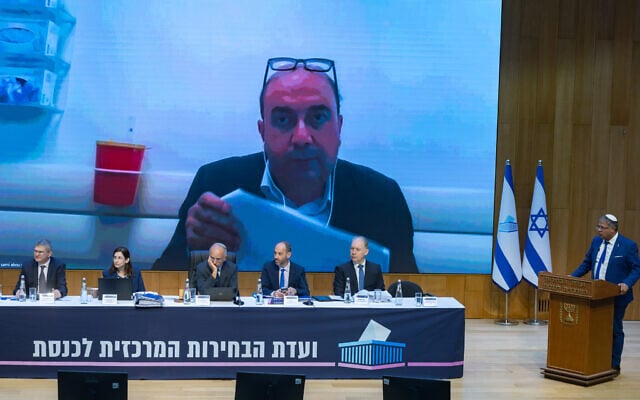
A vote on the second and third readings of the compromise legislation was completed at 9:58 p.m., two hours and two minutes before the country would have been plunged into new elections — its fourth in under two years — due to the legal requirement that the government pass a budget by midnight or fall. The bill passed by 67 votes to 37.
Though the crisis was ostensibly about the state budget, the true bones of contention Monday appeared to be the issue of senior law-enforcement appointments and the balance of power in the dysfunctional unity coalition.
Despite earlier Likud demands, the final bill approved by the Knesset plenum Monday night did not include a clause, demanded by the party earlier, to form a panel on senior appointments. Netanyahu has been accused of seeking to engineer the appointment of top legal officials — including a new state prosecutor — who would be willing to be more lenient in the criminal graft trial against him. The prime minister denied any such plan.
According to Channel 12 news, Blue and White said it would only accept such a clause if Likud agreed to also pass long-delayed regulations formalizing the equal balance of power in the cabinet, as agreed upon in the coalition deal between them — which Likud refused to do.
Other issues of dispute between the two parties, including the matter of the panel for senior appointments, are yet to be resolved. They were not included in the budget compromise law that staved off the election, and the sides will continue to discuss them, Hebrew news reports said late Monday.




The Times of Israel Community.