

Palestinian sources: Teens’ killing planned, funded by Hamas
Mahmoud Kawasme, brother of ringleader arrested for June abduction and triple murder, has worked with Hamas on terror attacks since being deported to Gaza as part of Shalit deal

 Add ToI as a Preferred Source on Google
Avi Issacharoff, The Times of Israel's Middle East analyst, fills the same role for Walla, the leading portal in Israel. He is also a guest commentator on many different radio shows and current affairs programs on television. Until 2012, he was a reporter and commentator on Arab affairs for the Haaretz newspaper. He also lectures on modern Palestinian history at Tel Aviv University, and is currently writing a script for an action-drama series for the Israeli satellite Television "YES." Born in Jerusalem, he graduated cum laude from Ben Gurion University with a B.A. in Middle Eastern studies and then earned his M.A. from Tel Aviv University on the same subject, also cum laude. A fluent Arabic speaker, Avi was the Middle East Affairs correspondent for Israeli Public Radio covering the Israeli-Palestinian conflict, the war in Iraq and the Arab countries between the years 2003-2006. Avi directed and edited short documentary films on Israeli television programs dealing with the Middle East. In 2002 he won the "best reporter" award for the "Israel Radio” for his coverage of the second intifada. In 2004, together with Amos Harel, he wrote "The Seventh War - How we won and why we lost the war with the Palestinians." A year later the book won an award from the Institute for Strategic Studies for containing the best research on security affairs in Israel. In 2008, Issacharoff and Harel published their second book, entitled "34 Days - The Story of the Second Lebanon War," which won the same prize.
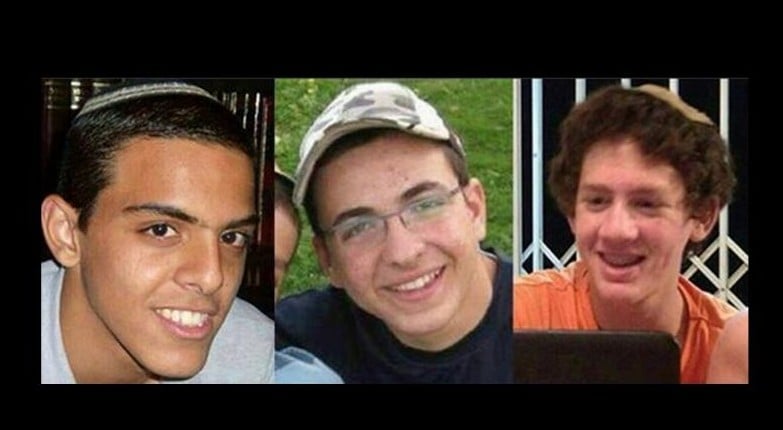
The brother of a Palestinian man arrested as the ringleader of a terror cell that kidnapped and murdered three Israeli teens in June, suspected of funding the attack, has fostered deep Hamas ties since being deported to Gaza, Palestinian security sources said.
Mahmoud Ali Kawasme was one of the Palestinian inmates deported to Gaza in the 2011 prisoner swap for Gilad Shalit.
He is suspected of funding and planning the June 12 West Bank attack in which Israeli students Gil-ad Shaar, Eyal Yifrach and Naftali Fraenkel were abducted and killed near Hebron.
His ties to the attack and to Hamas will likely further implicate the terror group in the killings. Israel has alleged Hamas involvement, though Hamas’s leadership has denied any connection to the scheme.
Mahmoud Kawasme’s brother, Hussam, was recently arrested by the Shin Bet and the police anti-terror unit near Jerusalem.
Hussam Kawasme admitted during his interrogation that he was the commander of the two kidnappers, Marwan Kawasme and Omar Abu Aysha. All four live in the same area of Hebron. The latter two are from the Haris neighborhood, while the families of Hussam and Mahmoud live in the nearby Wadi Abu Ktayla neighborhood in the northwestern part of the city.
Mahmoud Kawasme is a known Hamas operative who was imprisoned in Israel until the Gilad Shalit deal, when he was deported to Gaza under the terms of the agreement, which also obligated the former prisoners to not return to terror.
Kawasme, though, continued to work with members of Hamas’s military wing there, in an attempt to bring about terror attacks in the West Bank. He maintained contacts with terror operatives in Hebron, as well as other cities like Tulkarm.
According to Palestinian sources, Mahmoud Kawasme initiated and planned the kidnapping along with his brother Hussam. Senior members of Hamas’s military wing were aware of the plan, and gave him money to fund the attack. The kidnappers needed vehicles, Israeli license plates, weapons, and safe houses.
Israel has not rushed to blame Hamas’s senior leadership for the kidnapping and murder. Israeli officials have said there was a general directive for a kidnapping and funding for it, but there is still no proof of a direct order to kidnap the teens.
After his arrest, Hussam admitted to receiving money for the attack from Hamas operatives in the Gaza Strip.
Hussam Kawasme revealed that the alleged killers, Marwan Kawasme and Amer Abu Aysha, drove to his house after killing the three youths. Together, they drove to the plot of land in Halhul which was bought by Kawasme ahead of time. There, they buried the three.
Hussam also helped the two killers hide from the Israeli security forces who were scouring the West Bank for them, the Haaretz daily reported, citing the Shin Bet security service.
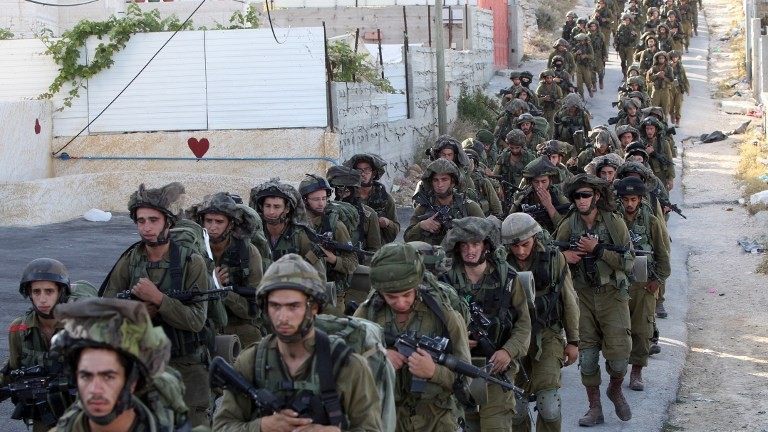
The teens’ abduction sparked a massive search operation and crackdown on Hamas in the West Bank, with hundreds of members arrested. Tensions further ratcheted up after the teens’ bodies were found outside Hebron at the end of June, and an East Jerusalem teen was killed by a Jewish Israeli in an apparent revenge attack, sparking days of unrest throughout the country and in the West Bank and heavy rocket fire on Israel.
On July 8, Israel launched Operation Protective Edge to stymie the rocket fire with airstrikes and later carried out a limited ground incursion into Gaza to destroy a network of cross-border attack tunnels.





The Times of Israel Community.