

Passport found near Paris bomber came via lax migrant route
Document holder was allowed to pass through Europe unhindered because he had no previous criminal record
 Add ToI as a Preferred Source on Google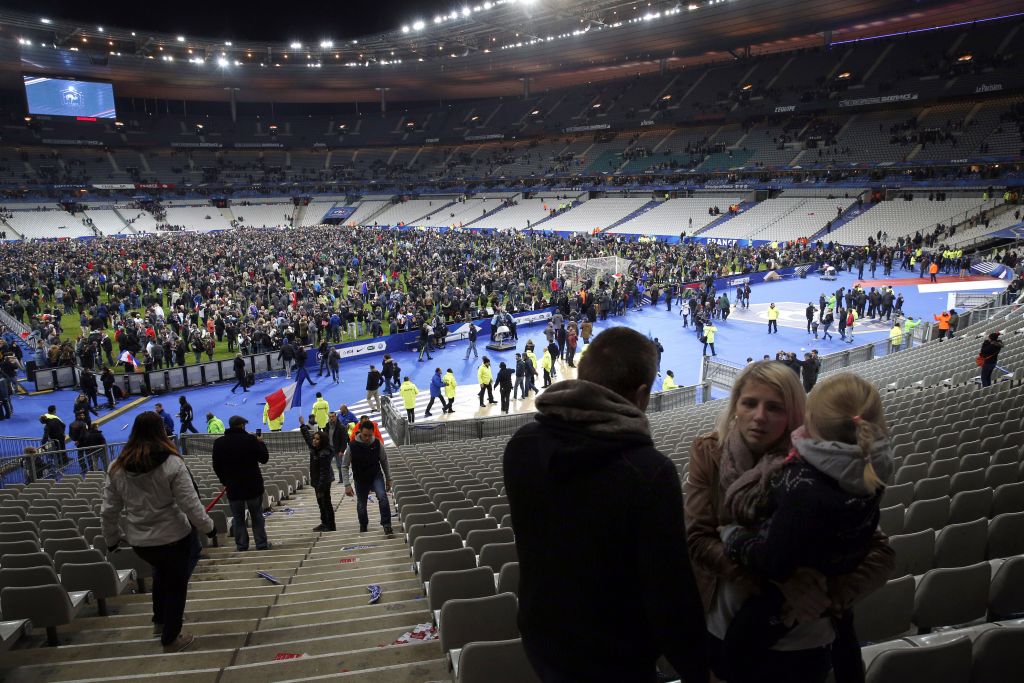
The owner of a passport found near the body of a suicide bomber in the attacks on Paris passed through a migrant corridor known for its lax controls and ease in obtaining transit documents as a flood of asylum-seekers surges toward Western Europe.
The Syrian passport was registered in October in Serbia and Croatia, two of the countries on the corridor crossing the Balkans. The owner was allowed to proceed because he passed what is essentially the only test in place — he had no international arrest warrant against him, police in both states said Sunday.
It was not clear whether the passport was real or fake, or whether it belonged to the suicide bomber. But trafficking in fake Syrian passports has increased as hundreds of thousands of people fleeing war and poverty try to get refugee status, the chief of the European Union border agency, Frontex, has said.
Most of those who enter countries on the so-called Balkan corridor for migrants — Greece, Macedonia, Serbia and Croatia — are registered with authorities. Their data are checked against INTERPOL records, and their fingerprints and photos are taken. But many people tell officials that they’ve lost their identity papers, and they can give false names and other information, including their country of origin.
The Serbian newspaper Blic said Sunday that authorities had identified a Syrian passport found near one of the attackers as belonging to one Ahmad al-Mohammad, who had passed through Greece and Serbia last month with tens of thousands of other refugees streaming in from Syria, Iraq, and Afghanistan. However, the report also noted that there is a black market for forged Syrian passports, and al-Mohammad may therefore not be the attacker’s true identity.
JUST IN: Photo of Syrian passport recovered at stadium bombing linked to migrant wave https://t.co/bLZUjWgRQ3 pic.twitter.com/awmNZxwoR3
— CBS News (@CBSNews) November 15, 2015
A large majority of migrants declare themselves as Syrians from the war-torn country, although they have no documents to prove it, Serbian police say. Syrian refugees have a better chance of getting asylum in Germany than those classified as economic migrants from Afghanistan, Iraq or Pakistan.
In Serbia, some 490,000 migrants have passed through this year, and many say they don’t have documents — making it impossible to check for terrorist connections or criminal histories, to verify their backgrounds, Serbian officials said Sunday.
“No one can know for certain where they come from, their true identity, or if their documents are genuine,” Serbian labor minister Aleksandar Vulin said. “The Paris suspects have not been registered anywhere as terrorists, so Serbia could not have known that they represent a danger.”
Frontex spokeswoman Ewa Moncure told The Associated Press that “among some 500,000 people, you will find some with false documents.
“There is always a certain percentage of false Syrian passports and identity documents revealed on the Greek border,” she said.
The holder of the passport found next to the bomber’s body is registered as entering Greece on October 3, Greek officials said, adding that the passport owner entered the country through Leros, one of the eastern Aegean islands that tens of thousands have been using as a gateway into the European Union.
The owner of the passport then formally requested asylum in Serbia October 7, according to a Serbian police statement. The document allowed him three days to pass through the country on his way to Croatia. Police did not give a name, identifying the passport’s owner only as A.A.
The passport-holder entered Croatia from Serbia on October 8, Croatian police spokeswoman Helena Biocic said Sunday. The owner was not flagged as suspicious and then proceeded to Hungary and Austria.
The passport was found after Friday’s attack on France’s national stadium, next to the body of one of the suicide bombers who blew themselves up nearby. In all, 129 people were killed in Paris in the violence, the worst in France in decades. Authorities said three teams of attackers were involved in the gun and bomb attacks on the stadium, a concert hall and Paris cafes. Officials have not said whether there are more attackers at large.





The Times of Israel Community.