

Peres opens his eyes, slightly improving, still in serious condition
Former president to be kept sedated for at least another day; is responding to stimuli; doctor warns he likely suffered permanent damage
 Add ToI as a Preferred Source on Google
Raoul Wootliff is a former Times of Israel political correspondent and Daily Briefing podcast producer.
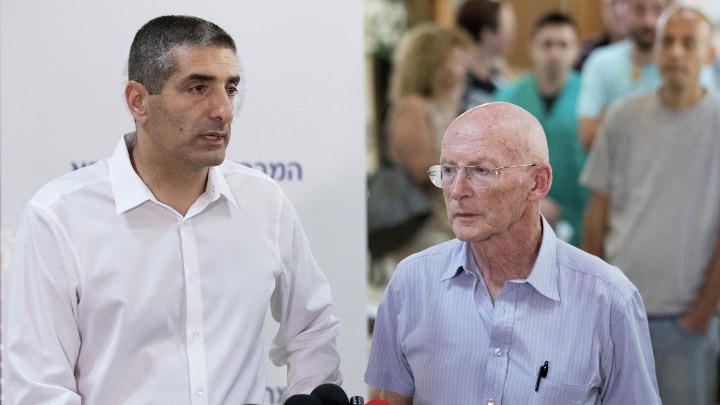
Former president Shimon Peres was showing signs of improvement Wednesday but remains in serious condition after suffering a major stroke a day earlier, according to doctors treating him at the Sheba Medical Center.
Peres was still sedated and on a respirator, but was stable and has responded to stimuli, the head of the hospital told reporters.
“After 24 hours of intensive treatment, I can say that although he is still in serious condition, he is stable and there is an improvement,” Prof. Yitzhak Kreiss said.
“What I can say is that, even though we are still waiting, there is improvement and that is good,” he added.
Rafi Walden, Shimon Peres’s son-in-law and personal physician, said that the former president is “responsive and understands what is being said to him.”
Walden said Peres is under “relatively light sedation,” and will remain that way for at least another day in order to allow his body to rest.
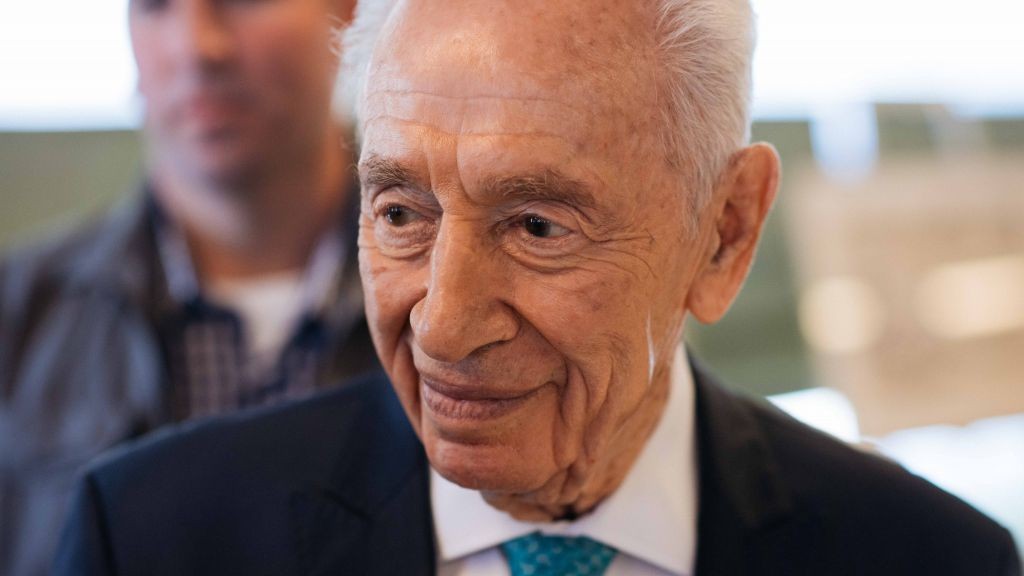
Earlier Wednesday, Walden warned that Peres had likely suffered permanent damage from the Tuesday evening stroke.
Meanwhile, Peres’s daughter, Tsvia Walden, told Army Radio Wednesday that her father had opened his eyes.
“Yesterday he could hardly move his hand and today he has a tight grip,” she said. “There is an improvement since yesterday, but this does not help us predict the future.”
She said Peres “opened his eyes for several minutes.”
After feeling unwell during lunch on Tuesday, Peres was rushed to the hospital in the Tel Aviv suburb of Ramat Gan for medical tests. Initial blood tests revealed a chemical imbalance. After further tests, at around 7 p.m. aides and a nurse attending to him noticed a deterioration in his usually gregarious interaction with those around him.
He said his head hurt, causing the medical team to suspect a stroke. He was given a CT scan at 8 p.m. that confirmed internal bleeding in the brain.
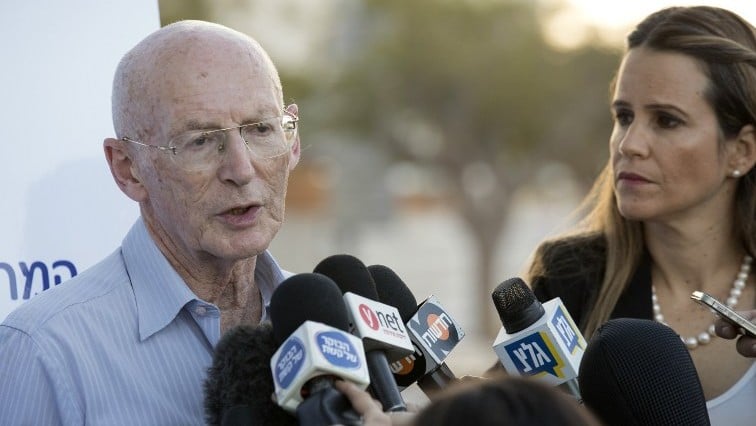
The “massive intracranial hemorrhage” occurred in the middle of a typically busy day for the nonagenarian, who turned 93 on August 2 but has remained active in public life after a seven-decade career as a politician.
Peres’s granddaughter on Wednesday said he seemed to be comfortable and not suffering.
“I was at his side with the family and his excellent [medical] team most of the night and all morning,” Mika Almog wrote on Facebook Wednesday morning, in a post accompanied by a picture of her and Peres.
“He slept. He seems comfortable, not suffering. I hope he is regaining his strength. The rest is unknown at this point,” she wrote.
Peres is the elder statesman of Israeli politics, one of the country’s most admired symbols and the last surviving link to its founding fathers.
Over a seven-decade career, he’s held virtually every senior political office, including two stints as prime minister and extended terms as foreign, defense and finance minister. He won the 1994 Nobel Peace Prize for his work in reaching an interim peace agreement with the Palestinians.
Long a divisive personality in Israeli politics, Peres finally became one of Israel’s most popular public figures in his later years.
Earlier this month, Peres underwent surgery to receive an artificial pacemaker after he was diagnosed with an abnormal heart rhythm in July following a series of minor health scares.
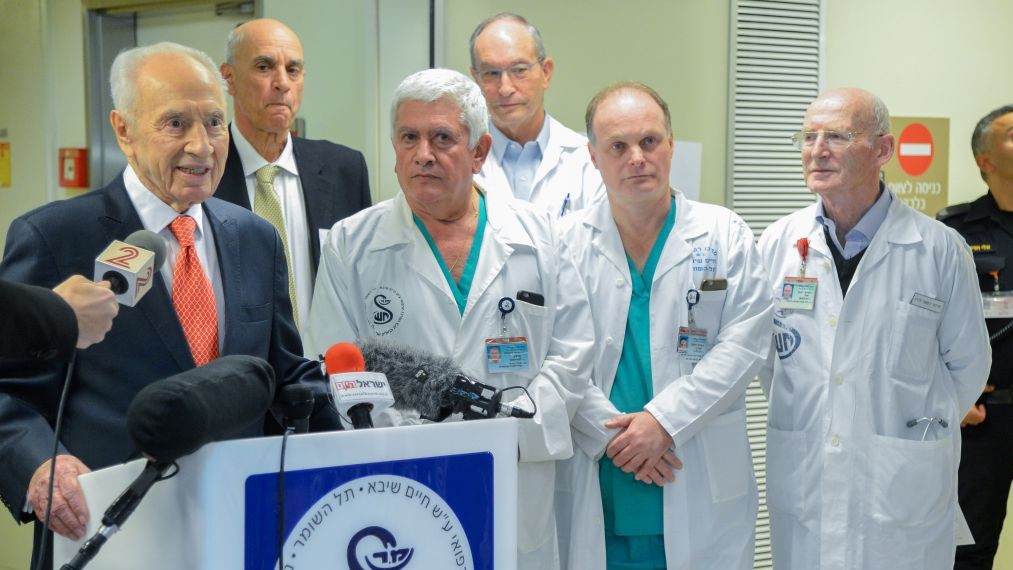
The implant was recommended by Peres’s doctors, including personal physician Walden, after he was diagnosed in July with atrial fibrillation.
He suffered a mild heart attack in January and underwent a cardiac angioplasty to open a blocked artery. He had been hospitalized twice after suffering chest pains.
Times of Israel staff contributed to this report.








The Times of Israel Community.