

Preachers, soldiers, a long-lost skull: Unearthing Mt. Zion Protestant cemetery
The historic Jerusalem graveyard is home to the remains of Royal Engineers, missionaries, archaeologists and philanthropists, and built atop remnants of the Second Temple era
 Add ToI as a Preferred Source on Google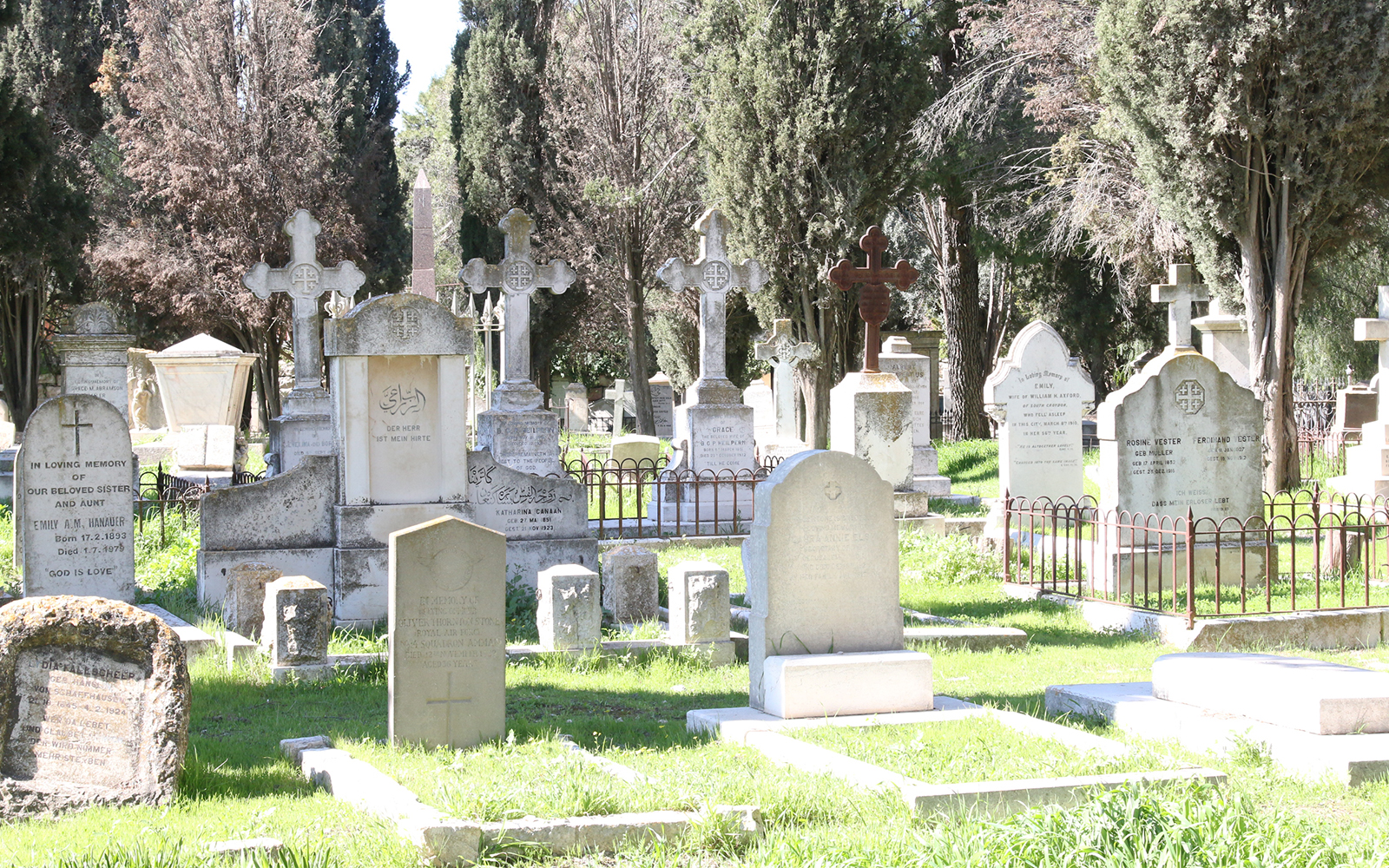
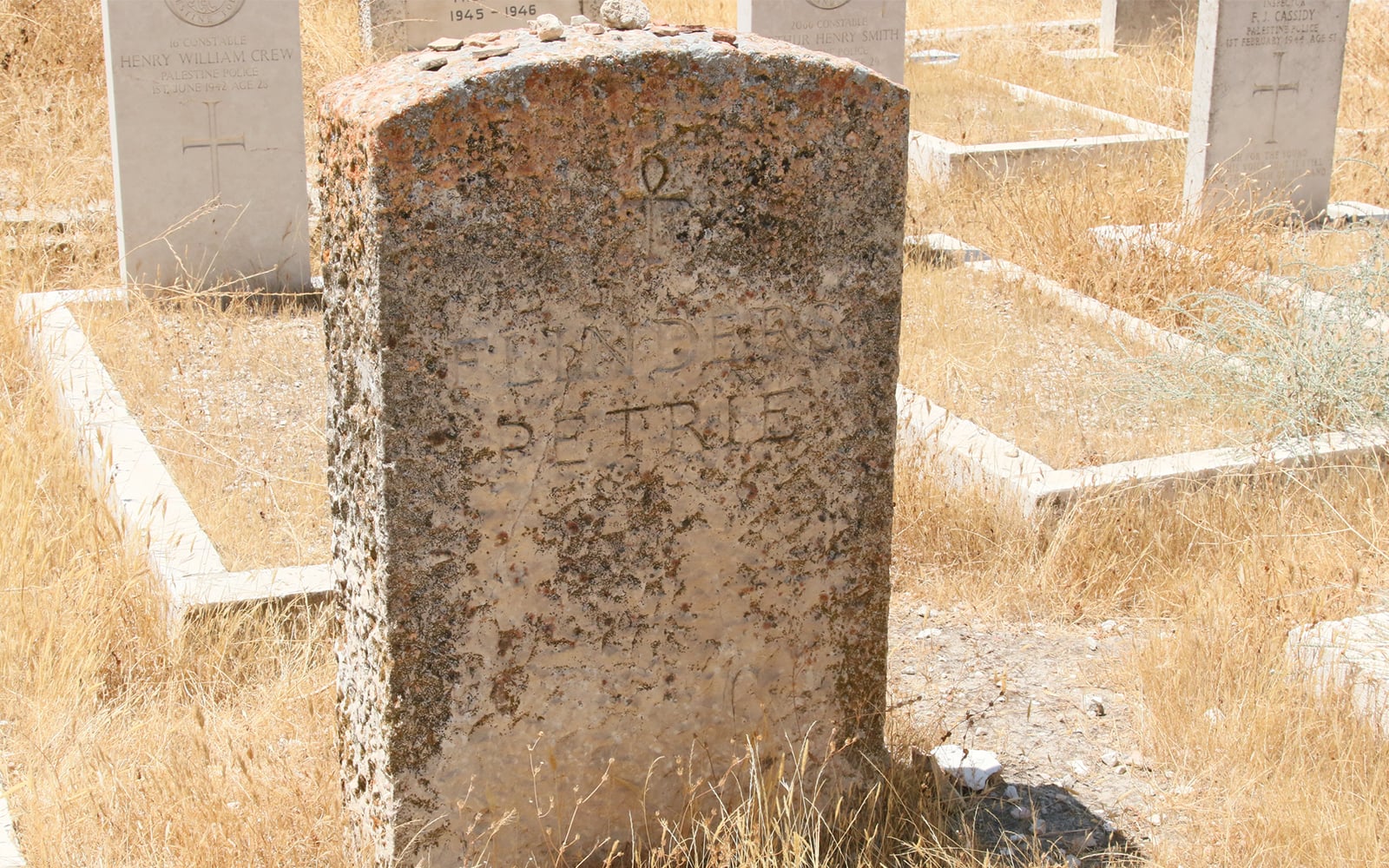
The most unusual gravesite in Jerusalem’s Protestant cemetery belongs to Sir Flinders Petrie, a famous British archeologist who proposed the idea — radical at the time — that you could date archeological layers based on pottery shards and ceramic artifacts.
What makes his grave so special is the tombstone, which is split into two parts. Barely visible on the larger one is the name Flinders Petrie, who was born in 1853 and died in 1942. The small white stone next to it apparently represents his head: Petrie was super smart and believed that there was a correlation between intelligence and the size of one’s skull, so he willed his head to the Royal College of Surgeons in London.
That would be strange enough. But there is an unusual end to this story. Because Petrie passed away at the height of World War II, there was a delay in transferring his head. Stored in a jar at what was, at the time, the American School of Oriental Research in Jerusalem (today the Albright Institute of Archeological Research), the head was later sent to London. There, the label fell off and remained unidentified for decades. It was only in 1989 that archeologist Shimon Gibson finally identified the skull as that of Flinders Petrie.
Some of you may consider traipsing through the country’s cemeteries a rather gruesome hobby. But is it really? Israel’s modern history was written by many of the souls buried in its cemeteries. Like the Protestant Cemetery on Mount Zion, the final resting place for some of the country’s most prominent 19th and 20th century Christian figures. Also interred within are British policemen, soldiers and a Postmaster General.
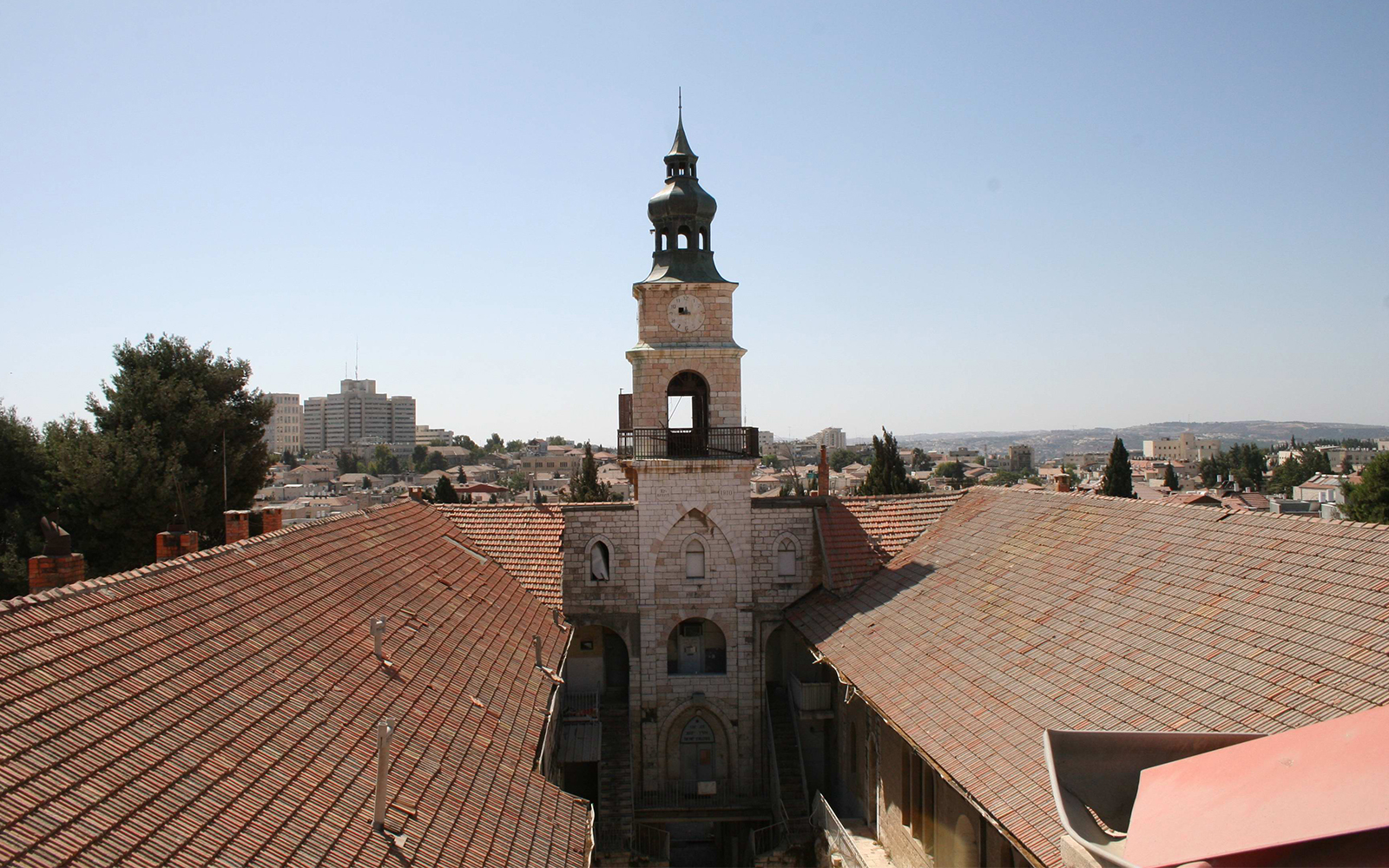
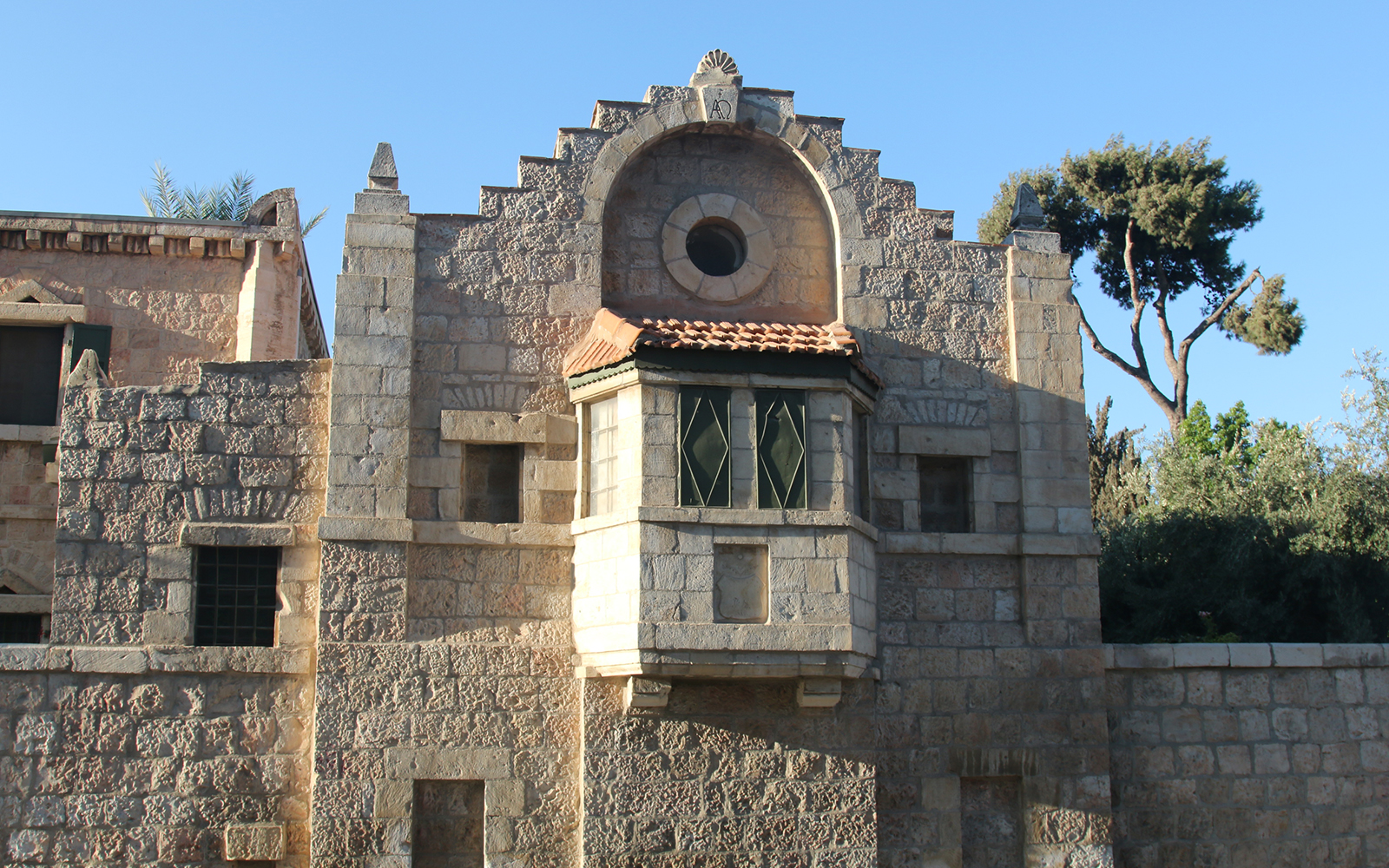
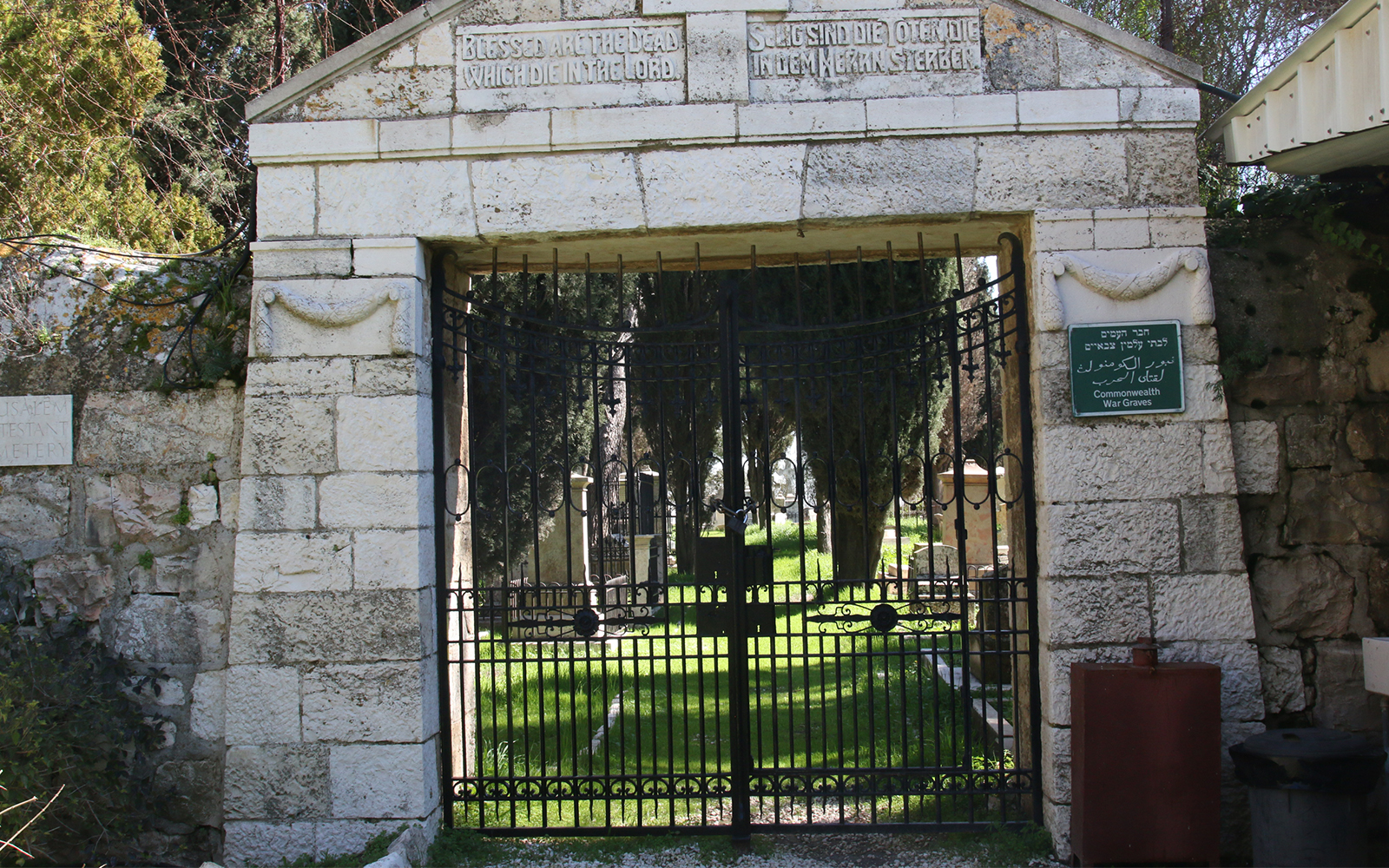
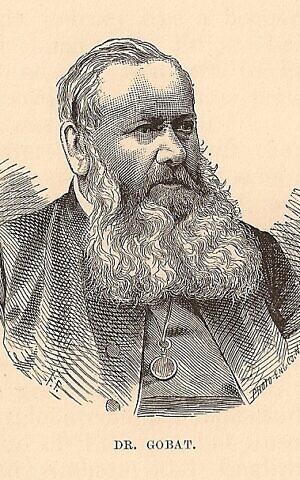
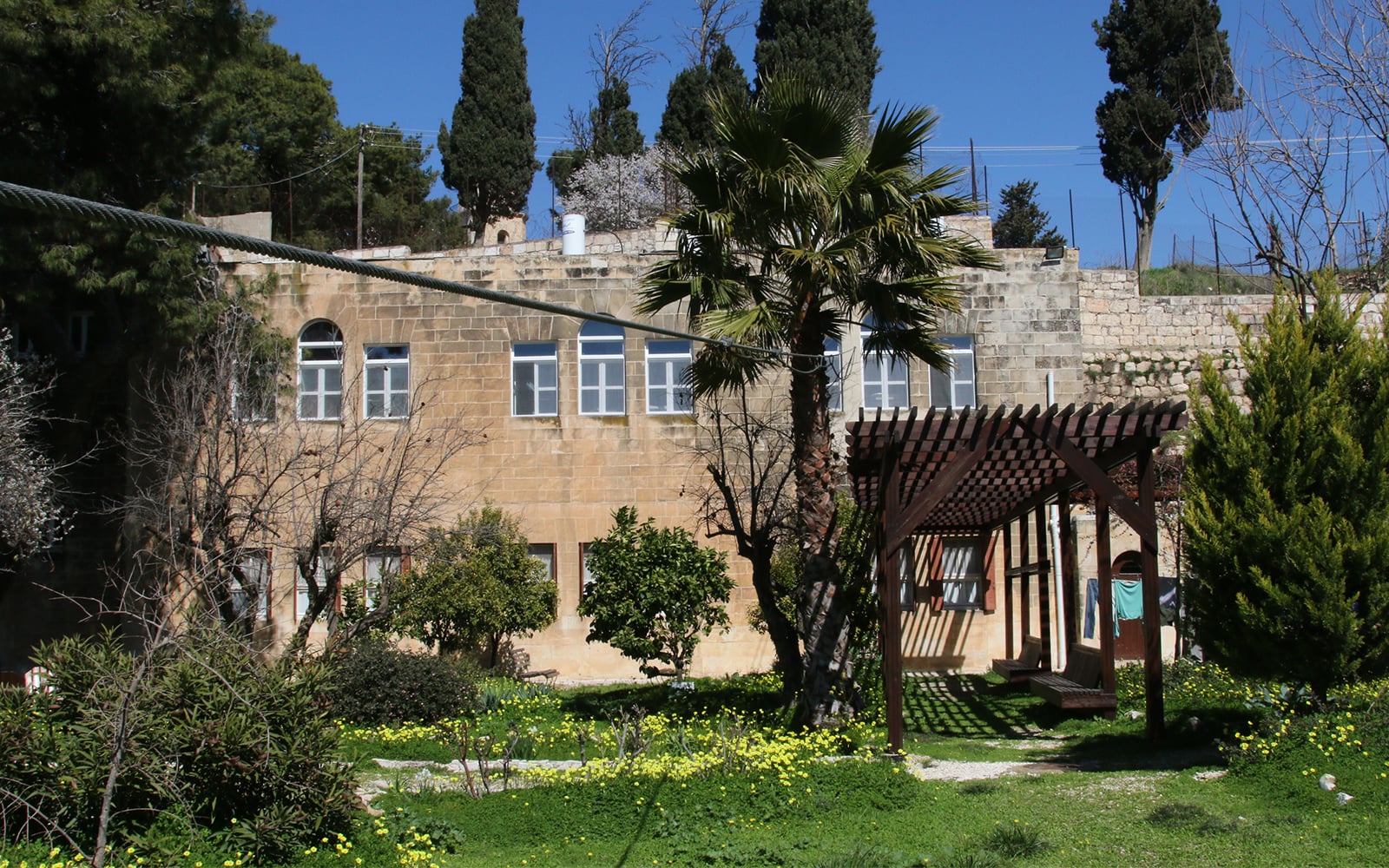
Located on the grounds of the Jerusalem University College, also known as the Institute of Holy Land Studies, the cemetery stands on land purchased by Rev. Samuel Gobat in 1848. Gobat, Jerusalem’s Protestant Bishop at the time, later divided the land in two. That portion which was largest became the Bishop Gobat School, and was constructed atop Hasmonean stones over 2,000 years old. The school operated from 1853 until the War of Independence in 1948.
After the war, Mount Zion was located in Israeli territory and the Old City — adjacent to the mountain — on Jordanian land. Until the reunification of Jerusalem in the 1967 Six Day War, the buildings and grounds were occupied by the Israeli army.
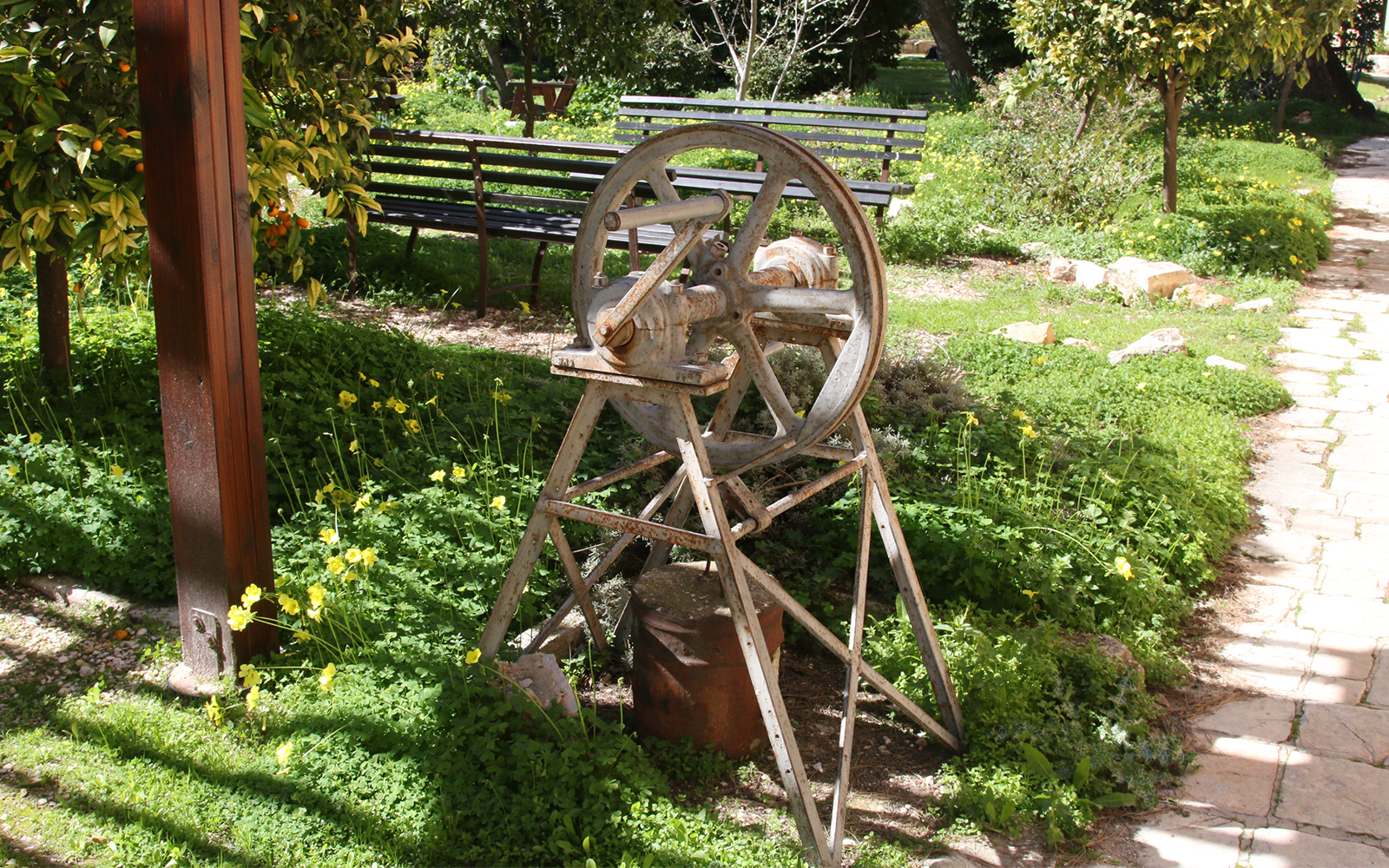
During those 19 years, a cable car from the Gobat Compound ran across the Hinnom Valley to the neighborhood of Yemin Moshe, transferring supplies to and from Mount Zion. Still visible on the grounds is one of the wheel cranks used to raise the cable at night, and to lower it into the valley during the day.
Gobat’s robe, books and some of his personal effects, sent recently to Jerusalem, are in a glass display case inside the school. His tombstone — the most elaborate in the cemetery — includes not only a detailed inscription but his likeness as well.
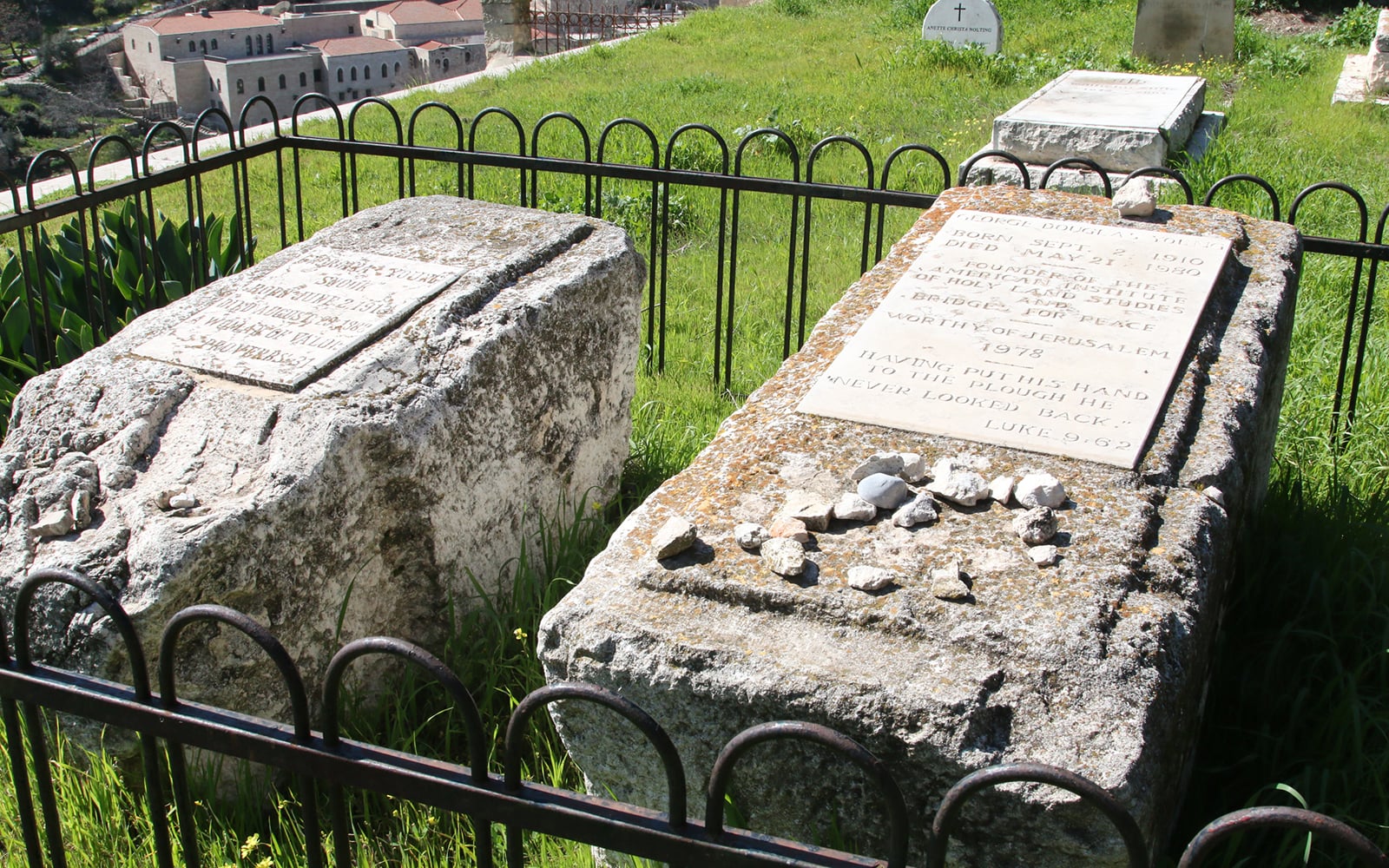
Born in 1910, G. Douglas Young was born into a fundamentalist family and early on became one of Israel’s staunchest supporters. He was adamant in his attempts to counter anti-Semitism, and he hoped to foster good relations between Jews and Christians in Israel and all over the world. To that end, in 1976 he and his wife Georgina founded Bridges for Peace. The two are buried next to each other in the Protestant cemetery; the tombstones above their graves date back 2,000 years to the Herodian era.
In 1957, Young founded the Institute for Holy Land Studies in order to give students the opportunity for live learning experiences in biblical history, historical geography, archaeology, Hebrew language, culture, and religion. The Institute, originally situated on the Street of the Prophets (HaNevi’im Street), moved to the Gobat Compound after it was vacated by the Israeli army in 1967.
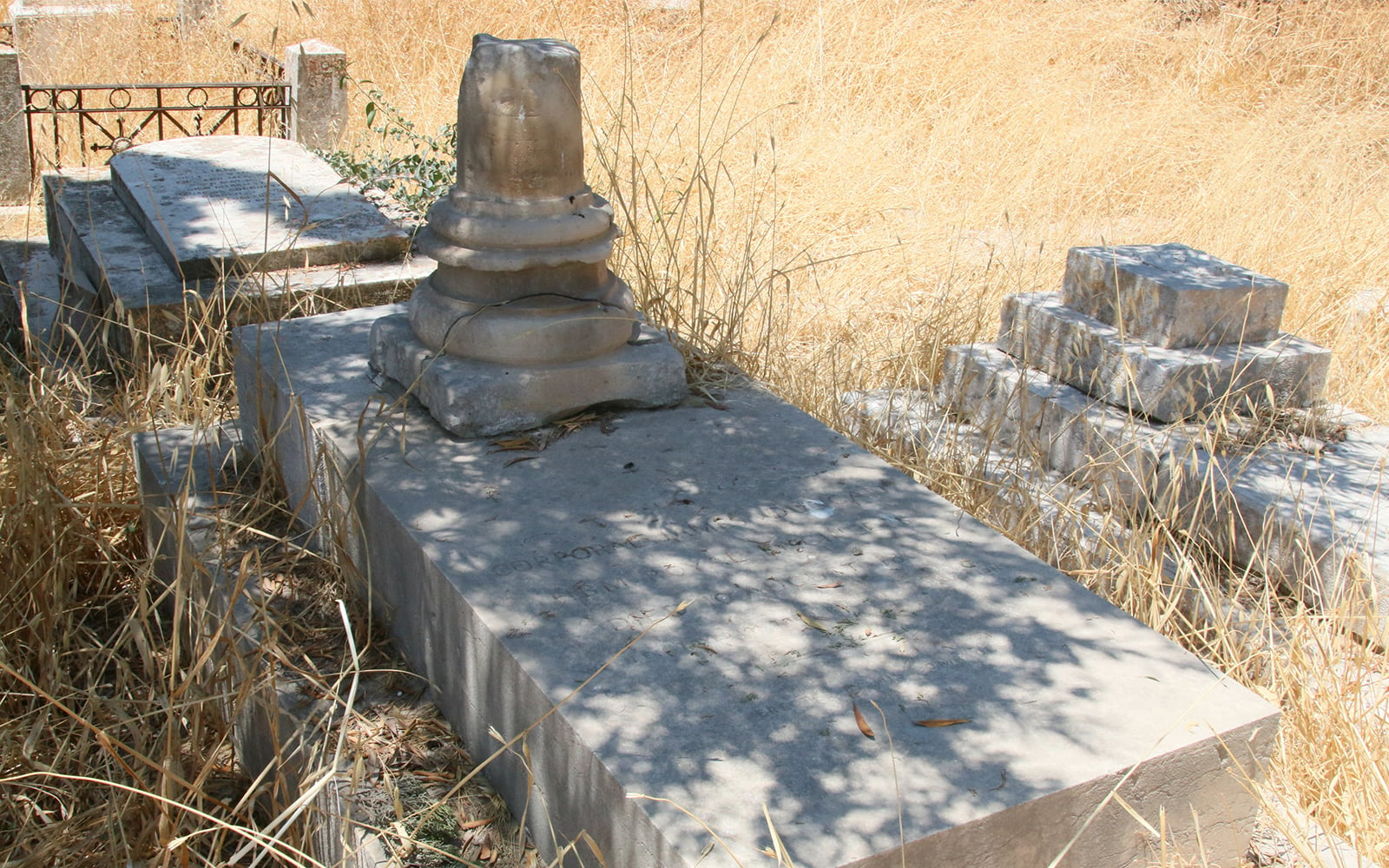
Charles Warren was a second lieutenant in the Royal Engineers’ Corps in 1867 when the Palestine Exploration Fund sent him to the Holy Land to carry out excavations. Accompanying him were three soldiers, also from the corps. One of them, James Duncan, contracted malaria and died less than a year later in Jerusalem. He was interred in the Protestant cemetery, and on his tombstone his friends placed the stone leg of a pedestal table discovered during excavations and dating back to the Second Temple Period (516 BCE to 70 CE).
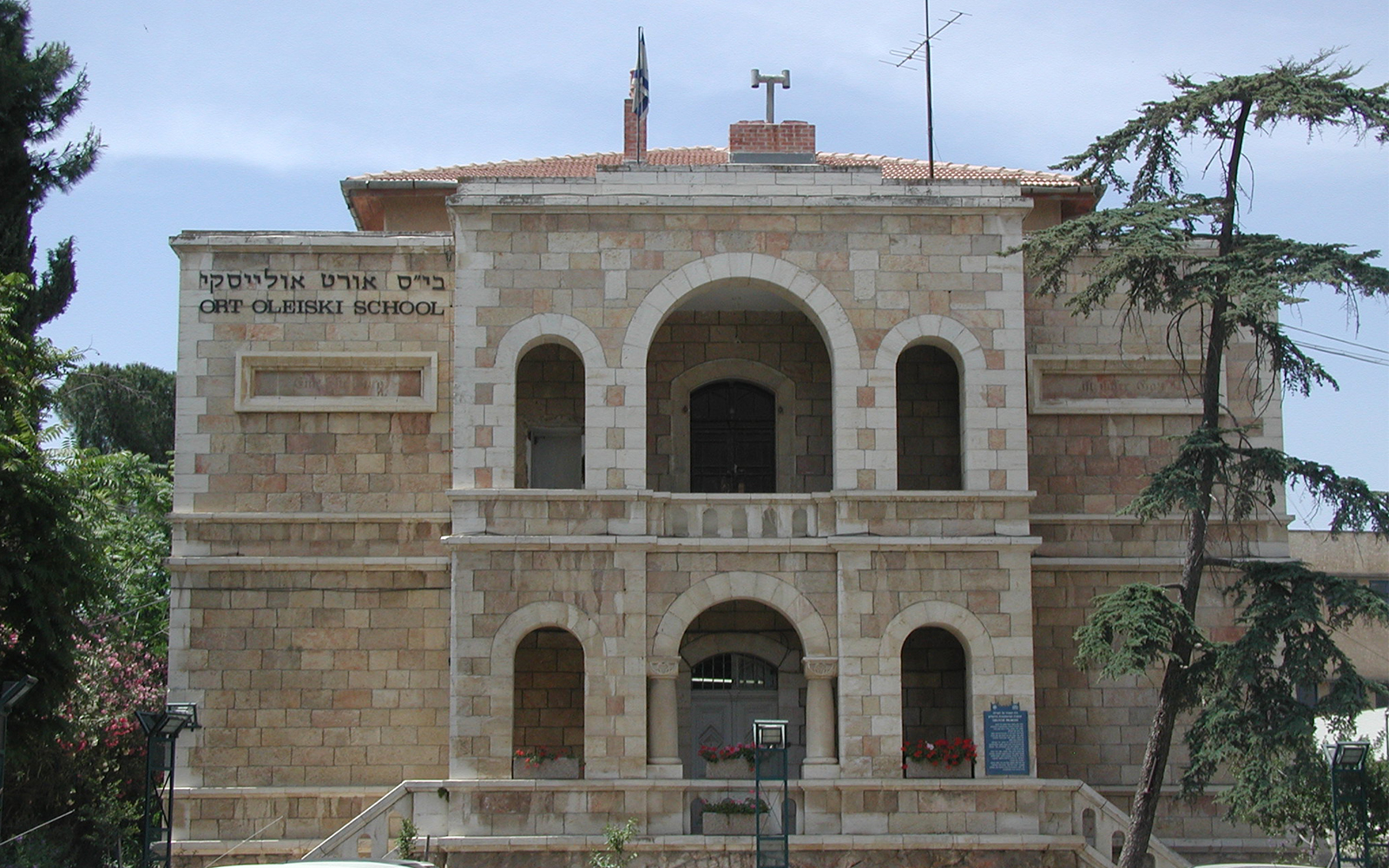
Also buried here is architect Paul Palmer, who designed a lovely two-story house for the head of the German Protestant community (today the Ort vocational school) in Jerusalem. His main claim to fame, however, is an intricate drawing of the 6th century mosaic Madeba map. Discovered in 1884 during renovations at a church in Madeba, Jordan, it covered the floor of a Byzantine church and is the only surviving ancient map of the Holy Land. Absolutely exquisite, it was created with over two million mosaic tiles.
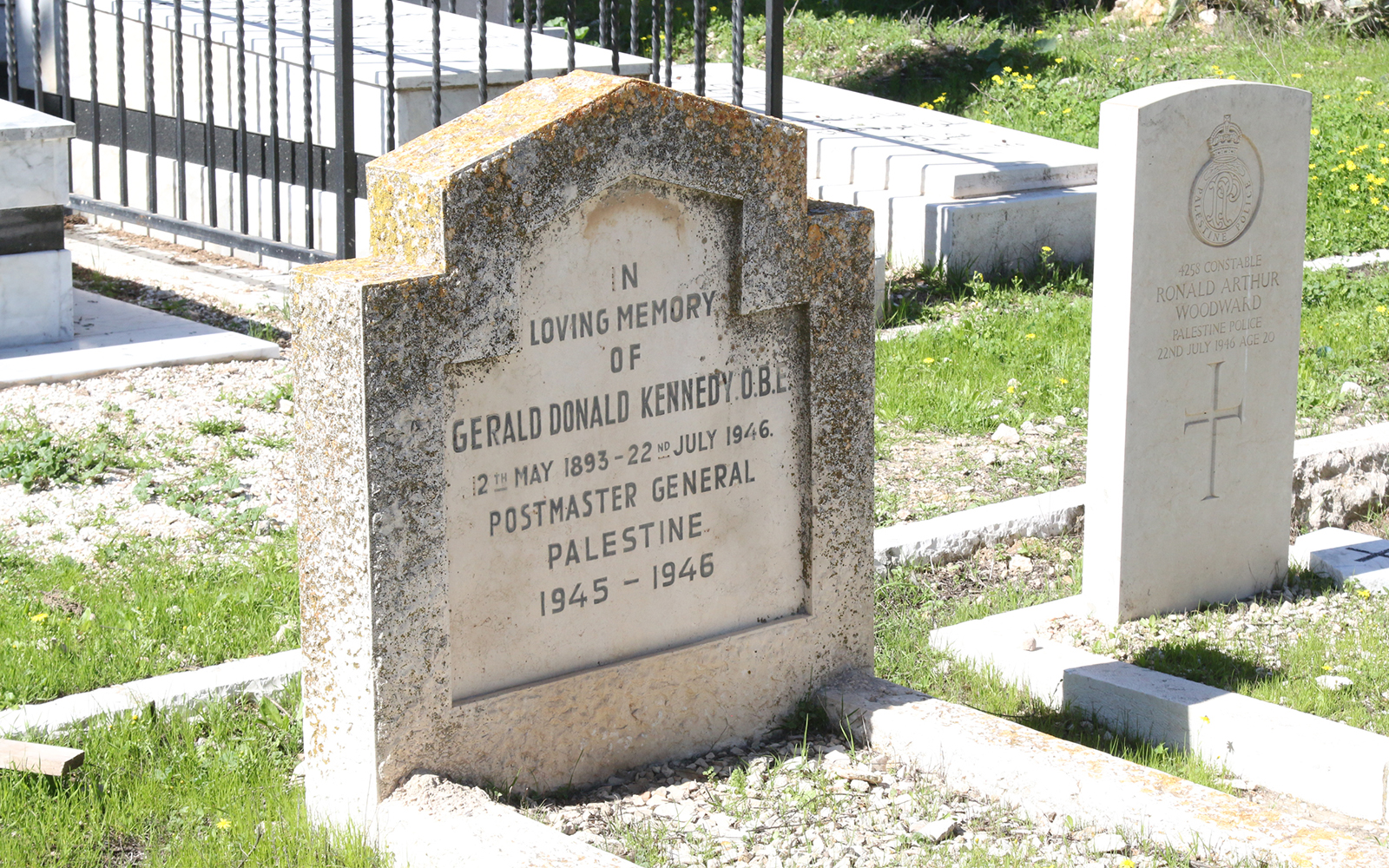
During the final years of the British Mandate in Palestine, its administrative and military nerve center was located in Jerusalem’s elegant King David Hotel. When the hotel was bombed by members of the Jewish Underground in 1946, over 90 people were killed in the blast. Among them was 20-year-old Constable Ronald Arthur Woodward, lying at rest in the Protestant Cemetery on Mount Zion.
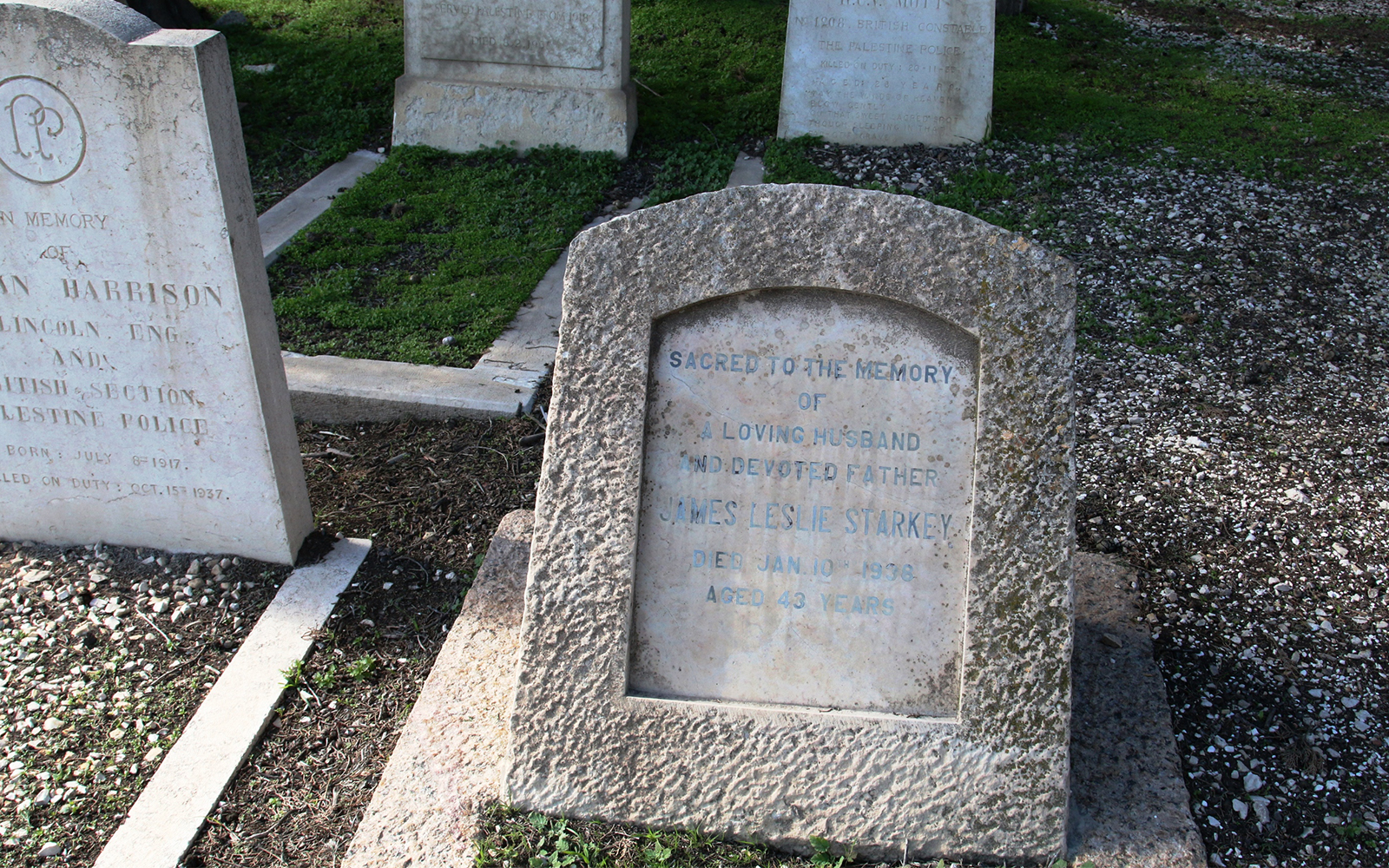
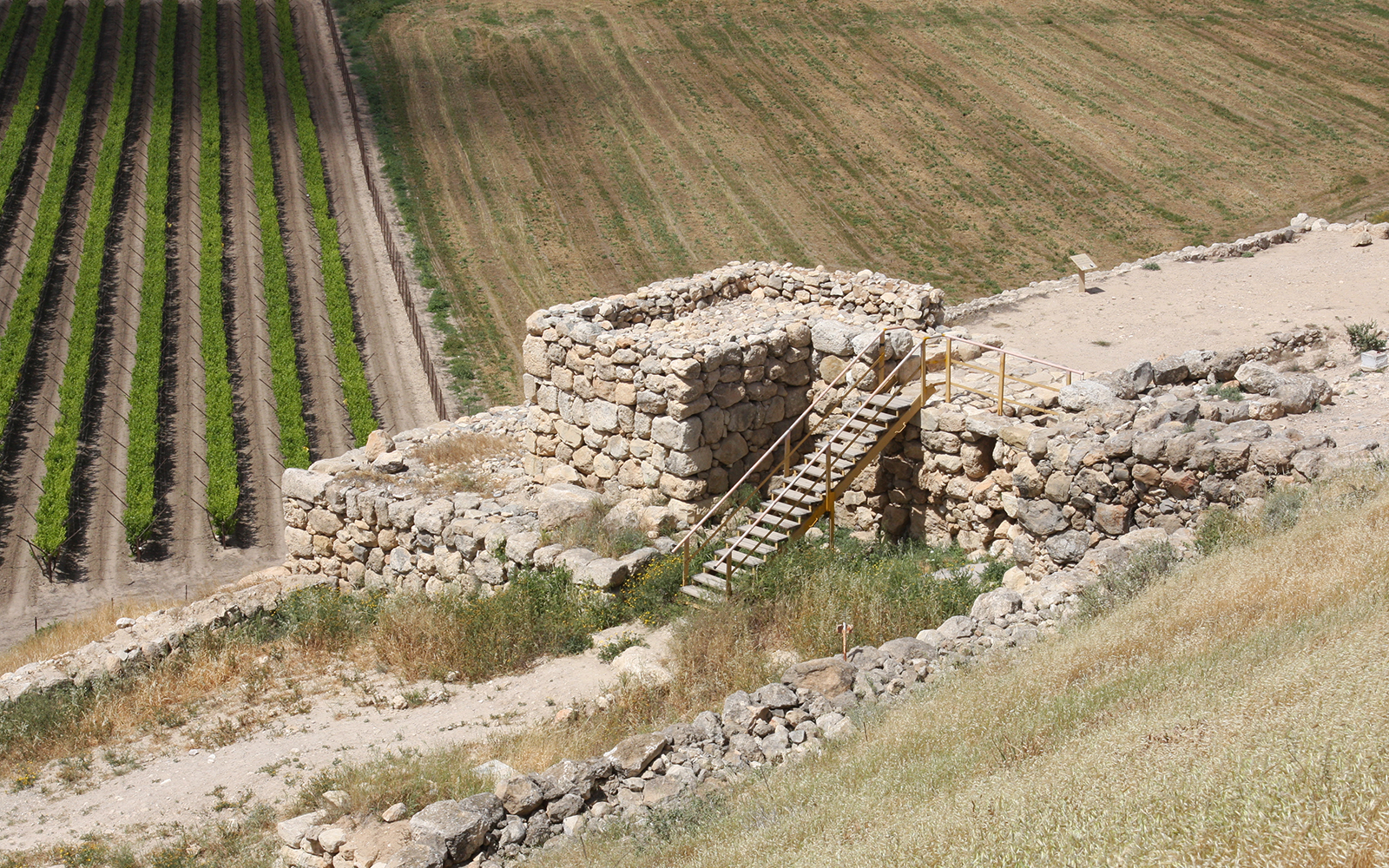
One modest tombstone is inscribed with the name of James Starkey, the first ever archeologist to excavate the Judean town of Lachish. It was his privilege to uncover the Lachish Letters — clay missives written during the Babylonian siege of the city in 596 BCE. Starkey was murdered by Arab assailants in 1936, while on his way to the inauguration of Jerusalem’s famous Rockefeller Museum.
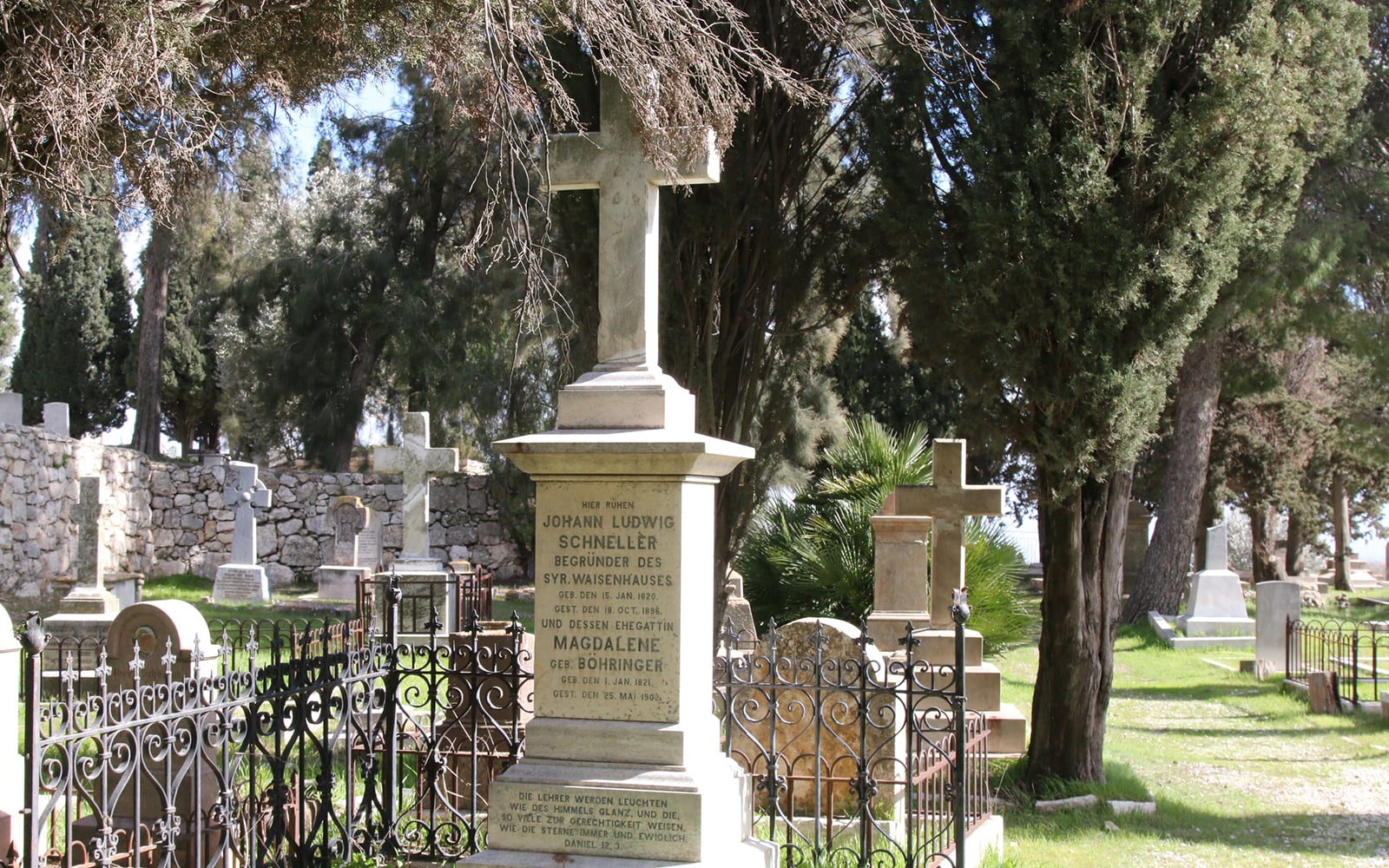
A large cross tops the tombstone of German-born Johann Ludwig Schneller, a devout Lutheran missionary who came to Palestine intent on serving the local population. In 1855 he bought a plot of land in the wilderness outside of the Old City, and in 1860 designed and built a house there for his family.
Soon afterwards, when thousands of Christians were massacred in Syria, Schneller dashed up north and brought back nine orphan boys. The population of what is known as the Syrian Orphanage quadrupled a year later, so additional buildings were added and the complex was surrounded with a large wall.
All kinds of activities went on in the complex, which had a kitchen, school, clinic, workshops, bakery, printing press, and laundry. Schneller was determined that the children under his care would become productive members of society: nearly all remained until they turned 18 — and then left with a trade under their belts.
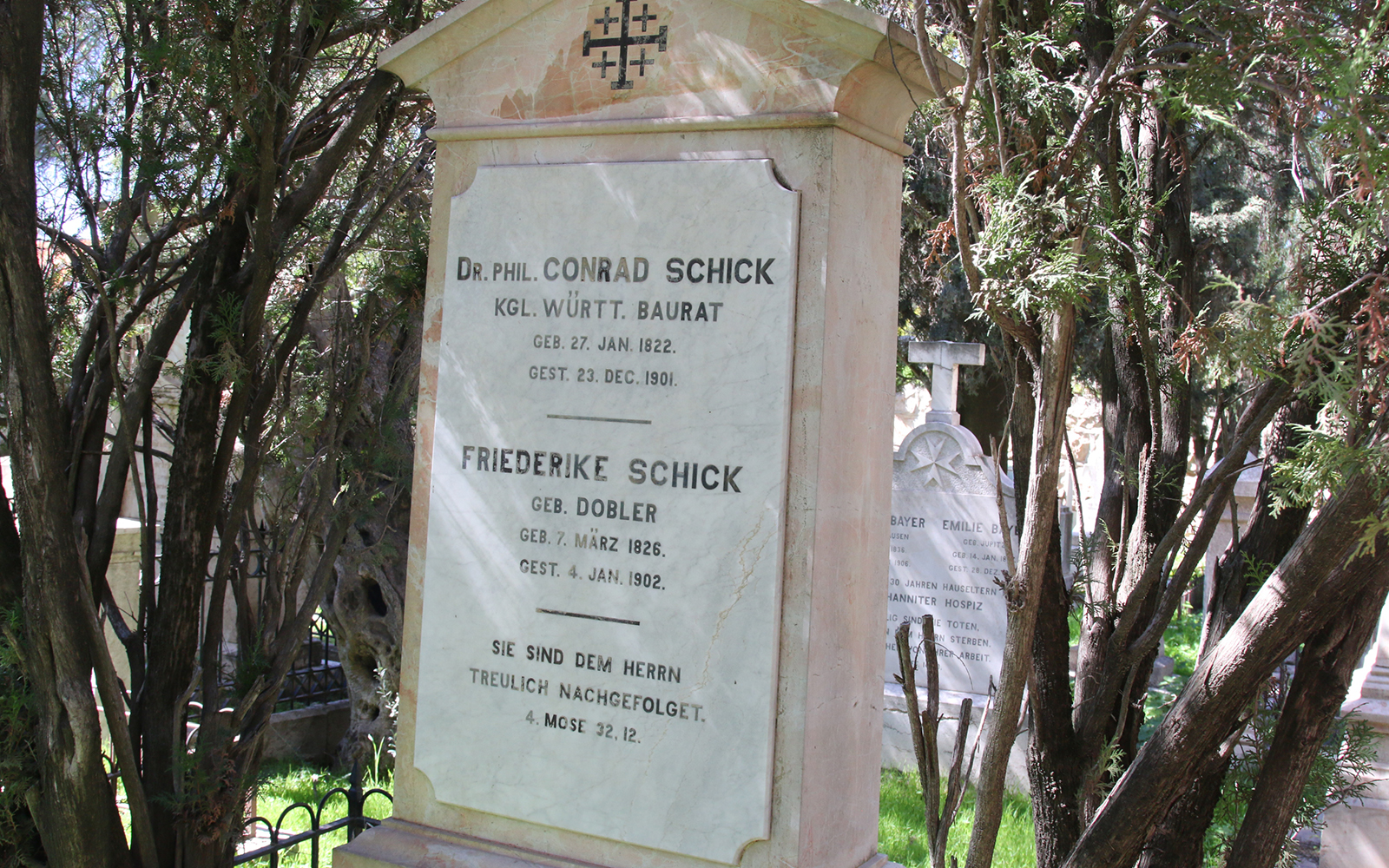
Yet of all the 19th and early 20th century architects, missionaries and archaeologists lying at rest in the cemetery, it was, perhaps, Conrad Schick who had the most impact on Jerusalem. Trained as both missionary and craftsman, he made a living in the city, at first, by assembling and repairing cuckoo clocks.
A self-taught architect, Schick designed some of the city’s most historic buildings, among them the Hansen Leper Hospital, the St. Paul Anglican Church, one wing of the former Bikur Holim Hospital, and his own, unique dwelling — Tabor House. He also planned Mea Shearim, one of the earliest Jewish neighborhoods outside the Old City walls.
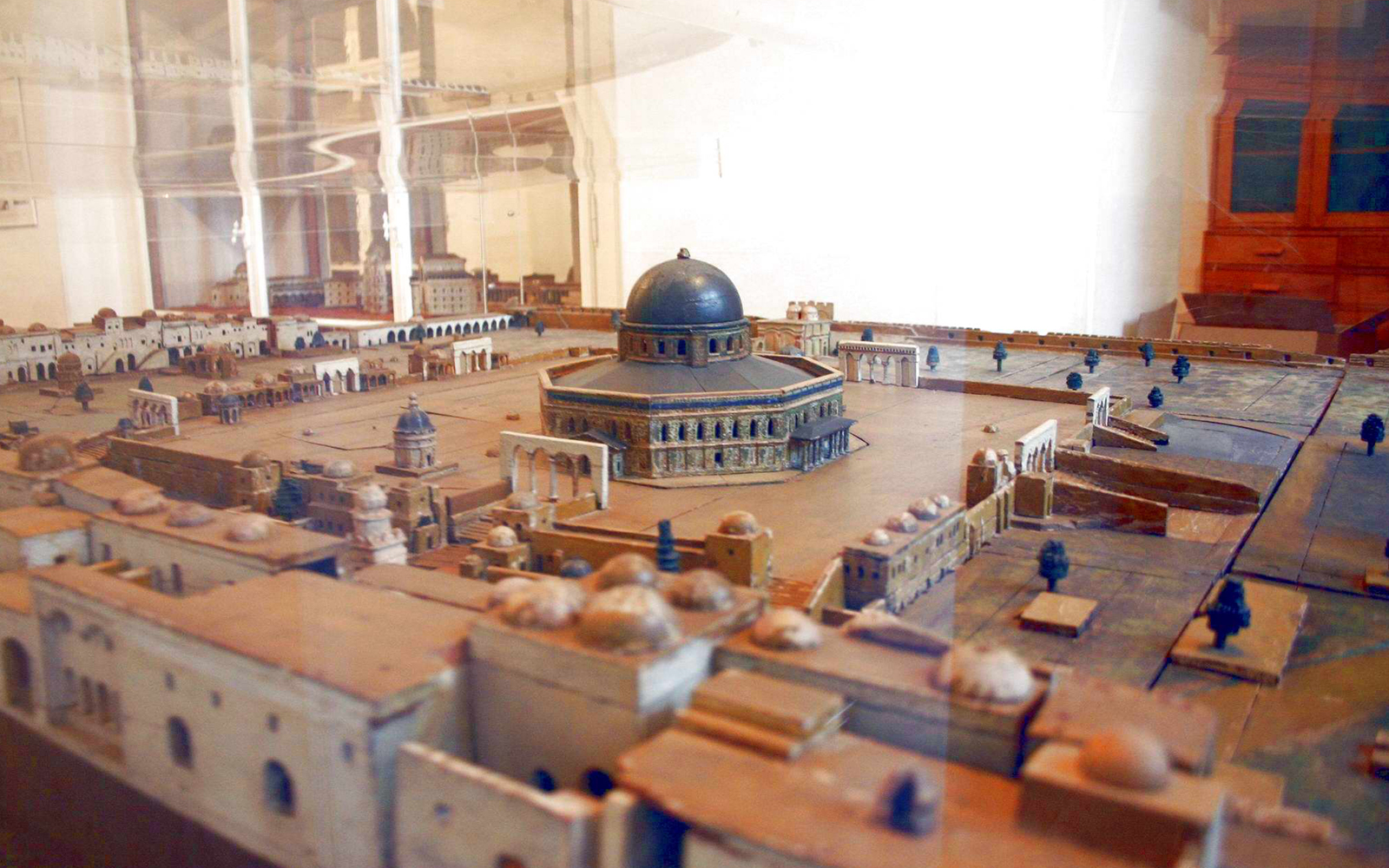
Although he never studied archaeology, he took part in some of the country’s most important excavations and published their findings. And although non-Muslims were generally not allowed on the Temple Mount, an exception was made for Schick. As a result he was able to build models of the Temple Mount, on display today at the city’s Schmidt School for Girls and in the Christ Church Heritage Center.
Visitors that wander to the far end of the cemetery, or a bit to the side, discover that the Gobat compound was built on an archaeological treasure house. Indeed, during construction of the original buildings, part of the Jerusalem wall dating back to the Second Temple period was uncovered. Fairly recent excavations revealed both a mikveh (Jewish ritual bath) and a tomb from that same era. Looking down from the edge of the cemetery all kinds of artifacts come into view. What an incredibly appropriate site for an institution whose website invites students to “Read the Land, See the Text, Live the Book!”
—
Aviva Bar-Am is the author of seven English-language guides to Israel. Shmuel Bar-Am is a licensed tour guide who provides private, customized tours in Israel for individuals, families and small groups.







The Times of Israel Community.