

Sinai attacks decline as Egypt’s fight against IS yields results
Through targeted bombings on Islamic State’s Jabal Hilal stronghold, Egyptian military deals strong blow to terror group’s capabilities

 Add ToI as a Preferred Source on Google
Avi Issacharoff, The Times of Israel's Middle East analyst, fills the same role for Walla, the leading portal in Israel. He is also a guest commentator on many different radio shows and current affairs programs on television. Until 2012, he was a reporter and commentator on Arab affairs for the Haaretz newspaper. He also lectures on modern Palestinian history at Tel Aviv University, and is currently writing a script for an action-drama series for the Israeli satellite Television "YES." Born in Jerusalem, he graduated cum laude from Ben Gurion University with a B.A. in Middle Eastern studies and then earned his M.A. from Tel Aviv University on the same subject, also cum laude. A fluent Arabic speaker, Avi was the Middle East Affairs correspondent for Israeli Public Radio covering the Israeli-Palestinian conflict, the war in Iraq and the Arab countries between the years 2003-2006. Avi directed and edited short documentary films on Israeli television programs dealing with the Middle East. In 2002 he won the "best reporter" award for the "Israel Radio” for his coverage of the second intifada. In 2004, together with Amos Harel, he wrote "The Seventh War - How we won and why we lost the war with the Palestinians." A year later the book won an award from the Institute for Strategic Studies for containing the best research on security affairs in Israel. In 2008, Issacharoff and Harel published their second book, entitled "34 Days - The Story of the Second Lebanon War," which won the same prize.
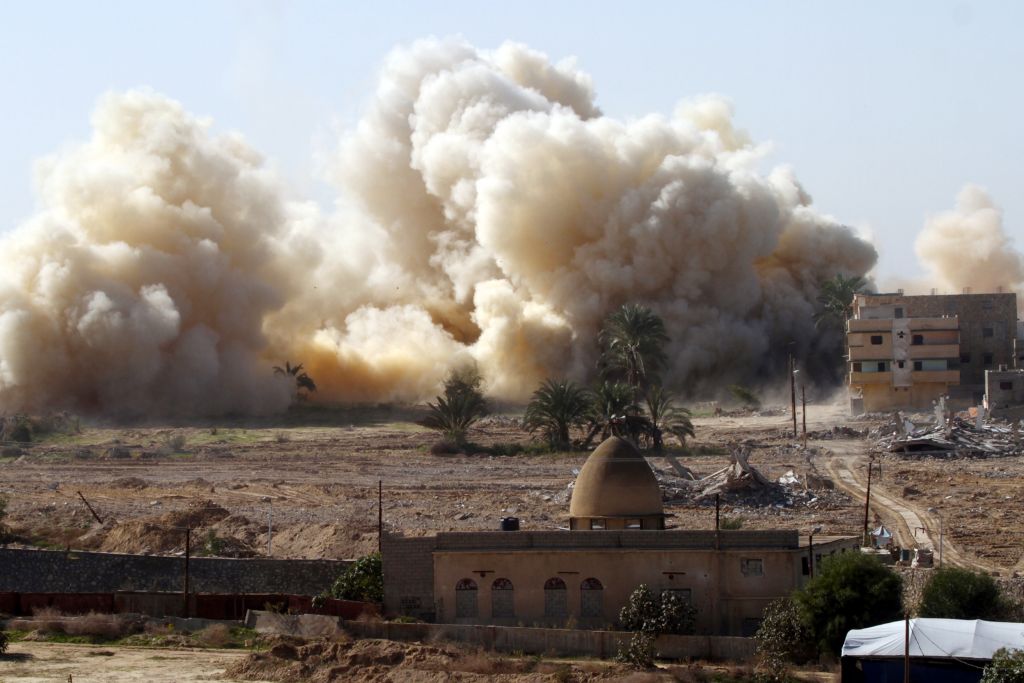
There has been a steady and significant decline in terror attacks carried out by the Islamic State in the Sinai Peninsula in recent months, according to both Egyptian and Israeli sources.
Though the Islamic State’s armed activities continue apace in the northeast triangle framed by the Israel, Gaza and Egypt borders, there have been fewer terror attacks on the Egyptian army, with a smaller number of casualties than last year, and the attacks have been less ambitious than those IS carried out in 2014 and 2015, as a result of the group’s weakened force and diminished weapons supply.
The Egyptian military’s operations in the central Sinai Peninsula and a series of airstrikes in the Jabal Hilal region — a terrorist-controlled area — have dealt a powerful blow to IS’s military capabilities, the sources said.
For the past few years, Jabal Hilal has been the stronghold of the extremist group in the peninsula, mostly due to its topography.
The region’s extensive cave system — it is considered the “Tora Bora of the Sinai,” an allusion to the rugged region of Afghanistan that Taliban and al-Qaeda fighters made into a bastion against the United States — has made it the preferred destination for IS, the current iteration of the Ansar Bayt al-Maqdis group.
Three months ago, toward the end of May, the Egyptian military spokesperson, Col. Muhammad Samir announced the killings of “88 armed members of the jihadist group in central and northern Sinai.”
May’s large-scale aerial campaign not only took out nearly 100 IS operatives, it also injured hundreds more, dozens of them seriously. In addition to the human casualties, the bombings destroyed the group’s weapons storage facilities and ammunition caches, which had been kept hidden for years.
Essentially, the “logistic front” of the Islamic State in Sinai was destroyed, the sources said.
Around the same time, Egyptian President Abdel-Fattah el-Sissi also discussed the actions against IS, which focused on Jabal Hilal, an area that is seen as particularly problematic. According to Sissi, there had been a significant victory in the fight against terror. However, he clarified, the state of emergency for Egypt would continue.
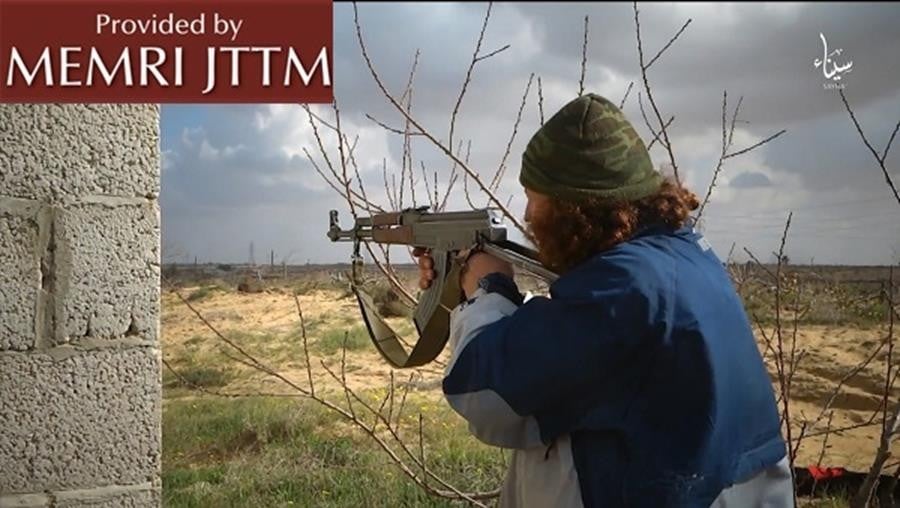
Earlier this month, the Egyptian military announced another achievement, the execution of Abu Duaa al-Ansari, the presumed commander of the Islamic State in Sinai, formerly known as Ansar Bayt al-Maqdis.
According to the military’s statement, the series of bombings south of el-Arish — the provincial capital of the Sinai — in which al-Ansari was killed came as the result of precise intelligence. During the bombings, a number of weapons storehouses were destroyed and some 45 operatives were killed.
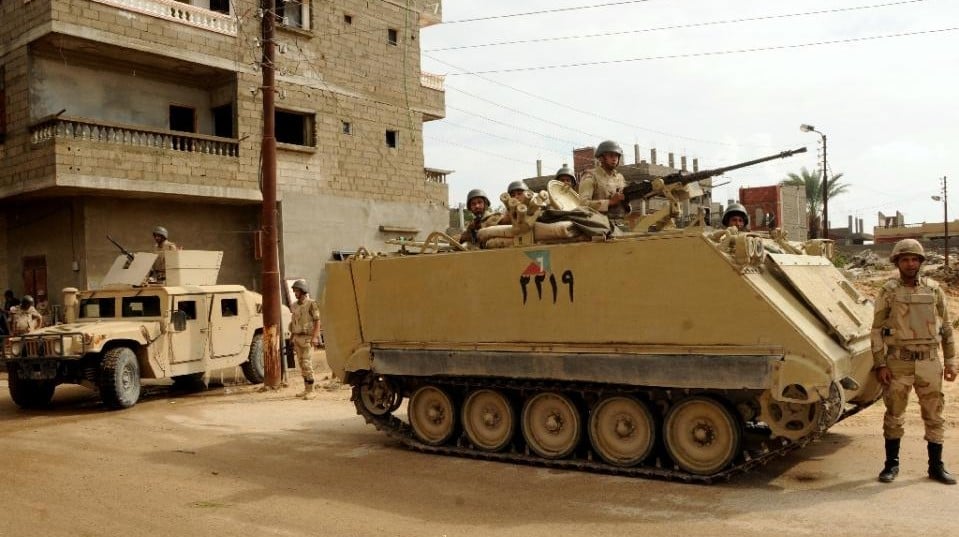
Throughout 2015, dozens of Egyptian soldiers were killed by IS, with the worst attack taking place during the month of Ramadan in simultaneous assaults on a number of Egyptian military outposts near the town of Sheikh Zuweid that left over 50 dead.
Since the July 1, 2015 attack, however, the Egyptian military’s intelligence has improved. In addition, security collaboration and cooperation with Israel has continued.
Recently, Egypt has made a number of significant gestures in the diplomatic realm, including a rare meet-up between its foreign minister and Prime Minister Benjamin Netanyahu, that testify to the closeness of the two sides.







The Times of Israel Community.