

Sins of omission or wins of omission?
Donald Trump kept his mouth shut for once, and what he didn’t say about Palestinian statehood seems more important to the press than what he did
 Add ToI as a Preferred Source on Google
Joshua Davidovich is The Times of Israel's Deputy Editor
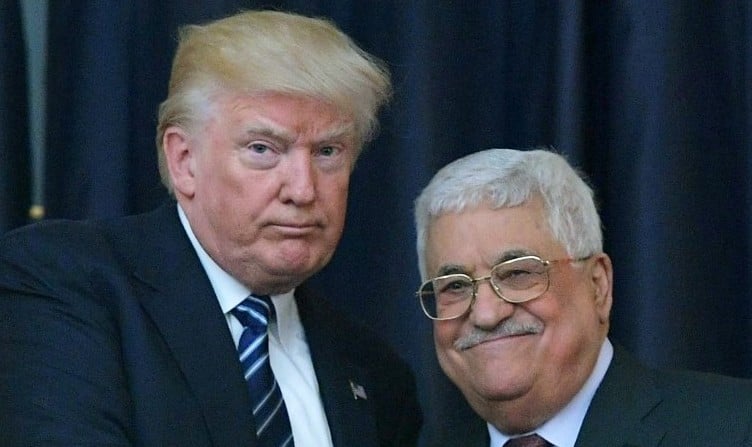
Remarkably for a visit that was so heavy on speeches and words, as the press chews over the tail end of US President Donald Trump’s visit what seems most striking is what was left unsaid.
As Yedioth Ahronoth puts it: “Trump did not say ‘Palestinian state’; ‘two-state solution’; ‘1967 lines’; ‘settlements’; ‘settlements as an obstacle to peace’; ‘refugees’; ‘occupation’ or ‘borders.’” He also didn’t mention moving the embassy to Jerusalem, the paper notes.
Whether one sees Trump’s omissions as sins or cause for celebration is up for exegesis, and papers wrap up the trip by mulling over what he did and didn’t say, and what it does and doesn’t mean.
One reason for the focus on the fact that Trump’s omission was so striking was because of the high expectations many had for the trip. Though the administration gave zero indication that Trump would be pushing any sort of peace initiative, talk in the lead-up to the trip was rampant over the idea that he could push the sides into peace talks, because that’s what presidents do when they come to our little neck of the woods. When he didn’t — and didn’t even seem to make much of an effort — it became news.
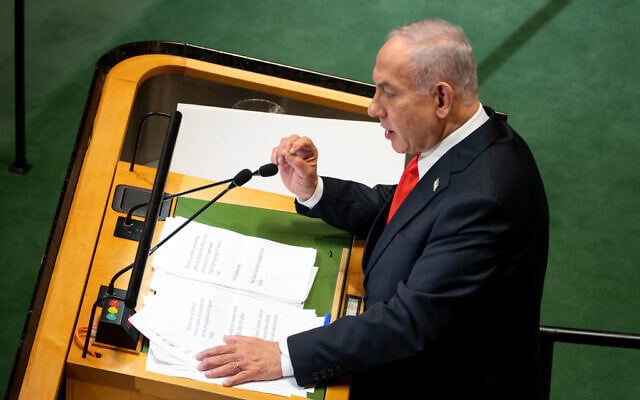
Haaretz’s lead headline quotes Trump saying ‘With compromise and belief in peace, we can make a deal,’ the cliched quote being about the newsiest thing one could pull out of the speech. Naturally, the coverage is accompanied by analysts noting more what Trump didn’t say.
“Trump played up the positive and ignored the negative. He spoke of a golden opportunity to achieve peace, but skipped the gory details of the sacrifices needed to make it happen. He hyped the prospects for regional peace but sidestepped the Palestinian price that Israel would have to pay to achieve it,” Chemi Shalev writes in one piece. “There was no miracle, Trump didn’t say Palestinian state,” Amira Haas writes in another.
The paper’s Barak Ravid, though, does latch on to Trump’s high-falutin’ appeal for peace and for peace talks as having some meaning.
“The hugs and kisses that Trump scattered everywhere in his Jerusalem speech did not distract him from the message he’d been hammering home from the moment he landed at Ben-Gurion International Airport. Trump wants a deal between Israel and the Palestinians, and thinks that achieving such a deal will be difficult but not impossible. In contrast to what the two leaders themselves think, Trump believes that both Netanyahu and Abbas are ripe for making history,” he writes.
In Israel Hayom, editor and Trump fanboy Boaz Bismuth also mentions all the things Trump didn’t say but puts them in a much more positive light, noting that all the naysayers thought he would come and talk about Palestinian statehood and the occupation.
“What happened in the end?” asks Bismuth. “To Israel came the best friend it has had in decades. The man loves us, period. He speaks about the deep connection between Jerusalem and the Jewish people, embraces and promises to protect Israel and exterminate terror, and decisively vows that Iran will not go nuclear and that he, the president of the US, will not allow anyone to hurt Israel.”
The paper’s Dror Eydar compares and contrasts Trump’s speech and Barack Obama’s in 2013, and guess whose he liked better?
“Barack Obama’s speech created an artificial symmetry between the Palestinians and Israel, and placed Israel as the main problem. Trump, on the other hand, picked a side. In many ways his speech was the antithesis of Obama’s during his visit here,” he says, reading into Trump’s comments that he agrees with Prime Minister Benjamin Netanyahu’s statement that terror in Israel is the same as terror in Manchester. “It’s impossible to advance peace and to fund terror, he said to Mahmoud Abbas — a crucial statement. Neither Obama nor Europe would have said this. Trump knows that a similar attack in Israel would see the Palestinian Authority pay a salary to the attackers families for life, straight from the American and European taxpayers’ pockets.”
Yedioth Ahronoth sees so little news in Trump’s visit and speech that it puts it after the Manchester attack.
“Anyone who shed tears over Donald Trump’s cliched speech yesterday would have found that even their hanky was dying of laughter. After two days of hollow ceremonies, which were only meant to build to the peak of the visit, here came the speech and it became clear that the only thing you could learn from it was how to say nothing in a lot of words,” the paper’s Sima Kadmon writes.
As for the Manchester attack, the paper calls it a “massacre of children,” and columnist Yaniv Khalili estimates the attack will serve Theresa May in upcoming elections.
“Terror attacks play well into the hands of the right. That’s true almost anywhere in the world, especially now, with fear and separatism eroding many parts of the Western world,” he writes.
Haaretz’s Anshel Pfeffer notes that the Manchester bombing was a rare instance of someone slipping through Britain’s anti-terror net, which has done so well as to rival Israel’s counter-terror abilities.
“Like other Western countries, Britain is facing a new pattern of terror — ‘lone wolf’ attacks by individuals, rather than organized networks, and so far it is doing so relatively well. And no less importantly, it has succeeded in doing this without any noticeable change to daily life — not even in central London,” he writes. “Over the next few days, as more details emerge, it will become clearer what, if anything, the security services knew about the perpetrator of Monday night’s attack. But it is unlikely that this will provide a reason for any drastic change in British counter-terror strategy.”
In Israel Hayom, though, which only gets to the attack after a whopping 21 pages of Trump coverage, Yaakov Amidror predicts more attacks coming soon, saying measures will have to be ramped up and seemingly relishing the fact that Israel’s counter-terror measures are disruptive.
“In Israel you are allowed to collect intel in a much more intrusive way, personal rights-wise, than most other Western countries, and rules for using the intel, to thwart terror, are less strict,” he writes. “That’s the price Israeli citizens pay to fight terror. There are no free lunches.”


The Times of Israel Community.