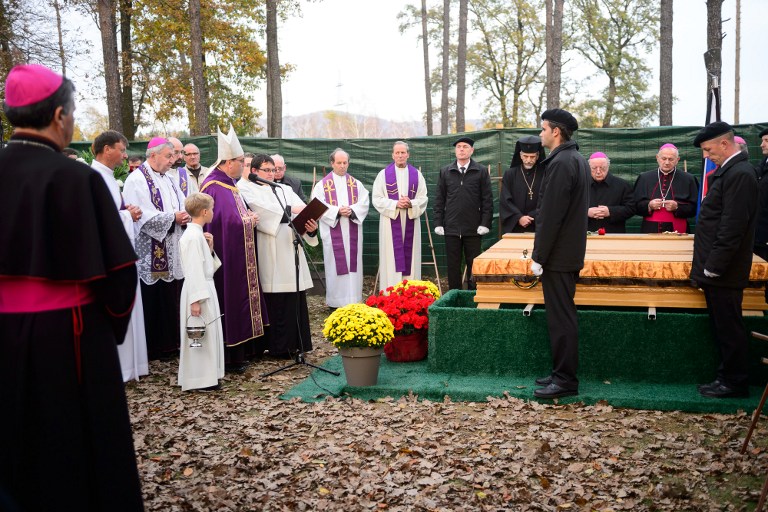
Maribor Archbishop Alojzij Cvikl (4th L) blesses a coffin during a ceremony marking the beginning of the burial of remains of some 800 people killed by communist forces after World War II at the Dobrava Memorial Park in Maribor, on October 27, 2016. (AFP/Jure Makovec)
MARIBOR, Slovenia — Slovenia on Thursday started burying the remains of some 800 alleged Nazi collaborators killed by communist forces in the aftermath of World War II, and discovered in a giant mine in 2009.
“It is our human and state duty to bury in a civilized way the victims of war and post-war killings,” Slovenian President Borut Pahor said at the burial ceremony in the northern second city of Maribor.
“We’re not changing history, we are changing our future. This represents a step forward,” he added.
Croatian Prime Minister Andrej Plenkovic also attended the ceremony, the first in a series of state burials expected to continue until the end of 2017.
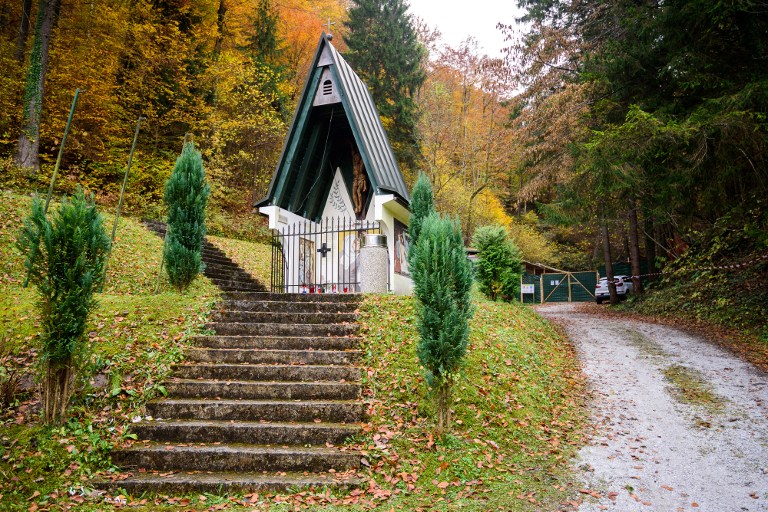
A picture taken on October 27, 2016 near town Lasko, Slovenia, shows a chapel near the entrance to Huda Jama mine where the remains of some 800 people were found in March 2009. (AFP/Jure Makovec)
The bodies were discovered in March 2009 in the Huda Jama mine, some 80 kilometers (50 miles) northeast of the capital Ljubljana.
Get The Times of Israel's Daily Editionby email and never miss our top stories
Experts say most of the victims were Croats and Slovenes who had been executed for collaborating with the Nazis, often without trial.
Authorities believe the mass grave may have contained up 2,500 bodies.
Croatia’s President Kolinda Grabar Kitarovic, who visited Maribor earlier on Thursday, said “the historic truth has to be determined to ensure a better future.”
Advertisement
A special government commission has so far registered 700 possible mass grave sites containing up to 15,000 bodies in Slovenia, a former Yugoslav republic until 1991 when it declared independence.
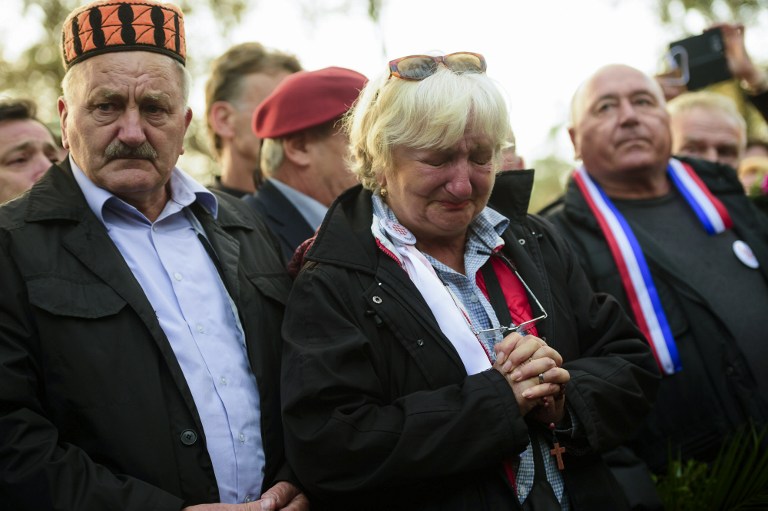
A woman cries during a ceremony marking the beginning of the burial of remains of some 800 people killed by communist forces after World War II at the Dobrava Memorial Park in Maribor, on October 27, 2016. (AFP/Jure Makovec)
Your next read: ToI Editors' Picks
LIMITED TIME OFFER: Join The Times of Israel Community today and you'll receive a physical book of your choice, carefully curated by our editors.
Choose between two must-reads: When We See You Again by Rachel Goldberg-Polin, a searing portrait of a mother’s grief and strength following unthinkable tragedy;
Or Out of the Sky: Heroism and Rebirth in Nazi Europe by Matti Friedman, the gripping and surprising tale of a forgotten moment during World War II.
As a Community member, you’ll also enjoy our DocuNation series of outstanding Israeli documentary films, an ad-free experience of our site and podcasts, commenting privileges, and more.
We’re really pleased that you’ve read X Times of Israel articles in the past month.
That’s why we started the Times of Israel - to provide discerning readers like you with must-read coverage of Israel and the Jewish world.
So now we have a request. Unlike other news outlets, we haven’t put up a paywall. But as the journalism we do is costly, we invite readers for whom The Times of Israel has become important to help support our work by joining The Times of Israel Community.
For as little as $6 a month you can help support our quality journalism while enjoying The Times of Israel AD-FREE, as well as accessing exclusive content available only to Times of Israel Community members.
Thank you, David Horovitz, Founding Editor of The Times of Israel


 Add ToI as a Preferred Source on Google