

Stuck abroad, philanthropist hatches a modern Exodus to bring Israelis back home
Moti Kahana has spent years smuggling Jews out of dangerous places. Now, with Israel’s borders shut, he’s looking to the sea and recent history for a way to smuggle people back in
 Add ToI as a Preferred Source on Google
Tal Schneider is a Political Correspondent at The Times of Israel

American-Israeli Moti Kahana was in Dubai last week for work when he asked permission to fly to Israel to discuss urgent business with senior officials.
Kahana, 53, said he had already been fully vaccinated in New Jersey, but Israeli authorities said no dice. Like thousands of other Israelis stranded abroad since officials shut down most international travel to stem the entry of virulent variants of the coronavirus on January 25, he was locked out.
Fuming and flying to his ranch in Randolph, New Jersey, the millionaire hatched an audacious plan instead: an operation to transport thousands of Israelis by sea past the authorities and into their historic homeland, not unlike the famous Aliyah Bet operation to bring thousands of Jews to pre-state Israel.
Only instead of stealing past British immigration officers who blocked Jewish refugees from entering Mandatory Palestine after World War II, this time they would be going up against modern-day Israeli officials.
“There are thousands of Israelis who want to join,” Kahana said Sunday. “I was upset that I was not allowed in. Israel is the only country that treats its citizens this way.”

Under current rules, only some 200 people a day are being allowed into the country, as determined by a special exemptions committee. Everybody else has been left to wallow, flung across the four corners of the globe, leading to no small amount of consternation over the policy.
According to a Channel 12 report last week, some 90 percent of those being approved to come to Israel during the closure were ultra-Orthodox Jews, while many secular people’s requests, including that of Kahana, are being denied. Some have expressed concern that decisions are being made with an eye toward keeping out those less likely to vote for parties supportive of Prime Minister Benjamin Netanyahu in next month’s election.
Health officials say the airport shutdown is necessary over concerns that more contagious strains of the coronavirus could arrive in the country from abroad, as is the case with the so-called British mutation which now accounts for almost all new coronavirus infections in the country.
Kahana told The Times of Israel that his plan, which he is working on setting in motion with Cypriot authorities, would see anybody who wants to enter Israel fly to Larnaca, Cyprus, where a boat he would lease — to be named “Democracy” — would be waiting to secretly ferry people to Israel.
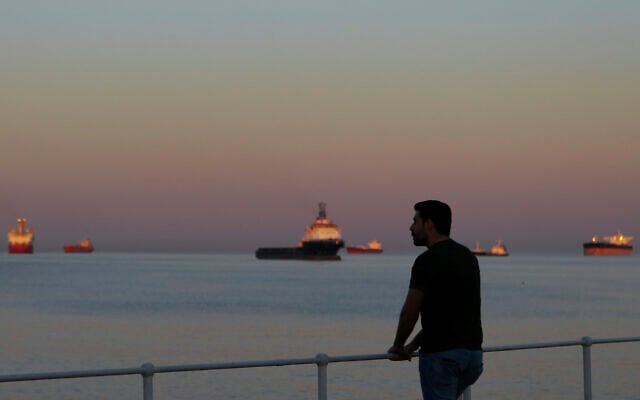
Passengers would be required to take a COVID-19 test before boarding and another upon disembarking, assuming they made it.
While Israelis stuck abroad would need to pay their own way to Cyprus, Kahana, a businessman and philanthropist, said he would cover all other expenses, from the boat journey to the tests.
An Israeli government spokesperson said sea entries were open but also subject to approval from the exemption committee, though the policy had not yet been tested by an actual boat.
“We will know the final answer when we face a ship at our coast,” she said.

There was no immediate comment on the scheme from Cypriot authorities. Kahana said he was awaiting answers from Larnaca, and that Israeli Foreign Minister Gabi Ashkenazi had not returned his calls.
The Jerusalem-born Kahana made his money after moving to the US in his 20s and starting a car rental business, which he later sold to Hertz. He now runs other businesses from his New Jersey home.
His plan may sound pie in the sky, but Kahana has experience smuggling Jews places, earning him praise as well as some detractors for his maverick approach.
In 2015, he arranged for the last Jewish family to be smuggled out of Aleppo, Syria, and into Turkey. The matriarch of the family and one daughter were allowed to continue on to Israel, but a second daughter was rejected because she had converted to Islam and married a Muslim man, and they were sent back to the war-torn city.

The Jewish Agency, the semi-governmental body responsible for organizing immigration to Israel, accused him at the time of reckless abandon, labeling him a “self-appointed freelancer.”

Kahana has also helped smuggle Jews out of Yemen and spent some $2.2 million to send food, medicine and other aid to Syrians from 2011 to 2016. He later founded an NGO called Amaliah, which raises money and works to bring injured Syrians to Israel for medical procedures.
According to a report published in 2019, Kahana was also involved in a failed scheme to sell oil from Kurdish areas of Syria in exchange for humanitarian supplies.
“I went in and out of Syria, but I can’t get into Israel?” he posted on Facebook Sunday, above a picture of a ship involved in a Jewish smuggling operation over 70 years ago.
ליום הולדת שלי אני מוציא ספינת מעפילים מקפריסין לישראל . לסוריה נכנסתי ויצאתי לישראל לא יתנו לי להיכנס?פרטים בקרוב עובד מול הרשויות בקפריסין
Posted by מוטי כהנא on Sunday, February 28, 2021
From 1939 to 1948, tens of thousands of Jews tried to enter Mandate Palestine on dozens of ships attempting to sneak past British authorities limiting Jewish immigration, in an operation known as Aliyah Bet, or illegal immigration.
The most famous of these was the “Exodus 1947,” immortalized in the fictionalized Leon Uris novel and Paul Newman movie “Exodus.”
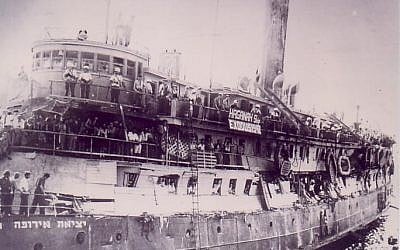
Somewhat ironically, the picture posted by Kahana was of the Shear Yishuv, which attempted to sail from Italy to Palestine with over 700 Jewish refugees aboard in 1947. The ship was intercepted by British authorities north of Port Said on April 23, 1947, and after a brief skirmish, was sent to Cyprus instead.
Kahana said unlike the Jews back then, he would not break the law but simply park his boat off the coast until they allowed everybody in.
“For the past 10 years I’ve been extricating Jews from Arab countries from dangerous places,” he said. “Whoever can afford a flight to Cyprus will be able to board my ship.”










The Times of Israel Community.