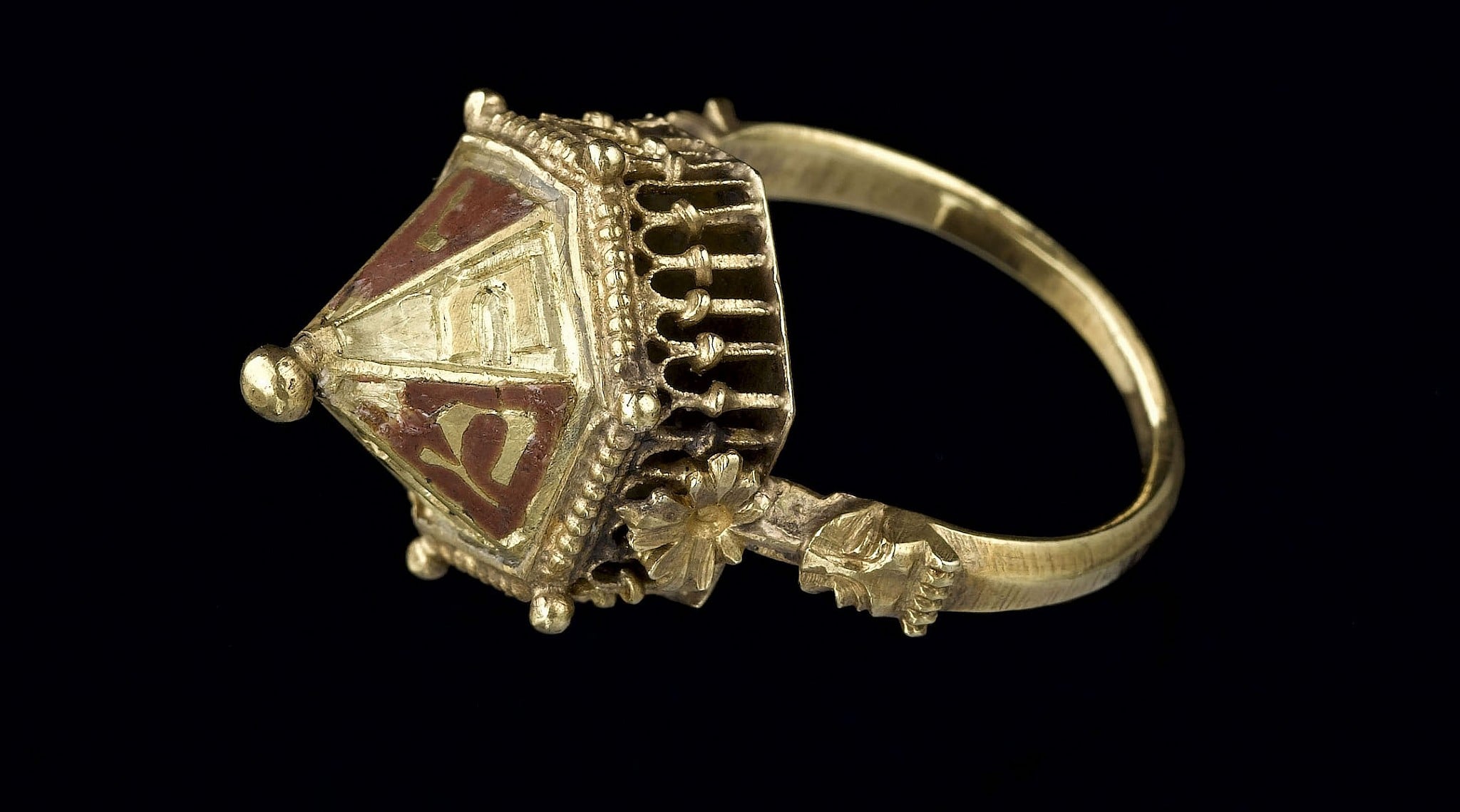
A Jewish ceremonial wedding ring, inscribed “mazel tov,” made of gold and enamel, from the Colmar Treasure, circa 1300-1347. (Musée de Cluny – Musée national du Moyen Âge, RMN-Grand Palais/Art Resource, NY via Metropolitan Museum of Art/via JTA)
NEW YORK (JTA) — There are few remnants of the once flourishing Jewish community of the town of Colmar, in France.
Jews were blamed for the outbreak of the Black Death there in 1348-49, and many were burned to death. A Holy Roman emperor who then controlled the area later seized their assets.
But a few pieces of jewelry that testify to Jewish life in the town miraculously survived after being hidden in the walls of a house during the 14th century and remaining stashed there for more than 500 years.
The items, which were discovered in 1863, all belonged to an unknown family. Some are now on view at the Met Cloisters museum, part of New York’s Metropolitan Museum of Art.
As part of the exhibit, the items will be displayed alongside related artifacts from the Cloisters Collection, the Jewish Theological Seminary and Colmar’s public library. The exhibit opened Monday and will run through January 12.
Get The Times of Israel's Daily Editionby email and never miss our top stories
Here are a few of the items from the exhibit that hold more than a little history.
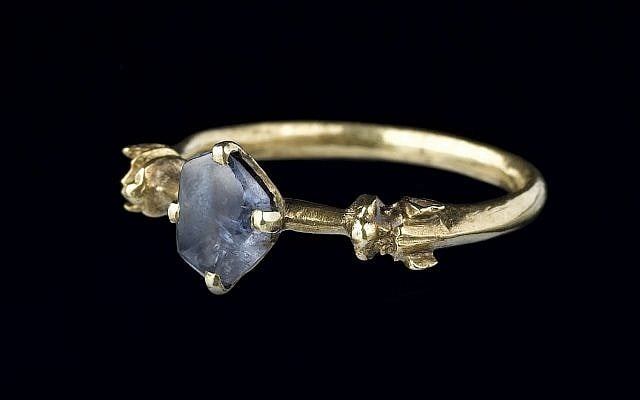
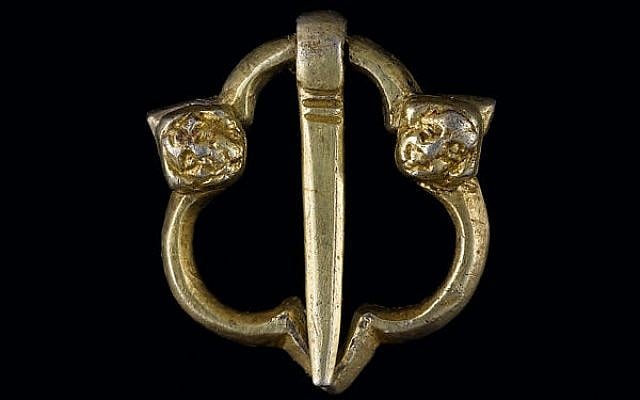
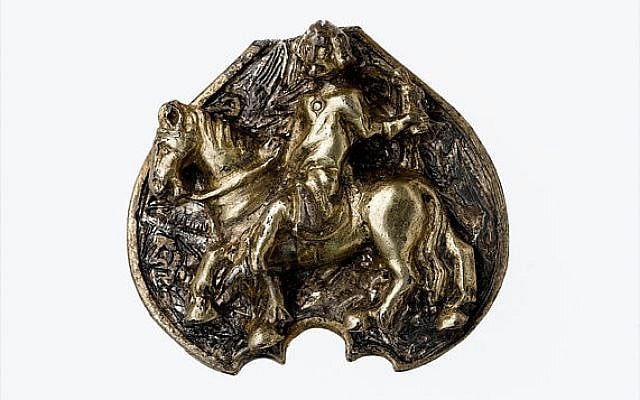
A star and crescent gold ring, 13th century to first half of 14th century, from the Colmar Treasure. (Musée de Cluny – Musée national du Moyen Âge, RMN-Grand Palais/Art Resource, NY via Metropolitan Museum of Art/via JTA)A sapphire gold ring from the second quarter of the 14th century, from the Colmar Treasure. (Musée de Cluny – Musée national du Moyen Âge, RMN-Grand Palais/Art Resource, NY via Metropolitan Museum of Art/via JTA)A silver key from the first half of the 14th century, from the Colmar Treasure. (Musée de Cluny – Musée national du Moyen Âge, RMN-Grand Palais/Art Resource, NY via Metropolitan Museum of Art/via JTA)A jeweled silver brooch, second quarter of the 14th century, from the Colmar Treasure. (Musée de Cluny – Musée national du Moyen Âge, RMN-Grand Palais/Art Resource, NY via Metropolitan Museum of Art/via JTA)A dress pin from the Colmar Treasure, second quarter of the 14th century, decorated with faces. (Musée de Cluny – Musée national du Moyen Âge/Metropolitan Museum of Art)A fastener decorated with a falconer on horseback from the Colmar Treasure, dated the first quarter of the 14th century. (Musée de Cluny – Musée national du Moyen Âge/Metropolitan Museum of Art)A ring with a snarling leopard or lion from the Colmar Treasure, dated to the 13th century. The ring is inscribed “A MON AMI,” suggesting it was a gift to a friend. (Musée de Cluny – Musée national du Moyen Âge/Metropolitan Museum of Art)
Your next read: ToI Editors' Picks
LIMITED TIME OFFER: Join The Times of Israel Community today and you'll receive a physical book of your choice, carefully curated by our editors.
Choose between two must-reads: When We See You Again by Rachel Goldberg-Polin, a searing portrait of a mother’s grief and strength following unthinkable tragedy;
Or Out of the Sky: Heroism and Rebirth in Nazi Europe by Matti Friedman, the gripping and surprising tale of a forgotten moment during World War II.
As a Community member, you’ll also enjoy our DocuNation series of outstanding Israeli documentary films, an ad-free experience of our site and podcasts, commenting privileges, and more.
We’re really pleased that you’ve read X Times of Israel articles in the past month.
That’s why we started the Times of Israel - to provide discerning readers like you with must-read coverage of Israel and the Jewish world.
So now we have a request. Unlike other news outlets, we haven’t put up a paywall. But as the journalism we do is costly, we invite readers for whom The Times of Israel has become important to help support our work by joining The Times of Israel Community.
For as little as $6 a month you can help support our quality journalism while enjoying The Times of Israel AD-FREE, as well as accessing exclusive content available only to Times of Israel Community members.
Thank you, David Horovitz, Founding Editor of The Times of Israel


 Add ToI as a Preferred Source on Google