

Survey indicates national religious voters prefer Shaked to head a joint slate
Majority of constituents want to see all their parties united on one list, including the far-right Otzma Yehudit
 Add ToI as a Preferred Source on Google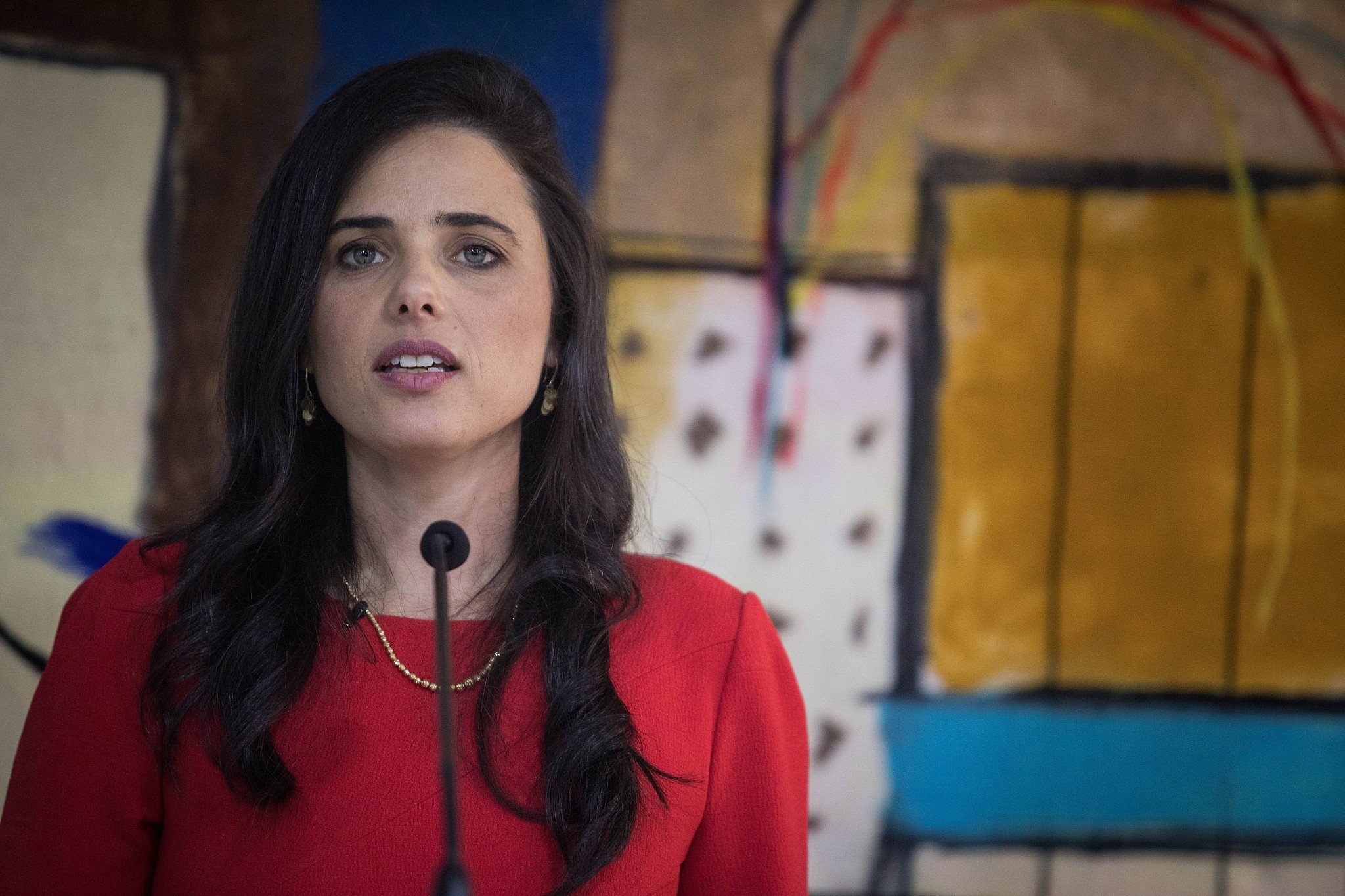
Former Justice Minister Ayelet Shaked would be the best candidate to lead a united right-wing party in the upcoming September elections, according to a survey of national religious voters published Friday.
The poll in the Makor Rishon paper, which is affiliated with the community, found that 40.1 percent wanted Shaked to lead the hypothetical list. Former Education Minister Naftali Bennett came second at 19%, while National Union leader Betzalel Smotrich got 15.1%.
Rafi Peretz, the current head of the Union of Right-Wing Parties, received 14.8%, while Itamar Ben Gvir of the extreme right Otzma Yehudit (Jewish Power) had 2.6% and Moshe Feiglin of the libertarian party Zehut received 1% of the support.
Shaked and Bennett left the Jewish Home party ahead of the April 9 election to form the New Right, which failed to clear the electoral threshold in that vote. Jewish Home, including Smotrich’s National Union faction, then merged with the far-right Otzma Yehudit party to create the Union of Right-Wing Parties, which won five of the 120 Knesset seats.

The survey also showed that right-wing religious voters favor all the factions uniting to run together in a single party.
According to the poll, 56.7% want “a complete unification of all the parties of the religious right.” Meanwhile 17.1% wanted a united party, but without Otzma Yehudit or Zehut. A further 14.1% wanted to see two parties: the current URWP, and a union of the New Right and Zehut. Finally, 6.1% wanted to see all the parties united with the exception of Otzma Yehudit.
The poll was conducted among 1,370 people who self-identified as national religious voters and had a margin of error of 2.9%, Makor Rishon said.
There has been pressure among the right-wing religious parties to unite following the failure of New Right and Zehut to cross the 3.25% election threshold, which led to tens of thousands of religious right votes being lost.
And there has also been intense speculation over the fate of the popular Shaked.
On Sunday, Smotrich attacked Shaked, accusing her of sowing political turmoil even as he called for all parties “to the right of Likud” to run under a single political umbrella in the September 17 election.
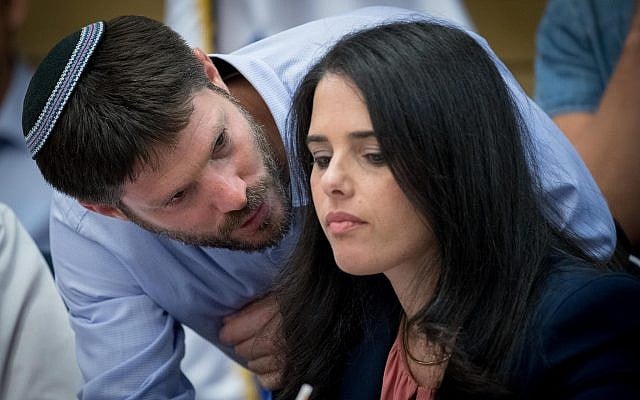
Shaked “abandoned, divided, crushed and made a mistake that sent the whole country into a whirlwind. You want to come back? We can certainly consider, but I don’t think there’s a reason in the world why you should be number 1,” he said.
The Likud party also quashed rumors that Shaked was going to be joining Prime Minister Benjamin Netanyahu’s ruling party, with the move reportedly vetoed by Netanyahu’s wife Sara.
Earlier in the week, Netanyahu fired Shaked and Bennett from his cabinet. The move was widely seen as designed to prevent the once-popular right-wing ministers from using their positions to bolster their campaigns for the fall vote.
Bennett has said he will run once again as leader of New Right, and has reportedly been working to persuade small right-wing parties, including Otzma Yehudit, to run on a joint ticket in the September 17 elections.
Shaked has not yet said whether she will once again join Bennett on the New Right ticket.
Feiglin, the far-right politician and head of the quasi-libertarian, pro-cannabis Zehut party confirmed Saturday that he had met with Bennett to discuss cooperating in the upcoming election campaign.
For a time, Feiglin’s Zehut was seen as the Cinderella story of the campaign season, after years of him wandering in the political wilderness. Early polls ignored the party, but, as its cannabis position took center stage, Zehut gradually grew in popularity, with most polls predicting it would win four to seven seats. However, it ultimately failed to pass the electoral threshold, gaining 2.73% of the April 9 vote with 117,587 ballots.








The Times of Israel Community.