

The rabbi, the wedding, and Springsteen’s romantic songs on ‘The River’
As The Boss winds down his world tour celebrating the 35th anniversary of a landmark album, here’s how a rabbi’s remarks at the marriage of a friend helped prompt him to tackle the traditional love songs he’d previously avoided
 Add ToI as a Preferred Source on Google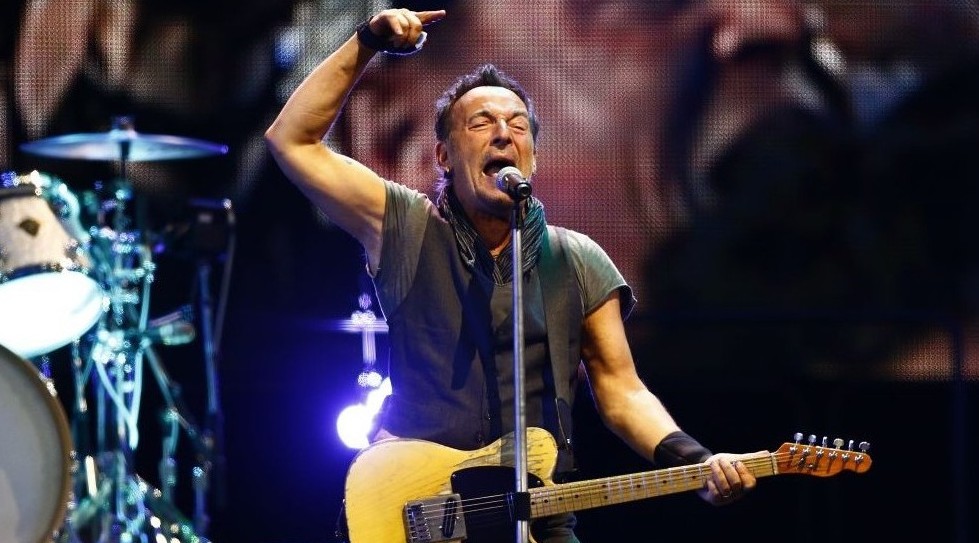
WASHINGTON — When Bruce Springsteen released “The River” in 1980, the double album he’s spent this past year celebrating on a 75-stop world tour, he ventured into thematic territory he had consciously avoided on earlier records.
“I never wrote romantic songs,” he said around the time of the album’s release. “That was what everybody else did … The romantic songs that I did write, I tended to give away, like ‘Because the Night’ and ‘Fire.’”
Both of those songs were written in between 1977 and 1978, while he was recording “Darkness on the Edge of Town,” and were given to Patti Smith and The Pointer Sisters, respectively. Both of their covers became hit singles — an achievement that had eluded the New Jersey native at the time. (Springsteen’s first top-five hit single was “Hungry Heart,” a “River” track that he originally planned to give to The Ramones until his manager, Jon Landau, convinced him otherwise.)
By 1980, however, Springsteen wanted his music to express the leap he was trying to make in his own life. He was living alone on a farm in Holmdel, New Jersey, where he spent hours watching John Ford westerns and American film noir; he described this period as his “attempting to pull myself into what I felt was going to be the adult world.”
From there, he began crafting an album that, for the first time in his career, included several songs that contained a “dream of domesticity,” as the music critic and Springsteen biographer Dave Marsh once put it.
While his breakthrough third album, in 1975, included romantic invitations like “Thunder Road” and narratives like title track “Born to Run,” those songs are defined by the narrators’ aspirations for escape, as Springsteen’s heroes implore their love interests to join them in their refusal to accept the conditions of their lives. “It’s a town full of losers,” declares “Thunder Road’s” protagonist, “And I’m pulling out of here to win.”
But with “The River,” Springsteen incorporated more traditional love songs, like “Two Hearts” and “I Wanna Marry You,” in which the narrator yearns for the stability of settling down into a partnership.
“Now honey, I don’t want to clip your wings,” he tells his beloved in the latter song. “But a time comes when two people should think of these things / Having a home and a family / Facing up to their responsibilities.”
And he adds: “They say in the end true love prevails / But in the end true love can’t be no fairy tale / To say I’ll make your dreams come true would be wrong / But maybe, darlin’, I could help them along.”
This evolution in Springsteen’s lyrics and thematic interests was undoubtedly due to a number of factors, and one of them, he’s acknowledged, was the influence of a rabbi.
‘Boy that really got to me. I wrote a lot of songs after that’
In 1979, while he was recording the album, Springsteen attended the Jewish wedding of one of his former lighting designers, Marc Brickman, at The Whiskey a Go Go nightclub in Los Angeles. Along with other members of his E Street Band, he performed “Hava Nagila” during the reception.
But it was that day’s ceremony, before he took the stage himself, that really moved him, an experience Springsteen has described as formative to his musical development.
The wedding was officiated by Harold Schulweis of Valley Beth Shalom, a conservative synagogue in the Encino neighborhood of Los Angeles, to which Brickman’s parents belonged.
During the marriage service, Schulweis told the couple (as quoted by biographer Marsh and others): “When you’re alone and without anybody, your dreams and fantasies are all of what you got, and when you get married, when you get together with someone, that is the first step toward making those dreams and hopes a reality.”
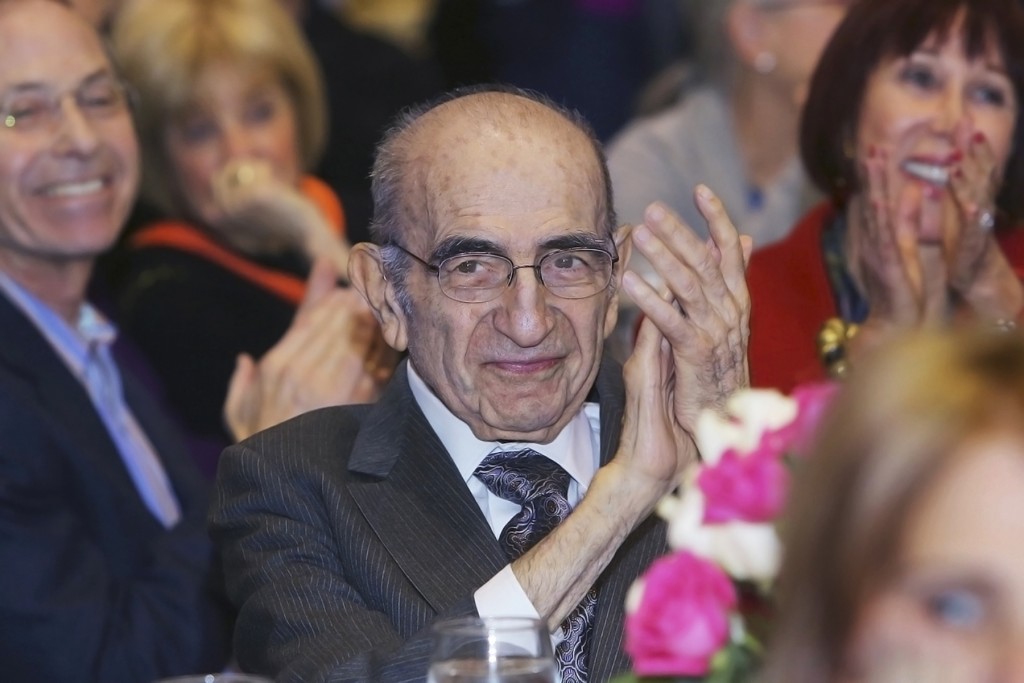
In a 1980 interview with the journalist Kit Rachlis, Springsteen said of Schulweis’s remarks, “Boy that really got to me. I wrote a lot of songs after that.”
In that same interview, he also said he wanted to transition from the focus of his last album (“Darkness On the Edge of Town”) about “a guy stripping himself down, trying to find out where he stands,” and to make a record about “trying to get connected back with your relationship.”
Years later, he wrote another song that appears to reference Schulweis, who died in 2014, titled “When You’re Alone” and released on his 1987 album “Tunnel of Love.” It repeatedly observes, “When you’re alone you ain’t nothing but alone.”
That album is noted for its attention to disintegrating relationships; it was produced while Springsteen’s first marriage, to actress Julianne Phillips, was falling apart. They had married in 1985 — five years after “The River” came out — and would divorce in 1989.
Some critics play down the notion that Brickman’s nuptials had a significant impact on Springsteen’s songwriting focus. Dave Marsh, who is married to Barbara Carr, the assistant to Springsteen’s longtime manager Landau, is among them — despite the fact that he quotes Springsteen acknowledging Schulweis’s influence in his 1983 biography.
To write music, Marsh told The Times of Israel, “You take the summation of what you know and what you’re afraid to admit and what hurts and what pleases you, and you fit it altogether. That is how you write a great, enduring rock song. The influence doesn’t come from one wedding, it comes from linking all the weddings you’ve ever seen or been part of and the fact that you’re getting over being afraid to do it yourself.”

At the time of “The River,” Springsteen’s fifth studio album, he was single and starting to deal with sustained success. His first two albums, both released in 1973, “Greetings from Asbury Park, N.J.” and “The Wild, the Innocent & the E Street Shuffle,” were both well received critically but didn’t make much money.
His third album, “Born to Run,” landed him in a new universe; for the first time in the history of entertainment journalism, one man was placed on the cover of Time and Newsweek magazines in the same week, and the influential critic Jay Cocks called the 25-year-old musician “the distinctive voice of a generation.”
But that experience also brought its share of pain for Springsteen, who entered an acrimonious lawsuit with his then manager, Mike Appel, over a contract he felt was exploitative.
The legal affair dragged on for three years until a settlement was reached and Springsteen could return to the recording studio, where he produced the bleak yet resilient “Darkness.”
Brickman began working for the Springsteen and the E Street Band in April 1972, right around the time of its formation. “He was driving around with his life in a station wagon, and I was driving around with my life in a station wagon,” Brickman told The Times of Israel. “I started in the beginning, pretty much.”

But three years after “The River,” he left the band amid a bitter fallout, the details of which he still prefers not to discuss. His departure came in the fall of 1983, shortly before Springsteen’s biggest commercial success, “Born in the USA.”
Brickman then went on to work on Roger Waters’ first solo album, “Pros and Cons of Hitch Hiking,” which was released in April 1984. It was reported that he designed the lighting of New York City’s Empire State Building last year as a tribute to the Grateful Dead’s “Fare Thee Well” shows at Chicago’s Soldier Field.
Springsteen, meanwhile, wrapped up his “The River” 2016 anniversary tour Wednesday in Foxborough, Massachusetts. His memoir “Born to Run” will be published by Simon & Schuster on September 27, when he will also commence a book tour throughout the United States.







The Times of Israel Community.