

UN says aid to besieged Syrian towns must continue
Humanitarian chief says convoys to besieged towns must not be ‘one-off or exceptional’; Damascus denies starvation reports
 Add ToI as a Preferred Source on Google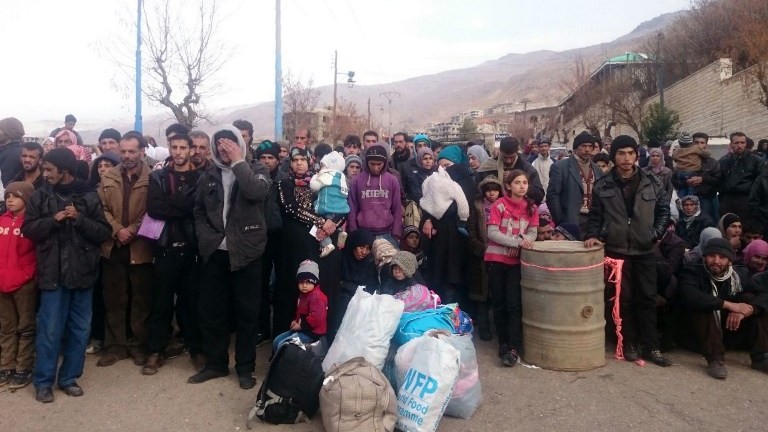
UNITED NATIONS (AP) — The UN humanitarian chief called for Monday’s delivery of aid to three besieged towns in Syria to be the first of many and welcomed a Syrian statement that such deliveries should be repeated and sustained.
Stephen O’Brien told reporters after briefing the UN Security Council behind closed doors that the arrival of convoys to help civilians in the three towns cut off for months by the war in Syria must not be “either one-off or exceptional.”
They must become the model for regular aid deliveries to civilians caught in conflict, which is a requirement under international law, he insisted.
The UN says 4.5 million Syrians are living in besieged or hard-to-reach areas and desperately need humanitarian aid, with civilians prevented from leaving and aid workers blocked from bringing in food, medicine, fuel and other supplies.
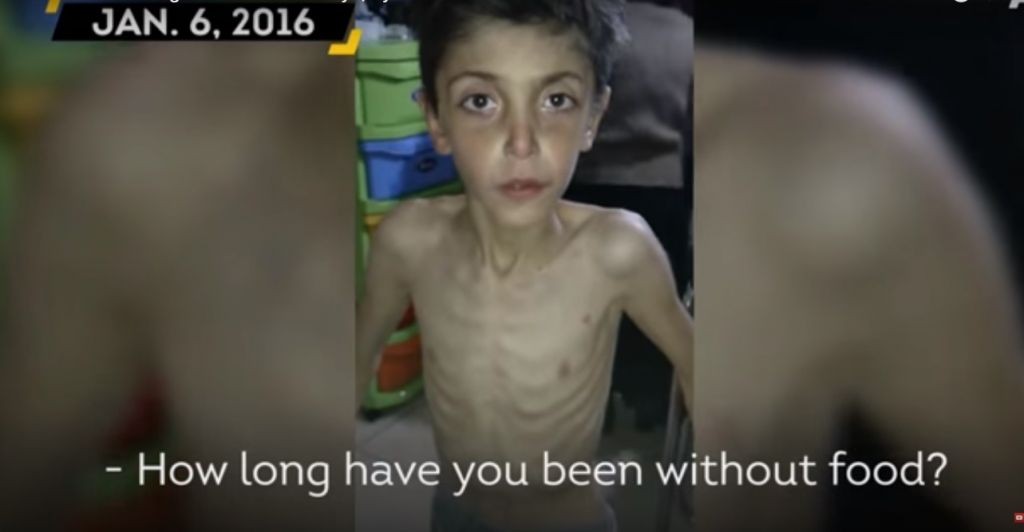
Reports of starvation and images of emaciated children have raised global concerns and underscored the urgency for new peace talks that the UN is hoping to host in Geneva on January 25.
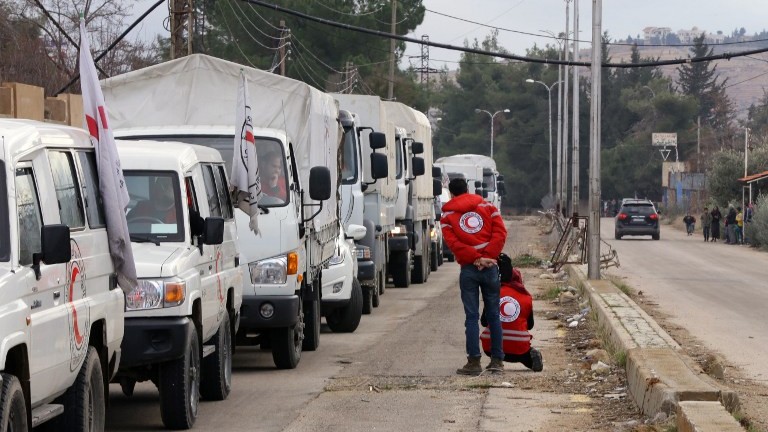
Aid convoys with food and other supplies reached three besieged villages on Monday — Madaya, near Damascus, where O’Brien said about 400 people need immediate life-saving treatment for medical conditions, malnourishment and starvation, and the Shiite villages of Foua and Kfarya in northern Syria.
Syria’s UN Ambassador Bashar Ja’afari told reporters that the government reiterated its commitment to cooperate fully with the UN and the Red Cross to deliver humanitarian assistance to all civilians “without any discrimination,” including those in besieged and hard-to-reach areas.
He called reports of starvation in Madaya fabrications and lies and insisted that “the Syrian government is not and will not exert any policy of starvation against its own people.” At the same time, however, he said economic sanctions against Syria and the influx of “terrorists from all over the world” are causing starvation and economic and humanitarian problems in the country.
Ja’afari accused Saudi Arabia, Qatar and Turkey of raising the humanitarian issue and “defaming” and “demonizing” the Syrian government in order to torpedo the Geneva talks because “they are not in favor of a political settlement.”
France’s UN Ambassador Francois Delattre warned after Monday’s meeting that “there will be no credible political process without progress on the humanitarian front.”
“It’s not progress on the political front or progress on the humanitarian front. It’s both or nothing,” he said.
Delattre said France is calling for the immediate lifting of blockades on all besieged cities and immediate humanitarian access to all affected areas — and it wants a public meeting of the Security Council on this issue.
New Zealand’s UN Ambassador Gerard van Bohemen, who called Monday’s council meeting with Spain, said “we recognize that a political solution is the answer to the wider problem, but humanitarian access cannot be held hostage to the politics.”
Spain’s UN Ambassador Roman Oyarzun Marchesi stressed that “besieging with the goal of starvation is a war crime.”
Copyright 2016 The Associated Press.







The Times of Israel Community.