

Pushing a plea deal for Netanyahu, Herzog takes a risky bet on his pareve approach
The president is known for preferring quiet consensus building over bellicose bombast. That style just might resolve the festering issue of the PM’s trial — but it will likely fail, damaging public faith in him

 Add ToI as a Preferred Source on Google
When he ran for Israel’s top job in 2015, Isaac Herzog pitched himself as a different kind of candidate from his opponent, Prime Minister Benjamin Netanyahu.
He was derided as reedy in both stature and voice, but tried to spin those things as advantages: He campaigned as a “thoughtful and responsible leader” focused more on quietly building consensus than on being the loudest guy in the room.
Israelis didn’t go for it. Despite polls consistently showing a slight advantage for Herzog’s Zionist Union party, Netanyahu decisively won the election, sending Herzog back to the opposition and, eventually, out of the Knesset.
Running for president six years later, he tried again, this time campaigning to win the votes of 61 Knesset members — and succeeded with flying colors. In the 2021 presidential race, Herzog won 87 out of 120 possible votes, more than in any contested presidential election in Israeli history.
In the five years since, some of the country’s most tumultuous ever, the unassuming, pareve Herzog has struggled to make his mark as other presidents have. Like his predecessor, Reuven Rivlin, he attempted to navigate the widening gyre of Israel’s polarized society. Like former president Shimon Peres, he tried his hand at regional diplomacy. But he has yet to leave an indelible legacy.
Until now, that is.
In November, Herzog had history thrust upon him when Netanyahu formally requested a pardon in his long-running corruption trial — something only the president has the power to grant. On Sunday, Herzog gave his answer: Not a yes or a no, but a not yet, and a pitch to negotiate a plea deal that he will mediate.
It’s an unorthodox proposal and, for Herzog personally, an audacious one. The ensuing negotiations, if they happen, won’t only determine whether an amicable resolution can be found to one of the most charged issues dividing Israeli society.
They will also act as the ultimate test of Herzog’s entire approach to politics, a gamble that quiet discussions aimed at reaching consensus, rather than bellicose bombast, can succeed in resolving one of the country’s thorniest conflicts.
The stakes are high: If Herzog succeeds in forging a deal that both sides consider acceptable, he may innovate a new way of addressing pardon requests, and be remembered as the president who helped mend what seemed an intractable rift.
But if he fails, and there are a few reasons to think he will, the consequences could be disastrous. A collapsed negotiation could lead to heightened vitriol and a legal battle that feels increasingly unsolvable. And it could cause one side (or both) to lose faith in the office of the president, who is supposed to remain above the fray, at a time when the country’s politics are messier than ever.
Reasons for optimism…
Herzog does have some reasons for optimism. Netanyahu is clearly anxious for the trial to end, and polls show Israelis at large are roughly split on the issue. That indicates that, if a deal is to be had, it can probably garner a measure of public support.
US President Donald Trump has lashed out at Herzog multiple times over the issue, calling him “weak and pathetic” for not pardoning the prime minister. He may erupt yet again if he feels like Herzog is dragging out the process. But Trump may appreciate this bid for negotiations.
It’s hard to imagine two politicians who are more different, in style and temperament, than Herzog and Trump. But Mr. Art of the Deal may just go with the flow if the talks lead to something (and if he can take credit for pushing it forward).
… But slim chances of success
That doesn’t mean the talks Herzog seeks are likely to succeed. The core of the disagreement appears to be over whether Netanyahu must admit guilt and/or step down, two things he has refused to do. In its explanation of why the prime minister couldn’t receive clemency, issued last month, the Justice Ministry’s Pardons Department noted that Netanyahu had not, in his pardon request or elsewhere, admitted guilt or expressed any remorse for his alleged actions, which is usually key to requesting a pardon.
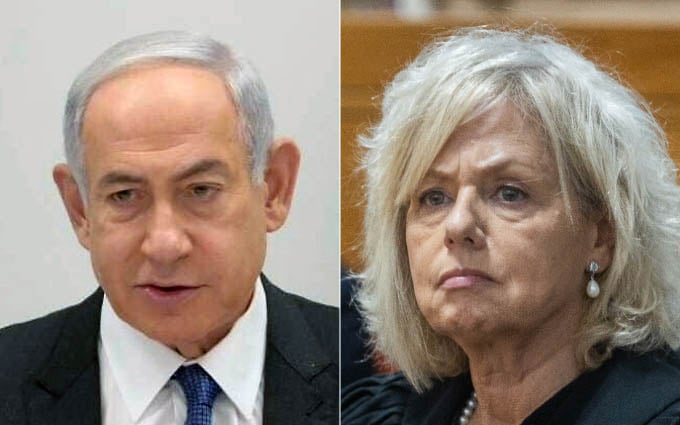
Herzog reportedly envisions the negotiations being held between Netanyahu’s lawyer, Amit Hadad, and Attorney General Gali Baharav-Miara. There’s no love lost between the attorney general and the government, and neither of those sides seems ready to back down from its current position.
Baharav-Miara has made it her mission to defend the rule of law, including the continuation of Netanyahu’s trial, despite overwhelming pressure from his coalition, which tried to fire her. She isn’t likely to give in now.
And Netanyahu has spent much of the last decade loudly asserting his innocence and calling the trial a witch hunt and attempted political coup. He isn’t likely to give in, either, especially in an election year.
The chances for a deal feel even slimmer considering there have been multiple attempts at just such a negotiation, and none have succeeded. Previous efforts by retired Supreme Court president Aharon Barak fell apart because Netanyahu didn’t want to agree to a finding of moral turpitude, which carries a seven-year ban on holding public office.
Betting on quietly building trust
Can Herzog defy the odds? Early in his term, he stood out for taking a hand in sensitive talks with leaders across the region, including by securing the freedom of an Israeli couple detained in Turkey for alleged espionage.
“He didn’t make a big to-do out of it. He just did his job, using his good connections with the Turks. It’s not something we’re used to,” Avi Benayahu, a former IDF spokesman, said about the detained couple back in 2021, contrasting Herzog’s style with that of Netanyahu, who returned to office the following year.
Herzog does, in fact, have a reputation for building trust and being on good terms with people across the political spectrum, hence the 87 votes he got in that 2021 presidential election. (A report from December alleged that Herzog floated pardoning Netanyahu in exchange for the votes of the prime minister’s Likud party. Herzog adamantly denied the allegation and threatened legal action.)
Throughout the almost five years of his tenure so far, Herzog has enjoyed relatively high levels of trust from an Israeli public that is generally very skeptical of the country’s institutions.
Last year, according to the Israel Democracy Institute, 41 percent of Jews and 27% of Arabs said they trusted him, much higher than the scores the government received (25% and 14%, respectively).
But trust in the president is also declining. The 41% of Jews is a sharp drop, for example, from the 58% who said they trusted him in 2022, before the Hamas-led October 7, 2023, attack. After that, overall trust in the country’s leaders appears to have fallen.
One test after another
The other factor at play here is that in six months, after the next Knesset election, Herzog will exercise his other main non-ceremonial role: tapping someone to form the next government.
That job, too, is sensitive and fraught with controversy, and depends on maintaining the trust of a wide array of warring parties.
If Herzog fails in the monumental task of bringing an end to Netanyahu’s trial, it could damage public trust in his ability to manage the election’s aftermath.
The New York Times report that broke the news of the proposed negotiation said Herzog believes “the main role of Israel’s president is to foster unity.” And in his statement confirming the report, Herzog said he feels the need to “exhaust a process that could lead to the formation of an agreement between the parties.”
The talks may, improbably, produce a compromise that everyone can live with. But if they don’t, both Netanyahu and his opponents may leave the room frustrated and aggrieved, with nothing solved, Herzog undermined, and his next potentially complex role just around the corner: determining who is best-placed to form Israel’s next government if the election result is not clear-cut.




The Times of Israel Community.