

West Bank rage over frozen wages could boil over into violence
While the government continues to withhold PA tax revenues, and the banks stop lending the PA cash for salaries, Israel’s security forces are on alert for a possible deterioration in the security situation

 Add ToI as a Preferred Source on Google
Avi Issacharoff, The Times of Israel's Middle East analyst, fills the same role for Walla, the leading portal in Israel. He is also a guest commentator on many different radio shows and current affairs programs on television. Until 2012, he was a reporter and commentator on Arab affairs for the Haaretz newspaper. He also lectures on modern Palestinian history at Tel Aviv University, and is currently writing a script for an action-drama series for the Israeli satellite Television "YES." Born in Jerusalem, he graduated cum laude from Ben Gurion University with a B.A. in Middle Eastern studies and then earned his M.A. from Tel Aviv University on the same subject, also cum laude. A fluent Arabic speaker, Avi was the Middle East Affairs correspondent for Israeli Public Radio covering the Israeli-Palestinian conflict, the war in Iraq and the Arab countries between the years 2003-2006. Avi directed and edited short documentary films on Israeli television programs dealing with the Middle East. In 2002 he won the "best reporter" award for the "Israel Radio” for his coverage of the second intifada. In 2004, together with Amos Harel, he wrote "The Seventh War - How we won and why we lost the war with the Palestinians." A year later the book won an award from the Institute for Strategic Studies for containing the best research on security affairs in Israel. In 2008, Issacharoff and Harel published their second book, entitled "34 Days - The Story of the Second Lebanon War," which won the same prize.
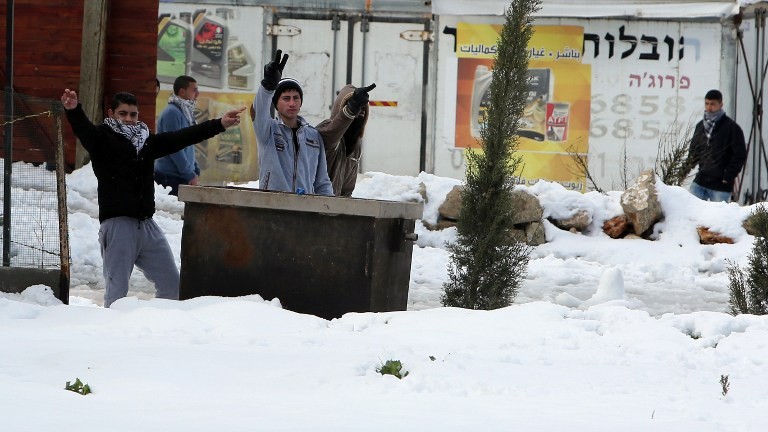
In just eight days, the Palestinian Authority will need to pay the salaries of about 180,000 of its employees. At the moment, it’s not clear how it will be able to do so.
Israel, or more accurately Prime Minister Benjamin Netanyahu, seems determined not to renew the transfer of tax funds to the PA — some NIS 500 million ($130 million) per month — contrary to the position of defense establishment officials.
In the past two months, the PA has found a solution that allows it partially to overcome the Israeli sanctions, via guarantees and loans from banks, which has allowed it to pay about 60 percent of these wages.
According to senior Palestinian officials, though, the banks can no longer continue to lend funds to Ramallah in order to pay the next salaries, at the start of March, and PA employees won’t receive even part of their wages.
A temporary and partial solution to the issue will likely be found, nonetheless, and the officials will probably receive an even smaller portion of their salaries. But PA employee salaries are the most significant driver of the West Bank economy and the ongoing failure to pay them will gradually shut down that engine.
As the months pass and the salaries shrink, the West Bank’s economy deteriorates and the chance of an increase in violence becomes more realistic.
This process prompted US Secretary of State John Kerry’s latest warning that he’s concerned about the potential collapse of the PA or a termination of security cooperation with Israel.
The Israel Defense Forces are on alert for a deterioration in the West Bank — with the Central Command, the Shin Bet and special forces preparing for a possible escalation of violence in March and April, in part because of the freeze in transferring tax funds.
However the issue seems to be almost totally ignored by the prime minister and defense minister. And Israeli media aren’t rushing to weigh in on the danger.
Netanyahu, Defense Minister Moshe Ya’alon and other key cabinet members continue to back the freezing of Palestinian tax funds as a justified response to the PA’s decision to turn to the International Criminal Court and seek war crimes prosecutions against Israel.
The implications for the situation in the field are clear to them — the undermining of the security cooperation between the two sides (perhaps even its suspension); agitation that will gradually increase among residents of the West Bank against the PA, particularly among the lower classes in Palestinian society; and the pushing of PA President Mahmoud Abbas into a corner.
And logic would suggest that Israel’s interest would be to transfer the funds to the Palestinians in order to preserve security cooperation, as was previously the practice. The PA arrests hundreds of Hamas members each year, helps in thwarting terrorist attacks — including against settlers and the IDF — and managed even to keep the peace during last summer’s war in the Gaza Strip.
But looming over any decision on the fate of the tax revenues are the March 17 elections. Were Netanyahu to again let money flow to the PA, he fears this would strengthen the nationalist Jewish Home party, which would claim that he was demonstrating weakness.
The Palestinian Authority isn’t expecting Netanyahu to unfreeze the taxes the day after the elections either. The general belief in Ramallah is that in the weeks after the vote, as Jerusalem puts together a governing coalition, the Palestinian funds will remain stalled in Israel.
But Palestinian officials understand the need for keeping a low profile ahead of the elections out of concern that even a relatively mild diplomatic confrontation with Israel will aid Netanyahu’s campaign. That’s also the explanation for the Palestinian media silence in recent days about possible next steps at the ICC and the United Nations Security Council.
But with each day that salaries go unpaid, the danger grows of a breakdown in law and order in the West Bank. The Palestinian economy is already experiencing a slowdown; in the coming month, it could become a real crisis. If a national uprising begins, even primarily an economic one against the PA, it is difficult to predict where that rage will lead.








The Times of Israel Community.