

When Hitler Youth summered near Long Island
Throughout the 1930s, 19 German-American Bund summer camps operated across North America to indoctrinate youth with Nazi ideology
 Add ToI as a Preferred Source on Google
Reporter at The Times of Israel
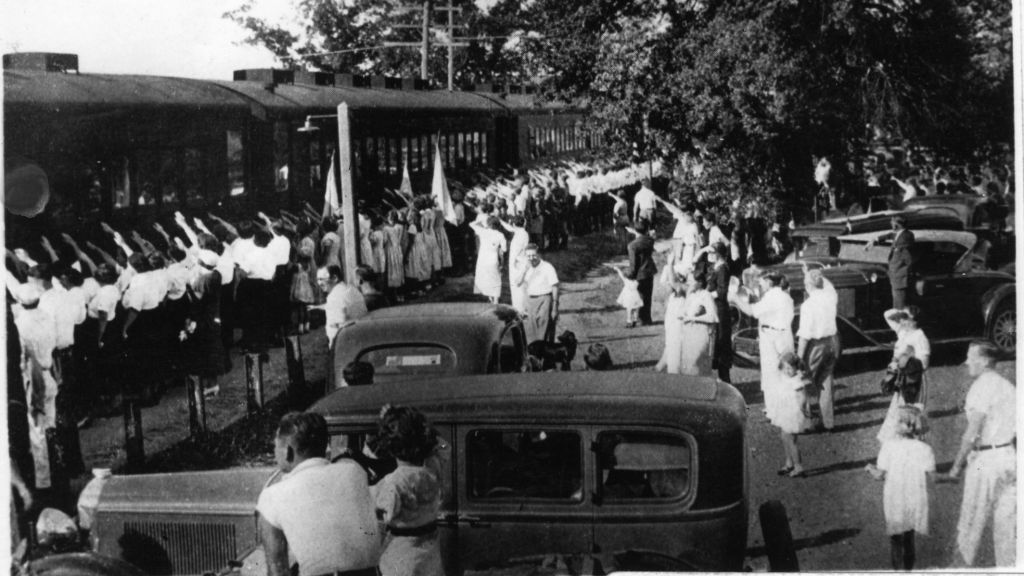
NEW YORK — On Sundays, scores of German-Americans living in New York City in the 1930s dressed in German folk costumes and boarded the Long Island Railroad’s “Camp Siegfried Special,” eager to spend a day in the bucolic town of Yaphank, Long Island.
There was nothing innocent about these outings to the countryside.
Throughout the latter half of the 1930s, 19 Nazi summer camps and family retreats operated across the United States, from New York to California. Sponsored by the Deutsche-Amerikanische Berufsgemeinschaft, DAB, or German-American Bund, the camps were set up to indoctrinate children and adults with Nazi ideology.
“The camps basically had everything the Hitler Youth camps had in Germany. Their uniforms were similar, right down to the Sam Brown belts and swastikas on the arms,” said Arnie Bernstein, author of the 2014 book, “Swastika Nation: Fritz Kuhn and the Rise and Fall of the German-American Bund.”
The campers, aged 8 to 18, wore official uniforms and carried official banners of the Hitler Youth. Most were the children or grandchildren of German immigrants or naturalized citizens.
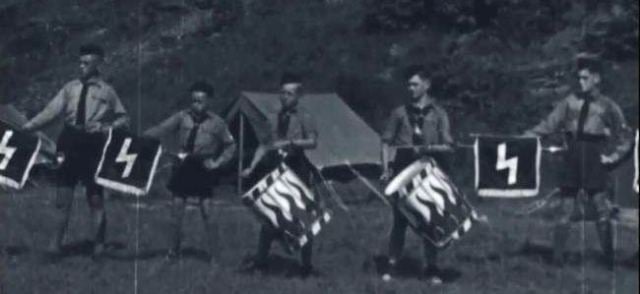
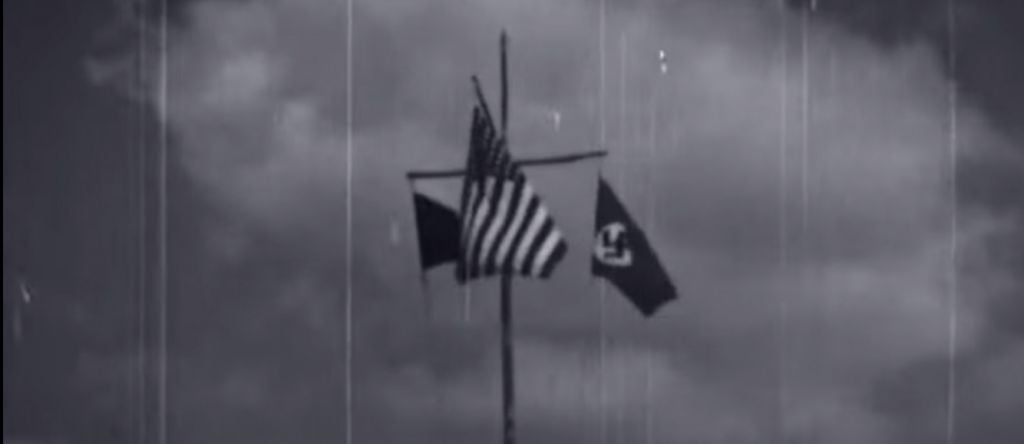
At the helm of the Bund stood Fritz Kuhn, a German naturalized citizen, who insisted on being called Bundes Fuhehrer. He understood that for his organization to succeed he had to make sure the camps appeared loyal to the United States. In one 25-minute film taken at Camp Highland in the Catskills one can see a swastika flag raised alongside an American flag.
“He insisted on it being an American group. In reality it was a hard core Hitler organization,” Bernstein said.
Today the U.S. National Archives and Records Administration houses a trove of photos and footage of the camps. Additionally, the New York Department of Records has about 30,000 photos taken by the Alien Squad, a surveillance unit with the New York Police Department, which documented subversive activity in the 1930s.
The snapshots and films show young people with their arms extended in stiff Heil Hitler salutes, lined up for drills, participating in rifle practice.
During the summer, staff awakened campers in the dead of night and taken on forced marches through the woods. They sat around bonfires singing “Deutschalnd, Deutschland Über Alles” and repeated the words Ein Volk, Ein Reich, Ein Fuhehrer.
“The summer camps, complete with the official uniforms and banners of the Hitler Youth, might be the most visual and chilling example of the DAB’s attempts to instill Nazi sympathies in German-American children,” wrote Audrey Amidon an archivist in National Archives’ Motion Picture Preservation Lab. “Even though it happened more than 75 years ago, it’s unsettling to see American children raise a Nazi flag and know that it occurred just 150 miles outside New York City.
While the Nazis provided the German-American Bund with propaganda materials, they did not actively encourage Kuhn, whom they viewed as somewhat of an embarrassment, Bernstein said.
Nevertheless, Kuhn attended the 1936 Olympics and while there he met Adolf Hitler.
“It was a standard grip and grin. At the end Hitler said “Go continue the fight,” it was an offhand remark that Kuhn took as a blessing,” Bernstein said.
The summer camps were Kuhn’s way of following through. There was Camp Will and Might in Griggstown, New York and Camp Hindenburg in Grafton, Wisconsin. There was Camp Deutsch Host in Sellersville, Pennsylvania and Camp Sutter near Los Angeles.
And of course there was Camp Siegfried on Long Island.
That Camp Siegfried took root in Yaphank, then known more for its duck and potato farms, doesn’t surprise Steven Klipstein, an English professor at Suffolk County Community College.
“Anti-Semitism was at its absolute peak at this time. Jews were excluded, beaten and on the defense. Suffolk County was at the center of right wing politics then,” said Klipstein who organized the 2011 exhibit “Good Stepping on Long Island: Camp Siegfried.”
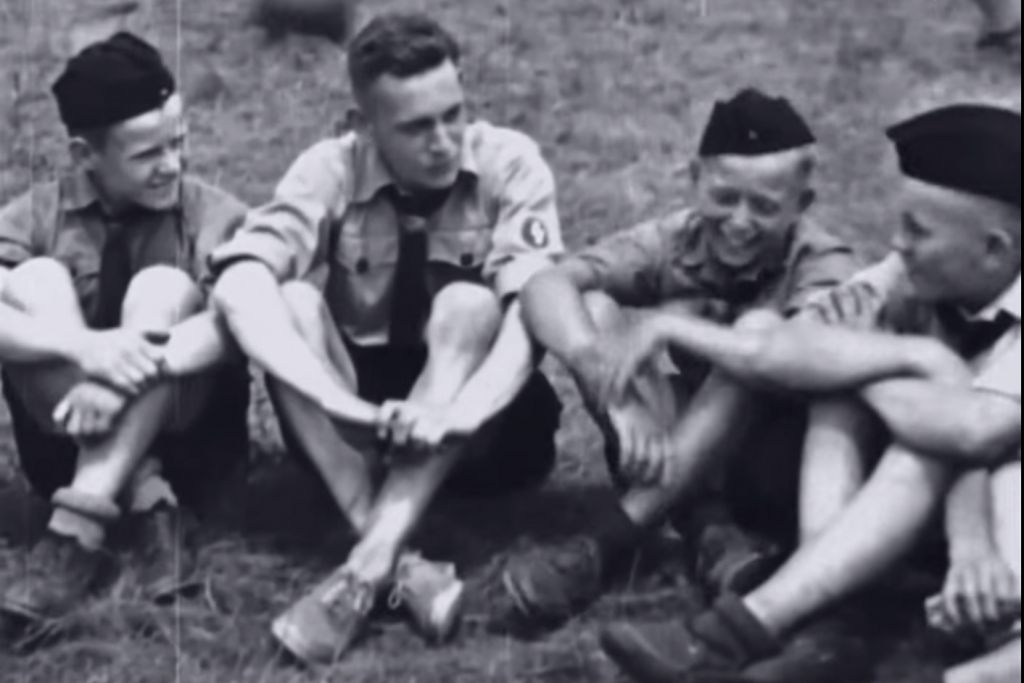
Camp Siegfried had a social hall, a lake for swimming and at the center a large white podium from where Kuhn and his cohorts delivered bombastic speeches, Klipstein said. Occasionally, black shirts from Lindenhurst joined the audience.
At first the locals knew of the camp as a place where people of German descent congregated. They were more concerned about traffic congestion, alcoholic beverages and a general disturbance of the peace, Barbara Russell, Town of Brookhaven Historian, said.
‘When the Nazi flag and the American flag began to fly together, and the camp took on a more military appearance, suspicions arose, as did the Bund’s propaganda’
“When the Nazi flag and the American flag began to fly together, and the camp took on a more military appearance, suspicions arose, as did the Bund’s propaganda. The First Amendment right of free speech escalated to speeches about anti-Semitism rapidly, which aroused the communities on Long Island to respond,” Russell said.
Towns outside New York also fought back. In Southbury, Connecticut residents successfully repelled the Bund’s attempt to open a camp, Bernstein said. Photos of the time show protestors carrying signs saying: “Old Glory is Our Flag. Southbury Wants No Swastika,” and “United Americans Show the Way. No Nazi Camps.”
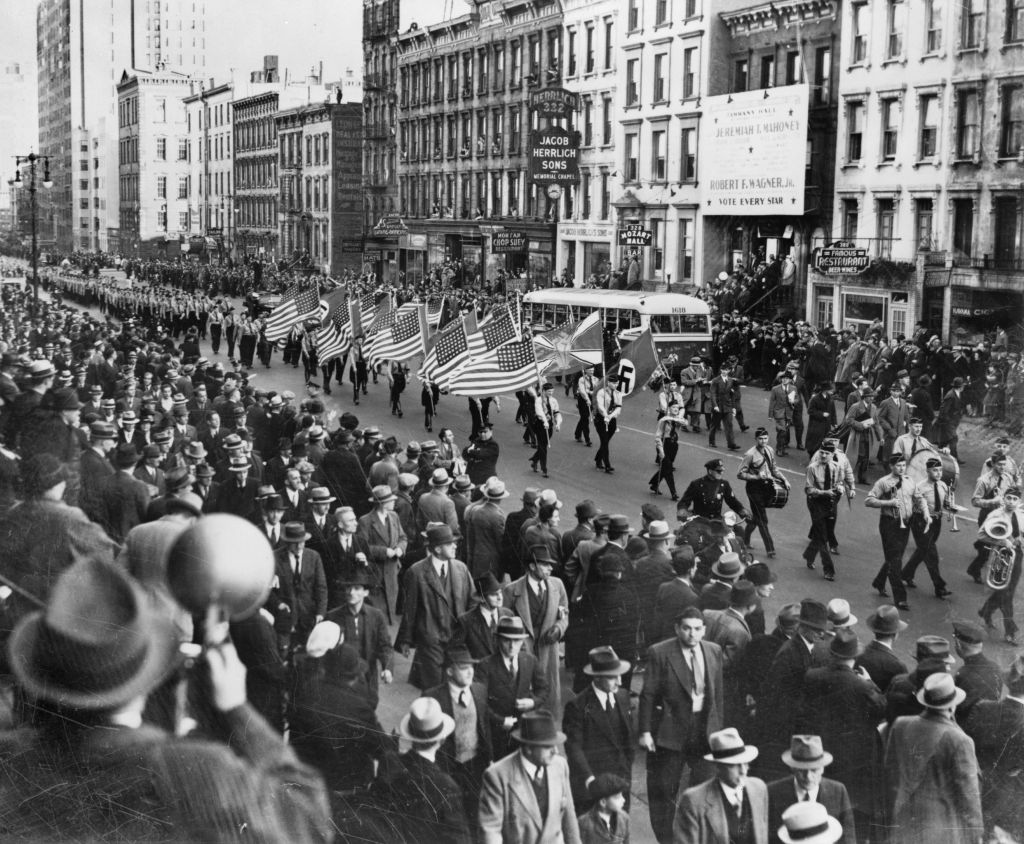
In 1939 the German-American Bund’s Kuhn organized a pro-Nazi rally at Madison Square Garden.
“You had 20,000 people inside listening and 100,000 people outside who wanted to kill him,” Bernstein said.
LaGuardia and Dewey decided to get Kuhn the same way the federal authorities got Al Capone: taxes
The rally was the beginning of the end for Bund and Kuhn. A furious Mayor Fiorello LaGuardia called on New York District Attorney Thomas Dewey. They decided to get Kuhn the same way the federal authorities got Al Capone: taxes. The ensuing investigation revealed Kuhn used $14,000 in Bund funds to finance his many mistresses.
In 1939 Kuhn was charged with tax evasion and embezzlement. He was sentenced to between two-and-a-half to three years in prison. During this time the FBI raided the camps, seized rolls of film and other documents, and shut them down for subversive activities.
Kuhn’s citizenship was stripped during his imprisonment. After his release authorities re-arrested him an enemy alien. He was sent to an internment camp and ultimately deported to Munich, Germany in 1945 where he died in obscurity.
“After his arrest the Bund flopped around like a fish and then came Pearl Harbor and that was the end,” Bernstein said.






The Times of Israel Community.