

Why London’s abuzz with this Israeli soul food bistro
A labor of love, Israeli celebrity chef couple Itamar Srulovich and Sarit Packer achieve popular and culinary success with Honey & Co.
 Add ToI as a Preferred Source on Google
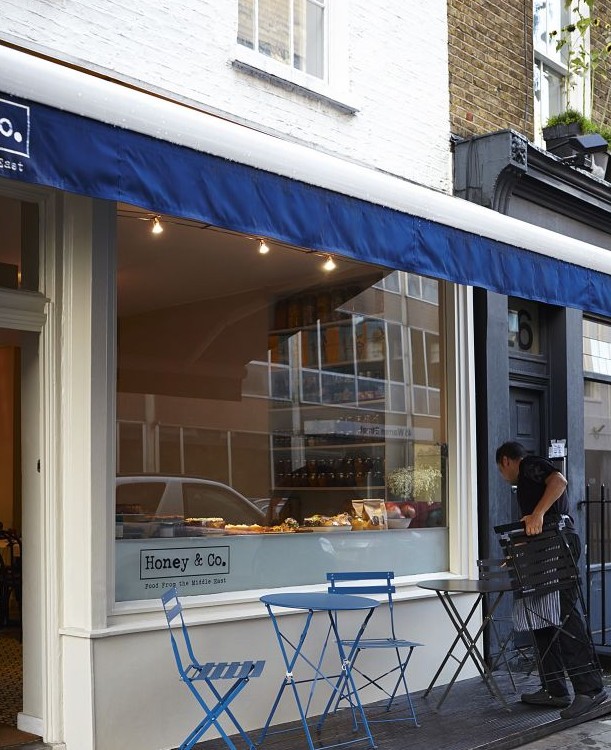
LONDON — When the Israeli husband and wife celebrity chef team Itamar Srulovich and Sarit Packer were looking for a place to set up a restaurant, what attracted them about 25a Warren Street in Fitzrovia in central London was its large window that dominates the front of the store.
Unable to afford much in the way of advertisement for their Middle Eastern bistro Honey & Co., they decided a great way to attract foot traffic was to fill the window with cakes. Having initially thought they would only bake one type of cake to serve as a dessert, this mélange of sweet treats — fruit-speckled, glazed, iced and spiced — became an attraction in itself.
“It was like our little hook,” Srulovich told The Times of Israel. “The cake as a possibility, persuading patrons to sit down to a full meal.”
Since it opened in 2012, Honey & Co. has quickly established itself as somewhere to go for good home-cooked Middle Eastern fare.
“This is indeed food made by people who like to eat. It is food that cares less about how it looks than how it tastes,” Jay Rayner said in his review for The Observer. He went on to write that Honey & Co.’s food “feels like an act of love.”
The restaurant won the Observer Food Monthly’s best newcomer award in 2013, with Rayner praising their “quince salads with mint, honeyed hazelnuts, chilli and fresh curd cheese, deep intense bowls of lamb shawarma on crispy pita bread or chicken tagine with chestnuts, raisins and date molasses.”
Dessert is where the heart is
Situated at the far end of Warren Street in central London, away from the noise and bustle of the Tottenham Court Road and nearby University College London and Euston Station, Honey & Co. occupies part of a four-story, whitewashed townhouse structure, with the restaurant on the ground level and the kitchen down below.
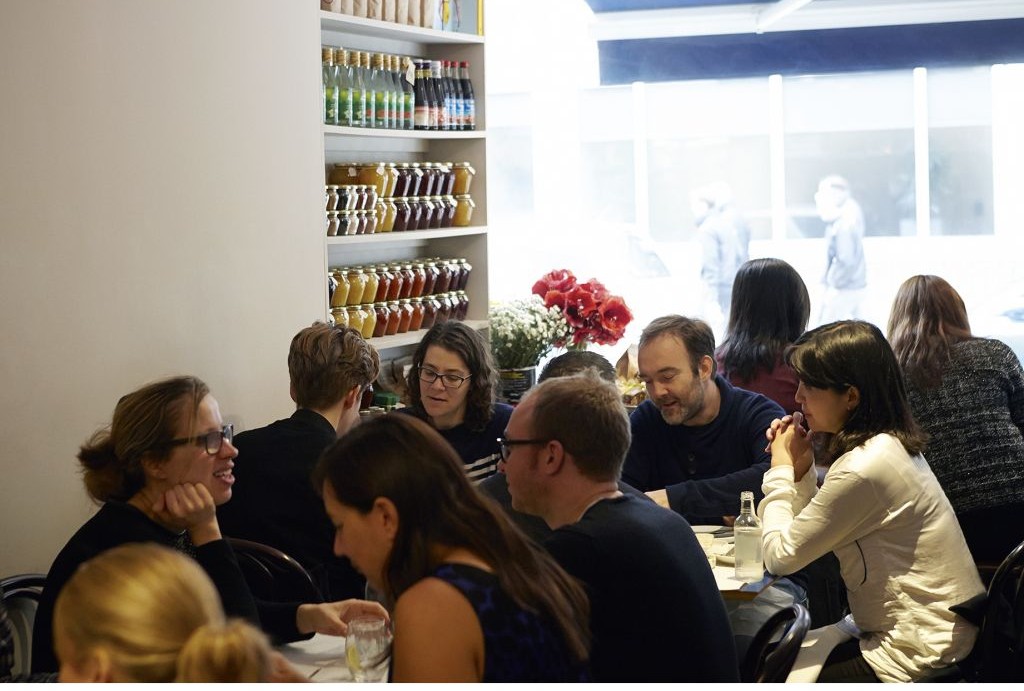
The pinched interior, with its white walls and Moorish black-and-white tiled floor, fits 10 tables: black seats with a looping back design around square-cornered tables adorned with disposable white cloths. One wall is affixed with shelves filled with copies of their two cookbooks, stamped paper bags of granola, and enticing jars of savory and sweet preserves.
Coffees and drinks are served from a bar area at the back, while the long bench table in the front window that was once festooned with cakes has now, as a matter of necessity, become extra seating for those coming and going for coffee, a quick lunch, or sweets. But baking goods prepared under Packer — a trained pastry chef who worked under Yotam Ottolenghi — remain central to Honey & Co.’s menu.
“Dessert is where my heart is, and what our menu needed,” Packer wrote in their first cookbook, “Honey & Co.: Food From The Middle East.” Packer has said previously that she didn’t want to bake in her own restaurant (though Srulovich said she protests too much about this).
“The reason I love making desserts is that I love watching people while they eat them: they become quieter for a while, then happier, and then they feel they can really relax,” she wrote.
The pastry section of the kitchen runs twenty-four hours a day, employing three full-time staff. As well as cakes and pastries, Honey & Co. bakes at least four different types of bread, sometimes up to seven, every day for their menu. Regularly, they produce pita breads, potato bread, milk buns — something of an amalgam of challah and brioche — and a kind of cheese scone.
“It’s a small section with a huge amount of knowledge,” husband Srulovich said.

Tea is served
Their second cookbook, “Honey & Co.: The Baking Book,” is a testament to that knowledge and the sheer range of baked goods and accompaniments Honey & Co. creates. It moves thematically through their recipes, organizing them according to the time of day they are made or served, beginning with the jams that adorn the shelves of their restaurant: sliced plum, strawberry and rose, and quince.
Their breakfast items include Fitzrovia buns, their twist on the traditional Chelsea bun using vanilla sugar, dried sour cherries and chopped pistachios. Elevenses features savory muffins including spiced cauliflower, as well as sweet slices and loaf cakes.
After savory pastries at lunch that take their inspiration from around the Mediterranean basin, tea time offers stunning cheesecakes, cakes flavored with orange blossom and clementine, and tahini sandwich cookies filled with white chocolate and rose. Their dessert menu includes halva, baklava and something called znoud el sett: semolina and strawberry in a flaky filo shell.
I sampled a slice of their fig and hazelnut slice: a versatile bar that can also be made with seasonal fruit such as strawberries, blackberries and blueberries. Served on a tile plate, partially encased in parchment paper, the slice’s shortbread base is made using ground hazelnuts and cinnamon. It is then adorned with the fruit and this time roughly chopped hazelnuts, and topped finally with pieces of dough to create a not-quite crumble effect.
The figs provide an essential sweetness and texture: soft in the very center but not totally unyielding around the exterior such that you’re very aware you’re eating it, which contrasts effectively with the crunch of the hazelnuts. What hits you, though, is a waft of cardamom, an extremely evocative taste that cannot help but transport one to the Old City of Jerusalem where its heady, medicinal smell, steeping in rich, black coffee, creeps out of doorways and alleyways at every turn.
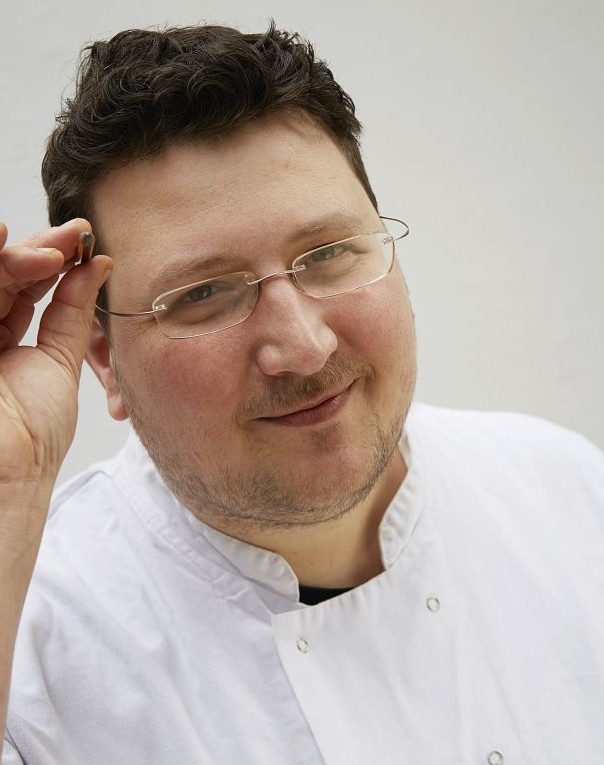
“We ended up in London completely by mistake. We didn’t plan on living here,” Srulovich said when asked about how they came to found Honey & Co.
Both he and Packer were working in the city — both of them worked for the Ottolenghi empire at one time or another — but “I always wanted to have my own restaurant. My wife never did, so originally we thought I would open something small and run it myself.”
But, the more they considered it, the clearer it became that both of them would need to work together.
“When you work in other kitchens, it can be very impersonal,” Srulovich said. “There’s always someone above you. You’re not the last word.”
Originally, they were looking at possible sites in south London — in Brixton and Clapham — near their home, but after two years of looking they hadn’t found anything.
Expanding the search north of the River Thames enabled them to stumble upon 25a Warren Street. They thought they could make it work — and indeed they have.
They weren’t locked on cooking Middle Eastern food initially. Whatever they needed to do to be successful was the order of the day. But now it’s hard to imagine Honey & Co. succeeding with anything else.

I asked Srulovich what, over time, he’s learned about what Londoners are and aren’t inclined to eat.
“Offal is always a hard sell,” he said, though he believes Londoners to be adventurous and willing to try almost anything once. “Offal is a huge part of Middle Eastern cooking. When we were kids, we were eating chicken livers and chicken hearts.” Fish on the bone is a really hard sell in London, too. “People don’t know what to do with it.”
Cooking Middle Eastern food in London has its advantages and disadvantages. Finding good produce was a struggle in the beginning but now they’ve found suppliers who understand their requirements.
“We always struggle with the vegetables and herbs to get the quality we get back home,” Srulovich said. “Things like tomatoes, eggplant, zucchini, peaches, plums — they need sun, they need heat to bring out their sweetness.”
On the other hand, “the meat we get here is spectacular,” he said, in a country where cows and sheep simply have more room to roam and graze, “and the fish is very good.”
Perhaps the most interesting aspect is that they have access to a whole range of dried herbs and spices you cannot find in Israel, such as imports from Lebanon, Syria and Turkey. “We have to work for it and buy everything retail, but it’s worth it,” Srulovich said.
Their customers, it seems, would agree.










The Times of Israel Community.