

Iran deploys long-range radar system on border
Home developed and manufactured air defense apparatus said able to detect small unmanned aircraft
 Add ToI as a Preferred Source on Google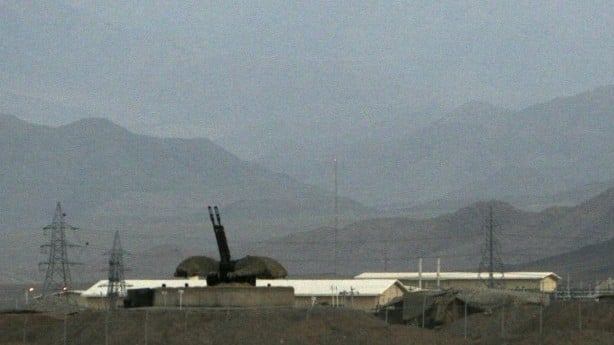
A new, long-range radar system designed by Iran’s air force has been deployed in the southwest of the country to bolster Iranian air defenses, official state media reported on Saturday.
Brigadier General Farzad Esmaili, commander of the Islamic Revolutionary Guards Corps’ (IRGC) air defense force, who unveiled the Ghadir phased-array radar, suggested that the system has the capacity to identify small unmanned aircraft, Reuters reported.
“Discovering and tracking micro aerial vehicles (MAV)… is one of the special qualities of the Ghadir radar system,” Esmaili was quoted by the semi-official Fars news agency as saying.
The array was placed near the city of Ahwaz in southwestern Khuzestan province, near the Iraq border and just north of the Persian Gulf.
According to Iranian officials, the Ghadir radar was designed and manufactured entirely within the country. The system, according to the officials, can detect a plane at a distance of 600 kilometers (373 miles) and a ballistic missile at 1,100 kilometers.
[mappress mapid=”5157″]
The announcement of the air defense system came months after Russia said it would ship Iran its advanced S-300 air defense array, as sanctions on Tehran are rolled back amid nuclear negotiations.
Despite the emerging agreement between Tehran and world powers, Israel has long hinted it would strike Iran if the Islamic Republic were deemed close to acquiring nuclear weapons.
The US also made similar statements in the past but has shied away from them in recent years as world powers and Iran have come close to clinching a nuclear pact.
On Saturday, the Associated Press reported that the so-called P5+1 world powers negotiating with Iran on its nuclear program had drawn up a draft document on the pace and timing of sanctions relief, advancing on one of the most contentious issues at their talks.
The development indicated the sides were moving closer to a comprehensive accord that would set a decade of restrictions on Tehran’s nuclear program in exchange for tens of billions of dollars in economic benefits for the Iranians, as they race to complete a deal after extending a June 30 deadline to July 7.
Israel has loudly lobbied against the emerging deal, arguing it will let Iran continue to enrich uranium for a nuclear weapons program while lifting sanctions that have crippled the country’s economy.
The US and much of the world fears Iran’s enrichment of uranium and other activity could be used to make nuclear weapons; Iran says its program is meant only to generate power and for other peaceful purposes.
The Associated Press contributed to this report.










The Times of Israel Community.