

Palmyra victory shows Assad, Putin finally confronting Islamic State
Unfortunately, a symbolic defeat in Syria for the terror group could raise its motivation to prove its ongoing strength with terror attacks in Europe

 Add ToI as a Preferred Source on Google
Avi Issacharoff, The Times of Israel's Middle East analyst, fills the same role for Walla, the leading portal in Israel. He is also a guest commentator on many different radio shows and current affairs programs on television. Until 2012, he was a reporter and commentator on Arab affairs for the Haaretz newspaper. He also lectures on modern Palestinian history at Tel Aviv University, and is currently writing a script for an action-drama series for the Israeli satellite Television "YES." Born in Jerusalem, he graduated cum laude from Ben Gurion University with a B.A. in Middle Eastern studies and then earned his M.A. from Tel Aviv University on the same subject, also cum laude. A fluent Arabic speaker, Avi was the Middle East Affairs correspondent for Israeli Public Radio covering the Israeli-Palestinian conflict, the war in Iraq and the Arab countries between the years 2003-2006. Avi directed and edited short documentary films on Israeli television programs dealing with the Middle East. In 2002 he won the "best reporter" award for the "Israel Radio” for his coverage of the second intifada. In 2004, together with Amos Harel, he wrote "The Seventh War - How we won and why we lost the war with the Palestinians." A year later the book won an award from the Institute for Strategic Studies for containing the best research on security affairs in Israel. In 2008, Issacharoff and Harel published their second book, entitled "34 Days - The Story of the Second Lebanon War," which won the same prize.
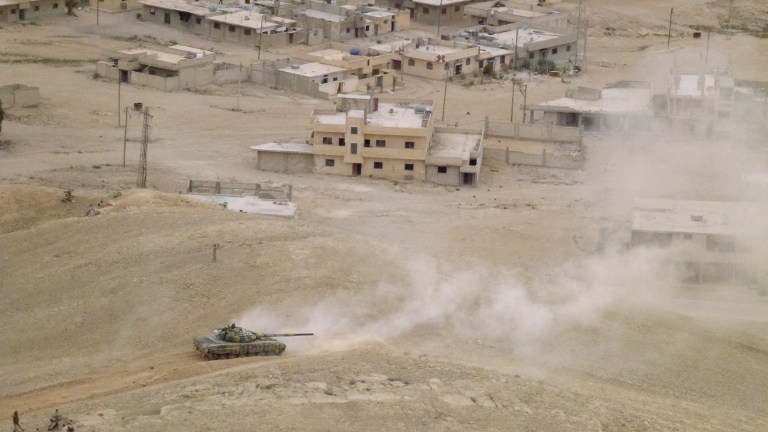
The commanders of the Syrian army announced on state television Sunday that their troops had completed the recapture of Palmyra, the resonant, ancient city in the Syrian heartland 130 miles north of Damascus.
According to the army’s announcement, this military victory proved that the Syrian army is the only force capable of defeating Islamic State in the country and marked the beginning of IS’s disintegration.
These claims, however, would appear to be some distance from the truth. The victory at Palmyra has some significance, of course, but it is important mostly at the symbolic level.
Islamic State conquered Palmyra ten months ago in a dramatic onslaught, with President Bashar Assad’s troops folding before it. Since then, Palmyra has served as a kind of western forward position for IS. Now, the terror group has been ejected almost as speedily as it arrived. The recapture was not particularly arduous or prolonged. Assad’s army took over large sections of the city even as IS fighters withdrew east, toward Deir a-Zur and Raqqa, its power centers.
Because of Palmyra’s ancient significance, its capture by Islamic State caused considerable international media buzz. But the terror group never utilized it as a military or civilian power center. It is a desert city, easily captured last year because of the weakness of the Syrian army. Today, facing Assad forces that are better organized and backed by massive Russian air support, Islamic State recognized that it was wiser concentrating its efforts on more significant locales, and less on desert areas of limited strategic importance.
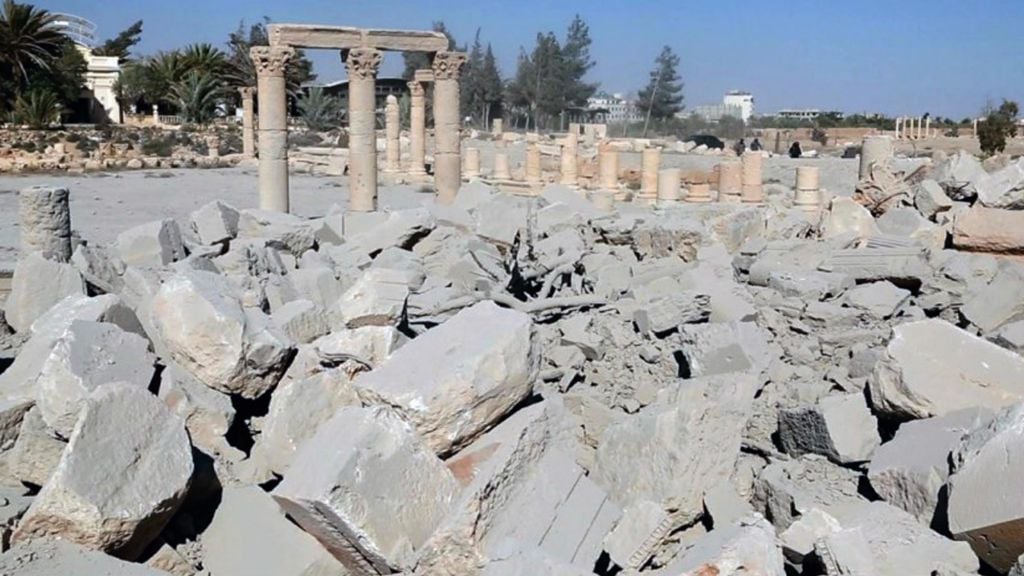
Nonetheless, in this interminable conflict, even symbolic achievements matter. This is, after all, the first major victory by the Syrian army against Islamic State since the Russian planes entered the fray. Hitherto, Assad’s forces have been focused on northwest Syria, in the Aleppo and Idlib areas where a variety of non-IS opposition forces are active. With the Palmyra battle, it would seem that the Russians and Assad have decided to directly confront Islamic State.
A further point worth stressing is that the reconquest of Palmyra demonstrates that, for all the dramatic reports of Moscow pulling its forces out of Syria, President Vladimar Putin still has enough planes to enable Assad to attain control of various areas.
[ndnvideo id=”30534871″]
Its defeat in Palmyra, even if the battle was barely contested, also adds to more bad news for Islamic State from other fronts. Recent days have seen the elimination of its number two in a US raid in Syria, and the start of an Iraqi operation against it in Mosul. It may be that the ring is beginning to tighten around Islamic State, from east and west.
Even if it is far from defeated, therefore, there is real progress against it on the ground.
Unfortunately, experience suggests that with military successes by the Syrian and Iraqi armies against Islamic State on the ground comes growing motivation by IS to carry out attacks in Europe. This is in order to ostensibly prove that the terror group is still alive, strong and succeeding in its war against the West.
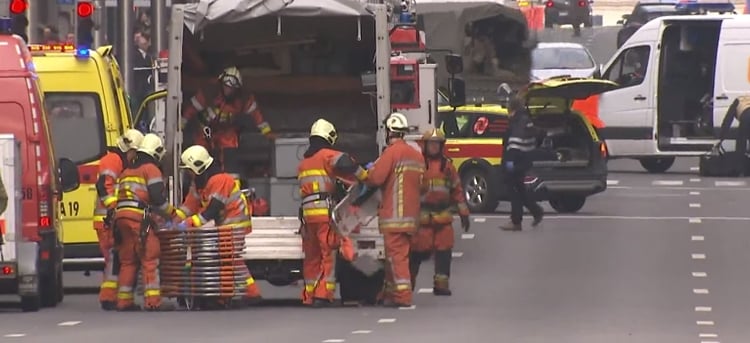
Grimly, in the wake of the Brussels attacks last Monday, Europe is right to be braced for more to come.



The Times of Israel Community.