

When the sukkah becomes home
Two Jerusalem residents find themselves extending their temporary lifestyle — all year round
 Add ToI as a Preferred Source on Google
Jessica Steinberg, The Times of Israel's culture and lifestyles editor, covers the Sabra scene from south to north and back to the center
When it comes to homes, the varieties are endless: spacious and small, spare and cluttered, simple and ornate. And then there’s the Matthews’s home, a mostly standard three-bedroom affair overlooking the Jerusalem Forest in the neighborhood of Har Nof that is an all-year paean to the festival of Sukkot.
Walk through their dining area and living room, past the family photos, the pile of carefully dried flowers artfully arranged in a pile, a scatter of figurines left by one of their young grandchildren, then traverse the living room, and you find yourself on a 30-meter porch transformed into a three-room sukkah for the duration of the eight-day festival — and for the rest of the year.
This isn’t about splendor or a grand swath of space in a city that is generally limited when it comes to living space. It’s simply about a couple who relish the space and freedom that comes with living slightly closer to the natural elements. Call it vacation-style living, with a refined, urban twist.
“It grew in stages,” said Shimon Matthews, a Harvard University-trained doctor who has his own Chinese medicine practice. “At some point, different parts of the sukkah stopped coming down.”
There are no poles or white muslin walls in this sukkah, nor a roof made of bamboo rolls. Instead, two of the walls are the Jerusalem stone exterior of the apartment, and the third is a PVC-framed window at the far end. The schach — the traditional temporary roof of a sukkah — is a roof of reeds, dried and bleached by the sun over the years, covered after each Sukkot by a plastic screen that keeps out the rain and other elements during the Jerusalem winters. And the furniture? No folding tables or chairs, and not a naked light bulb in sight. This is a real dwelling.
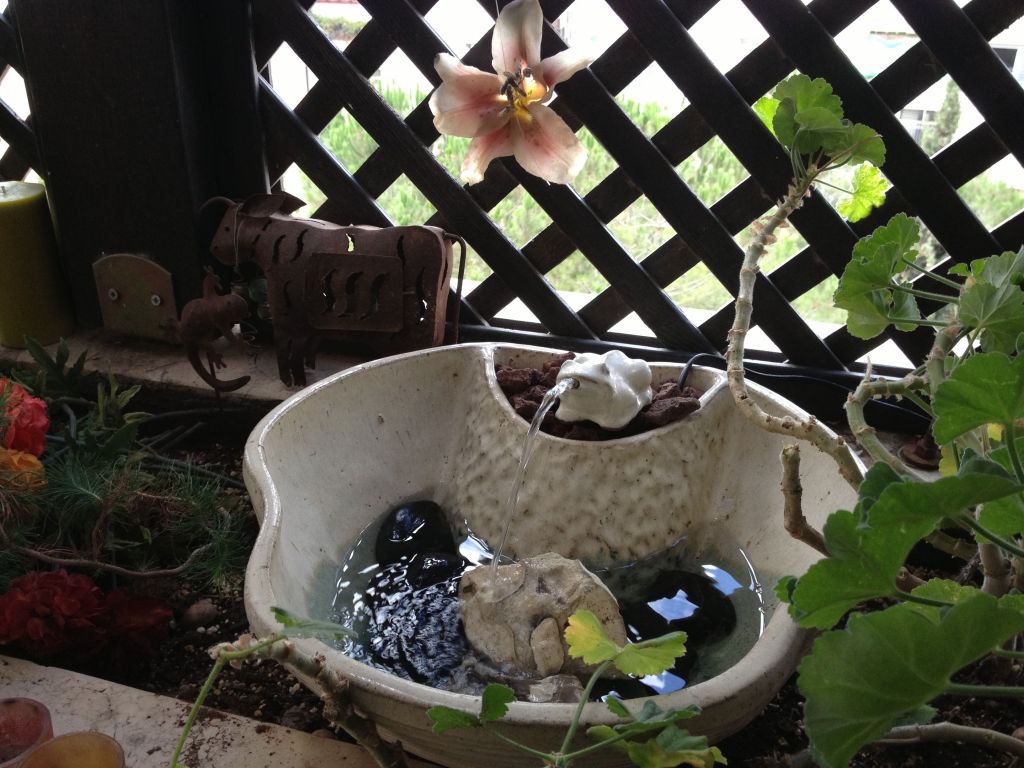
At the far end is the bedroom, a zen-like space occupied by a bed and a canvas swing, and pervaded by the soothing burble of the stone water fountain on the ledge of the porch.
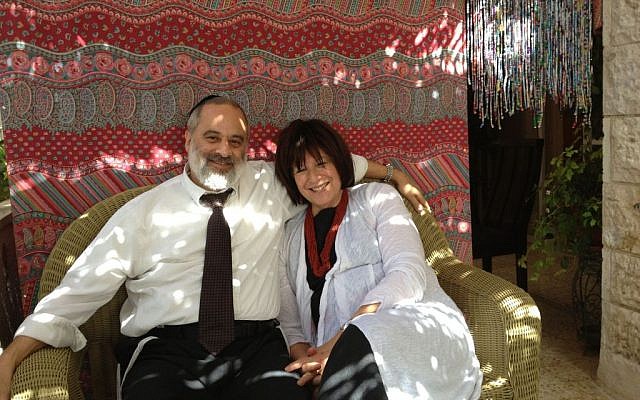
The next space is the “living room,” a grouping of two rattan chairs, a table and a couch, framed by a fabric-covered wall that doubles as the canvas for a mural behind the dining room table. That furniture also stays during the rest of the year, as do the rattan window shades that keep out the sun along the entire length of the balcony.
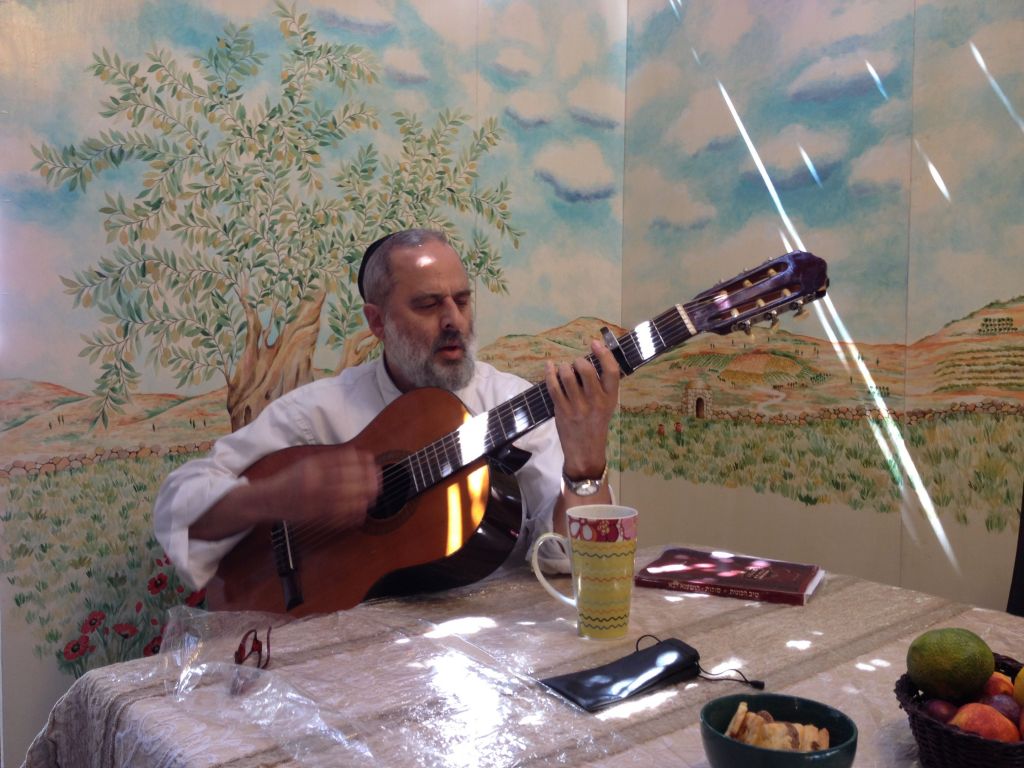
To get to the next room, there’s a curtain of paper beads handmade by Cheryl Matthews — think Martha Stewart, if the doyenne of culinary arts and crafts frequented secondhand stores and lived in Jerusalem — leading to the dining room, the formal part of the sukkah, framed by a four-paneled mural of the Temple and the olive tree-filled fields surrounding it.
“It’s an elegant sukkah,” said Cheryl, who runs the medical practice with her husband. “We never did kids’ decorations.”
-
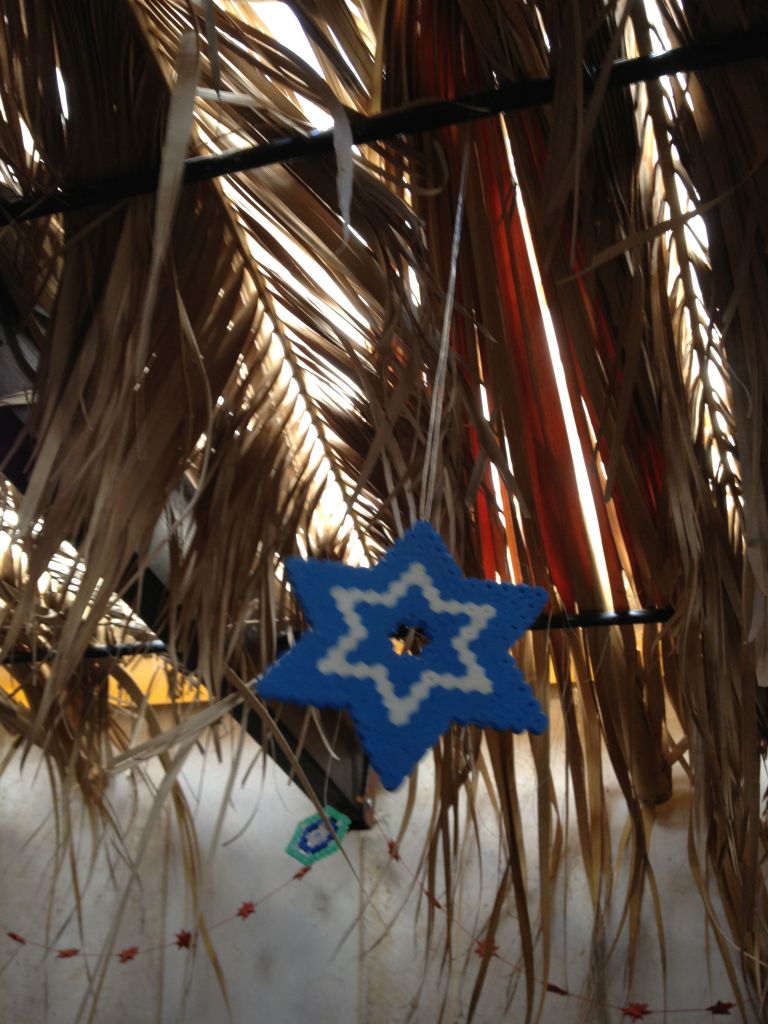
- The only Sukkah decorations left from the Matthews’ kids are these ironed bead decals, hung in the dining room portion of their three-room sukkah (photo credit: Jessica Steinberg/Times of Israel)
-
- Shimon Matthews, a practitioner of Chinese medicine, loves the soothing sounds of water, and installed this fountain on the sukkah porch (photo credit: Jessica Steinberg/Times of Israel)
-
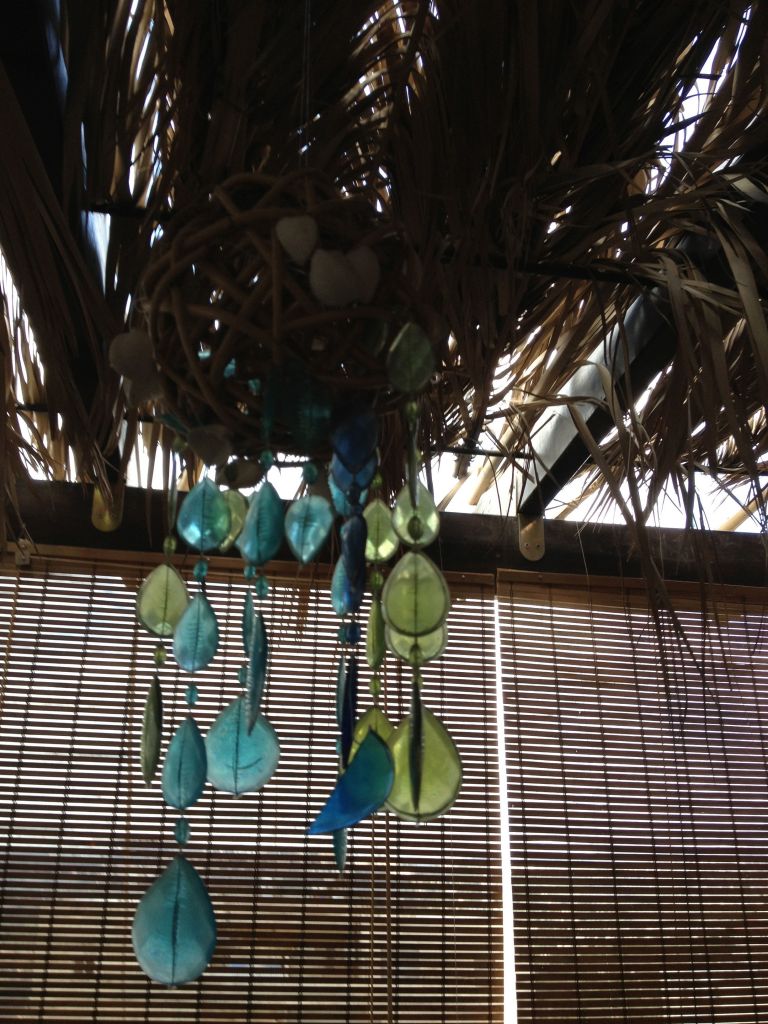
- A master of recycling crafts, Cheryl Matthews strung pieces of her daughter’s beaded curtain around wicker balls for a Sukkah decoration (Jessica Steinberg/Times of Israel)
-
- Handmade paper beads rolled by Cheryl Matthews and then strung into a curtain (photo credit: Jessica Steinberg/Times of Israel)
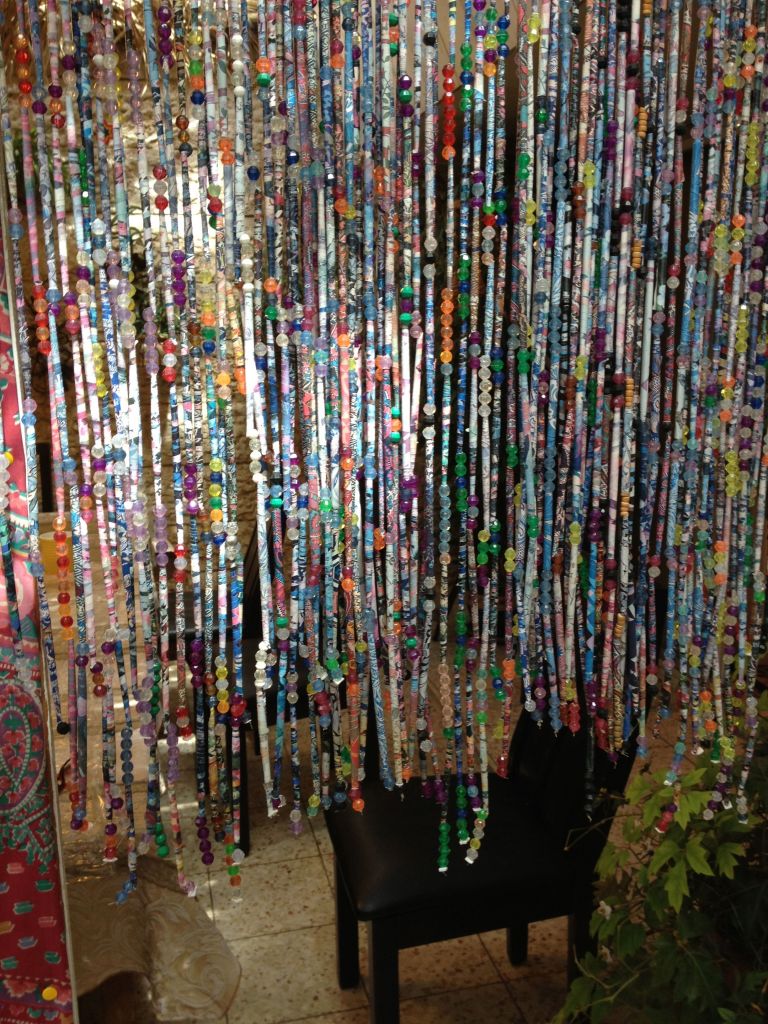
Well, except for the colorful ironed-bead ornaments dangling above the dining room table. But even those are hung sparingly, remnants of childhood crafts, in rainbows, stars and hearts. And while she admits that there were once plastic toys scattered around when their three kids were younger, the rest is all Cheryl; her particular way of looking at shapes and colors, and her penchant for recycling bits and pieces, such as a book of papers picked up at Steimatzky that became handmade beads, or the wicker balls strung with colorful plastic pieces of what was previously her daughter’s store-bought bead curtain.
She’s a collector of items, whether coral-colored shells layered in a square vase, a tiny, dried seahorse found during a Netanya beach stroll, or desert branches from the Negev, hung just so from their perch on the sukkah wall.
In fact, when the Matthews sit in their sukkah, they spend time being creative. She saves up craft projects to work on, while he learns and writes songs that he then plays on the guitar sitting in the corner.
“We used to entertain a lot in the sukkah,” she said. “But it’s really become our refuge, our haven.”
Maybe that’s why they’re careful about keeping it theirs, given that this outside space has become part of their permanent home. There’s a particular sense of privacy they experience in their sukkah, even if it is exposed to the other sukkot in the neighborhood, particularly at this time of year.
And despite that proximity to the neighbors, what’s perhaps best about this open living room is that it’s left standing after the holiday, when everyone else moves back inside. The Matthews get to remain in their elegant hut with a window to the world around them.
“We sit out here, and despite the vulnerability of being open to the elements, the sukkah is a hug,” she said. “We feel like we get dollops of holiness.”









The Times of Israel Community.