

100 years of saving Jews depicted in NY JDC exhibit
‘I Live. Send Help’ provides a look back through the Joint’s century of renewal, rebuilding and relief
 Add ToI as a Preferred Source on Google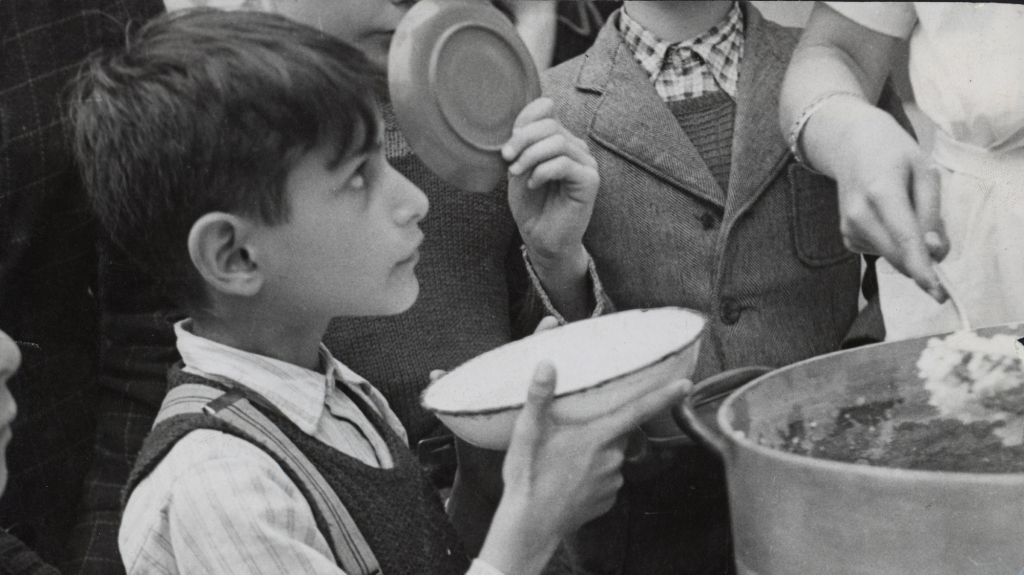
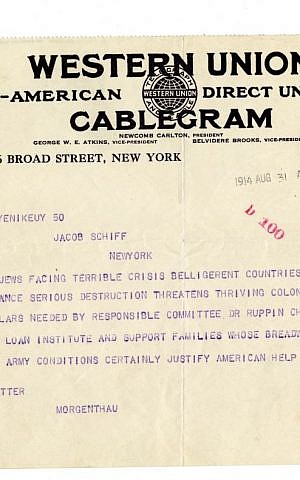
NEW YORK — It all began with a cablegram in 1914. “Palestinian Jews facing terrible crisis belligerent countries stopping their assistance serious destruction threatens thriving colonies,” wrote Henry Morgenthau. The US ambassador to the Ottoman Empire was reaching out to New York philanthropist Jacob Schiff asking for $50,000 to help the Jews in Palestine. Within the month, Schiff secured the funds and sent them over.
This was the beginning of the American Jewish Joint Distribution Committee, a coming together of three different organizations united to help save Jews worldwide in distress. Now, 100 years later, the JDC is celebrating its centennial with an exhibit in the New York Historical Society.
Called “I Live. Send Help” after another important cablegram, the exhibit walks through the century of JDC existence, giving a glimpse into the many ways the organizations has helped Jews and non-Jews around the world. (The titular cable was sent in June of 1945 from a survivor in Warsaw named Luba Mizne, who simply wrote, “I live require help.”)
“Our goals were to celebrate JDC’s centennial by showcasing some of the treasures of the JDC Archives,” said Linda Levi, assistant executive vice president of the JDC. “The viewer will come away from this exhibit with a feeling for Jewish history over the last 100 years and the role played by ‘the Joint’ in so many places around the world.
“It highlights the lengths to which the Joint went to save Jews, to bring relief in times of need, and to rebuild and renew Jewish life,” she said.
Since those early cablegrams, the JDC has helped people in difficult situations all over the world, ranging from sending goods to Holocaust survivors in Displaced Persons camps and helping Jews who immigrate to Israel, to relocating refugees from Sarajevo and educating Jews in the Soviet Union. And while there are countless stories and photographs, the “I Live. Send Help” exhibit takes just a few of the most emblematic memories.
One of the more touching sections of the exhibit is a montage of photographs from all places and times that each portray a time where the JDC has helped those in need. One picture shows a boy waiting in line at a soup kitchen, another shows Yemenites who have moved to Israel.
But the exhibit goes beyond mere images. There are sound recordings, including an old radio broadcast of Jewish celebrity Eddie Cantor asking Americans to participate in the JDC’s SOS campaign and send goods to survivors in DP camps after World War II. The exhibit also includes video footage of WWII and the hardships in Sarajevo.

On top of the multimedia on display, the JDC also rounded up some articles that give a fascinating look into the organization’s history. One artifact is a bar of soap — but this bar of soap is no ordinary bar of soap. The soap belonged to Dr. Orly Ardon, currently a professor at the University of Utah, whose mother received it at a DP camp after surviving Bergen-Belsen.
Another meaningful relic in the exhibit is a young girl’s dress. The JDC gave this dress to a young girl who was born in the DP camps, and that young girl grew up to work for the JDC, where she framed and hung the dress in her office.
While the majority of the exhibit centers around the JDC’s work surrounding WWII, it also highlights the organization’s continued activities to this day. Recently the organization sent help after the typhoon in the Philippines and the Haitian earthquake, and the JDC is helping people in the Ukraine at a frantic pace.
As Marilyn Satin Kushner, the exhibit’s curator, explained, “The JDC is there when help is needed.”
The “I Live. Send Help” exhibit will be on display at the New York Historical Society through September 21.









The Times of Israel Community.