

A seasoned journalist brings her Israel reportage to fiction
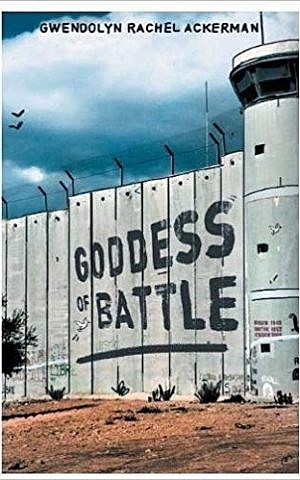
‘Goddess of Battle’ is Gwen Ackerman’s personal treatise about the Israel-Palestinian conflict, looking at the ‘bad and good on both sides’
 Add ToI as a Preferred Source on Google
Jessica Steinberg, The Times of Israel's culture and lifestyles editor, covers the Sabra scene from south to north and back to the center
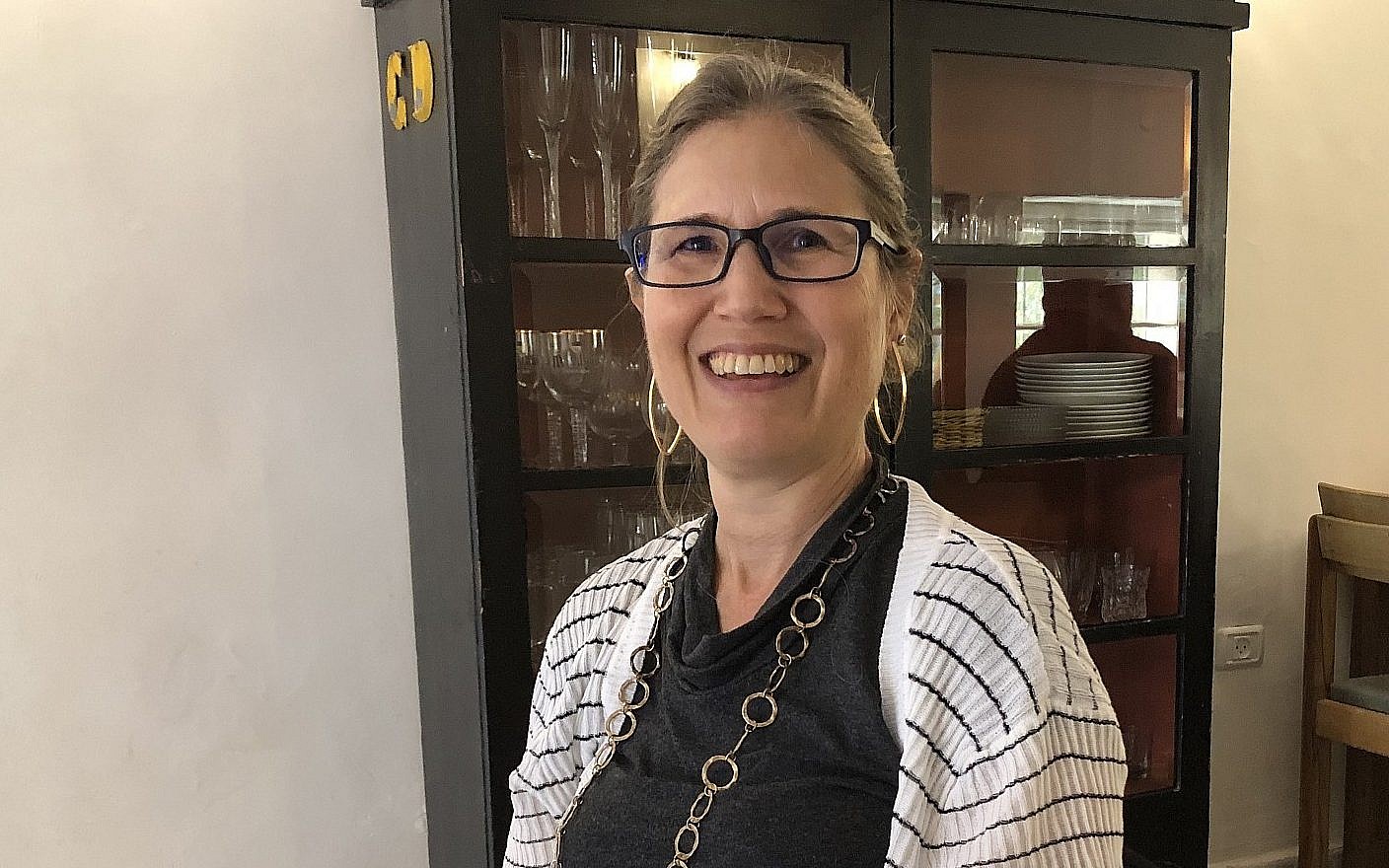
It was three decades of reporting on the Israeli-Palestinian conflict that made Gwen Ackerman want to write “Goddess of Battle,” her first novel about the region she has lived in for the last three decades.
“The more you cover the story here, the more you realize that truth is so multifaceted here,” said Ackerman, sitting at a Jerusalem cafe this week. “I wanted to write this book and to show that there’s bad and good on both sides.”
Mission accomplished with “Goddess of Battle” (Black Rose Writing), Ackerman’s novel about Tyra, a New Yorker with liberal, Jewish parents and a feisty Holocaust survivor grandfather.
Tyra unexpectedly comes to Israel, joins the army, and befriends, in turn, Israelis, a fellow immigrant, a settler Israeli, and, eventually, Noureen, a Palestinian young woman from Bethlehem who experiences her own emotional turmoil.
Together, Tyra and Noureen challenge the status quo of their rocky situation, questioning their place in the volatile environs of the Middle East, until they finally figure out their own way of challenging it.
It’s a novel that encompasses much of what has taken place during Ackerman’s years of living in Israel, covering the Middle East conflict for ABC News, as well as wire services Reuters and Associated Press.
Originally from the US, and brought up in a Reform Zionist home, Ackerman, 54, underwent her own immigration and acclimation to Israel. She’s also married to an Israeli and has three kids of her own.
Still, despite those surface similarities to the character of Tyra, there’s not much of Ackerman herself in this debut novel.
“A lot of the main character’s experiences happened to me, and were incorporated into her character,” said Ackerman. “But my outlook on the conflict has changed and the conflict has changed, and my experiences have changed. A lot of my reason to write this is to kind of release the trauma of covering the conflict.”
While the novel was published in 2017, it references events and situations of the last 20 years, such as the spate of bombings in the early 2000s that affected Ackerman most personally.
It was while she was working at AP that a set of bombings rocked the nearby Mahane Yehuda market, a five-minute run from the office and an event that Ackerman covered herself.
“The little boy on the stretcher looked exactly like my son, and it was very traumatic to me,” she said. “I had to write it and process it somewhere.”
She began writing “Goddess of Battle” more than 14 years ago, when her youngest, now 17, was still a toddler. At the time, the Oslo Accords were still in place and the suicide bombings and 9/11 attacks were fresh in Ackerman’s mind.
“Now it’s rocket attacks instead of bombings, but all these major experiences were imprinted on my psyche,” said Ackerman. “Almost everybody in Israel walks around with some kind of PTSD” — post traumatic stress disorder — “and that doesn’t diminish what the Palestinians go through, either.”
For Ackerman, the challenge was to make Tyra as objective as possible, a left-wing New Yorker who is unlikely to come to Israel. Tyra is a follower, pointed out Ackerman, and has very little personal ideology before she finds herself joining the Israeli army and being posted at the Bethlehem checkpoint.
“What does she think?” said Ackerman.
Tyra is juxtaposed by Noureen, a serious, educated young woman from Bethlehem who is undergoing her own experiences that are both counter and similar to Tyra’s life.
“The idea was to take all these different narratives and kind of show that each person has what they believe in, and neither are bad or good,” said Ackerman. “Otherwise, there’s no hope here.”
Ackerman wanted the book to be about women’s empowerment, about how women can change the world, particularly in this corner of the globe — an element that’s worked into the novel.
Now she’s working on her second novel, a story about an archaeological dig that brings another young American to Israel, exploring the seam between the age of polytheism in ancient Israel, the development of the biblical land of Israel and the role of women in ancient times.
“There’s a lot more research in this one,” said Ackerman, who is working on a creative writing master’s degree at Bar Ilan University. “These are stories that are just inside of me.”






The Times of Israel Community.