

After killing, army unlikely to heed calls for revenge against Palestinians
Since outbreak of violence in October 2015, IDF chief has practiced restraint, forgoing collective punishment, and that’s not liable to change in wake of Raziel Shevach’s murder

 Add ToI as a Preferred Source on Google
Judah Ari Gross is The Times of Israel's religions and Diaspora affairs correspondent.
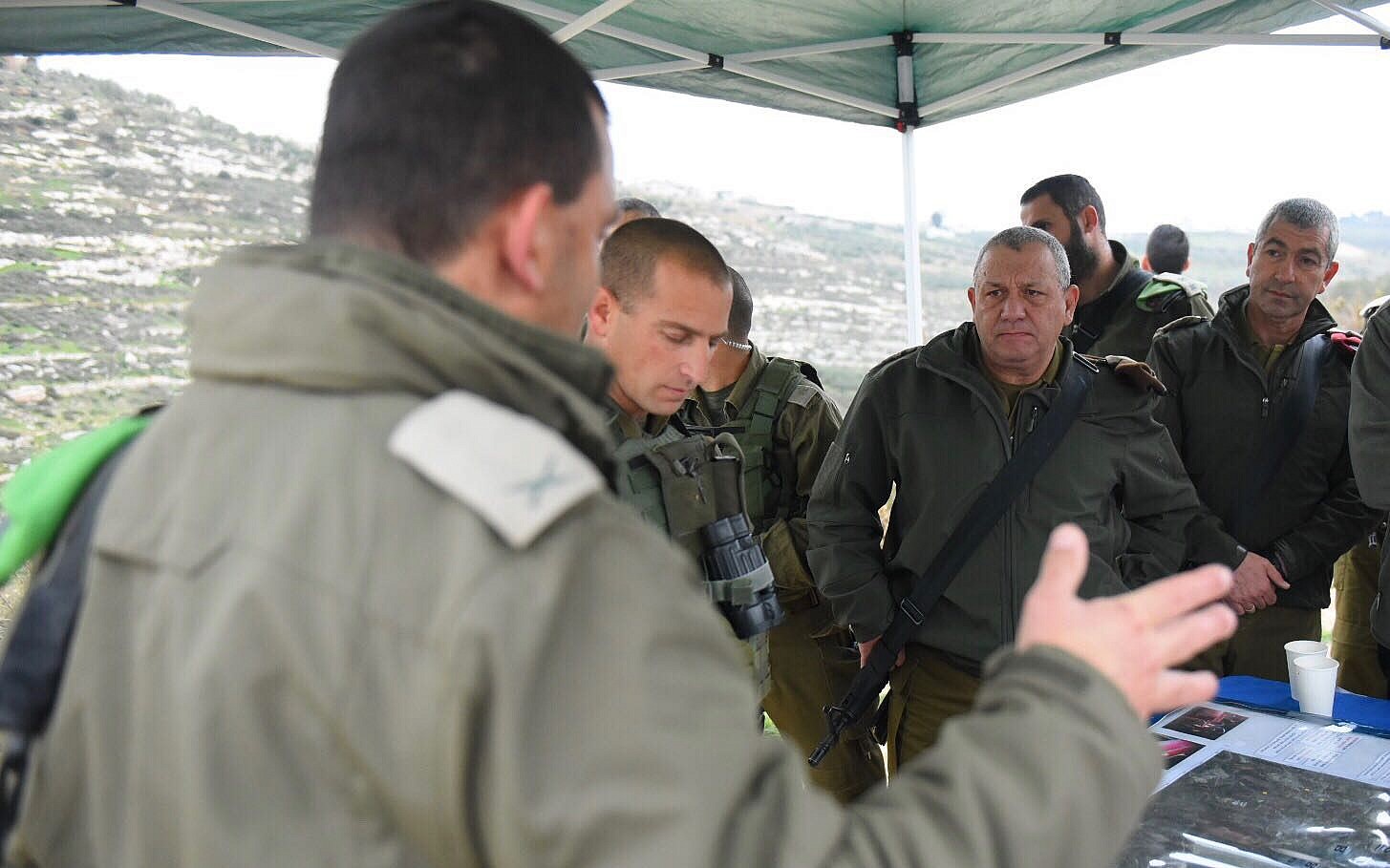
National and local politicians have led calls for the army to undertake aggressive action against local Palestinians in the wake of a deadly West Bank shooting attack Tuesday night, but it’s unlikely IDF brass will risk sparking a wider conflagration with a large-scale crackdown.
Following Tuesday night’s terror attack in which an Israeli rabbi, Raziel Shevach, was shot dead in the northern West Bank, national and local politicians — as well as mourners at Shevach’s funeral — called for the army to take decisive action against the Palestinian residents of cities and towns in the area, but such an aggressive military response is unlikely to come.
In the more than two years since the outbreak of renewed, regular violence in the West Bank and East Jerusalem, the military under IDF Chief of Staff Gadi Eisenkot has maintained a policy of refraining from excessive collective punishment following terror attacks, with the understanding that allowing Palestinians to conduct their lives as usual removes sources of friction that could otherwise lead to additional acts of terror.
In short, Palestinians going to university or work are less inclined to try to stab a soldier or ram a car into people waiting at a bus stop, as compared to Palestinians stuck inside their village with nothing to do.
The murder of Raziel Shevach, killed in a drive-by shooting near the Havat Gilad outpost where he lived south of Nablus, is unlikely to change that, though settler leaders and others have urged aggressive action.
“As soldiers in uniform, we need to adopt a wide, civilian view, with an understanding that functioning civil life for the entire population of Judea and Samaria is a factor in our ability to fulfill our mission. We must allow schooling, employment and movement,” Eisenkot said last month at an event hosted by the Israel Democracy Institute.
We need a professional and focused policy. It’s not that suddenly there’s a terror attack and everything is permitted
“We need a professional and focused policy. It’s not that suddenly there’s a terror attack and everything is permitted,” he said in December.
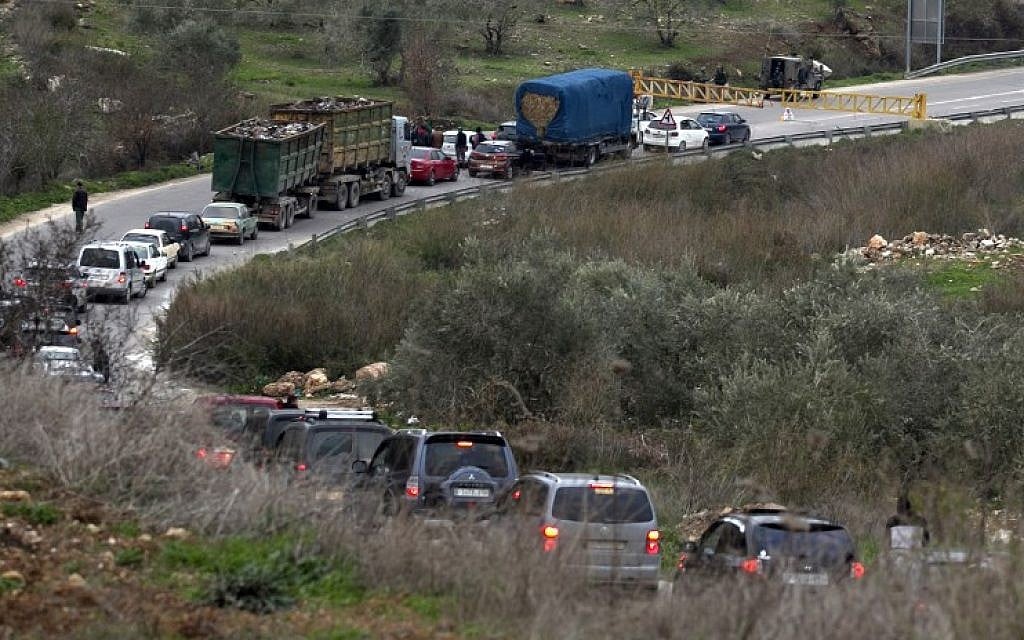
The army has therefore relied on so-called “breathing closures,” where checkpoints are set up at the entrances to villages and cities, allowing soldiers to inspect the people going in and out in order to search for suspects and spot suspicious characters, while also letting the Palestinian residents go about their business.
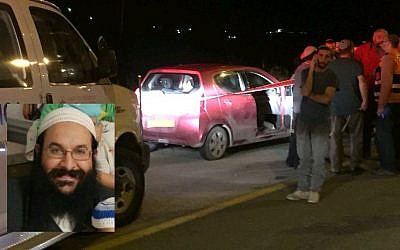
Following Tuesday’s attack, the army launched a manhunt in order to find the perpetrators of the attack, setting up checkpoints and roadblocks throughout the northern West Bank, including the large town of Hawara and the city of Nablus, which is home to more than 150,000 Palestinians.
Later on Wednesday morning, some of those checkpoints were taken down, angering among local settlers, including one activist who berated Eisenkot as he visited the area.
At Shevach’s funeral in the illegal Havat Gilad outpost, mourners interrupted a eulogy by Education Minister Naftali Bennett with chants of “revenge, revenge.” The killing came days after the Knesset gave an initial go-ahead to a bill which would allow Israel to execute terrorists in some cases.
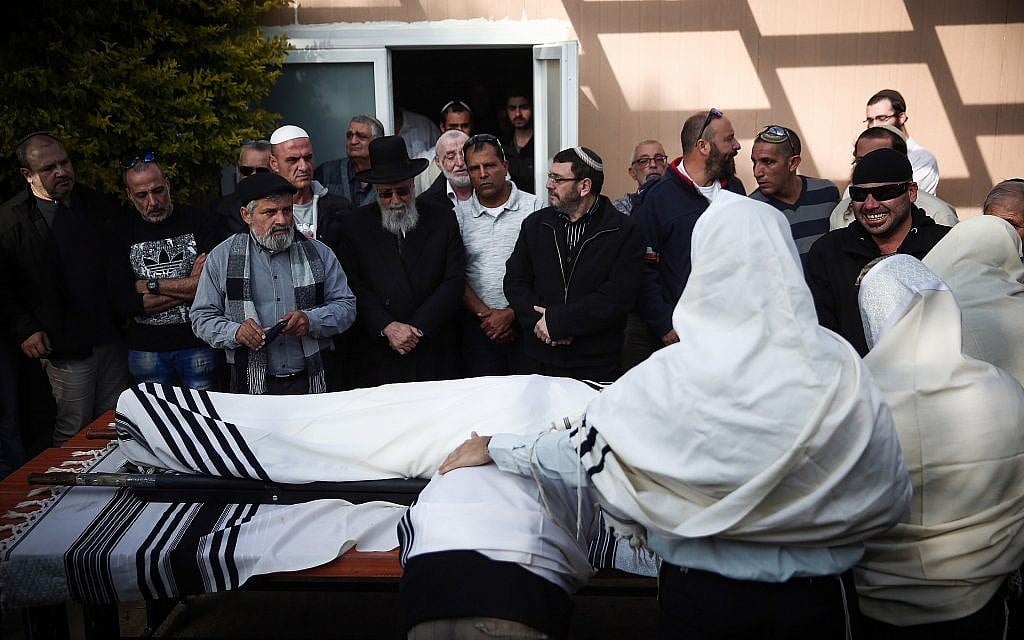
Yossi Dagan, the head of the local regional council, said at the funeral, “We have the strongest army in the world, we demand that the army bring day of vengeance upon the killers. We want to bring back our national pride.”
Speaking on Israel Radio on Wednesday, Agriculture Minister Uri Ariel said it was “time for there to be killed and injured among the Palestinians.”
On Twitter, far-right MK Bezalel Smotrich warned that the army needed to act “if it doesn’t want the grieving population to take the law into its own hands. We can start with immediate home demolitions, expulsion of families, mass cancellation of work permits, sieges and closures of terrorists’ villages.”
A small number of settlers on Tuesday night and early Wednesday morning did, in fact, take the law into their own hands, throwing rocks at Palestinian cars, villages and people in the northern West Bank, until IDF troops arrived at the scene and asked them to stop. Four Palestinians were lightly injured.
With the exception of home demolitions, which Eisenkot supports, and possibly expulsions, on which he hasn’t publicly commented, the army chief is staunchly opposed to Smotrich’s proposal.
We have a standing policy to refrain from putting in place closures… even if it is infuriating and people’s blood is boiling
In his lecture in December, Eiesnkot maintained that closures are not necessary for the army to operate and can, in fact, hinder its ability to do so.
“We have a standing policy to refrain from putting in place [full] closures and sieges after terror attacks, from an understanding that this doesn’t help us carry out our mission, even if it is infuriating and people’s blood is boiling,” Eisenkot said at the IDI event.
The army chief is also a vocal advocate of allowing Palestinians to work inside Israel and in Israeli settlements in the West Bank, as exceedingly few people with active work permits — or their children — have committed terror attacks.
“The right thing to do is to allow the rest of the population to work, to make money and to study — to refrain from collective punishment. And this does not contradict the determined and focused fight against terror,” the army chief said in December.
“This restraint… allows us to do our job — it doesn’t come from kindheartedness,” he added.
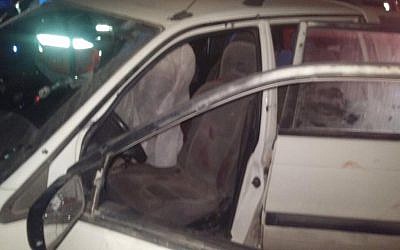
The military chief has credited these policies with halting the wave of stabbing, car-ramming and shooting attacks that began in October 2015, with the murder of Naama and Eitam Henkin, who were shot to death as they drove down a West Bank highway, with their children in the backseat.
“Within four to five months we succeeded in stabilizing the situation,” Eisenkot said earlier this month at a conference at the Interdisciplinary Center in Herzliya.
Statistics collected by the Shin Bet security service show a massive spike in the number of terror attacks beginning in October 2015 and lasting through January 2016, before leveling off and remaining more or less consistent with the number of attacks before the Henkins’ murder.






The Times of Israel Community.