

As bulldozers near, outpost residents vow they’ll be back, and they may be right
15 families in Nativ Ha’avot neighborhood in settlement bloc south of Jerusalem feel imminent razing will ultimately strengthen their claim to hilltop
 Add ToI as a Preferred Source on Google
Jacob Magid is The Times of Israel's US bureau chief

With the court-ordered demolition of their homes just hours away, residents of the Netiv Ha’avot outpost say they will be returning to the West Bank hilltop. It’s a familiar refrain among outpost residents whose homes are demolished, reeling as the bulldozers close in.
“Losing one’s home is incredibly painful… but we believe that we will be able to return to houses in the same location. It doesn’t really matter if they’re a few meters to the right or left,” said Itan Hay on Monday.
But unlike other outposts, which are usually razed for good, the 15 families of Netiv Ha’avot who are looking at demolition likely have a case, thanks to court rulings coupled with a series of government moves aimed at legalizing their claim on the piece of land abutting the Elazar settlement south of Jerusalem.
The September 2016 High Court of Justice ruling that initially sanctioned the Tuesday razing of half of the neighborhood concluded that the houses had been built without the necessary permits on parcels not considered “state land.”

However, the ruling was based on a land survey, which found that — save for two narrow strips on which the 15 homes were built — the remaining acreage where more than 20 other families live is considered state land.
Recognizing that it could not save the homes affected by the High Court ruling, the cabinet in February approved a proposal to begin the process of legalizing the rest of Netiv Ha’avot. The residents plan on utilizing the authorization of an official building plan to advance the construction of 350 more homes in the neighborhood.
“For every home that will be demolished, we will build 30 more in its place,” said Hay proudly.
A group of seven Palestinians have claimed ownership of the land on which Netiv Ha’avot was established in 2001, insisting that they were expelled by Israeli settlers. It was their petition that led to the High Court decision ordering the razing.
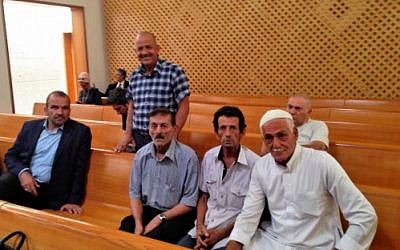
While they possess several documents showing partial ownership of the land since the Ottoman era, the High Court has yet to grant them ownership to any of the land in question.
The Peace Now settlement watchdog has backed the Palestinian petitioners, asserting in a Monday statement that the demolition will demonstrate that “anyone who builds on land without authorization or even purchasing it first will ultimately be compelled to leave.”
The left-wing NGO called on the government to allow the Palestinians to return to their farms.
But Hay claimed that the land adjacent to Elazar had been unworked until the turn of the 21st century. “The community was established in light of the Arab attempt to seize the land,” he said. “It was an ideological decision on our part.”
He acknowledged that the Civil Administration — the Defense Ministry body that authorizes construction in the West Bank — had issued demolition orders against the first homes in the neighborhood from the moment ground was broken. However, Hay pointed out that “this is how communities (in the West Bank) were built in the past. Build first and get approval after.”
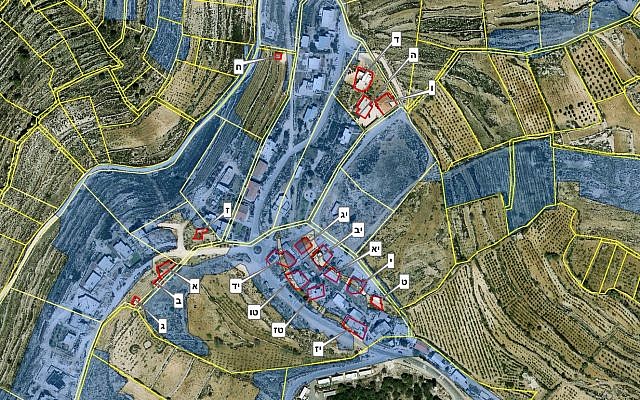
Moreover, the Netiv Ha’avot resident pointed out, the Gush Etzion Regional Council — the local government — had paid for the infrastructure of the homes and told the residents that they would eventually be legalized.
To the 37-year-old father of three, the Tuesday demolition is the result of a “leftist” court that “simply opposes settlement in Judea and Samaria.”

“There’s a deep feeling of injustice,” he said, lamenting the judges’ refusal to accept alternative solutions proposed by the residents, which included sawing off the problematic parts of six homes which only marginally sit on the two narrow strips of acreage not considered to be state land.
But Hay clarified that the feeling was not one of betrayal against Prime Minister Benjamin Netanyahu’s government, which did not prevent the demolition.

“There was nothing for [the coalition] to do because of mistakes it’s made in the past,” he said, explaining that there had been a lack of urgency on the government’s part to legalize the outpost prior to the High Court petition. But he acknowledged the support received from nearly every minister who spoke out against the final ruling.
Explaining it to the children
Hay’s wife Oli was among the first residents of Netiv Ha’avot. Her parents helped establish the neighborhood, moving there with her and her siblings when she was 15 years old.
“It’s a combination of personal and communal disappointment,” she summarized. “I think about my parents who helped build this place and now have to watch their daughter’s home be demolished.”
She said she’s had a hard time explaining the demolition to her children ages 8, 6 and 1.
“It’s hard to explain to a child, ‘look how because of our sacrifice, the settlement movement will be stronger,'” said Oli.
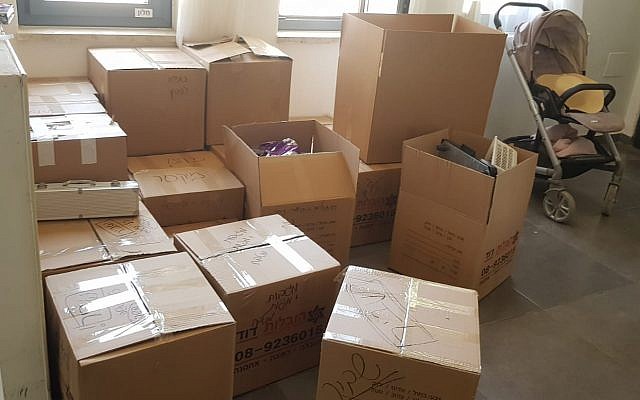
Along with many of the other younger children in the neighborhood, the Hays’ eldest son has undergone psychological treatment to prepare him for Tuesday’s demolition.
The 8-year-old has insisted on being there on the day the bulldozers arrive, which his psychiatrist has encouraged. “She worked with children during the evacuation of Gush Katif and she said that those who weren’t allowed to be there were left with scars,” Oli recalled.
She added that she has been taking her children every day to visit the modular home where they will be living starting Tuesday evening.
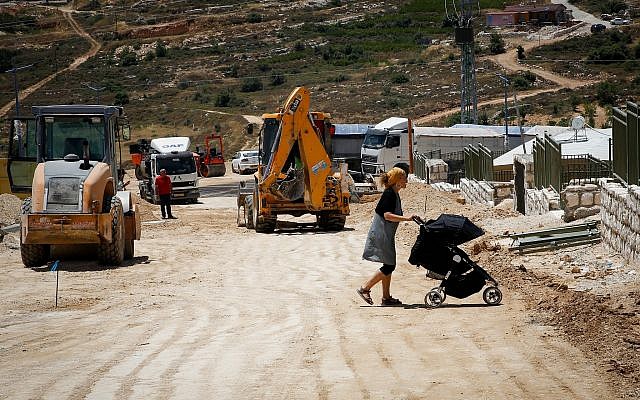
The state has built a temporary neighborhood on an adjacent hilltop for the 15 Netiv Ha’avot families, who are expected to live there for the next 2-3 years while permanent homes are rebuilt on the original hilltop where the community was founded.
“We’re trying to show our kids that it’ll be okay and that we fought for the land of Israel, that we were privileged to settle the land and that we will do so again in an even greater capacity,” said Itan Hay.
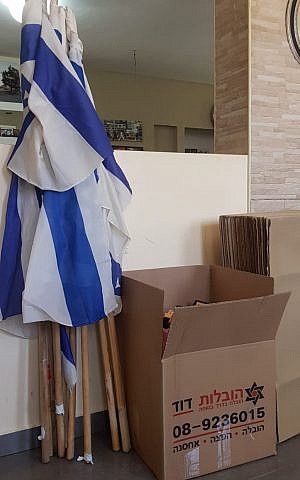
“We’ve been telling them that at the end of the day, the family is the most important thing. The house is really just stones.”
Nonetheless, the Netiv Ha’avot resident recognized that there’s a difference between what he and his wife have told their children and what they’re going to endure.
“Every room in our home is full of memories that are pretty much going to be destroyed before our eyes,” Itan lamented.
The couple called on Israelis to come to the outpost and support them on the morning of the demolition, though unlike the last major demolition, of the Amona outpost, Netiv Ha’avot residents are vowing to keep their protest peaceful.
“We are not calling for violence. We are normal people,” said Itan, employing a line frequently used by the Gush Etzion residents over the past year in their effort to gain sympathy from the broader public.
“It’ll be a very hard day tomorrow, but I want people to see that our dedication is toward the future and strengthening the settlement movement,” Oli said.










The Times of Israel Community.