

Baghdad is not about to make peace, but Israel can back Iraqis’ right to dissent
Furious official reaction to normalization conference was predictable, as Abraham Accords have yet to attract new members after Trump-Netanyahu era

 Add ToI as a Preferred Source on Google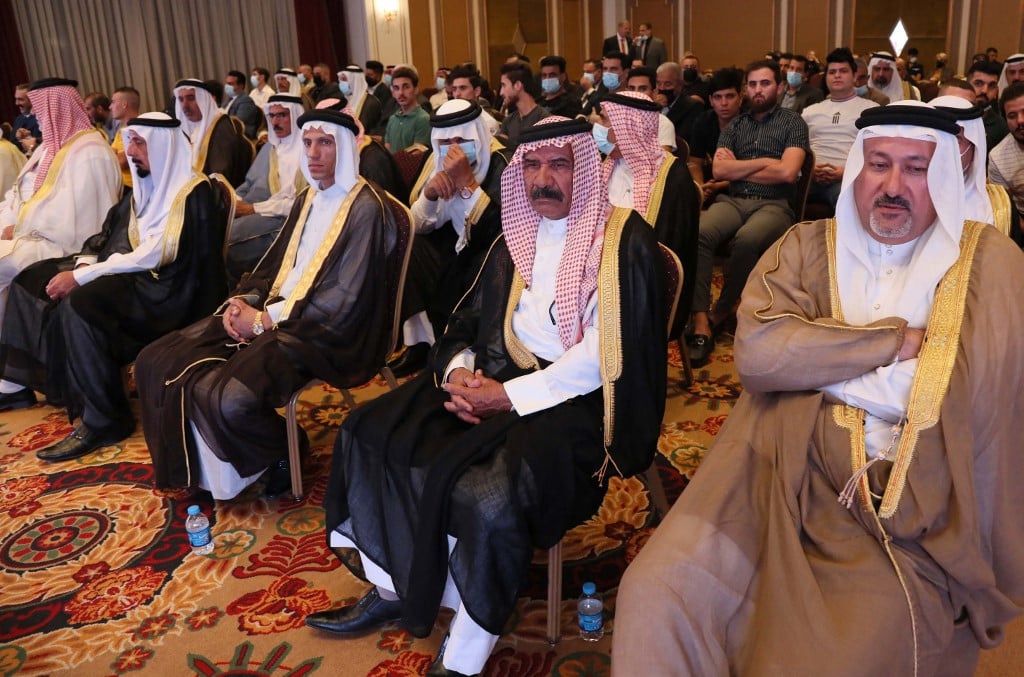
After the excitement last year over the previously unimaginable wave of normalization agreements between Israel and Arab countries, the Abraham Accords entered the doldrums.
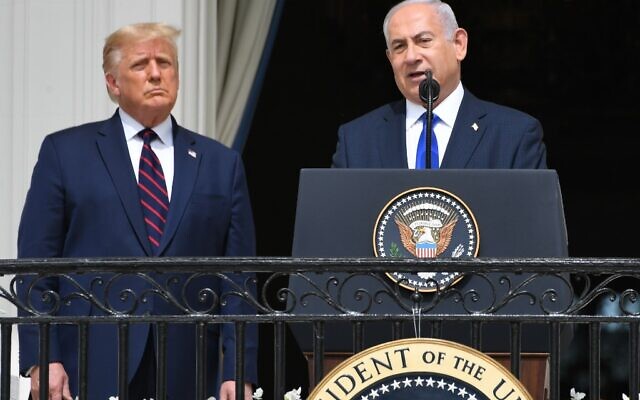
The leaders at the center of the agreements with the United Arab Emirates, Bahrain, Morocco, and Sudan — United States president Donald Trump and prime minister Benjamin Netanyahu — were both voted out of office.
US President Joe Biden and his advisers showed inconsistent enthusiasm for expanding the agreements, largely eschewing the term “Abraham Accords” and missing the first anniversary of the announcement of the impending ties, before putting together a Zoom event hosted by US Secretary of State Antony Blinken on the anniversary of the signing on the White House lawn.
Prime Minister Naftali Bennett and Foreign Minister Yair Lapid, on the other hand, have been consistently trying to blow new wind into the sails of the accords, expressing their desire to expand them to more countries at every opportunity.
But in spite of their enthusiasm, they have been unable to point to any tangible progress beyond opening the new embassies that were promised during the Netanyahu era, and building the framework for the growing ties with existing partners.
The countries that experts named as candidates to join the accords while Netanyahu and Trump were in office — Mauritania, Oman, Saudi Arabia and Indonesia — remained on the sidelines.
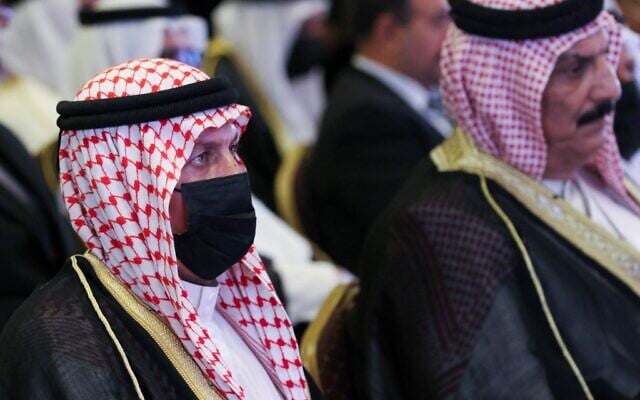
But then came the dramatic news, out of Iraq, of all places: On Friday night, over 300 Iraqis gathered in the country’s Kurdistan Region to issue statements backing normalization with Israel.
Lapid was ready with an expression of support, telling The Times of Israel immediately after the event that it is “a source of hope and optimism.”
Bennett — who observes Shabbat, the Jewish day of rest — took until Saturday night to respond, but emphasized his support as well, telling Iraqis that “the State of Israel extends its hand back in peace.”
Is this the big breakthrough Israel has been waiting for since Trump left office? Or is this a mere publicity stunt with no hope of creating any change in Iraq’s hostile posture toward the Jewish state?
From the furious response of official Iraq, the conference will not lead to any sort of rapprochement between Baghdad and Jerusalem — quite the opposite.
Iraqi President Barham Salih — a polished, United Kingdom-educated Kurd who enjoyed close ties with liberal and conservative organizations in Washington — denounced the conference as “illegal” and accused the attendees of seeking to stir up unrest.
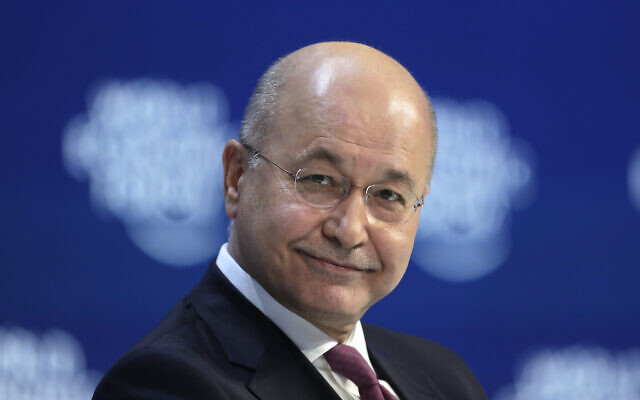
“The recent meeting held to promote [normalization] does not represent the people and residents of Iraq. It represents only those who participated in it,” Salih said.
Firebrand Iraqi Shi’ite cleric Muqtada al-Sadr called it a “terrorist Zionist meeting.”
Iraqi authorities announced on Sunday that they had issued warrants for the arrest of two Iraqis who addressed the conference, and promised to arrest all 300-plus participants once they have established who they are.
Iraqi law continues to mandate strict penalties to citizens and residents who maintain contact with Israelis. For decades, association with “Zionist organizations” or promoting “Zionist values” was punishable by death. A 2010 amendment to the Iraqi criminal code limited the sentence to life in prison.
But the strident denunciations shouldn’t be blown out of proportion. Rule of law is weak in Iraq, and an arrest warrant does not mean an arrest will actually take place, or even be attempted.
“You have to revert to the balance of power between the accuser and the accused,” said an Iraqi analyst on the condition of anonymity.
In 2012, Iraq’s vice president Tariq al-Hashimi was forced to flee the country after Baghdad issued an arrest warrant for him on charges of terrorism. A reflection of his lack of power within Iraq, Hashimi remains in exile, sentenced to death in absentia.
On the other hand, a Shiite militia commander accused of murdering popular activists was released in June, two weeks after his arrest, after powerful Iran-backed militias threatened Iraq’s government.
Moreover, everyone understands the rules of the game for elected officials. There was no doubt that even officials like Salih would condemn the gathering regardless of their personal views.
In an absurd display, the spokesman for the Iraq-based US-backed coalition to defeat the Islamic State had to tweet that the task force had no prior knowledge of Friday’s conference.
.@CJTFOIR has just been made aware of announcements by both the GoI & the KRG relating to the recent conference held in Erbil to discuss the normalization of ties with Israel. @Coalition had no prior knowledge of the event, nor do we have any affiliation with its participants. pic.twitter.com/mMVY13Lh0r
— OIR Spokesperson (@OIRSpox) September 26, 2021
It could be that the Iraqi government response will end with the recent declarations and nothing more.
“I hope this is it,” said the analyst, “and it ends in the war of words, instead of taking it to the courts or even worse.”
“Worse” could include targeted assassinations, as some Popular Mobilization Forces (PMF) militias have been warning.
What is certain is that there will be a strong coalition looking to punish the organizers. The Baghdad government will be joined by the PMF, as well as politicians looking to make a name for themselves and ingratiate themselves with Tehran ahead of the October 10 parliamentary elections.
The US government also can’t be thrilled about the timing of the event, weeks before voters head to the polls.
Glimmers of hope
Still, despite the preponderance of hostile forces, there are signs that the sentiments expressed at the conference extend beyond the 312 men and women in the room.
In 2019, Iraqi ambassador in Washington Fareed Yasseen said that there are “objective reasons that may call for the establishment of relations between Iraq and Israel.” Though he faced backlash from other Iraqi officials, Yasseen was not recalled.
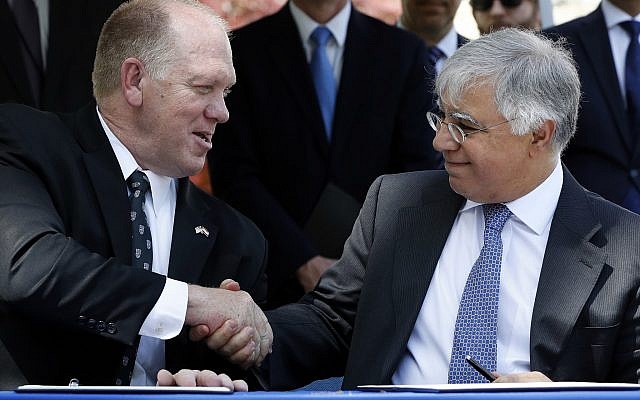
That same year, three delegations of local leaders from Iraq reportedly made trips to Israel and held meetings with Israeli officials.
In 2018, the Foreign Ministry launched a Facebook page uniquely dedicated to fostering ties with Iraq. Diplomats in Jerusalem said that the Arabic-language page would serve as “some sort of digital embassy” to the war-torn country.
Israel had, in the preceding months, stepped up efforts to reach out to Baghdad, arguing that Iraqis were interested in establishing ties with the Jewish state.
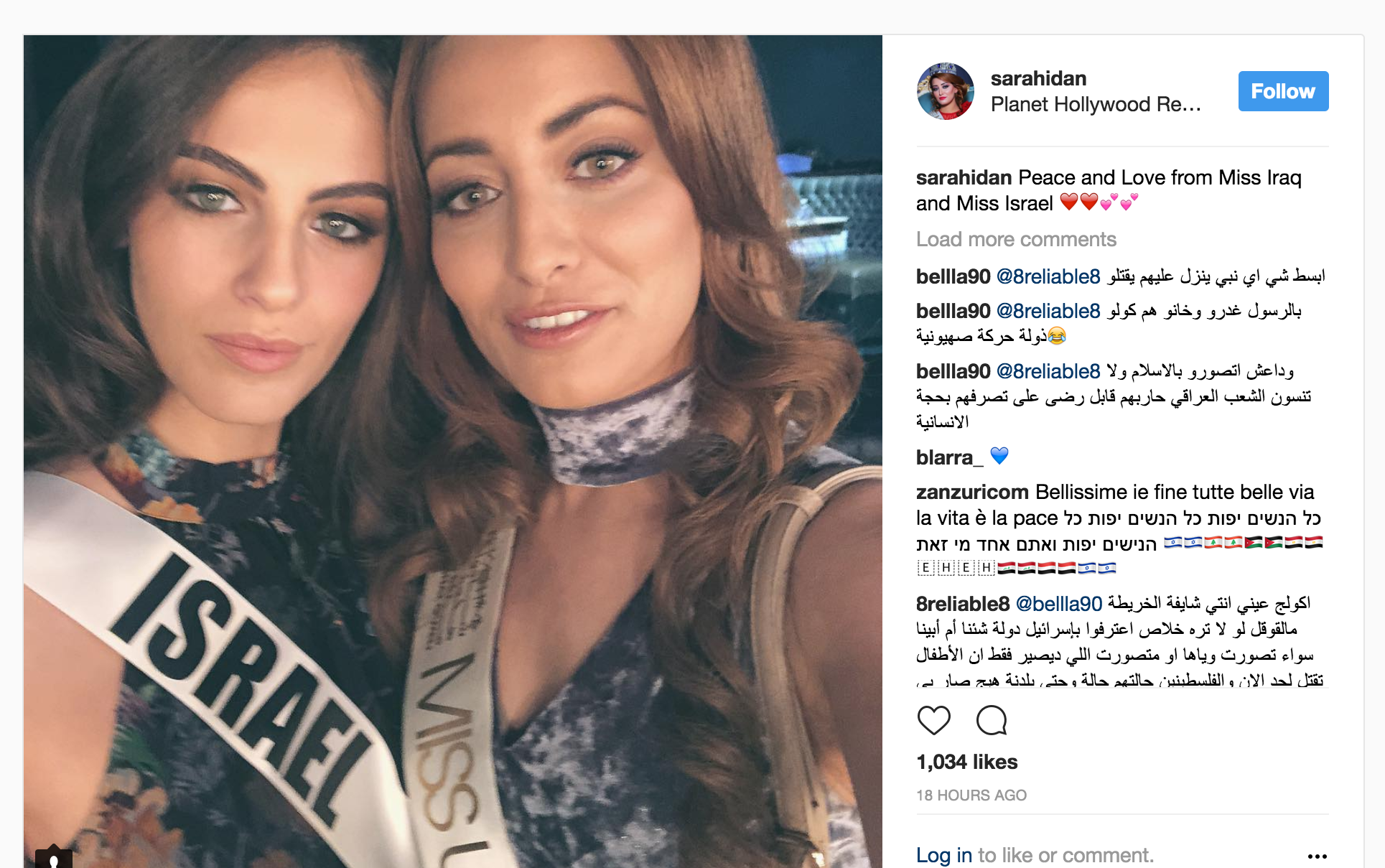
A month later, Iraq’s representative at the 2017 Miss Universe pageant — whose Instagram photo the previous year with her Israeli counterpart forced her family to flee the Middle Eastern country — visited Israel and reunited with Miss Israel.
In August of this year, a senior Foreign Ministry official said that Israel maintains some form of contact with Iraq.
It’s not always about you
Israeli leaders should also recognize the possibility that the participants’ willingness to attend the conference doesn’t necessarily stem from any love for Israel. For example, there is undoubtedly an element of backlash to Iran’s deep and ubiquitous involvement in Iraqi politics.
But even if that is a driving force behind participation in the conference, it is of great benefit to Israel if normalization increasingly becomes a way for Iraqis to show that they want Iran out of their country.
In addition, main conference speaker Wisam al-Hardan, head of the Sons of Iraq Awakening, and other movement leaders have been looking for ways to recover their influence and sources of funding after Shiite prime minister Nouri al-Maliki began cracking down on the Awakening in 2011. They may well be wagering that leading the normalization call will gain them support from the US and Gulf countries.
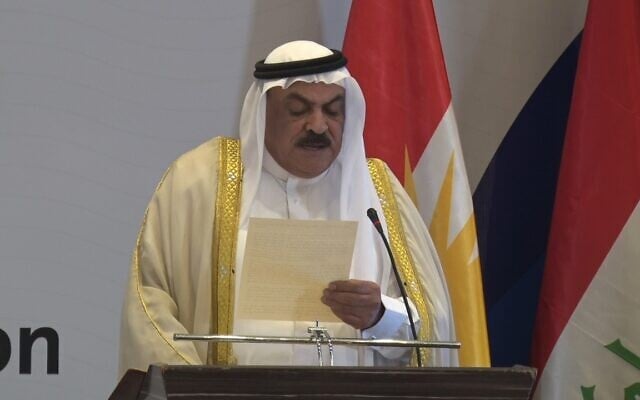
There have even been reports in Iraqi media that Hardan recruited Awakening leaders by promising them financial inducements.
Regardless of the complex reasons for publicly supporting normalization, Iraq’s leaders are not going to change their positions on Israel. What matters now is how the public will react: Will peace with Israel be a hotly debated issue on social media and in the newspapers, or will cosmopolitan Iraqis agree with their more conservative countrymen that the peace drive is free expression run amok?
In a best-case scenario, the majority of Iraqis under the age of 25, who have no memory of the wars with Israel, will prioritize the practical benefits of ties with Israel over issues like distant Jerusalem and the Temple Mount.
The sound of silence
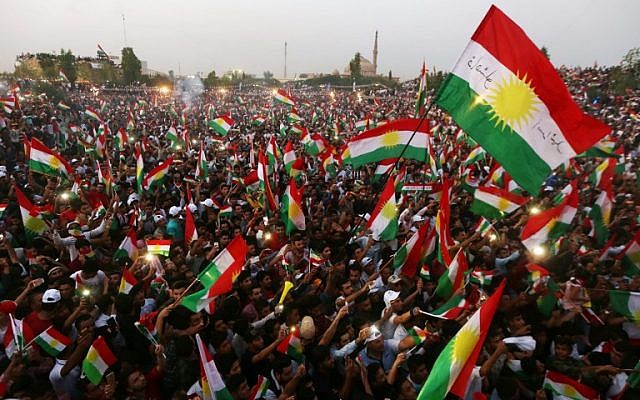
Israel is eager to do what it can to support the call for peace, but it must tread carefully. Speaking about it too much will likely make things worse for the cause, as Netanyahu unwittingly did by openly supporting the 2017 Kurdistan referendum.
As the Talmud cautions, “If a word is worth one sela, silence is worth two.”
What Israeli leaders can do when they address Iraqi calls for peace is support the right of Iraqis to express dissenting political opinions.
Iraq is a diverse, multi-ethnic and multi-religious country, with various constituencies expressing a preference for Iranian, Turkish, Gulf, and American patronage. It has active LGBT organizations, and no shortage of strongly held political opinions.
Israel’s message — especially to Western leaders — would resound best if it centers on the argument that Iraqis should enjoy the same right to gather in a hotel to express political opinions that their own citizens enjoy. The world should expect more from Iraqi leaders than threats of arrest against citizens reading out declarations and publishing op-eds.
“If Iraqis are free, it’s a win-win for everyone,” said the Iraqi analyst.


The Times of Israel Community.