

Boutique fragrance ‘L’Etrog’ bottles essence of Sukkot
Architect-turned-perfumer Carlos Huber creates scent time capsules with rich earthy Jewish notes
 Add ToI as a Preferred Source on Google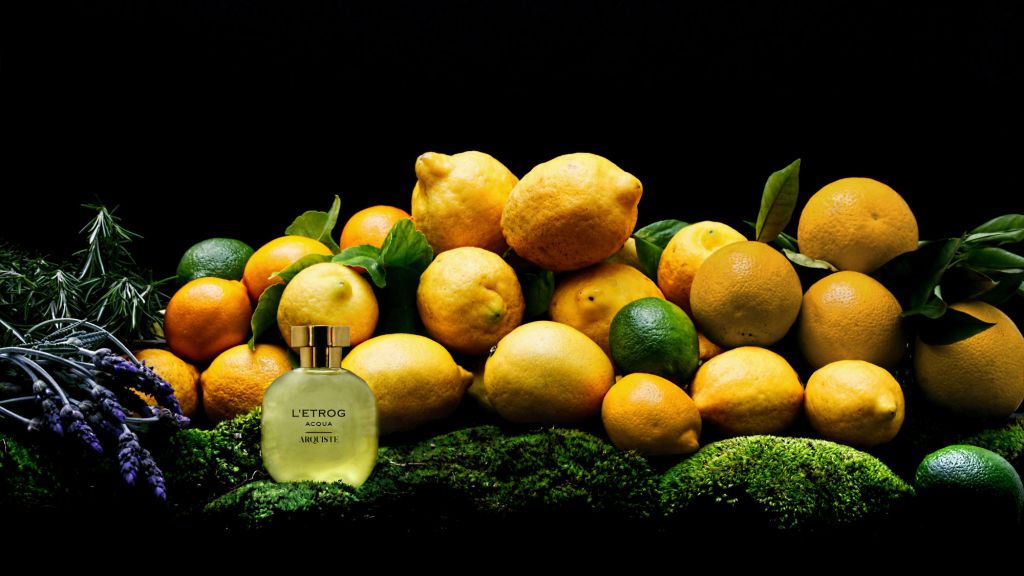
NEW YORK — Just in time for Sukkot, a new small-batch international perfume concern called Arquiste is featuring two festival-appropriate fragrances in its debut roster: L’Etrog and L’Etrog Acqua.
Started by architect-turned-perfumer Carlos Huber, each Arquiste fragrance is a well-researched curated “time capsule,” combining history and perfume.
“The first time I ever came across an etrog was at my Jewish primary school. The strength of the fragrance is memorable,” recalls Huber, who grew up in northwest Mexico City and attended Jewish schools until college. His family had emmigrated from the Pale of Settlement and Greece and Turkey in the 1920s, and is still active in the Jewish community in Mexico City.
“When the holiday of Sukkot came, we were taught the meaning of the Four Species. They consist of a bouquet of date palm, myrtle, willow and the etrog, bound to bless the people gathered for the holiday.”
Recalling his day school education, he continues, “Their significance relies on the individual meaning of each ‘species,’ they symbolize different types of people, good and bad, educated and not, and also different parts of the human body (the etrog is the ‘heart’). By binding them together, all types of people are represented and blessed by God.”

“It is a nice metaphor and beautiful lesson,” he says..
According to the company, its fragrances are formulated to “transport” wearers to “experience history in a most intimate way.”
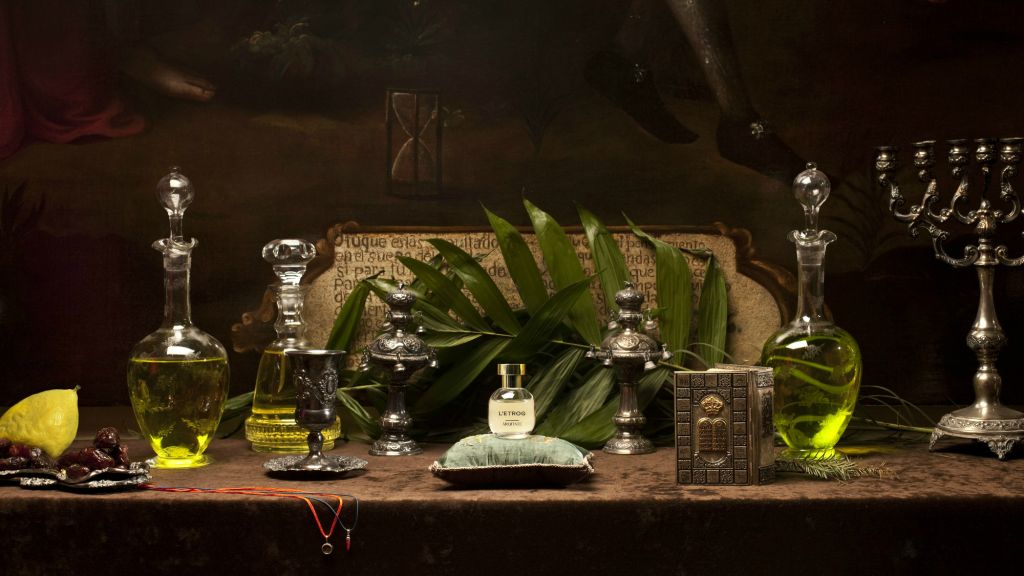
With L’Etrog, for instance, Arquiste intends to transport the wearer to a family harvest celebration in medieval Calabria in the year 1175, with fragrance notes including Calabrese Cedrat, myrtle, Smyrna dates, and Vetivert.
The fragrance is not overpoweringly lemony, with a hint of etrog. It is sweet with some floral overtones, reminiscent of the impression left on the lining inside an etrog box after Sukkot.
L’Etrog Acqua, is a sequel in the storyline of L’Etrog, placing the consumer at the morning after the family party. “L’Etrog Acqua opens up like the first rays of sun in a misty morning,” reads the descriptive text of its notes. It contains Sicilian lemon, Italian mandarin, Petitgrain Citronnier, bergamot, Mediterranean lavender, labdanum, and cedar wood. Crisp citrus scents underscore its softer elements.
Huber moved to New York in 2006 to attend graduate school at Columbia and pursue a career in historical preservation. He then decided to shift gears and study perfume, maintaining an interest in preserving history via fragrance.
To prepare his debut collection, Huber studied with perfumer Rodrigo Flores-Roux, visited inspirational sites, and researched the stories behind the perfumes in libraries and archives in addition to meeting with botanists, historians and chefs. He was awarded a Rising Star Award from Fashion Group International in 2013.
Arquiste has had an auspicious start, engaging in high-profile collaborations with J.Crew and the French candle maker Cire Trudon.
Huber sees parallels between his past and present avocations.
“There are many similarities in the processes of architecture and perfume — for example developing the ‘structure’ of a scent and directing the production of the actual creation. Researching the historical background on which I base each fragrance is in a sense the same foundation work of research that one needs in architecture and conservation.”
In addition to fanciful descriptions, the Arquiste website presents a historical context for the perfumes (including bibliographic references), detailing how the Jews of Calabria turned to agriculture in the twelfth century following the First Crusade, and how the etrog harvest has been a regional tradition ever since.
The website also shares that the etrog is “said to be the ‘Fragrance of Heaven,’” connected to the Garden of Eden, and linked with “righteousness, goodness and desirability.”
Smelling like heaven doesn’t come cheaply, however. L’Etrog costs $165 for a 55-milliliter bottle while a 100-mililiter bottle of L’Etrog Acqua is $190.









The Times of Israel Community.