

Ex-IDF chief: We’ve jeopardized national security by admitting to Syria strikes
In apparent dig at Netanyahu, Gadi Eisenkot says abandoning longstanding policy of ambiguity regarding Israeli operations in neighboring countries is a ‘serious error’
 Add ToI as a Preferred Source on Google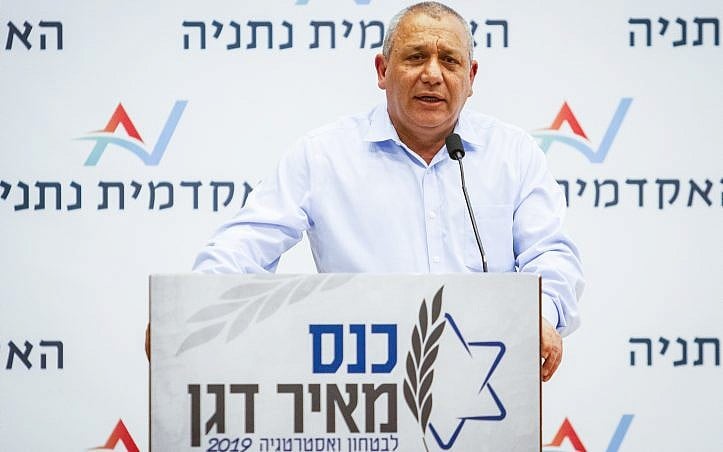
Former Israel Defense Forces chief of staff Gadi Eisenkot said Israel’s recent shift away from its longstanding policy of not claiming responsibility for military operations in neighboring countries was a misguided and dangerous move.
“The recent break in ambiguity is a serious error that jeopardizes national security,” he said in an interview with the Yedioth Ahronoth daily, which published an excerpt on Thursday.
Israel has long maintained a policy of ambiguity regarding strikes in Syria and elsewhere, in order to reduce the chances of reprisal attacks. But in recent months, Israeli leaders have been unusually forthcoming about some aspects of the country’s military activity in the region, including taking responsibility for airstrikes in Syria on an Iranian cell it said was planning a cross-border drone attack.
Critics have accused Prime Minister Benjamin Netanyahu — who has repeatedly warned Iran to rein in its military forces in the region — of boasting about the strikes in a bid to score political points.
Blue and White MK Yair Lapid on Thursday tweeted Eisenkot’s Yedioth interview, accusing Netanyahu, who is also defense minister, of endangering the country for the sake of his reelection campaign.
“Everyone in the defense establishment knows that Netanyahu got rid of the ambiguity because of the elections. He’s less ‘Mr. Security’ and more like ‘Mr. Politics,'” he said.

Eisenkot’s predecessor as army head, Blue and White chief Benny Gantz, has also criticized Netanyahu for abandoning the ambiguity policy, calling the move “totally unnecessary” at a recent campaign event.
Eisenkot, who is currently in Washington as a fellow at the Washington Institute for Near East Policy, also indicated to Yedioth that he stopped Israel from going to war a number of times during his tenure as IDF chief.
“It happened more than once that someone in the government approached me and said: ‘we need to go to war here or go to war there’ but eventually those [requests] were taken off the table,” he told Yedioth.
Eisenkot also mentioned several other disagreements he had with the Netanyahu government, including on its policy vis-a-vis Hamas in the Gaza Strip.
“Allowing Hamas to increase its strength was a serious mistake. We need to bring an end to its rule in the Strip,” he said.
He also referred to a dispute with then-defense minister Avigdor Liberman, who he claimed was opposed to an operation that sealed cross-border Hezbollah tunnels extending from Lebanon into northern Israel.
“I told him, ‘Minister, I respect you, I am subordinate to you, but I am bound to the government[‘s decisions],'” he said.
Liberman stepped down as defense minister over Israel’s Gaza policies in November 2018. Weeks later, Israel launched Operation Northern Shield to find and destroy Hezbollah cross-border attack tunnels, and on January 13, the military announced it had found all of the passages and was working to demolish them.
Before he retired as IDF chief in mid-January, Eisenkot acknowledged in a series of interviews that Israel had carried out hundreds of airstrikes against Iranian targets in Syria since his appointment in 2015. He also admitted that Israel supplied Syrian rebel groups along the border with light weapons for “self defense.”
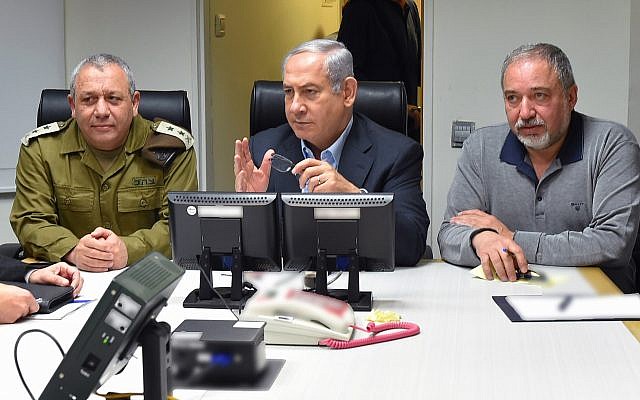
Eisenkot’s acknowledgments were part of a wider movement within the Israeli political and military establishment to be more open about the IDF’s efforts against Iranian military entrenchment in Syria.
His interview to Yedioth this week (set to be published in full on Friday) comes after the Washington Institute published an article of his outlining Israel’s shift in policy regarding Iranian entrenchment to what he dubs the Campaign Between Wars.
After he stepped down in January, Eisenkot requested and received a shortening of his year-long end-of-service paid leave, raising speculation the former military chief had his eye on a political career.








The Times of Israel Community.