

Former police chief calls for public committee to appoint commissioners
Roni Alsheich, who clashed with Netanyahu during his term, says law enforcement should be kept free of political influence
 Add ToI as a Preferred Source on Google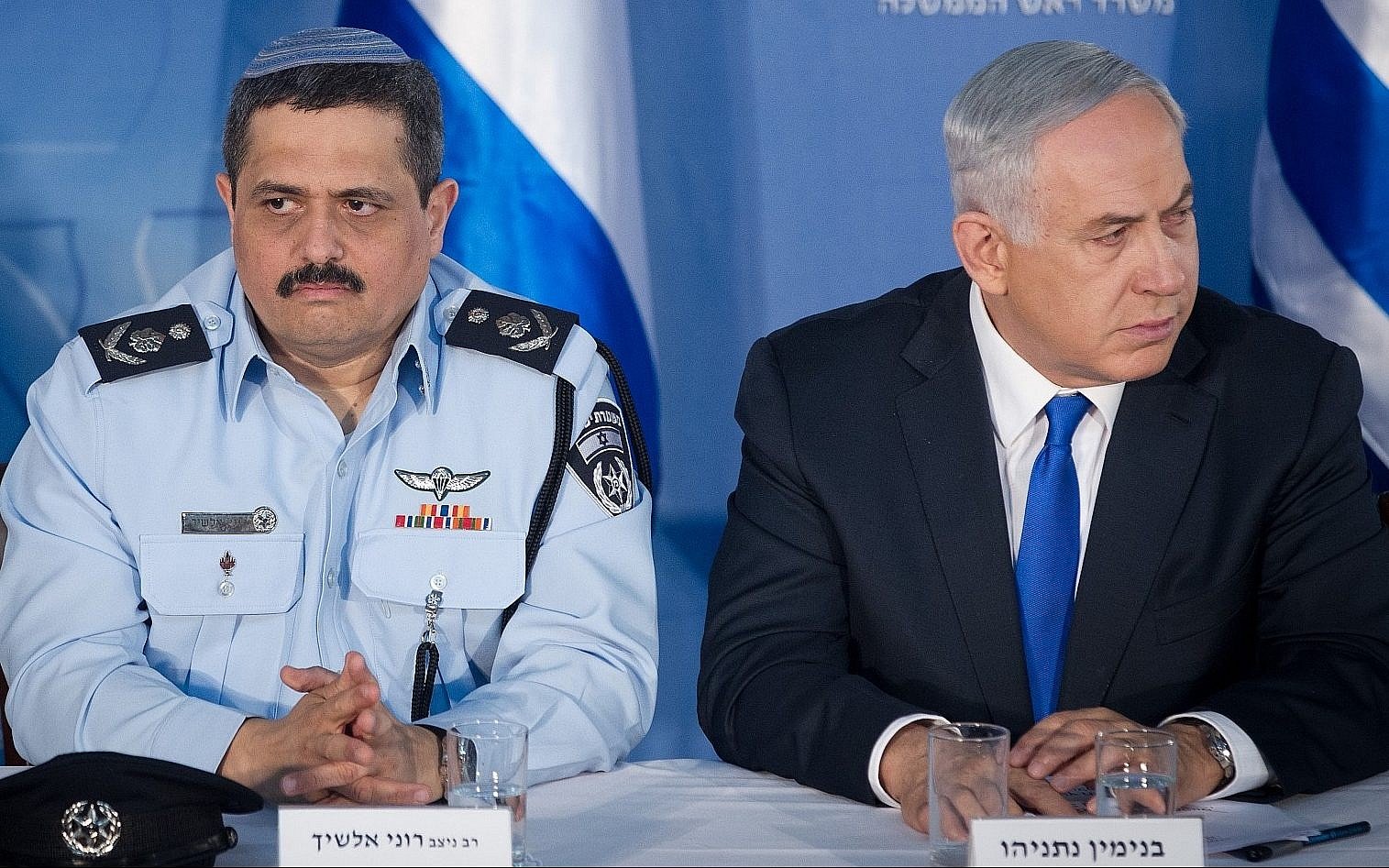
Former Israel Police chief Roni Alsheich called on Thursday for the establishment of a special public committee to select police commissioners in order to ensure that law enforcement remains independent of political influence.
Prime Minister Benjamin Netanyahu, who has been under investigation for suspected corruption, sparred publicly with Alsheich during the latter’s term, insinuating that the police chief was behind leaks to the media of details from the probes against him. Alsheich has denied the allegation.
Although Alsheich’s term ended at the beginning of the month, no commissioner has been appointed in his stead, after a vetting committee nixed his replacement due to concerns over his integrity. Deputy Commissioner Motti Cohen is on a 45-day temporary appointment that will expire either on January 16 or when a new permanent commissioner is chosen.
On Thursday, in his first public address since leaving the force, Alsheich told an Israeli business forum that the proposed panel should be along the lines of the Judicial Selection Committee, which appoints judges, and should include figures who are not politicians.
Currently, the candidate for chief of police is selected by the public security minister, then approved by the vetting committee and cabinet ministers.
“In everything relating to law enforcement, [the police] is either independent or subject to the decisions of the attorney general,” he said. “Therefore, we should devote thought to the correct format for appointing the chief, so that the Israel Police can remain apolitical, and so that the chief of police can operate independently.
“When that one person is not independent, the police is unable to direct law enforcement evenhandedly and apolitically,” he warned. “In my opinion, this is no less important than the committee to appoint judges.”
“Unlike positions such as that of the military chief of staff, the head of the Shin Bet and the head of the Mossad, who are supposed to fulfill the policies of the political echelon and need to be appointed by it, the chief of police is not subordinate to the political echelon, except marginally, on security matters.”
Police officials have warned that appointing an interim chief is problematic because certain key processes cannot be carried out, such as appointing officers, long-term procurement and other agreements, the Walla news website reported Thursday.
The previous candidate for police chief, Deputy Commissioner Moshe Edri, announced earlier this month that he would withdraw his candidacy after he was rejected by the vetting committee amid new questions regarding his conduct throughout the nomination process.
Public Security Minister Gilad Erdan has gone back to the drawing board and begun interviewing a new cadre of senior officers from the police and other agencies in search of a fresh crop of candidates for the commissioner position.








The Times of Israel Community.