

From ‘Heil Hitler’ to ‘Shalom, Tel Aviv,’ the many incarnations of David Bowie
A dabbler in Kabbalah and religious rituals, the British performer’s trend-setting career ended with the release of his 25th album last week
 Add ToI as a Preferred Source on Google
Deputy Editor Amanda Borschel-Dan is the host of The Times of Israel's Daily Briefing, What Matters Now and The Reel Schmooze podcasts, and heads up The Times of Israel's features.
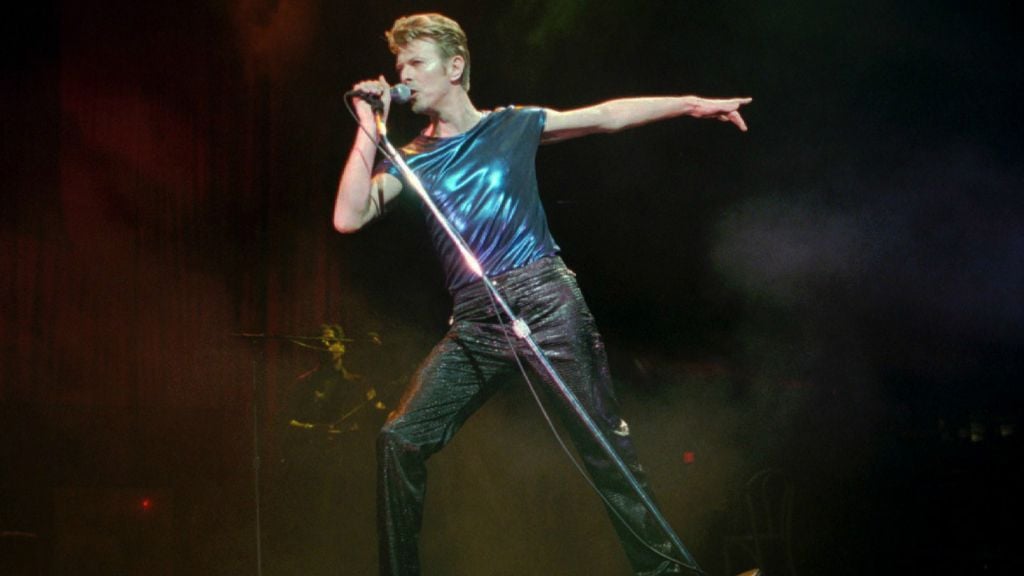
It’s the rare artist who would study Kabbalah while portraying himself as an Aryan nationalist. But David Bowie, who died Sunday after an 18-month battle with cancer, arguably succeeded in both with his 1976 Thin White Duke character, an “emotionless Aryan superman.”
Bowie later attributed his commitment to the character — complete with alleged Hitler salutes and recorded Fascist rants in interviews to Playboy and other media — to drugs addling his judgement. Once more coherent, Bowie retracted his much-quoted statement of “Adolf Hitler was one of the first rock stars,” saying he was high and “out of my mind, totally, completely crazed.”
Interestingly, despite Bowie once playing Hitler Youth to the hilt, the Internet is rife with unfounded claims of his Jewish roots. (Bowie’s older half-brother Terry was reportedly fathered by a Jewish Frenchman.)
That’s just one twist on the life of the musician/actor whose schtick was dipping his toes in Lake Bizarre. Whether playing Ziggy Stardust in the early 1970s or an archetypical blue-eyed soul singer for decades, Bowie’s prolific career was marked by innovation and reinvention. His 25th and final album, “Blackstar,” was released in the genres “experimental jazz or art rock” on January 8, 2016.
“My entire career, I’ve only really worked with the same subject matter,” Bowie told The Associated Press in a 2002 interview. “The trousers may change, but the actual words and subjects I’ve always chosen to write with are things to do with isolation, abandonment, fear and anxiety — all of the high points of one’s life.”
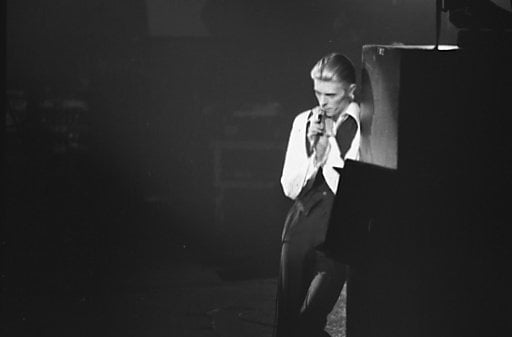
Arguably a low point in Bowie’s long career, the 1976 Thin White Duke era also produced some of his most haunting work, including “Wild Is the Wind.”
During this period, Bowie, emaciated and drug-addicted, performed his “Station to Station” album in a politically controversial tour — which included a detention by Polish/Russian border customs agents for possession of Nazi paraphernalia. And that May, in what later became known as the “Victoria Station incident,” Bowie made a triumphal entrance into London in an open convertible performing what some eye-witnesses claimed as Nazi salutes.
Bowie publicly blamed his behavior on drugs, and, according to Marc Spitz, author of 2010’s “Bowie: A Biography,” “One need not be an apologist (or superfan) to see how Bowie’s publicly stated and since recanted endorsement of Hitler’s charisma and the merits of a fascist leader overtaking Britain, while speaking with Cameron Crowe in a notorious 1976 Playboy interview, was the product of cocaine psychosis rather than any real fidelity to notions of racial purity or governmental insurrection.”
It is one of the wild mysteries of the Bowie brain that concurrently with purchasing Nazi paraphernalia, the artist sang of Kabbalah in the title track of “Station to Station.”
“Here are we, one magical moment
Such is the stuff, from where dreams are woven
Bending sound, dredging the ocean, lost in my circle
Here am I, flashing no color
Tall in this room overlooking the ocean
Here are we, one magical movement from Kether to Malkuth
There are you, you drive like a demon from station to station…“
According to a 2013 The Forward article by Seth Rogovoy, “The Secret Jewish History of David Bowie,” the lyrics “refer to the divine emanations of the infinite: Kether, or ‘the crown,’ said to be the divine will or pure light, and Malkhuth, or ‘kingship,’ the nurturing receptacle of that light.”
Rogovoy writes that Bowie was pictured on the back of the album while “drawing a diagram of the 10 Sefirot, an activity he purportedly engaged in with some frequency while recording the album in Los Angeles — a time during which he was supposedly bombed out of his mind on cocaine.”
https://www.youtube.com/watch?v=CtwFqu5gInM
In 1996, apparently not harboring any lasting Nazi sentiments, the performer appeared in Israel’s Park Hayarkon. In a short video taken after his show, Bowie smilingly complains to the Israeli interviewer that it is very “cham, cham, cham” (hot) in Israel. Looking healthy and relaxed, Bowie discusses plans for the future and says, “I think I would have to be squeezed real hard to be happier… does it show? Yeah, everything’s really cool.”
Bowie’s personal life, in addition to his Kabbalah dabbling, had several spiritual stations that saw the artist explore the ritual and religion of faiths across the globe.
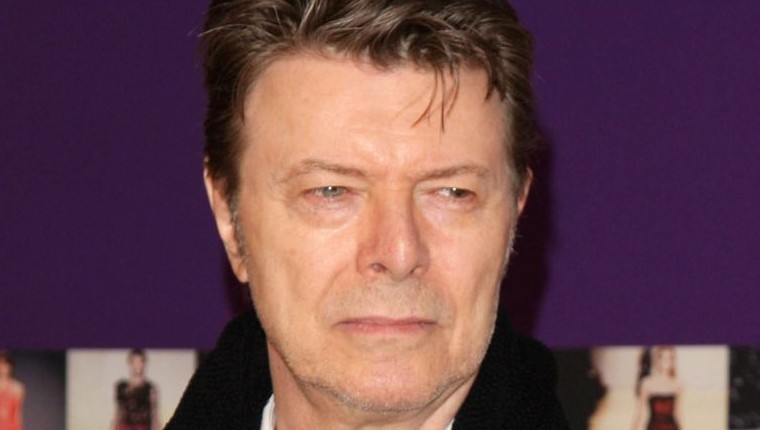
In a video made for his final album “Blackstar,” Bowie turns to the New Testament character Lazarus. It is a moving song from the point of view of a newly deceased man who is talking about what’s going on “down below.” (The song is also used in Bowie’s co-written stage production “Lazarus” starring Michael C. Hall in New York.)
Bowie is depicted in the “Lazarus” video wearing a shroud while lying on a wooden bed with — a la Greek mythology — coins on his eyes. He was, at least artistically, ready to cross over to the underworld.
And, in his many incarnations, it may be a place he has been before. Biographer Spitz quotes a memory from Bowie’s mother in his book, “The midwife said to me, ‘This child has been on this earth before.’ I thought that was rather an odd thing to say, but the midwife seemed quite adamant.”
Perhaps.
But as Bowie once said himself, “I don’t know where I’m going from here, but I promise it won’t be boring.”










The Times of Israel Community.