

From playground to battleground: The Gush Katif kids who went ‘home’ to war
Decade after pullout, 3 Gaza-born soldiers recall their return to the ‘landscape of their childhood’ to fight in last summer’s war
 Add ToI as a Preferred Source on Google
Marissa Newman is The Times of Israel political correspondent.
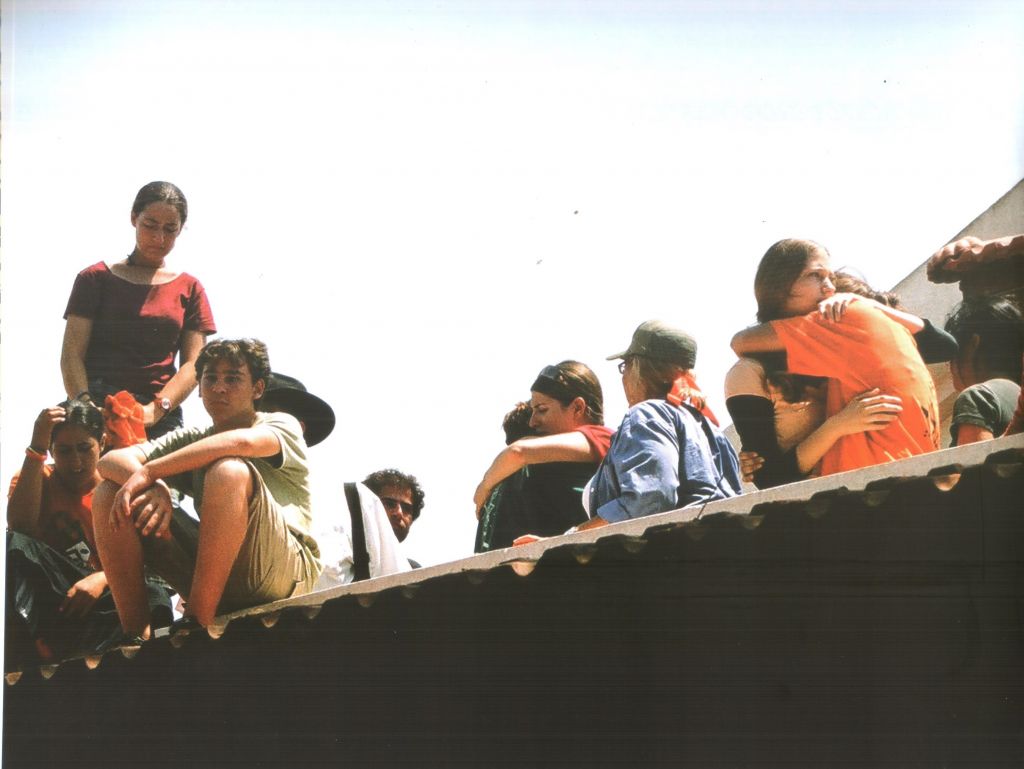
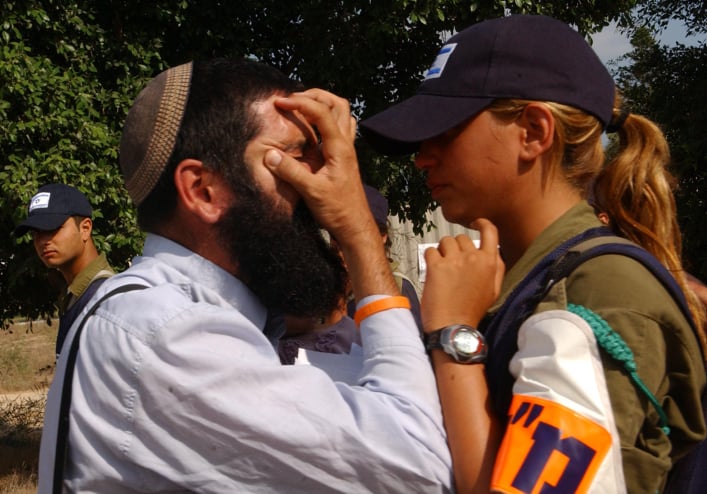
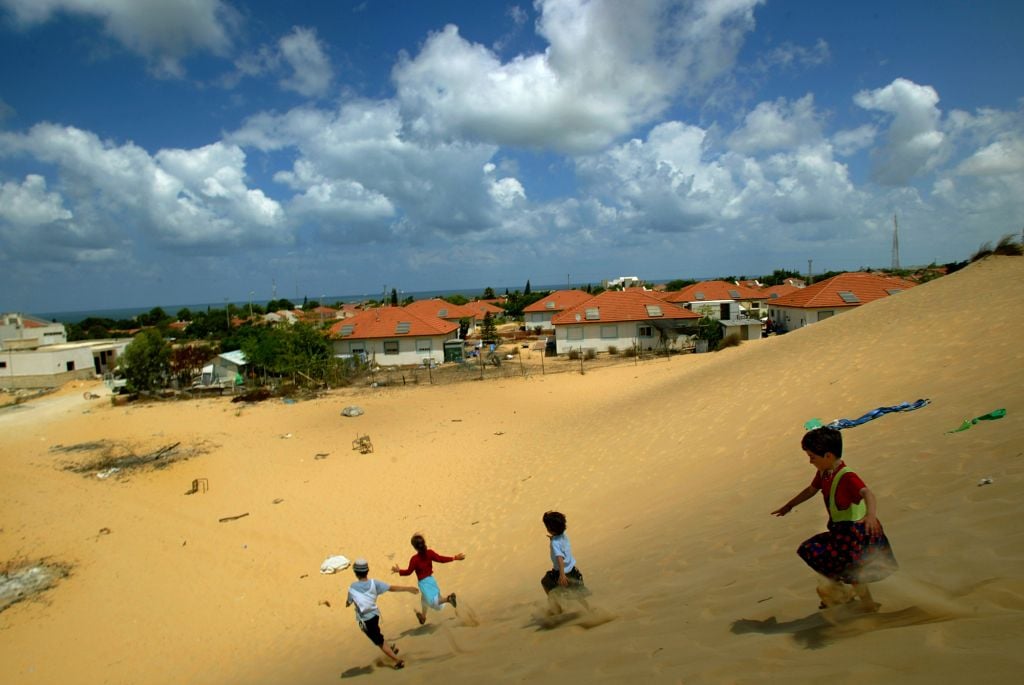
Ten years ago, they bid their homes good-bye, a streak of orange daubed on a coastal landscape. Clad in orange — the color of their resistance — the 8,000 residents of the 21 Jewish settlements of the Gush Katif bloc were evacuated by the Israeli army from their houses in the Gaza Strip, in a painful unilateral withdrawal known as the disengagement plan.
Last year, nearly a decade later, some of the younger ones made it back.
Grown up and attired in olive green now, they came as soldiers of the same army that uprooted them, fighting a war with Hamas, a war they maintain is a direct result of the withdrawal. The brutal campaign, in which over 2,000 Palestinians and 73 Israelis were killed, stemmed from the picturesque sliver of territory where they were born — once cherished and cultivated by their families and friends, and then left behind.
A different kind of homecoming
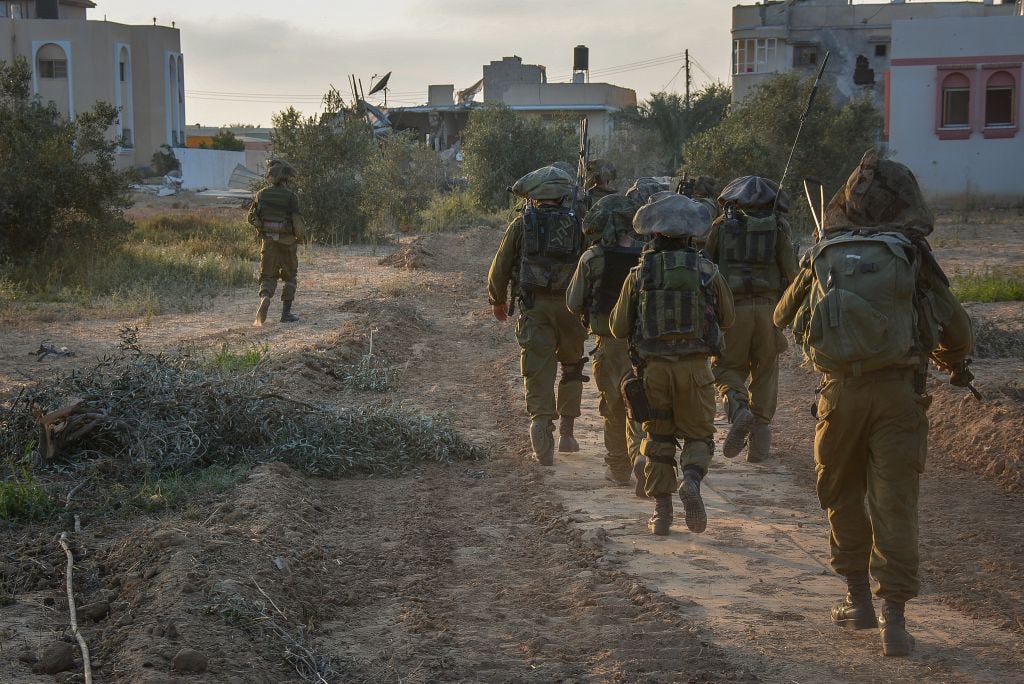
Deployed in Shejaiya, the scene of some of the heaviest fighting during last summer’s 50-day conflict, 23-year-old Alon Haidu, an infantry soldier born in the settlement of Katif, spotted the remnants of Netzarim on his tank map. Even as rockets rained down on Tel Aviv, Haidu was identifying the settlement of which former prime minister Ariel Sharon — fierce advocate of the settlement movement turned architect of the disengagement — had famously said: “The fate of Netzarim is the fate of Tel Aviv.” (It must be noted that Sharon, at the time, was offering an affirmation that the settlements would not be evacuated, rather than a prophecy of doom).
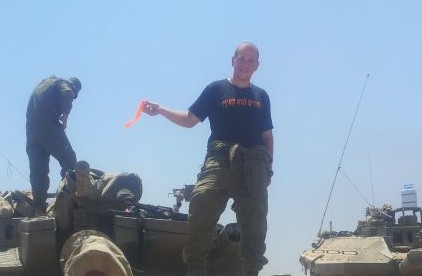
Despite the hellish war conditions, Haidu felt elated.
“I saw it as a homecoming,” said Haidu. “I told myself, do the mission the best you can, maybe they [the brass]’ll change the plans and take over Gaza, and that, for us, is the ideal. But there was excitement, and it gives you strength, because you’re in the war, and you’re tired, but you’re near your home, so you’re calm.”
Before entering Gaza, Haidu said he experienced “crazy excitement” and tension. “I don’t know how to explain it,” he said, “but it’s a sort of happiness, a kind of coming full circle… I see it as: I grew up there, it’s my home, and please God, I plan to return.”
Last summer, Ori Cohen, 25, an IDF soldier in the elite Duvdevan unit, found himself a few kilometers away from what had been Neve Dekalim, the settlement where he was born and where his family had lived for 22 years.
While primarily focused on the task at hand — “it’s a war, not a school trip” — during the respite from fighting, the memories wafted in.
“For me, it was the smell,” he said. “There’s a scent of the area, the sand, the palm trees, the atmosphere, the quiet. So all the moments when there was no fighting, when there was a lull, you think about it a lot.”
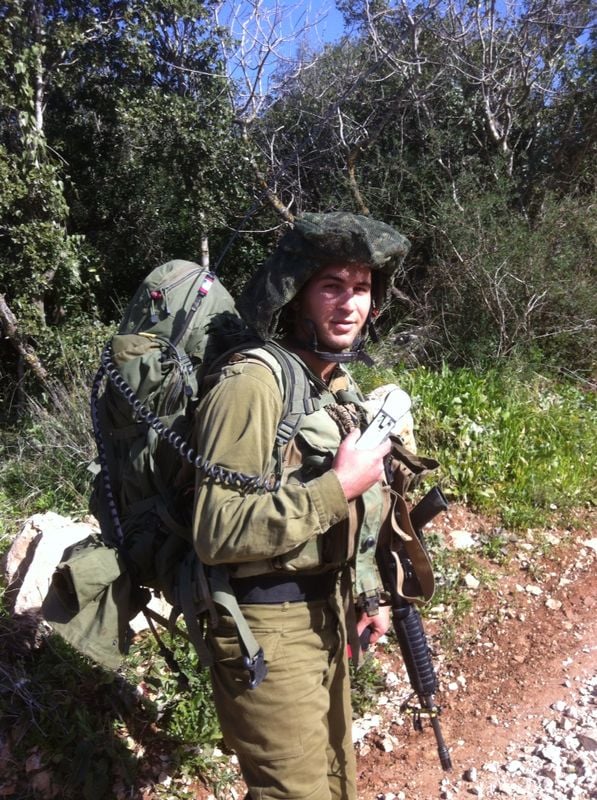
Like Haidu, Cohen was struck by a sense of homecoming.
“Throughout, from the beginning of the operation, it was very meaningful, the point of returning home. This was at the beginning, during preparations, [and] you have to be very focused on what you’re going toward. But on the other hand, you can’t ignore the thoughts of going home, and what if you get to places you’re familiar with, that you’ve been to,” Cohen said.
An officer in the Golani Brigade, Noam Tashnady, 22, was among the first to enter Shejaiya. He remained there for nearly two weeks.
“During the fighting, I got to thinking about how I’m really fighting in the same place I lived, and now to go back to that place and endanger my life…it was difficult,” the former Neve Dekalim resident wrote in an email.
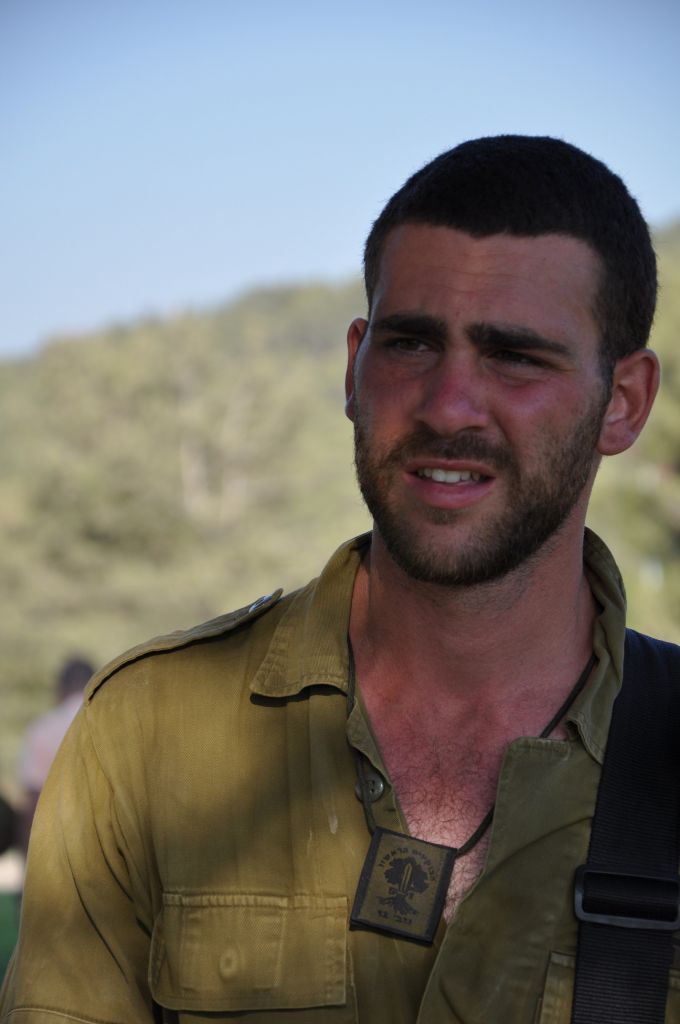
“On the one hand I felt a sort of pride, that here I’m a ‘Gush Katif expellee’ going back to fight in Gaza. On the other hand, I felt very frustrated, that I, who was kicked out of there for the sake of ‘peace,’ am forced to risk my life to fight in this place,” Tashnady said. “For my parents, too, it wasn’t easy that their son was going back to Gaza to war.”
At one point, his unit was instructed to head to a school, and “I understood right away that this was the school that my father was the principal of” for 25 years, and where he had studied until the disengagement when he was 12, Tashnady said. “I didn’t know what I would do if I was really in my father’s school.”
Luckily for Tashnady, the orders were changed and his unit was directed to a different school in Shejaiya.
“It wasn’t exactly a residential area, where we were fighting,” he said. “But it certainly reminded me of the dunes near my house in Gush Katif, the shrubbery in the area, and the Arab houses that we would see. It’s the landscape of my childhood.”
The last bar mitzvah in Gaza
Haidu’s was the last bar mitzvah in the coastal enclave.
On Saturday, August 20, 2005, he celebrated the Jewish rite of passage in his hometown of Katif. The next day, it was evacuated.
With the area declared a closed military zone, his father had suggested holding the event in Ashdod so his grandparents could attend. But Haidu insisted on celebrating with his friends in Katif.
“There was a blockade on the bloc. There was a blockade, literally. On food… it was really a disgrace. No one went out, no one came in. Those that left, didn’t come back in,” he said.
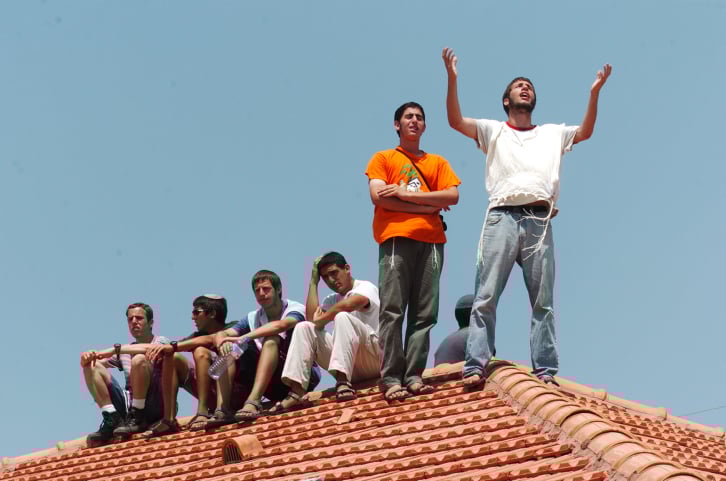
After a fair share of bureaucratic wrangling, Haidu said, the army granted his grandparents permits to enter the Gaza Strip, and dozens of relatives crossed illegally into the area.
“In the end, it was a very happy bar mitzvah,” he said, and 1,000 people showed up to celebrate.
That night, his family packed their belongings, still believing the evacuation would be called off at the last minute, he said.
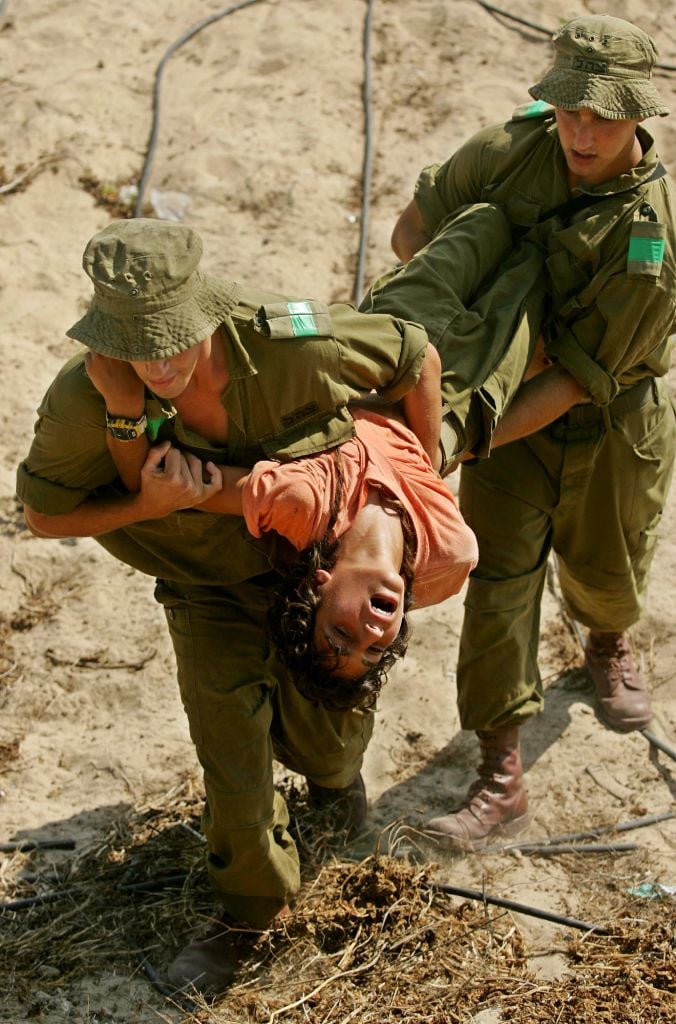
“My father was very proper. ‘Whatever they decide, whatever it is, will be. We accept it, we won’t lift a hand against the soldiers. We won’t stoop to that level’ — and was very tolerant to it,” he explained.
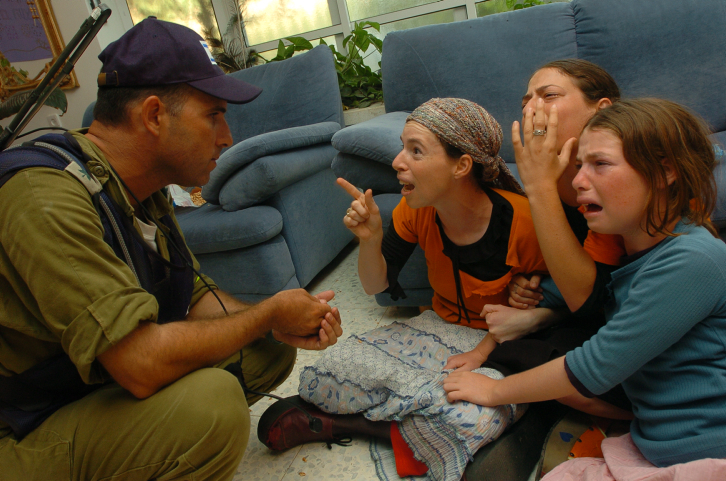
“And I, as a ‘hotheaded redhead,’ wasn’t like that,” Haidu continued. “I didn’t accept it at all that he was so okay with the soldiers, but I made him swear that we wouldn’t leave our homes with our bags on our backs, locking the door behind us. At least drag us out — that’s what I made him promise.”
And when the soldiers knocked on the door, his father had indeed wanted to leave quietly, he said.
“I said, ‘No, you promised. Come here.’ And then they came and dragged us out, four soldiers,” Haidu said. “So he kept his promise at least.”
But six months later, still homeless, Haidu’s father was called up for military reserve duty, and the freshly teenaged Haidu was “very, very angry.”
“I couldn’t understand how he could do it, and the hypocrisy… We were removed by olive-color uniforms, and now my father was wearing that uniform and going to reserve duty because they called him up.”
A difficult enlistment
For the teenagers evacuated from Gush Katif, joining the IDF was far from a foregone conclusion.
“There were a lot of years, until 11th grade almost, when I knew that I would end up enlisting, but I really didn’t want to,” Haidu said. “There was a strong feeling of betrayal, and a lack of sympathy with the state. Enmity to the IDF. Really.”
Eventually, Haidu opted to enlist because “there was no choice,” and the security situation demanded it.
Tashnady also struggled with the decision. “It was a slap in the face from the state and the army. I felt betrayed, angry and mostly disappointed.”
“I also had the dilemma of what to do if I’m drafted and they ask me to carry out something similar,” he said, referring to the evacuation. “I am not capable of doing to others what I went through.”
“On the other hand, I knew the state was in a difficult security situation, and in need of good fighters and officers,” he continued. “I was split, and in the end I decided that the security concerns of the state override the hard blow of the expulsion. And I decided to enlist in a combat unit as much as possible, and be an officer.”
For Cohen, however, the rage at the army, fueled by the pullout, dissipated relatively quickly.
“After the evacuation, in 2005-06, a lot of the guys my age — which isn’t an easy age to begin with, without this whole story — there was a lot of opposition to the state, to the army. We would talk about it, not wanting to go to the army, not wanting to be drafted.”
“But very quickly, that changed. After a year or two we understood that there is no logic in that. When I reached draft age, it was not something I thought about,” Cohen said.
A long way home
Ten years after leaving Gush Katif, many of the transplants are still struggling to settle down elsewhere.
Tashnady’s family went from a home “in a quiet area near the sea” to a nine-year stint in a trailer.
“After living in a hotel for eight months – a small stuffy room full of boxes, not as fun as it sounds – we were moved to a trailer site in Nitzan,” in southern Israel Tashnady said. “There we lived ‘temporarily’ for nine years.”

Haidu and Cohen’s parents are in the middle of building their new homes – a process dragged out by the snail’s pace of Israeli construction and endless red tape. With every delay, the residents joke that perhaps by the time it’s completed, Israel will have recaptured the coastal enclave, Haidu said.
And as their families rebuild their houses, these soldiers quietly view the recapture of the Gaza Strip as an inevitability.
“It’s not something that can be avoided. The question is when. If not in the [upcoming] round [of fighting], then in the next round. If not the next one, the one after that,” Cohen said.
Tashnady said that while the “situation is complex, and it’s a difficult question,” he believes that “there will be no alternative to a reconquering [of Gaza].”
Haidu echoed the sentiment, saying, “I don’t know if there will be Jewish settlements, but as for taking over Gaza, I believe they will take over Gaza in the coming years.”
Forgive and forget?
“We won’t forgive, we won’t forget,” was the battle cry of the Gush Katif protests. And a decade later, having joined the army and witnessed Gaza combat firsthand, these soldiers certainly haven’t forgotten. And the resentment lingers, to differing degrees.
“On a personal level, it’s not like I’ll see someone now who participated in the evacuation and hate him. Okay, the person made a mistake. Poor guy. I don’t hate him, he’s simply a poor guy,” Cohen said.
But, he said, “so long as the person seeking forgiveness doesn’t know they made a mistake, it’s not appropriate to talk about it.” Ask forgiveness from the soldiers killed in last summer’s war and those deployed to fight in Gaza, not from me, he added.
Not so for Haidu, who recalled that during a conversation with a battalion commander, he discovered the man had played a role in the disengagement. “I disdained him from the moment I found out that he played even the smallest part,” Haidu recalled. “I didn’t have an ounce of respect for him. Not an ounce of admiration.”
“The feelings haven’t passed. If I open it up, I have a lot of anger at the entire conduct, from [prime minister] Arik [Ariel] Sharon, until the last soldier that took part. I blame them equally,” he said.
Tashnady more unequivocally rules out the notion.
“There is no forgiveness. The mistake they made cries out. Did anyone even ask our forgiveness? Did anyone come check how are lives were afterwards? No. We won’t forget, and we won’t forgive.”
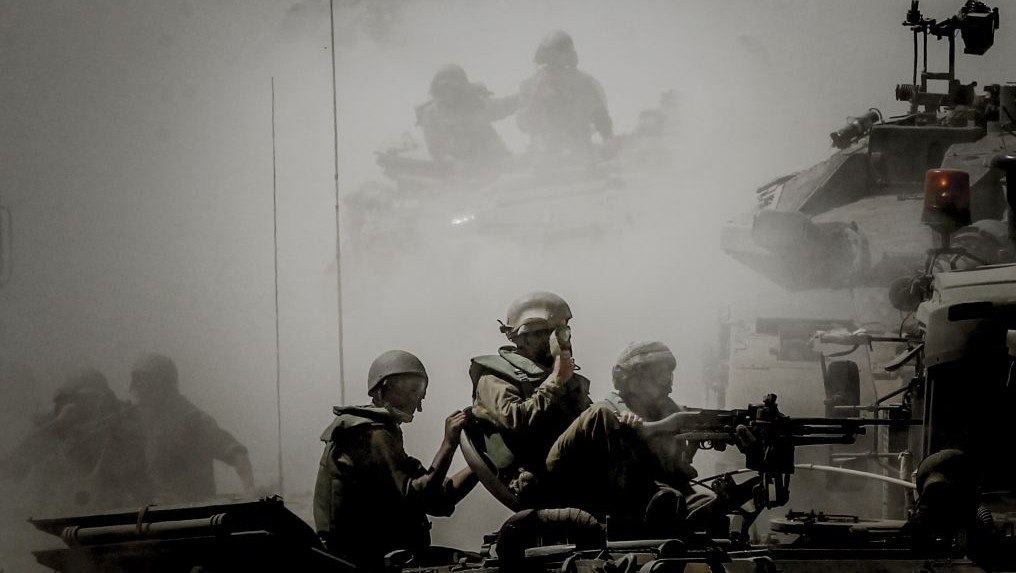
Last summer, when he was steeped in combat in Shejaiya, with the numbers of wounded soldiers growing, Tashnady said he was struck by fears “that something could happen“ to him, too. “But you think more about the sense of mission to protect the people of Israel, and that if I won’t do it, who will?” he said.
“[I thought to myself] that we paid the price, our home and the [Katif] bloc are gone, and no peace broke out. Precisely the opposite. The situation got worse, and here I am, part of the war.”






The Times of Israel Community.