

Gazans released by Israel in ceasefire deal allege mistreatment and abuse in prison
Civil rights groups say overwhelming majority of detainees are held incommunicado for months, denied access to evidence against them, and never charged

 Add ToI as a Preferred Source on Google
Jeremy Sharon is The Times of Israel’s legal affairs and settlements reporter
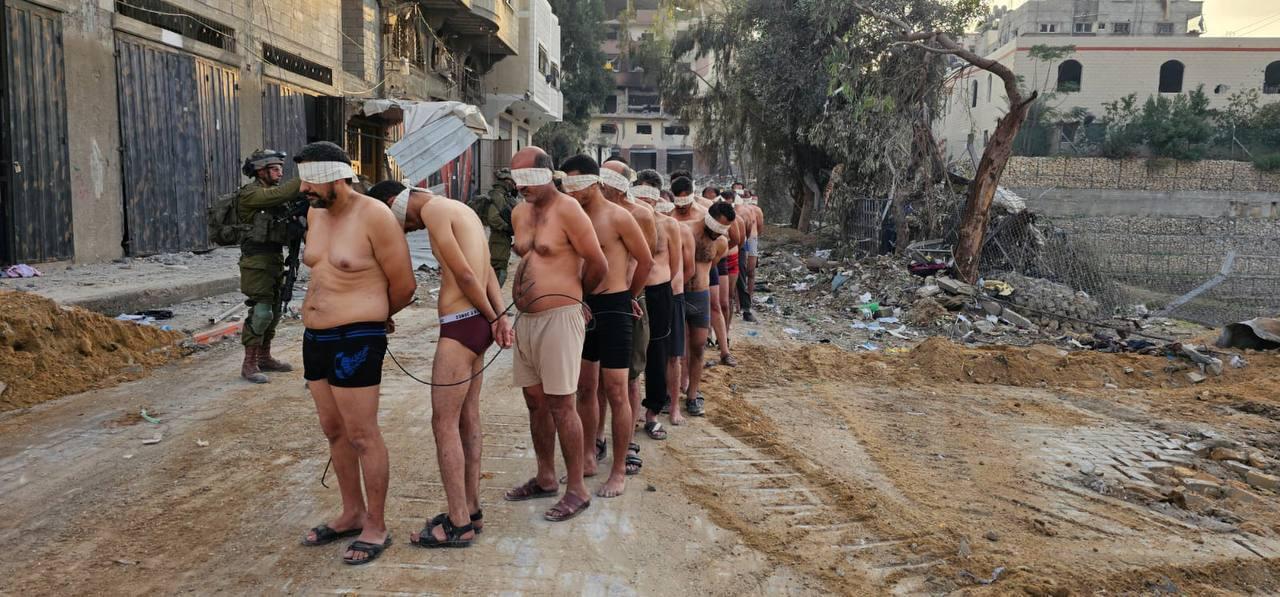
Under the terms of the ceasefire deal with Hamas, Israel on October 13 released not only 250 convicted Palestinian terrorists but also some 1,700 Gazans who were apprehended by Israeli security forces inside Gaza during the course of the war and detained.
Unlike the convicted prisoners, these detainees were never charged with a crime or put on trial, and the overwhelming majority were held incommunicado in Israeli prisons for many months.
Israel claimed that these detainees were connected directly or indirectly to terrorist organizations, but human rights groups and UN agencies have accused the Israeli security services of casting a wide net inside Gaza to apprehend people for intelligence gathering and other purposes, and claimed they were not connected to terror groups.
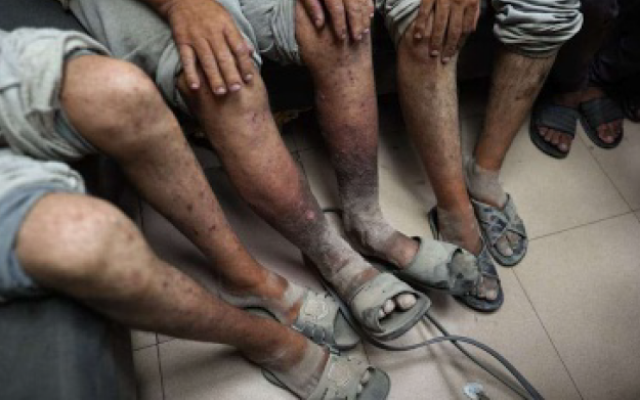
Numerous allegations have also been made by released detainees of severe mistreatment in Israeli prisons, including beatings, unsanitary conditions, inadequate and insufficient food, and psychological torture.
Who are the detainees?
Throughout the war that began with Hamas’s invasion and massacre of October 7, 2023, the IDF detained large numbers of Gazans, apparently on suspicion of involvement in terrorist activity.
Gazans detained by the IDF and the Shin Bet inside Gaza were apprehended under the terms of the 2002 Law for Incarcerating Illegal Combatants, and held in Israeli prisons and detention centers.
They were often detained during military operations against terror infrastructure, including in raids on civilian institutions with a Hamas presence, such as hospitals, schools, and shelters for displaced persons.
A report by UN Human Rights in July 2024 stated that detainees were also picked up from residential buildings and at checkpoints when trying to move about the Strip.
In one instance of mass detentions, the IDF issued a statement on April 1, 2024, saying that it had apprehended “500 suspects affiliated with terrorist organizations” over a two-week period during its operations surrounding Shifa Hospital in Gaza City, and that those suspects had been “transferred for further interrogation” by the Shin Bet and military intelligence.
Yuval Biton, a former director of intelligence in the Israel Prison Service, estimated based on his past experience that those apprehended in Gaza under the illegal combatants incarceration law “were not directly linked to the murder of Israelis or [IDF] soldiers,” and certainly had not had any involvement in the October 7 attack.
“It is possible that they were suspected of assisting, in some kind of indirect activity, such that it was possible to get information from them,” Biton told The Times of Israel.
Terms of detention
As of early October 2025, there were 2,673 such detainees in Israel Prison Service prisons, although Hamoked, a group providing legal assistance for Palestinian detainees, estimates that there are also several hundred more in a handful of military detention centers.
The detainees are held for six-month terms under the stipulations of the illegal combatants incarceration law.
Terms can be, and often were, renewed by district court judges. These renewals were handed down after extremely short hearings conducted with the detainee by video conference with a judge, lasting five to ten minutes, according to Hamoked.
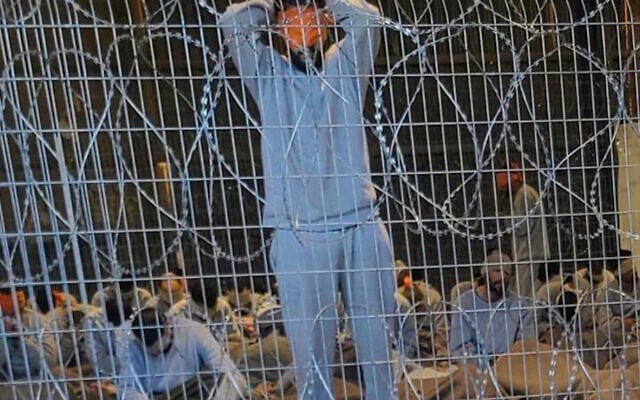
The detainees were denied access to the evidence presented to the judge by the security services justifying the detention, and the overwhelming majority of detainees never received access to a lawyer, it said.
Even if they managed to obtain legal representation, their lawyers were also not shown the evidence.
In addition, they were held without visits by the Red Cross, since the government banned such visits almost immediately after the October 7 invasion for all Palestinian prisoners and detainees.
The detainees were also not permitted visits by family members, could not receive phone calls or letters, and were in effect cut off from the outside world.
In May 2024, following legal pressure from civil rights groups, the IDF set up a system whereby lawyers could visit detainees.
This enabled the relatives of detainees to contact groups such as Hamoked and arrange for lawyers to visit them in prison.
But only Gazans who knew of the existence of Hamoked, or a few other human rights groups that provide similar services, were able to coordinate such visits and learn of the whereabouts of their relatives.
Hamoked executive director Jessica Montell said the vast majority of detainees’ families were unaware of these organizations. She noted that Hamoked was only able to facilitate lawyers’ visits for 50 detainees, and said other groups were similarly only able to contact a few dozen.
Treatment in detention
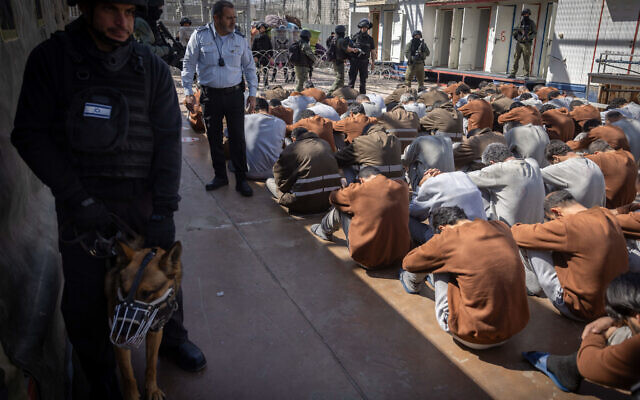
Detainees released during the course of the war routinely reported that they had been subjected to severe abuse and mistreatment while in detention.
Affidavits taken by Hamoked lawyers from some of the detainees they managed to visit while incarcerated and seen by The Times of Israel back up those claims.
One 23-year old man who was a humanitarian aid truck driver told a Hamoked lawyer in September 2024 that he was detained at a checkpoint in Gaza in April 2024, beaten, told to admit he was a Hamas operative, and then sent to the notorious Sde Teiman military detention facility for 45 days before being moved to the Ofer detention center.
He said he was taken to the “Disco” room where he was exposed to very loud music for what he estimated was an hour or more, and then taken for interrogation where he was asked about what he did. In further interrogations he was asked to give details about Hamas tunnels, and provided information about one tunnel he knew of that was close to his home, while denying any connection to the terror group.
The man said he had scabies due to unsanitary conditions, a common complaint among Gazan detainees, and that he had not been able to sleep properly for 20 days as a result.
Another detainee whose age was not given said he was detained at his home in Khan Younis, and that during detention he was struck on the head, which caused a large wound, then handcuffed, blindfolded, loaded onto a bus and beaten again.
He was taken to Sde Teiman, where he was held handcuffed and blindfolded for 96 days, including at night while in bed, and when going to the bathroom.
After over three months in Sde Teiman he was transferred to Ofer, where he said conditions were a little bit better since the detainees were only handcuffed during the day, and were not blindfolded. He also said the detainees were allowed to speak in Ofer, whereas at Sde Teiman they were forced to remain silent.
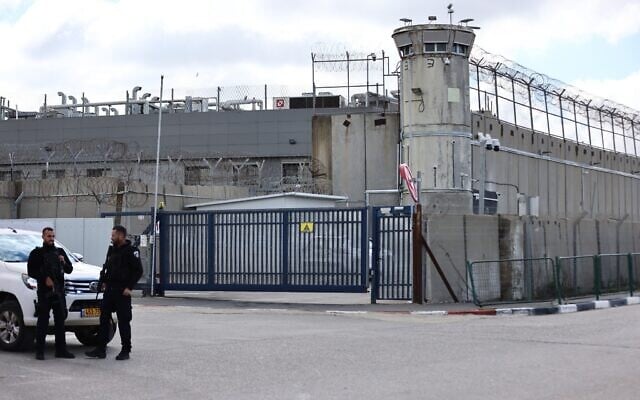
The man said it was difficult to properly clean himself when he went to the bathroom at Ofer due to the handcuffs, and that in the shower, detainees were given floor cleaner instead of soap.
He also told the lawyer he had not known where he was until the lawyer visited him and informed him.
The Times of Israel has seen affidavits of 11 other Gazan detainees apprehended under the law for incarcerating illegal combatants with similar accounts of abuse and mistreatment.
The Israel Prison Service and the IDF have repeatedly denied abusing or mistreating Palestinian detainees.
National Security Minister Itamar Ben Gvir, who has authority over the Israel Prison Service and its policies, has repeatedly boasted of the harsh conditions he has imposed on Palestinian detainees and prisoners.
In February this year, an IDF reservist was convicted of beating detainees with his fists and weapon, while they were blindfolded and handcuffed in Sde Teiman. Five other IDF reservists were indicted the same month on charges of severely abusing another Palestinian detainee, also at Sde Teiman.





The Times of Israel Community.