

German neo-Nazi rappers push hate speech and antisemitism on TikTok, Instagram, Spotify
Songs promote hatred and conspiracy theories as part of ‘increasingly radical movement,’ experts say; some clips remain online despite breaching hate speech policies
 Add ToI as a Preferred Source on Google
Far-right German-language rappers are flouting hate speech rules by spreading extremist rhetoric and disinformation on platforms such as TikTok, an AFP investigation found.
In one video, a rapper named MaKss Damage cited Israel’s war against Hamas in Gaza and suggested Adolf Hitler was right to claim the Jews caused destruction, with the artist’s face morphing into an antisemitic demonic silhouette.
“Back then it was Germany, today it’s Palestine,” MaKss Damage, whose real name is Julian Fritsch, rapped in the video he posted on TikTok, displaying a Germanic triangle tattoo synonymous with the far right.
“This time, people are questioning and are disgusted. They listen to old painters talk and understand history,” he added in a reference to Hitler, who aspired to be an artist.
In the same song, he referred to the false antisemitic conspiracy theory about September 11, 2001, according to which the Jewish owner of the World Trade Center stayed at home because of prior knowledge of the attacks.
TikTok took down all the rapper’s accounts after being contacted by AFP, but did not respond to specific questions about enforcing its policies on hate speech.
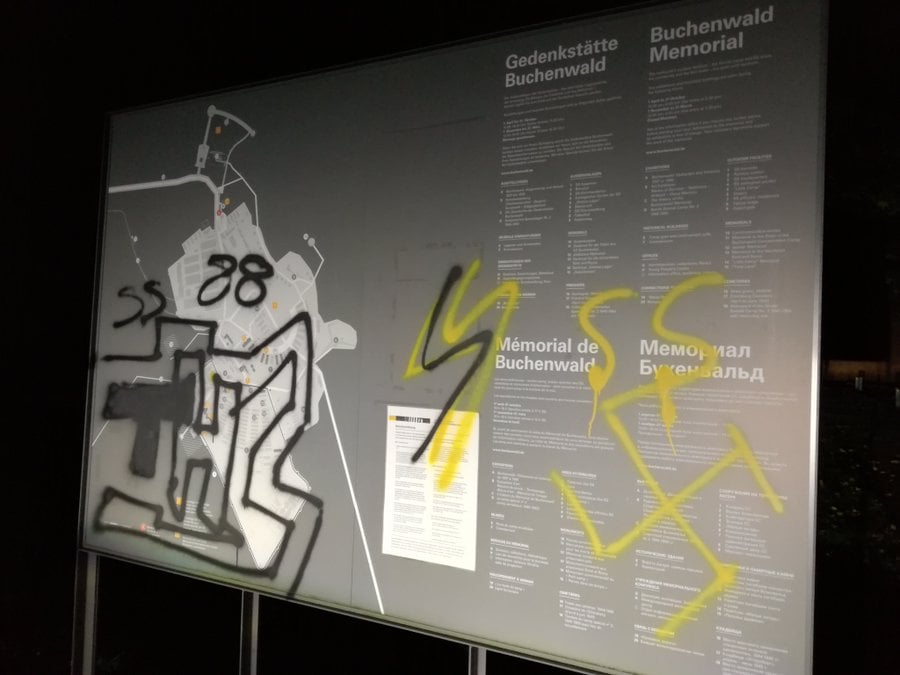
Germany’s federal domestic intelligence agency identified Fritsch as a right-wing extremist, and the website of far-right party The Third Way has named him as a supporter.
Antisemitic crimes
Germany’s far-right Alternative for Germany (AfD) party has seen its support surge on the back of hardening attitudes to immigration.
The country has also seen a jump in politically motivated crime, including soaring rates of antisemitic offenses, according to official figures published in an interior ministry report in May.
Fritsch is one of a group of far-right German-language performers who promote extremist views on social media and streaming platforms.
The rappers are part of a broader neo-Nazi movement online that includes Holocaust deniers.
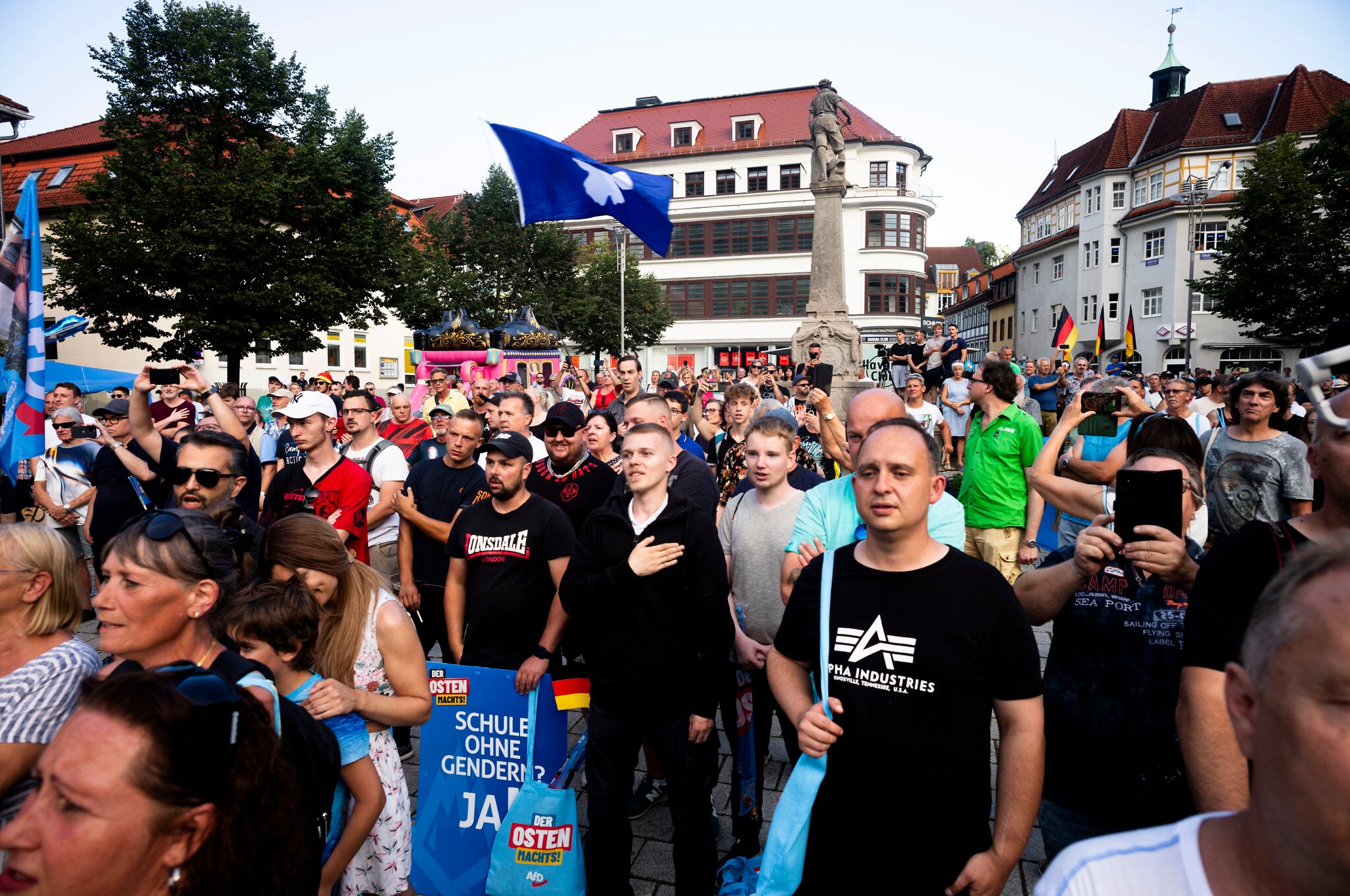
It has become “significantly more radical in recent years,” according to Thorsten Hindrichs, a musicologist at the University of Mainz.
A report by the domestic intelligence agency of the state of Saxony, for example, indicated the scene was expanding there.
Some of the clips seen by AFP remained online despite appearing to breach the apps’ policies on hate speech.
Pro-Palestinian twist
Fritsch, who also has a moderate following on Instagram, shares songs about Gaza that reflect a wider ambivalence among the European far right toward the Muslim world, Bernhard Weidinger, an Austrian expert on right-wing extremism, told AFP.
At home, “they agitate against ‘Islamization,’ portraying Islam as incompatible with Western values,” said Weidinger, a researcher at the Documentation Centre of Austrian Resistance in Vienna.
But when it comes to foreign policy, they “harbor quite the opposite sympathies, especially toward Palestinians,” believing they are “also kept down by Jews and Americans,” he said.
Another prominent rapper, E.Mar, a self-proclaimed “patriot,” has more than 96,000 monthly listens on Spotify with songs attacking Germany’s policies on immigration, complaining they are “letting anyone enter the country.”
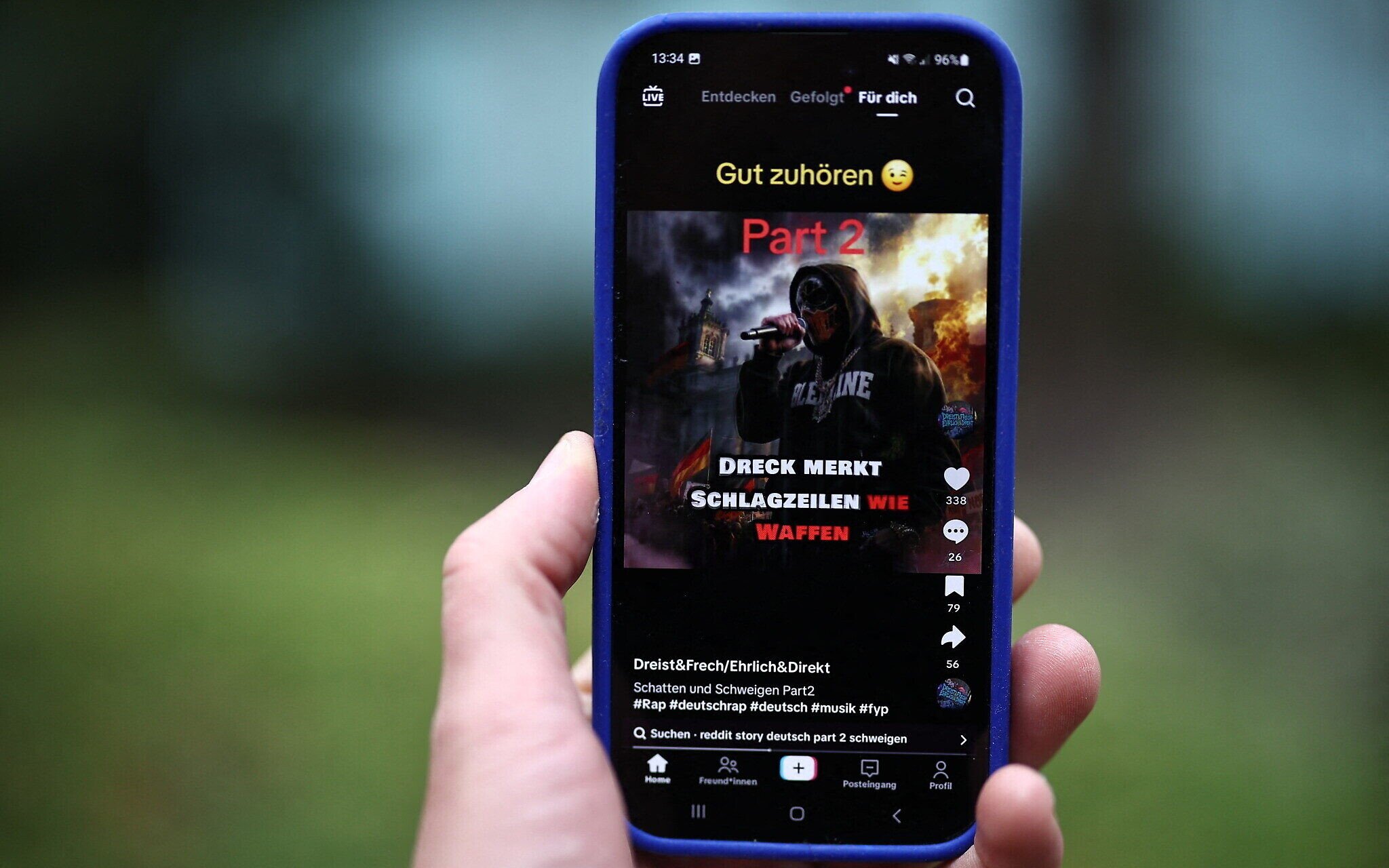
He has racked up hundreds of thousands of views on TikTok, concealing his face with a black skull mask and dressed in a German flag-design tracksuit top.
In one track, also released on Apple Music and his YouTube channel, he rapped: “We are ready for war here: current politics makes you feel foreign in your own country.”
Spotify told AFP it removes songs promoting violent extremism but content may remain online if it “does not explicitly incite violence or hatred against protected groups.”
It was among the platforms that rushed to take down “Heil Hitler,” a song glorifying the Nazi leader, by US rapper Kanye West earlier this year — but copies of it remain online.
Extremist recruitment
German researchers say German neo-Nazi networks flock to TikTok because of its “live” video function allowing creators to interact with viewers in real time.
These discussions are a “more private, intimate situation,” Markus Boesch, a researcher at the University of Muenster, told AFP.
He said it “might turn into some form of extremist recruitment,” having seen posts that encouraged users to join related groups on Telegram or Discord — platforms that typically have fewer content restrictions.
An AFP reporter tried to watch some of the rappers’ livestreams, using an account under a pseudonym, but creators regularly rescheduled them, suggesting they are trying to avoid detection.
Tom Divon, a social media researcher at the Hebrew University of Jerusalem, described these TikTok communities as not “massive, but nimble,” often migrating between accounts.
AFP saw messages promoting such alternative accounts on TikTok.
These users expect to be blocked if they breach content policies, but can “often return to the platform with ease,” said Ciaran O’Connor, a senior analyst at the Institute for Strategic Dialogue think tank.
Some commenters used emojis to signify far-right allegiance while skirting a potential ban, including a blue heart for AfD support, and two lightning bolts referring to the Third Reich’s elite SS unit.
AFP, along with more than 100 other fact-checking organizations, is paid by TikTok and Facebook parent Meta to verify videos that potentially contain false information.







The Times of Israel Community.