

Government says it’s ready to return to old method of firing AG, with certain terms
Government tells High Court it will discuss using professional committee if court agrees panel can convene without ex-justice minister or AG, and decide within two weeks of request
 Add ToI as a Preferred Source on Google
The government on Sunday told the High Court of Justice that it is willing to return to the original process used to fire an attorney general, after the court recommended that it rescind the new method it used to try to oust Attorney General Gali Baharav Miara earlier this year.
Writing to the High Court, Justice Minister Yariv Levin and Diaspora Affairs Minister Amichai Chikli stated that the cabinet would hold a hearing on the possibility of returning to the previously-approved process of dismissing the attorney general, if that process can result in a decision within two weeks of a government request, and if there are guarantees that the committee need not include a former justice minister or attorney general, given that the government was previously unable to find any who were willing to sit on the panel.
Earlier this month, the court decided unanimously to recommend to the government that it cancel its decision to fire Baharav-Miara, and gave it until September 14 to inform the court whether it accepted the recommendation to abolish the new method for firing the attorney general that the government established in June, and by extension to cancel Baharav-Miara’s dismissal.
The government’s response, submitted by Justice Minister Yariv Levin, came just minutes before the 11:59 p.m. deadline.
The government voted unanimously on August 4 to fire Baharav-Miara, but only after it failed to complete the dismissal process established in the year 2000, which determined that a public, professional committee be responsible for recommending the appointment and dismissal of attorneys general.
In order to try to push through her dismissal, the government instead established a new ministerial committee to make the recommendation, and adopted that committee’s recommendation when it fired her in August.
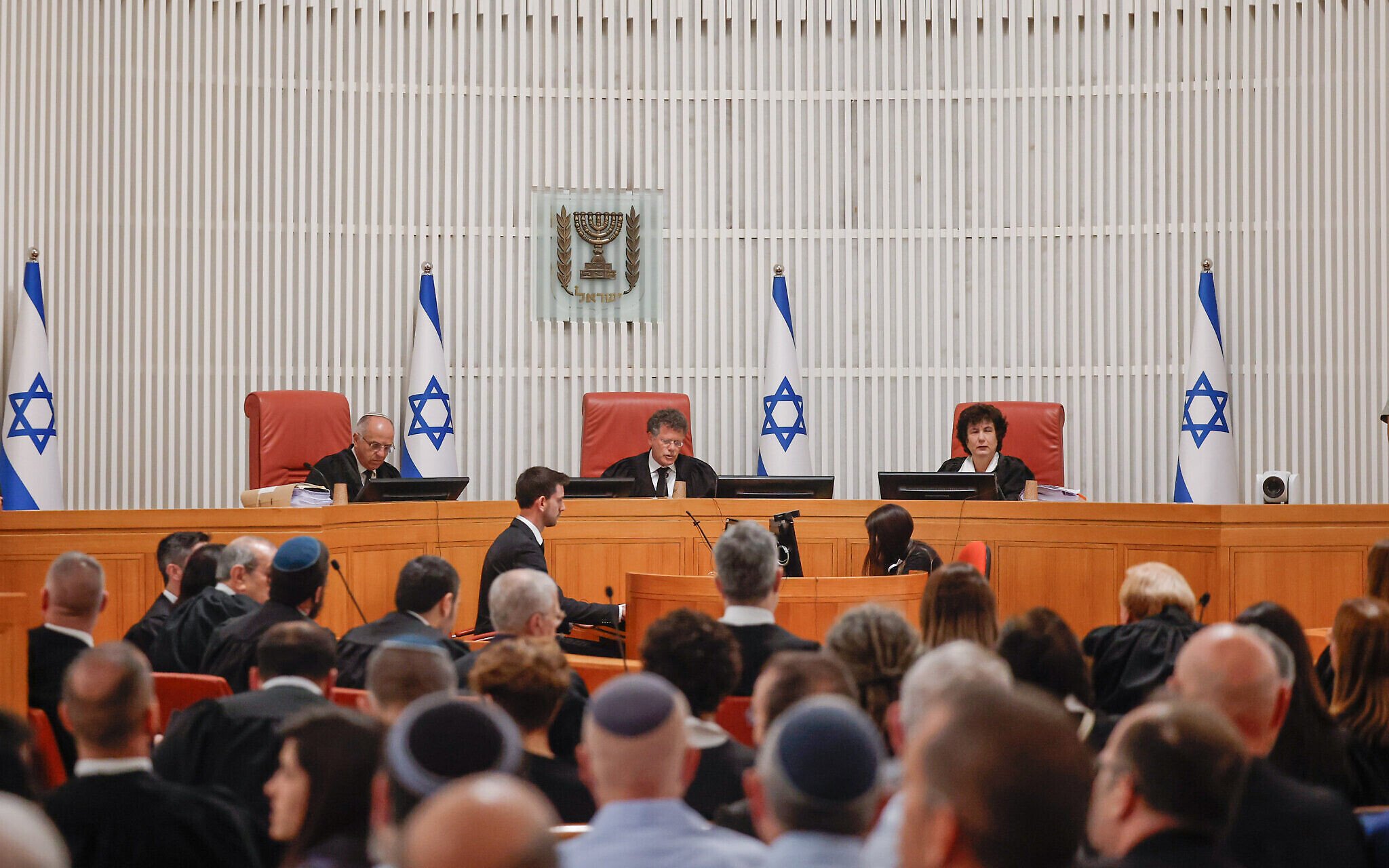
In its September 1 decision, the court decided unanimously to recommend to the government that it return to the original process for firing an attorney general, in a strong hint that it would invalidate the new dismissal process if the government did not agree.
In the government’s response Sunday, Levin and Chikli slammed the High Court’s orders as anti-democratic.
“These orders are in direct conflict with the democratic idea that the public has the right to elect a Knesset that will appoint a government that can deviate from the previous generation’s choices. The orders are contrary to state regulations and prohibit the government from correcting past mistakes,” the response read.
The ministers claimed that the interim orders against the government’s method for firing the attorney general “expressly contradict the law” since the 1959 Law for the Civil Service (Appointments) establishes that the government is entitled to “establish the means and terms” for appointing an attorney general, and the 1981 Law of Interpretations establishes that the authority to make appointments includes the authority to dismiss that same official.
They also insisted that the government’s decision to change the dismissal process had legal precedent, since a previous government in 2009 passed a cabinet resolution determining that the appointments process from 2000 would not apply to the candidacy of Yehudah Weinstein for attorney general.
Only three out of five members of the committee supported Weinstein’s candidacy, while the cabinet resolution from 2000 requires that at least four committee members support a candidate in order for the committee to recommend them for the position.
Levin and Chikli pointed out that the High Court at the time did not threaten to intervene over Weinstein’s appointment as it now does over Baharav-Miara’s dismissal.
The two ministers also argued that the court’s interim orders against the government’s decision, and any final ruling in the same spirit, were “not practical” since there was not even “the slightest trust” between the government and Baharav-Miara, apparently alluding to the government’s threats not to abide by a ruling invalidating her dismissal.

Despite these arguments, the two ministers said they would agree to return to the original dismissal process on condition that the court not insist that a former attorney general or a former justice minister be a member of the advisory committee, if they could not find such a figure to sit on the panel after checking one more time.
At the end of July, Levin told the High Court that all 21 living former attorneys general and justice ministers had either been unwilling to sit on that committee, had already expressed an opinion about Baharav-Miara’s dismissal, or had been deemed hostile to the government’s agenda.
“In light of the urgent need for the proper operation of the attorney general system, and in particular at a time of intense war in which the country is engaged, and because Attorney Baharav-Miara does not maintain any working relations with the government, and every day that passes in this situation causes serious damage to the country and all its citizens, the government is prepared, for practical considerations to save time and under protest, to hold a hearing on the court’s proposal, to the extent that it is formulated into a clear and complete proposal that will ensure the consultation process is carried out quickly,” Levin and Chikli told the court in their letter.
Even before the government fired the attorney general, Justice Noam Sohlberg, who presided over the initial proceedings of the petitions against the process change, recommended the government return to the original method.
Once the government actually fired Baharav-Miara, Sohlberg immediately froze her dismissal, ruled that her legal advice to the government would remain binding, and forbade the government from changing its working relationship with her.
The Israel Democracy Guard organization welcomed what it said was “the apparent change in direction” by the government, saying it had “internalized” the court’s recommendation.
“The government knows there is no point to the dismissal process at all, including through the Grunis [advisory] committee, and that there is no justification for firing Baharav-Miara,” the organization said.
“It would be better [however] for the court to issue a comprehensive ruling on this matter, in order to end this dance with the devil surrounding the government legal advisory system, and return the executive branch to the path of proper governmental conduct.”










The Times of Israel Community.