

Hezbollah rocket hits remains of 1,500-year-old Byzantine church in northern Israel
Israel Antiquities Authority says modern-day structure preserving the mosaic in Nahariya was damaged but the ancient floor is intact
 Add ToI as a Preferred Source on Google
Rossella Tercatin is The Times of Israel's archaeology and religions reporter.
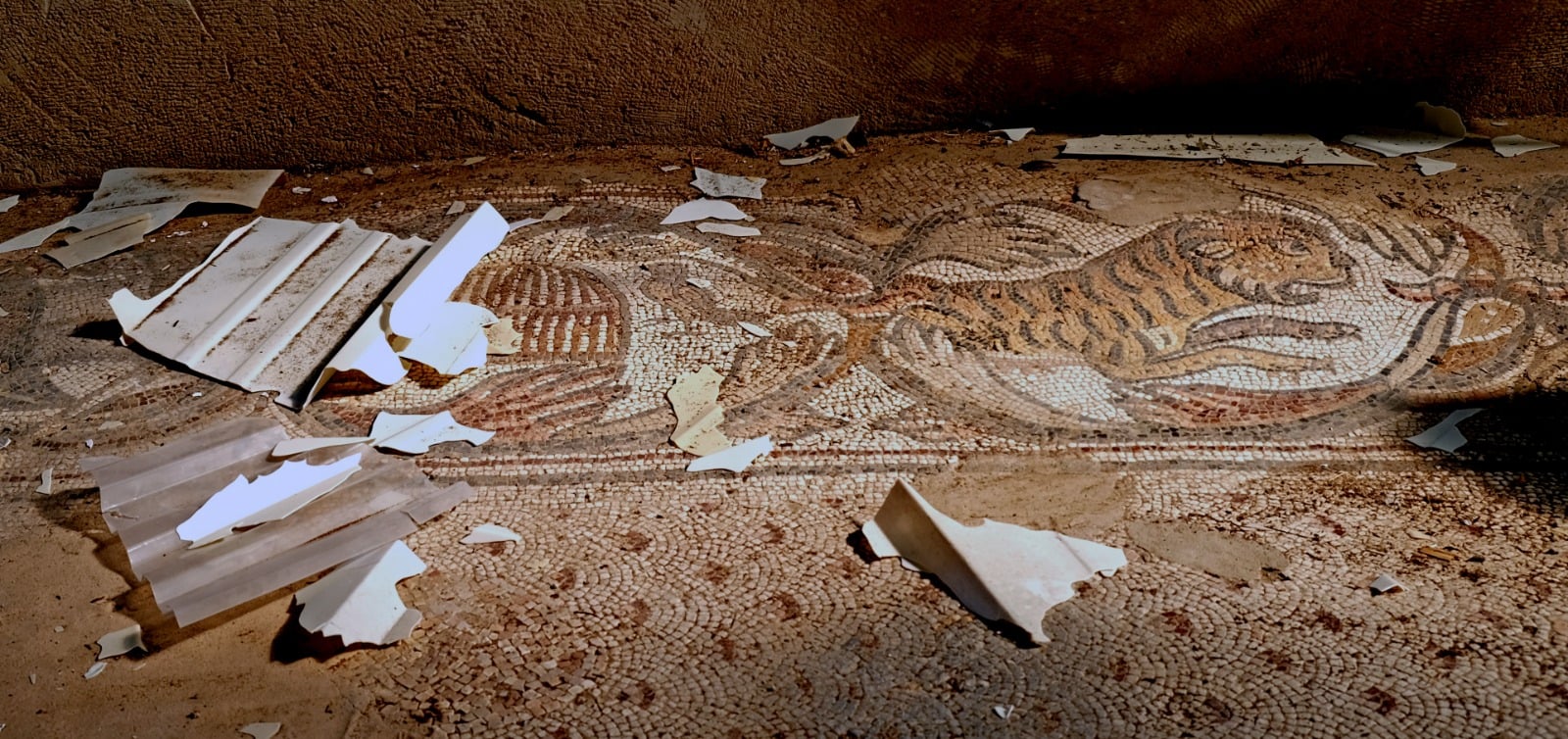
The remains of a Byzantine Church dating back some 1,500 years in the northern city of Nahariya were hit by a Hezbollah rocket on Friday night, the Israel Antiquities Authority confirmed to The Times of Israel on Sunday, after the news was first reported on Hebrew outlet Ynet.
The rocket hit a modern structure inaugurated in 2022 to preserve an impressive mosaic floor spanning over 500 square meters (nearly 5,400 square feet) and make it accessible to the public.
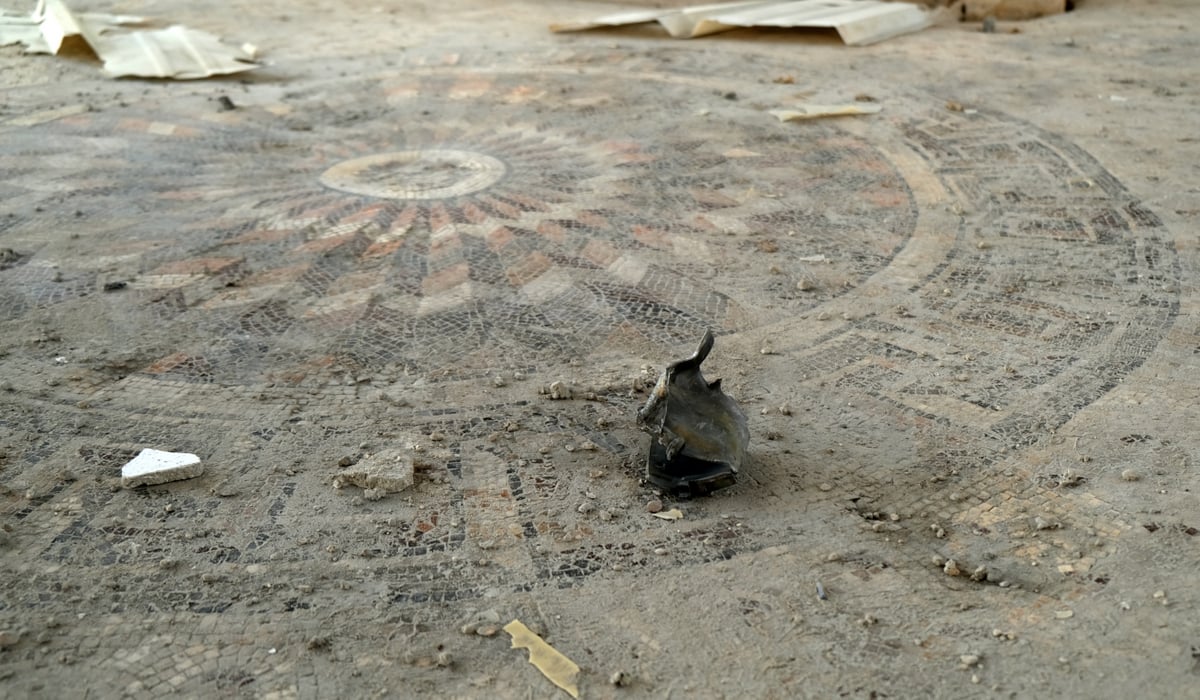
“Today, a meeting was held on site with the participation of archaeologists and conservators from the Israel Antiquities Authority [and] representatives of the municipality and the Property Tax Authority,” an IAA spokesperson said in a statement. “An on-site assessment indicates that the mosaic was covered by debris from the modern structure in which it had been preserved, but was not damaged.”
Located in the Katznelson neighborhood, the church’s remains were first discovered in 1964 during the construction of a local school.
According to a 2022 statement by the IAA, the floor was part of a church that was destroyed during the Sasanian Persian invasion in 614 CE and completely burned down.
The colorful mosaics include scenes representing animals, plants, and human figures in various situations. The ancient artist created 100 medallions along the perimeter of the floor, and 87 of them survived to the present day. At the center of the church was a rosette (a floral-shaped circular design).
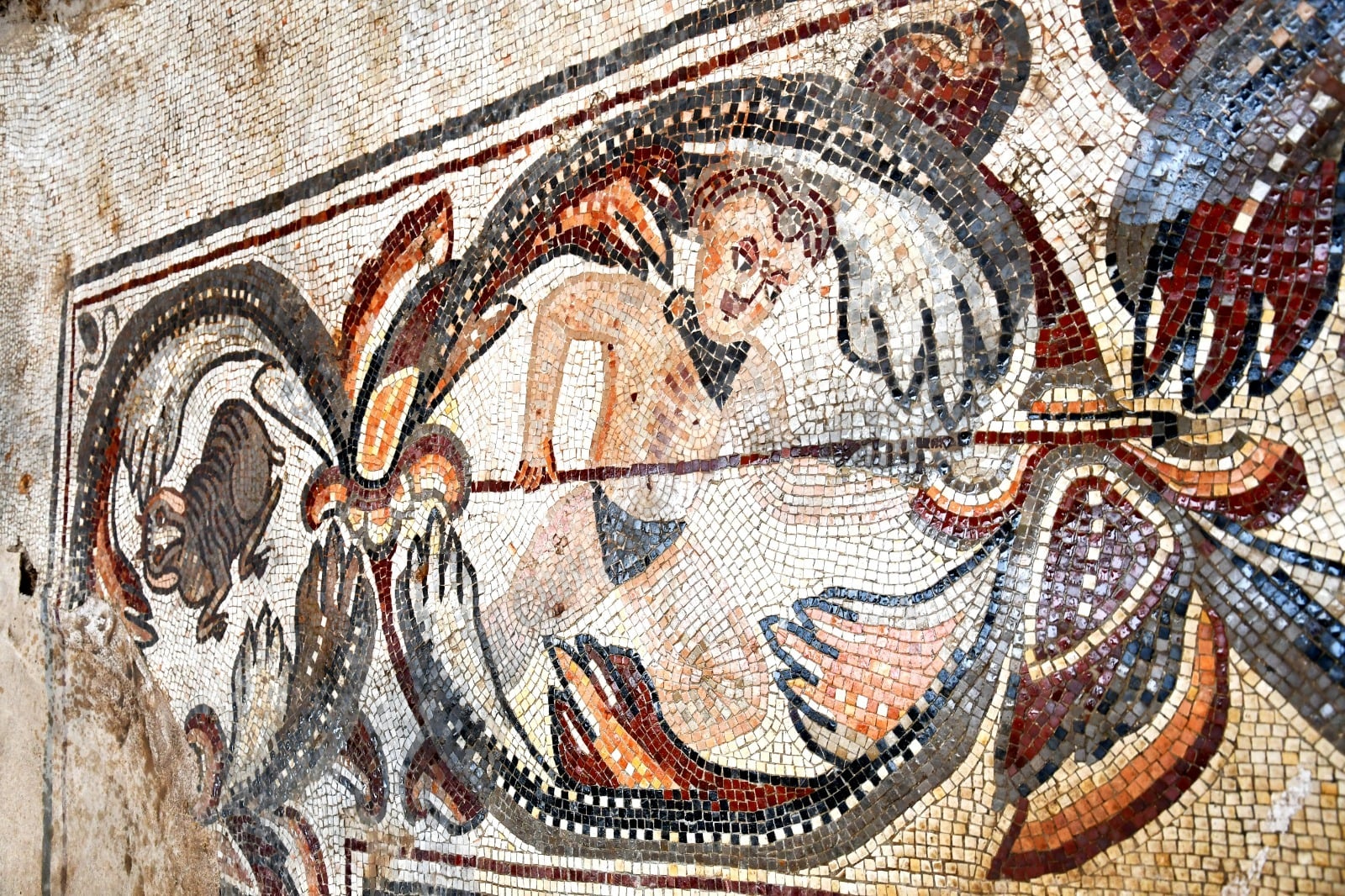
“We have a historical treasure in our city, and we have now presented [it] to the public and given it the place it deserves,” Nahariya Mayor Ronen Marelly said at the time. “This is a site of great archaeological value, and we must do everything to make it accessible and expose it to the city’s residents and to tourists from Israel and abroad.”
Pictures by the IAA taken at the site after Friday’s attack show the floor covered in dust, rocks, and broken tiles and bricks.
Since the beginning of the US-Israel war with Iran on February 28, Hezbollah has fired hundreds of rockets into Israel. Israel and Hezbollah have continued to trade fire, even after a ceasefire between Iran and Israel went into effect on Thursday.








The Times of Israel Community.