

High Court: Israel can’t keep holding terrorists’ bodies without a law
Justices give state six months to either release remains held as a bargaining chip or pass legislation allowing the practice
 Add ToI as a Preferred Source on Google
Judah Ari Gross is The Times of Israel's religions and Diaspora affairs correspondent.
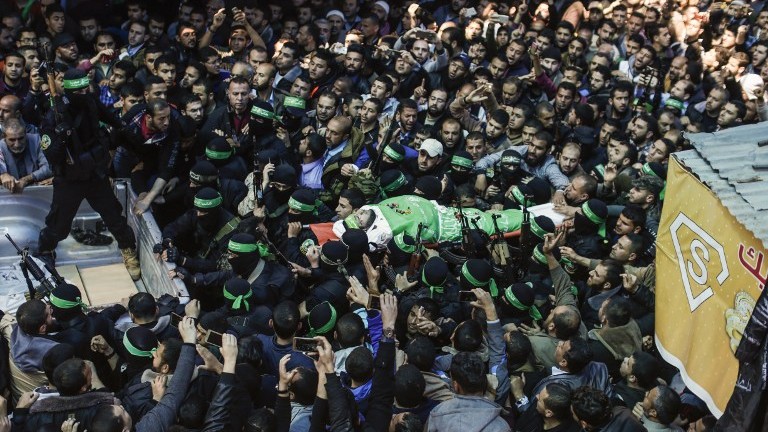
The High Court on Thursday gave the government an ultimatum: pass a law regulating the holding of Palestinian terrorists’ bodies as bargaining chips or hand them over to their families.
“The State of Israel, as a nation of laws, cannot hold on to corpses for the purposes of negotiations at a time when there is no specific and explicit law that allows it do so,” the justices wrote in their decision.
The High Court of Justice gave the government six months to enact such legislation.
“If a law is not made before this time, the bodies of the terrorists will be returned to their families,” the court wrote in its decision.
Responding to the decision, Defense Minister Avigdor Liberman said he had instructed lawmakers to prepare a bill.

The court was ruling on a petition by a number of families of terrorists whose bodies are currently being held by Israel.
Israeli security forces regularly take custody of terrorists’ corpses, with the intent of using them in negotiations to retrieve the bodies of Israeli soldiers, specifically those of Hadar Goldin and Oron Shaul, whose remains are being held by the Hamas terrorist group in the Gaza Strip.
The ruling was made by a panel of three judges. Justices Yoram Danziger and George Kara wrote the majority decision, while Justice Neal Hendel wrote a dissenting opinion.
They did not outright forbid Israel from holding the bodies of Palestinian terrorists, only from doing so without a law dictating how it is managed.
Following the ruling, several politicians criticized the court and called for work to begin immediately on such legislation.
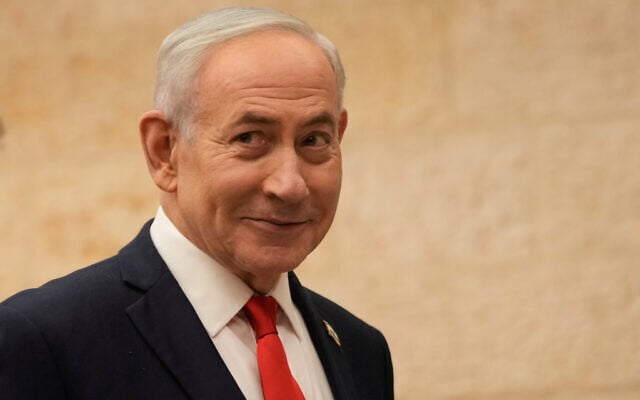
Prime Minister Benjamin Netanyahu blasted the decision as “very problematic.”
“We cannot give Hamas gifts,” he said. “On Sunday I’ll convene cabinet ministers and the attorney general for a special deliberation to find practical and legal solutions to keep up pressure on Hamas.”
“We owe this to the families of the fallen and to the soldiers of the IDF,” said Intelligence Minister Yisrael Katz.
Public Security Minister Gilad Erdan denounced the decision, saying it “makes it more difficult for security forces to create deterrence and fight incitement.”
He added, “We have to do everything in order to formalize the entire issue of terrorists’ bodies with rapid legislation and to give clear authority not to return them.”
The family of Goldin, one of the deceased soldiers whose body is being held in Gaza, accused the government of inaction in the wake of the court’s decision.
“We have felt for many long months now that the January cabinet decision calling for pressure to be put on Hamas was hollow and declarative only,” the family said in a statement. “The High Court decision will only increase the pressure on [Prime Minister Benjamin] Netanyahu and cabinet ministers to get up out of their seats, roll up their sleeves and start to work for the return of Hadar and Oron to Israel.”
Times of Israel staff contributed to this report.





The Times of Israel Community.