

Media personality sorry for suggesting Ethiopians should wear ‘pointy hats’
Avri Gilad apologizes after urging community to distinguish themselves from largely ‘criminal’ Eritrean and Sudanese migrants
 Add ToI as a Preferred Source on Google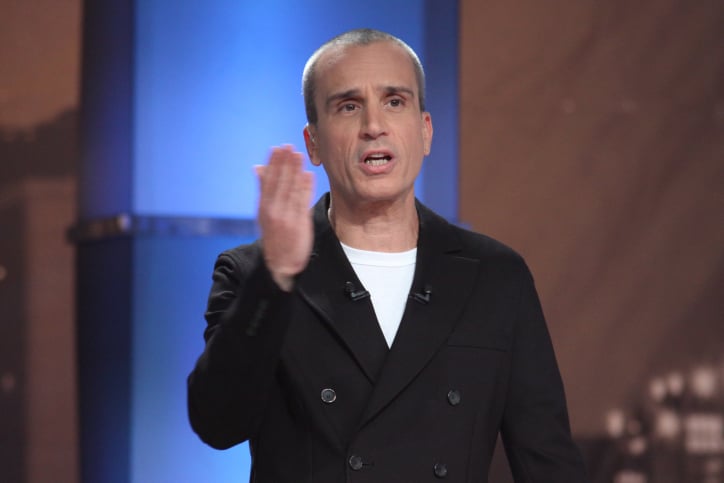
Israeli media personality Avri Gilad apologized Thursday for what he called a poorly worded joke on his radio program, after suggesting that Ethiopian Jews should wear “pointy hats” to differentiate them from other, “criminal” Africans.
While interviewing Ethiopian educator Aviv Melesa on his morning “Nuclear Family” show on Army Radio Wednesday, Gilad said Ethiopian Jews in Israel outwardly resemble other migrants from Africa. He suggested Ethiopians wear “pointy hats” so people could distinguish between them and migrants from Sudan and Eritrea.
“I would like to express my deep love for the Ethiopian community and say that every time I meet one of them or befriend them, I feel like I’m gaining something that I can’t gain from my white friends,” Gilad said on the show. “There is something ancient, African, that I enjoy basking in.”
He proceeded to distinguish them from the migrants from Sudan and Eritrea, “a weak population that unfortunately is highly represented among criminals, particularly theft and sex crimes and the like.”
“I apologize to everyone who was hurt unjustly,” Gilad posted on his Facebook page a day later, saying he “added a joke about pointy hats that seemed funny to me at that moment, but in hindsight I was probably the only one who was amused.”
Gilad said remarks on a live broadcast can often come out wrong, adding that he had great love and respect for the Ethiopian community. He also apologized to “law-abiding” Eritrean migrants for stereotyping them as criminals.
Gilad’s comments sparked a social media storm in the wake of the shooting Sunday night of an Ethiopian teenager by an off-duty police officer in the Kiryat Haim neighborhood of Haifa. The death of Solomon Tekah, 19, was the second police killing of an Ethiopian in six months with more than a dozen occurring in the last five years.

The killing set off two days of nationwide protests in which dozens were hurt, 136 were arrested and police cars were overturned and torched.
The off-duty Israel Police officer who was not in uniform at the time was arrested on suspicion of negligent homicide and was later released to house arrest.
More than 140,000 Ethiopian Jews live in Israel; most are children of immigrants who came to Israel in the 1980s and 1990s. Community leaders and activists have said there is a pattern of racism and abuse by police toward Ethiopian-Israelis, despite repeated promises to root out the problem.
Thousands of migrants from Sudan and Eritrea have entered Israel over the past decade. They are the bugbear of much of the Israeli right, which seeks to deport them over fears of Israel’s demographic balance.

About 800 people signed a letter of complaint sent to Army Radio over Gilad’s comments, claiming that “these are racist statements that have no place on a public radio station,” Channel 12 news reported.
On Twitter, users mocking Gilad’s comments posted pictures of Ku Klux Klan hats and dunce caps.
The radio and television host is no stranger to making controversial comments on live shows. Earlier this year he was criticized for saying that the fire at Paris’s Notre Dame cathedral was deliberately set by Islamists and alleged that French investigators were “lying” about the cause. Gilad’s comments at the time, which included saying “all the Europeans are liars,” were widely criticized on social media, including by fellow Channel 13 journalists.








The Times of Israel Community.