

Netanyahu may look to enlist Yisrael Beytenu or Labor-Gesher in coalition
Following registration of all parties running in September vote, and in light of recent polls, premier still left with no easy path to forming government
 Add ToI as a Preferred Source on Google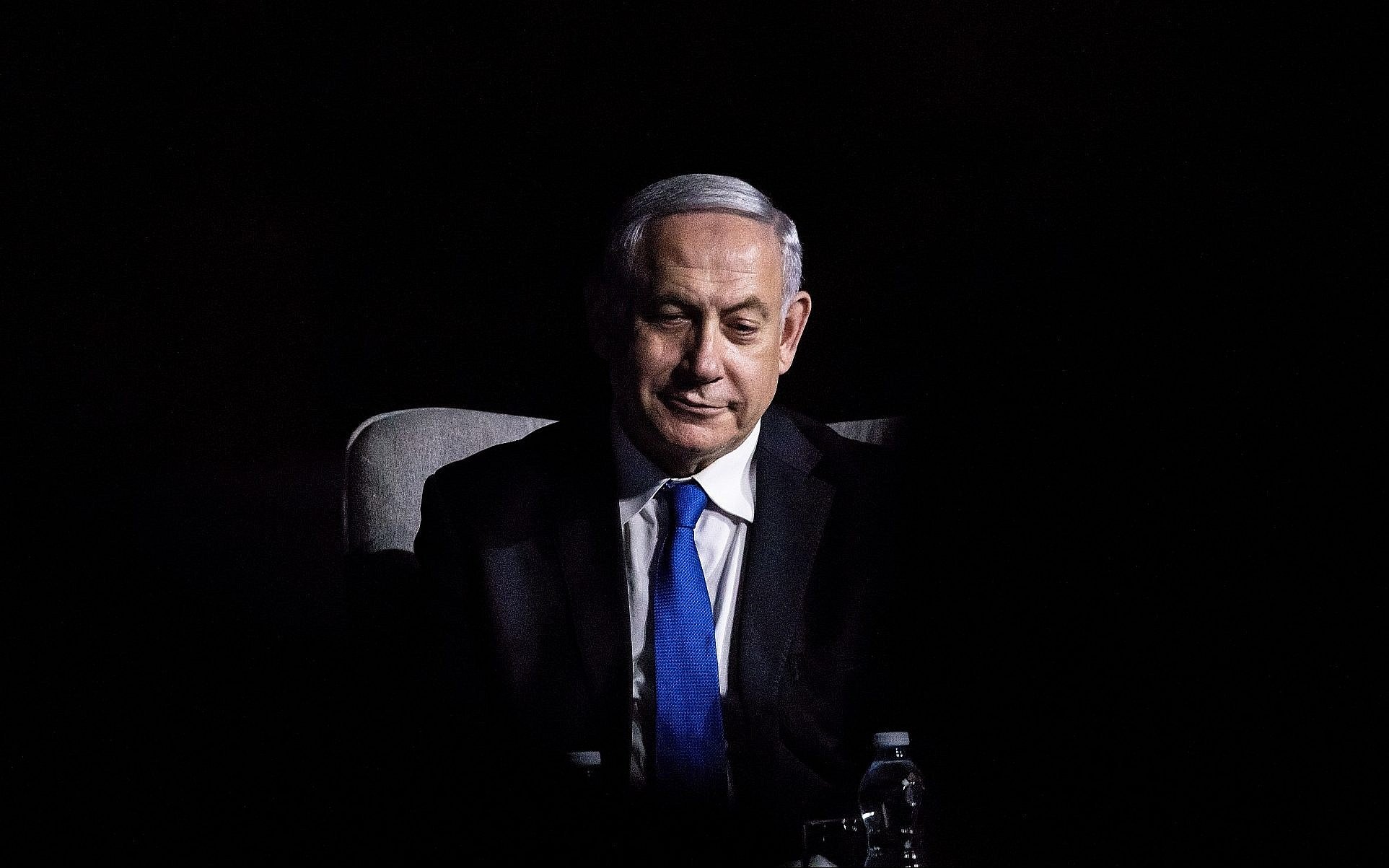
Prime Minister Benjamin Netanyahu is most likely looking to form a government with the support of either Labor-Gesher or Yisrael Beytenu following recent polls and the official registration of all parties running in the September election, although there are significant obstacles to a partnership with either party, according to a Friday report from Channel 12.
Recent surveys predicted around 56 seats going to right-wing and religious parties in the national vote — including Netanyahu’s Likud, but not Avigdor Liberman’s Yisrael Beytenu. The polls predict around 42 seats going to center-left parties, with Benny Gantz’s Blue and White, like Likud, expected to secure around 30 seats. In this scenario, neither side could form a coalition without Yisrael Beytenu, which is expected to win around 11 seats.
Gantz would be unable to form a coalition even with the support of the Joint List’s 11 or so seats.
Complicating matters for Netanyahu, the extremist right-wing Otzma Yehudit faction will be running alone in the election, after failing to merge with Ayelet Shaked’s United Right union. Otzma Yehudit is unlikely to cross the electoral threshold, meaning right-wing votes for the party will not translate into Knesset representation.
Moshe Feiglin’s quasi-libertarian hard-right Zehut is also unlikely to win any seats.
Of the 32 parties that registered with the Central Elections Committee before Thursday’s midnight deadline, only nine are projected to enter the next Knesset.
One scenario for a Netanyahu-led government would be a right-wing coalition including Yisrael Beytenu.
Liberman precipitated the September vote by refusing to join Netanyahu’s coalition following the April elections, when he clashed with ultra-Orthodox parties over legislation to regulate military service for ultra-Orthodox men. Rather than risk being left out of the coalition, the two ultra-Orthodox parties might agree to passing the bill to regulate the ultra-Orthodox military draft, and thus facilitate a coalition alongside Liberman, Channel 12 suggested.
It was Liberman’s demand for the passage of this legislation, unchanged from its current form, and the refusal of the ultra-Orthodox parties Shas and United Torah Judaism to promise this, that doomed Netanyahu’s coalition-building efforts in April-May.

Liberman on Tuesday told supporters that he plans to force a national unity government with Likud, the centrist Blue and White party and his own party, saying that there was “essentially no difference” between the two other factions and that he would recommend that the first leader to call for a unity government be tasked with forming a coalition.
A poll aired Thursday found that half of Israeli voters want to see a unity government between the Likud and Blue and White parties that does not include ultra-Orthodox factions.
While Gantz has voiced support for a unity government, albeit without Netanyahu, Likud has been dismissive of the proposal, and insists on a coalition with right-wing and ultra-Orthodox parties.
Netanyahu could also look to the newly-formed Labor-Gesher party, which is predicted to win around six seats.
Amir Peretz’s Labor faction approved a union with Orly Levy-Abekasis’s Gesher party on Wednesday.
Though she focuses on social issues, Levy-Abekasis, the daughter of former Likud foreign minister David Levy, has remained largely identified with the right, and the merger was seen as a move by Labor to push for more support from the political center rather than from Meretz, which is further to the left.

Peretz said on Thursday that he would not join a coalition led by Netanyahu, however. He also accused Liberman of colluding with Netanyahu to tank coalition negotiations following April’s Knesset elections in order to force a second round of voting.
His predecessor as Labor leader, Avi Gabbay, was booted from the party after leading it to its worst-ever electoral result during the April election with only six seats in the Knesset, and after briefly entertaining an offer from Netanyahu to join his coalition, a move met with fierce internal criticism.
Even with the support of Labor-Gesher, it could be difficult for Netanyahu to eke out a majority government. A television poll aired Thursday showed that a coalition consisting of Likud, United Right, Labor-Gesher and the religious United Torah Judaism and Shas parties, would win only 60 seats, just shy of a majority in the 120-seat Knesset.
Netanyahu could also hope for fissures to open in the Blue and White party, which Channel 12 report deemed an unlikely possibility.
Meanwhile, the premier’s bitter rival Liberman was probably going to change his campaign’s direction and cease his attacks against Netanyahu, according to a Friday report from Channel 13.
The leader of Yisrael Beytenu, which is associated with immigrants from the former Soviet Union, received results of a study on Wednesday indicating that Netanyahu and Liberman are the most popular figures among immigrants in Israel, and that voters would punish in the election whoever they viewed as more “guilty” in the conflict between the two. More of the respondents already placed blame for the rift on Netanyahu rather than on Liberman, himself an immigrant from Moldova.
Netanyahu’s efforts to recruit defectors from Liberman’s party had hurt him among voters, said the survey, which interviewed around 1,000 immigrants from the former Soviet Union.





The Times of Israel Community.