

NYC’s public CUNY college system works to expand enrollment from yeshivas
City College of New York’s chancellor visits Brooklyn’s Yeshivah of Flatbush, as dual enrollment for Jewish religious school students expands since program opened last year
 Add ToI as a Preferred Source on Google
Luke Tress is The Times of Israel's New York correspondent.
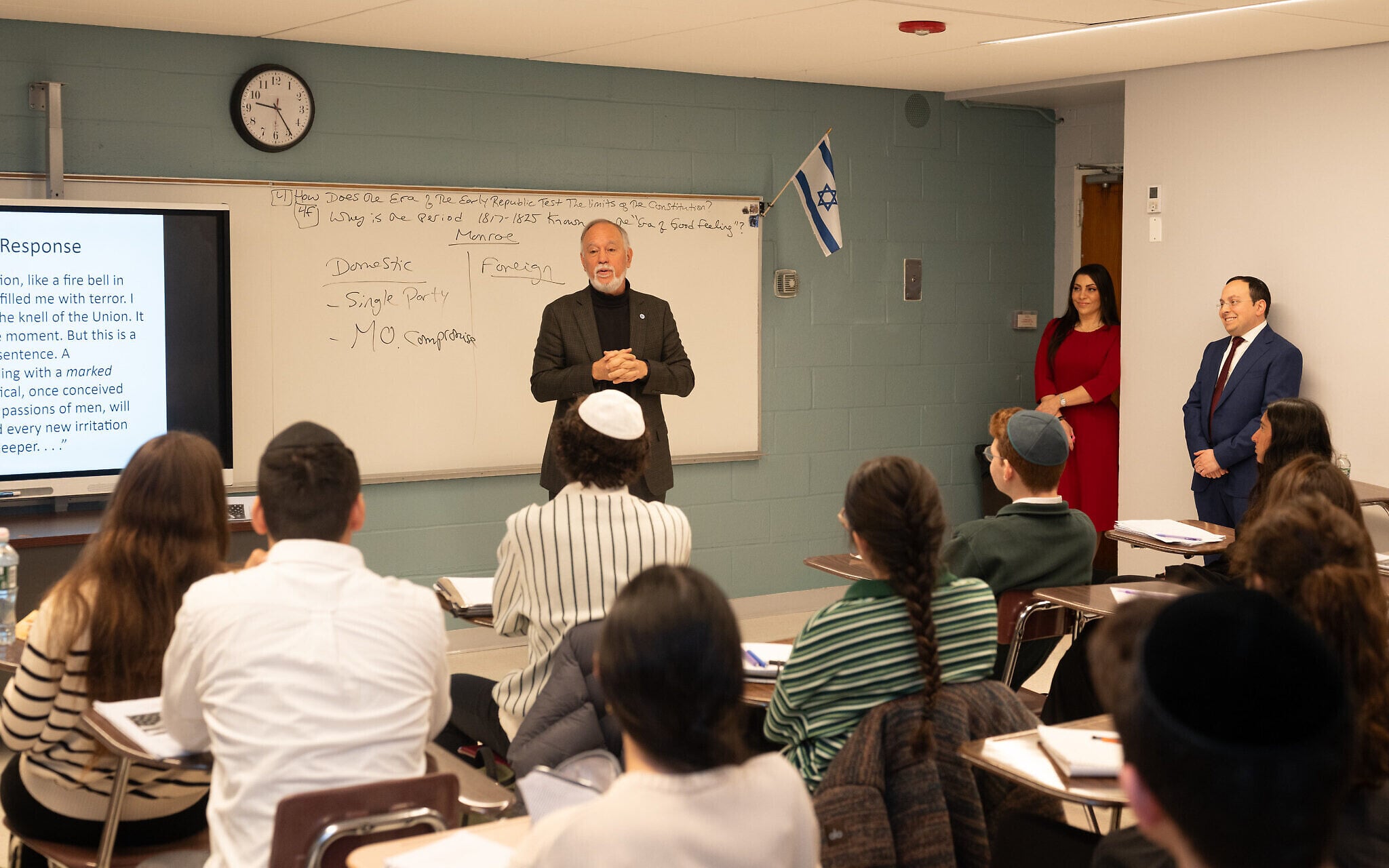
NEW YORK — The chancellor of New York City’s public college system, Félix V. Matos Rodríguez, visited a prominent yeshiva in Brooklyn on Tuesday in an effort to expand college course enrollment at Jewish religious schools.
The public City University of New York (CUNY) is the largest urban college network in the United States, with around 240,000 students, and has served as a vehicle for upward mobility for Jewish New Yorkers for generations, but has been grappling with alleged antisemitism on some of its campuses for years.
Amid those tensions, Rodríguez’s visit to Yeshivah of Flatbush highlighted a CUNY program launched last year that opened enrollment in college-level courses to students at independent religious high schools.
The initiative is part of CUNY’s College Now program that offers free college-level courses to New York City high school students, but had previously been limited to public schools. The students who complete the courses gain credits toward college degrees. CUNY said that, most years, more than half of the yeshiva’s students enroll at CUNY colleges after graduating high school
More than 30,000 students participated in the College Now program last year, CUNY said in a statement, but the initiative is just getting off the ground at yeshivas.
Yeshivah of Flatbush and another yeshiva, Magen David Academy in the Brooklyn neighborhood of Bensonhurst, are participating in the dual enrollment program, acting as a model for CUNY collaboration with other private and religious schools.
Between the fall of 2024, when the program opened to religious schools, and this fall, enrollment in college courses through the program increased from 32 students to 78. The expanded program is funded through partnerships between CUNY and the yeshivas, CUNY said.
The majority of those participants — 53 students — are from Yeshivah of Flatbush’s Joel Braverman High School. The yeshiva students are taking college-level courses in physics, English composition, American pluralism, college algebra, and calculus, CUNY said.
Magen David Academy is offering college courses on nutrition.
The courses are overseen by Brooklyn College, part of the CUNY system. The classes are taught at the high school by Yeshivah of Flatbush teachers who are also adjunct lecturers at Brooklyn College.
Brooklyn College President Michelle Anderson accompanied Rodríguez on his Tuesday visit to the yeshiva.
The expanded program “reflects CUNY’s commitment to providing high-quality education to all of New York City’s students,” Rodríguez said in a statement.
Yeshivah of Flatbush is a private, Modern Orthodox school that combines secular education with Jewish studies, such as classes on the Talmud. Some of New York City’s yeshivas have come under fire in recent years for allegedly neglecting education in secular studies, but that criticism is focused on certain Hasidic yeshivas, not on Modern Orthodox schools.
CUNY is the largest urban college network in the US, with 26 colleges spread around the city. The experience of Jewish students varies widely between the different campuses, and each college has significant autonomy from the central CUNY administration.
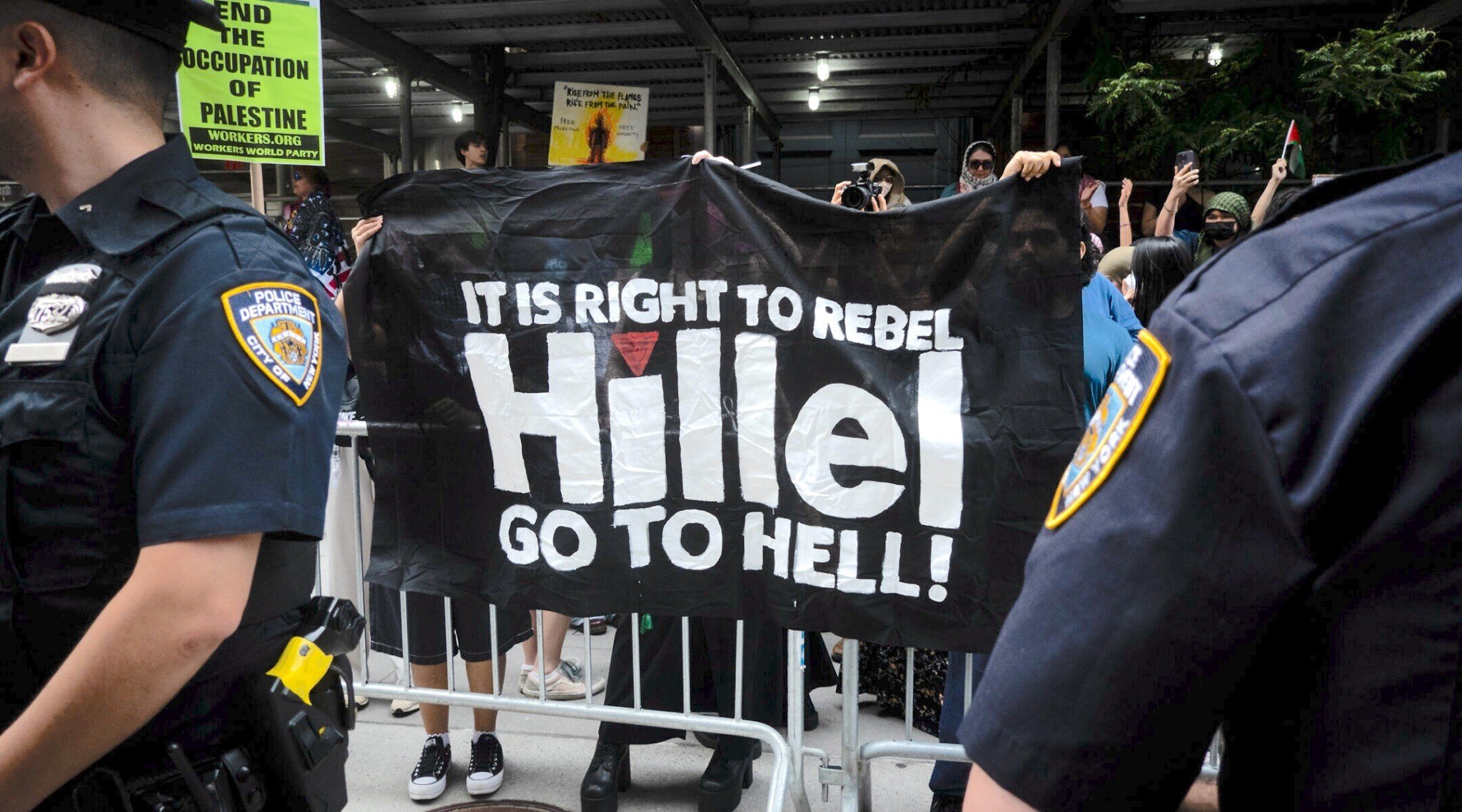
Some campuses have seen vitriolic protests against Israel since the October 2023 Hamas attack, including students targeting Hillel chapters with terrorist symbols. Other campuses have been relatively quiet. Brooklyn College, for example, received an “A” on the Anti-Defamation League’s Campus Antisemitism Report Card, while CUNY’s Hunter College received a “C” due to antisemitism and “hostile anti-Zionist student groups.”
The CUNY system has contended with instances of antisemitism on its campuses for years and has taken steps to counter anti-Jewish discrimination. A third-party review of antisemitism and discrimination at CUNY last year called for an overhaul of the system’s policies related to antisemitism.
In the most recent controversy, last month, a Muslim leader at an interfaith event at CUNY’s City College of New York berated the event’s Jewish representative, a Hillel director, as a “Zionist” responsible for deaths in Gaza and led Muslim students out of the room.
The incident, first reported by The Times of Israel, caused an uproar, drawing condemnation from New York elected leaders. The walkout predated the partnership with the yeshivas and Rodríguez’s plan to visit Yeshivah of Flatbush.









The Times of Israel Community.