

Police deny rumors of ‘X-ray cameras’ on Temple Mount
Citing unfounded claims circling on social media, Muslim worshipers say they are concerned new security measures will allow Israeli authorities ‘to see our women naked’
 Add ToI as a Preferred Source on Google
Raoul Wootliff is a former Times of Israel political correspondent and Daily Briefing podcast producer.
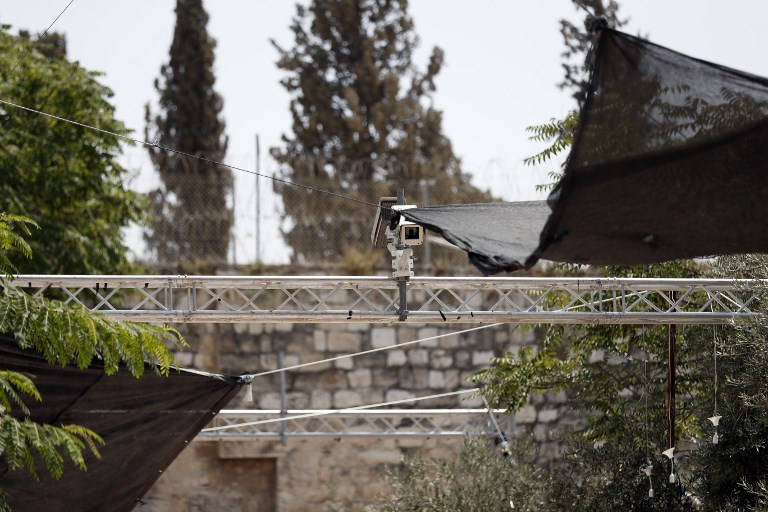
Police on Wednesday were forced to deny that they are planning to install X-ray cameras at entrances to the Temple Mount, as swirling social media speculation added to the already tense standoff over the holy site.
Muslim worshipers have stayed away from the sacred compound since Israel installed metal detectors there last week in the wake of a terror attack, and did not pray there on Tuesday even after the detectors were removed. Instead, they have performed mass prayer protests outside the shrine, many of which devolved into violent clashes with Israeli security forces.
Police said in a statement that that they “do not use any type of camera that harms privacy in any way and have no intention of using such cameras in the future.”
“The purpose of the cameras is to protect and guard public safety,” the statement said, adding that all security checks “are done while maintaining full respect for the public and its privacy, whether the people are worshipers or passersby, let alone women.”
Metal detectors were set up by Israel following the July 14 attack in which three Arab Israeli assailants killed two Israeli police officers just outside the Temple Mount, having smuggled their weapons onto the site beforehand.
Following violent demonstrations and mass protests, the detectors were removed early Tuesday morning; metal railings and scaffolding placed by the police in recent days remained in the area where the metal detectors once stood.
Israel’s security cabinet said it would replace the metal detectors with “advanced technologies,” referring reportedly to cameras that can detect hidden objects, but said the process could take up to six months.
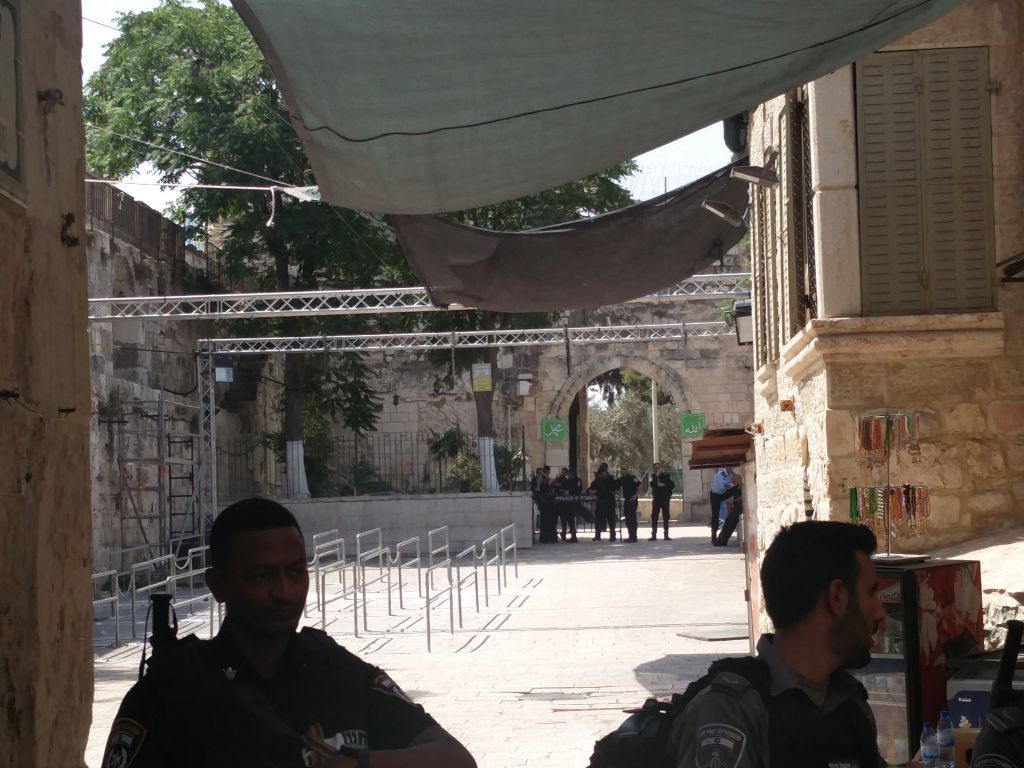
That statement sparked rumors among worshipers that these were some kind of X-ray camera.
“They took away the metal detectors, but they replaced them with X-ray cameras that can look at our women naked,” said one Muslim worshiper near the site Tuesday, Salah Abu Agrafa, prayer mat in hand, who vowed to “continue the fight until we can worship without Israeli control.”
Another worshiper, Ibrahim Mahmoud, said he was concerned that the cameras “would show the naked bodies” of those who passed by them.
Others expressed concern the cameras would cause cancer. Palestinian social media also has been rife with similar rumors.
The head of the Jerusalem Waqf trust said Tuesday that his office would continue to tell Muslims to pray in the streets until the rollback of all new security measures enacted by Israel in the Temple Mount area.
Following noon prayers Tuesday, which again took place outside of the Temple Mount on the streets of the old City, Sheikh Azzam al-Khatib al-Tamimi said that no decision had been made as to whether the Waqf, which administers the Temple Mount, would accept alternative security arrangements put in place by Israel, including “smart cameras.”

One Waqf official as well as other Muslim worshipers in the Old City claimed Israel had already placed new cameras inside the compound.
Dov Lieber contributed to this report.







The Times of Israel Community.