

The ancient Jewish art of preserving — kept fresh
Writer and food blogger Emily Paster’s new cookbook doesn’t offer the same canned recipes, though it has more than a taste of tradition
 Add ToI as a Preferred Source on Google
Reporter at The Times of Israel
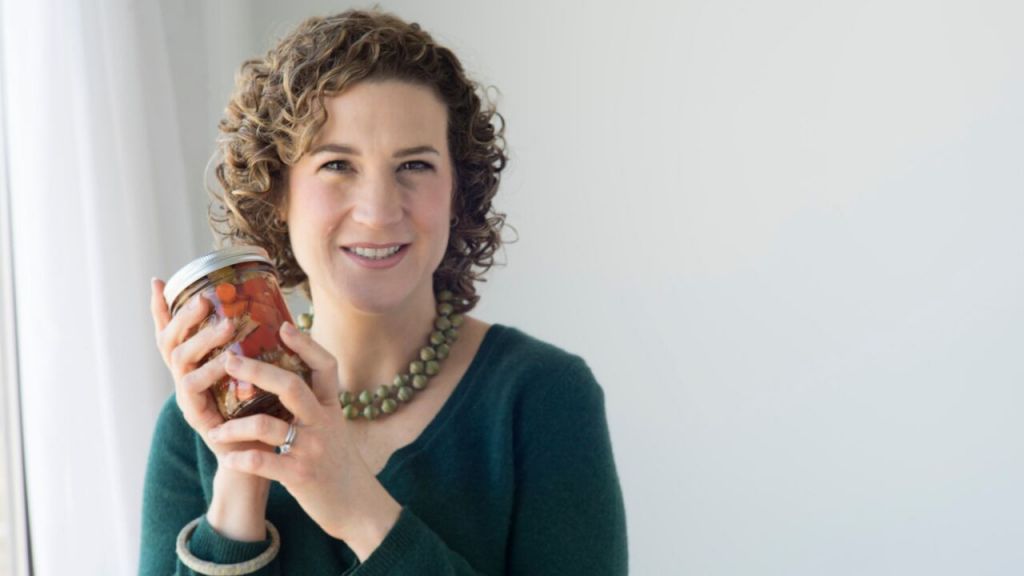
Like the sauerkraut carefully placed inside a hot pastrami on rye, or the jam peering invitingly through the triangular windows of hamantaschen, preserves play a central, centuries-old and perhaps-overlooked role in Jewish cuisine. Now, a first-of-its-kind book aims to, ahem, preserve the tradition.
In “The Joys of Jewish Preserving,” Chicago-based food writer and blogger Emily Paster shares 75 recipes that will get readers reaching for their cans and jars as they learn to make jams and pickled foods, including holiday fare.
“There are so many iconic — particularly Ashkenazic — foods we so love that include some preserve elements,” Paster said, listing “kosher dill pickles, sauerkraut on a reuben sandwich, jam in rugelach, jam in hamentashen, applesauce on latkes…”
Feeling hungry yet? Paster hasn’t even mentioned her favorite-tasting recipes — her plum butter, for instance.
“It’s absolutely delicious,” she said. “I love to make it. I use it as a fill-in for rugelach. It’s definitely a favorite.”
All of the recipes, she said, are “my own original creations.”
But, she added, “many are inspired from a particular tradition, something I found in the course of research.”
Consider another of her favorites — pickled okra. Some might wonder whether okra, which originated in West Africa, is a Jewish food, Paster said. But, she pointed out, it has actually been used in Sephardic cooking for “hundreds or thousands of years,” after migrating into North Africa and the Mediterranean.
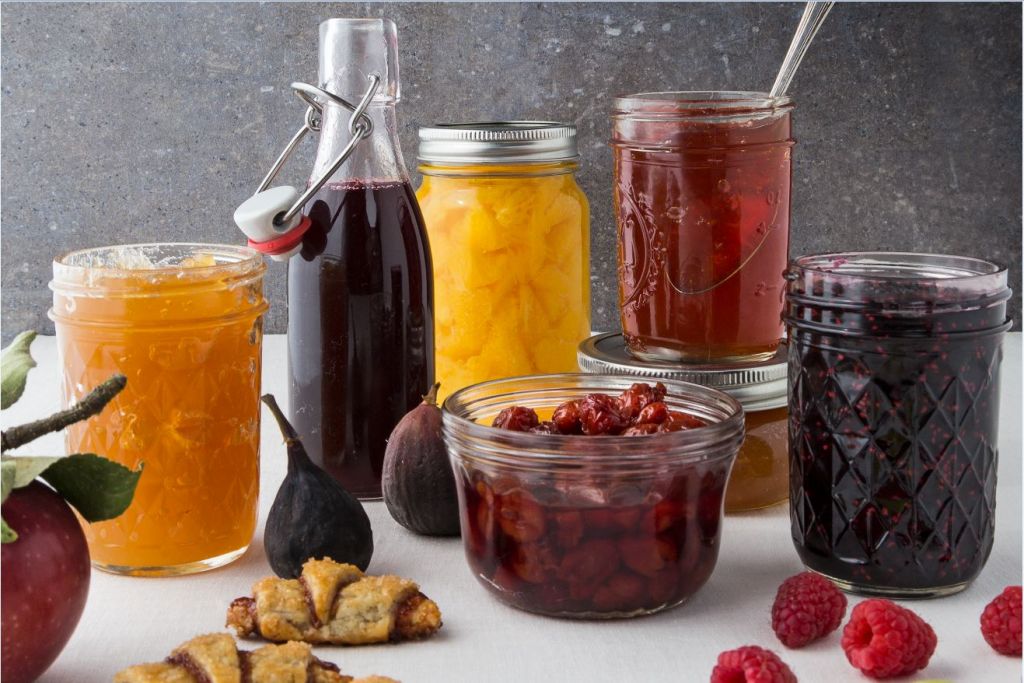
“A lot of historical contexts and anecdotes are in the book,” she said, emphasizing that, “I don’t want it to be a book on food history, food anthropology. It’s a cookbook, reflecting how we cook, eat and shop today.”
And, equally important, how we preserve.
A land of milk and… date syrup?
“There’s a very robust preserving tradition on the Ashkenazi side,” Paster said. “I discovered [an] equally robust side among Sephardim.”
Both traditions evolved from the same fertile crescent. “Preserving food is an ancient practice,” she said. “It was a matter of survival for people for many centuries. Before refrigeration and cargo transport, it was a matter of necessity starting in biblical times.”
The first preserved food, she said, was probably dates, which she called “an ancient, very special food.”
‘Scholars believe the Land of Milk and Honey did not have honey from bees, but date syrup’
“[Scholars] believe the Land of Milk and Honey did not have honey from bees, but date syrup,” she said. “There’s no evidence of people being beekeepers in the Bible.”
Wine was important, too. “Of course, winemaking is a form of preserving dating back thousands of years,” she said.
As the Diaspora gradually compelled Jews to migrate from the desert to the shtetl, preservation techniques changed as well.
“When Jews pushed north into the cold places where my ancestors are from, Poland, Russia, Ukraine, Belarus, of course it’s an absolutely life-saving technique,” Paster said. “You’re not going to get through winter unless you preserve fruits in jam — root vegetables, cucumbers, carrots, beets — to get through the long winter.”
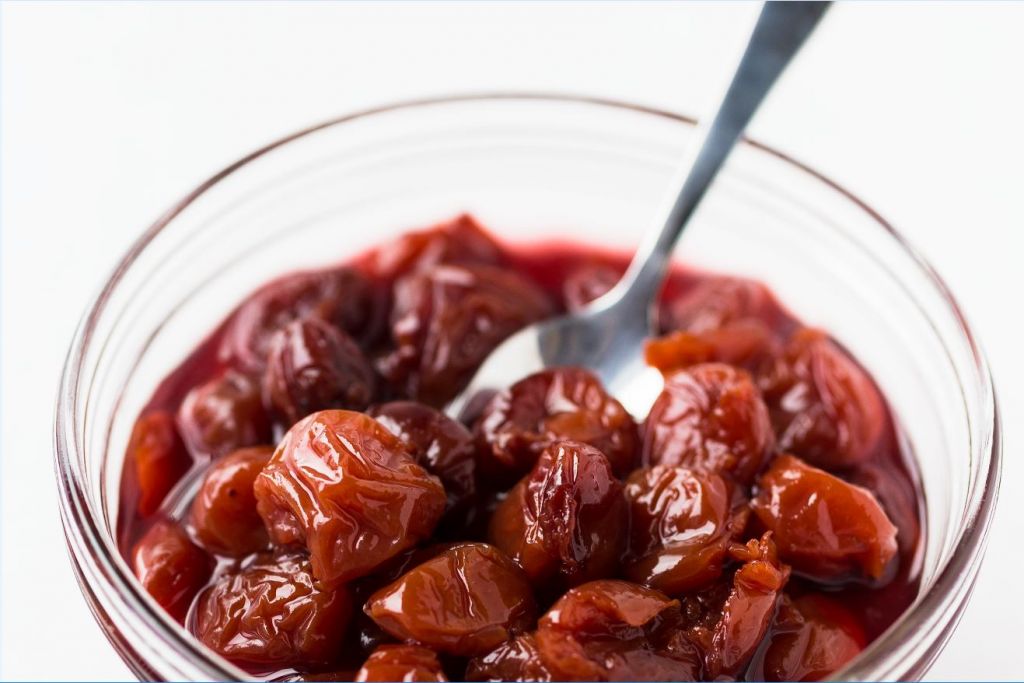
Both Ashkenazim and Sephardim found another way to preserve food — pickling.
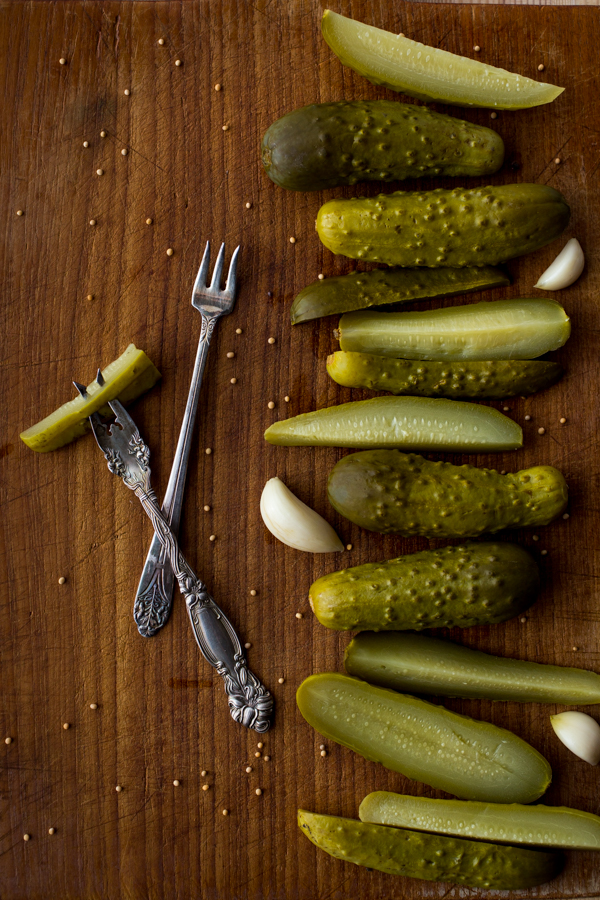
“In Ashkenazi cuisine, pickling is very important,” Paster said. “It cuts through the fatness, the richness, of Ashkenazi food. Pickled cucumber is so fabulous. A pastrami sandwich is so rich. The vinegar tang cuts [through].”
Sephardic food, she said, is “very interesting, with pickled marinated vegetables as a meze before meals.” And she praised “the fabulous Israeli breakfast, with a lot of pickles as well, traditional Ashkenazi pickles, beets, sauerkraut, and Middle East pickled cauliflower.”
As both Ashkenazi and Sephardic Jews immigrated to the US, cooking styles changed still further.
Paster’s recipe for pickled eggs arose after her rabbi, Max Weiss of the Oak Park Temple, asked if she could look into why Jews were nicknamed “egg-eaters” in the South — “not as an insult,” she noted.
“It was because of traveling Jewish peddlers in the 19th-century American South, the land of the pig,” Paster explained. “Traveling peddlers were not at all sure if what they ate out on the road was kosher.” So, she said, they would have “jerky and pickled eggs. The Cherokee first dubbed them [egg-eaters]. It’s a little phrase and a really fascinating piece of history.”
Pickling itself features two styles — fermented and vinegar. “Fermented pickles are the most traditional,” Paster said. “[They’ve been around for] hundreds and hundreds of years in the old country. Fermented pickles just need salt, salt-water brine, and time to ferment. The two [most famous examples are] sauerkraut and fermented kosher dill pickles.”
The alternate tradition — “vinegar pickles, in a vinegar brine” — is “easier for people to do,” she said.
But, she pleaded, “at least give fermenting a try.”
From J.D. to D.I.Y.
Paster is a champion of do-it-yourself cooking in general. It all stemmed from helping her young daughter deal with numerous food allergies about a decade ago.
“[My daughter and] I were starting to make a lot of foods from scratch,” she said. “I was concerned about the ingredients in prepared foods.”
‘I was concerned about the ingredients in prepared foods’
Preserving offered a solution. It was “a project she and I could do together,” Paster said. “It was hard with all the allergies. We could make jam — it’s fruits and sugar.”
It helped that the Paster family — Emily, her husband and their two children — lives in Chicago, home to a thriving farmers-market scene, with the fruit orchards of Michigan nearby.
“Preserves extended the local season a bit,” Paster said. “It became one of my areas of specialty as a cook.”
But it also led to an accumulation of cans and jars in their basement — more jams and pickles than one family could ever eat, Paster recalled.
Serendipitously, she learned about how fellow DIY-ers, in Philadelphia, were preparing and bartering their homemade creations through a concept known as a food swap. This led her to co-found the Chicago Food Swap, in 2011.
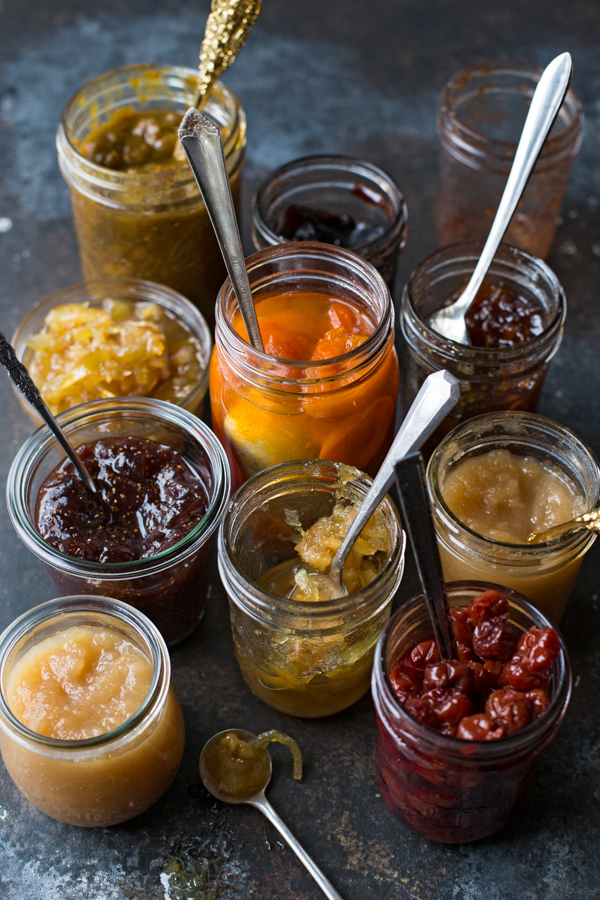
“It’s become a very important part of my life,” she said, “a wonderful community from all different parts of Chicago, different ages, walks of life, races, religions,” united by a “passion for homegrown foods over five years, a vibrant, exciting way to connect with people around food.”
It even inspired her first book, “Food Swap: Specialty Recipes for Bartering, Sharing and Giving,” published last year.
While “Food Swap” was about a familiar subject, “The Joys of Jewish Preserving” was more like “going back to school, a big research project,” she said.
Paster has experience with research — she’s a Princeton and University of Michigan Law School graduate, as well as a former lawyer.
For this particular project, inspiration came from fellow Jewish food writers, including the late Gil Marks, author of the “Encyclopedia of Jewish Food,” as well as “the work of people like Joan Nathan, I admire her, and Claudia Roden as well,” she said. “These were starting places where I could find out a particular tradition or ingredient.”
For Paster, the main ingredient is doing it yourself — especially with preserving.
“If you get too much food at a farmers market and it starts to go bad, you can whip up a bowl of jam and it will not go to waste,” she said. “It’s jam your family can eat.”










The Times of Israel Community.