

Thousands protest police response to Arab crime; dissident MK Abbas chased away
Police say some protesters in Umm al-Fahm launch fireworks, throw stones at officers; 22 Arabs have died of violent crime within the community so far this year
 Add ToI as a Preferred Source on Google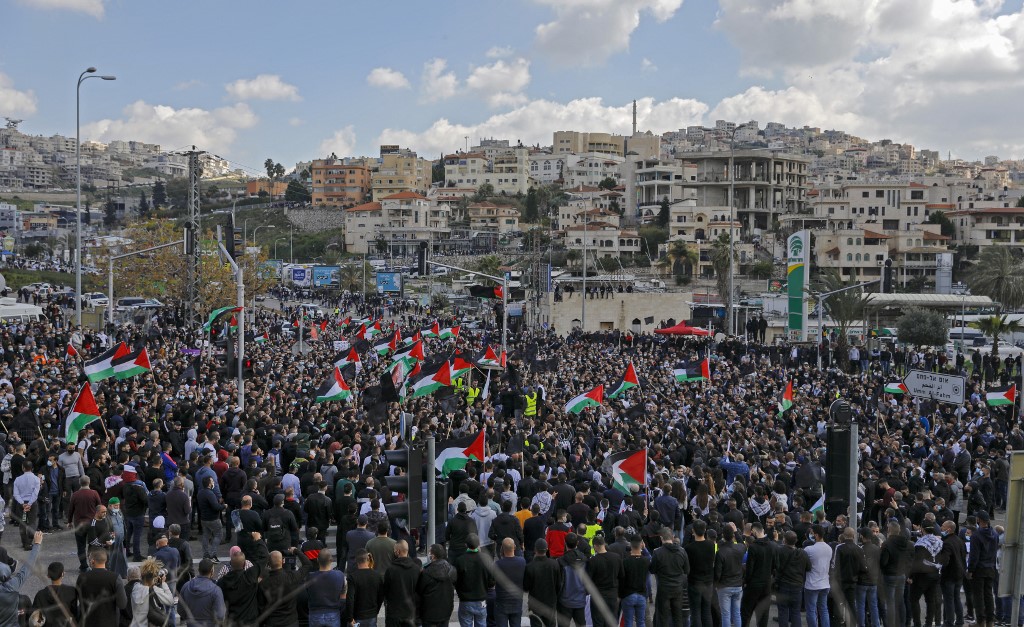
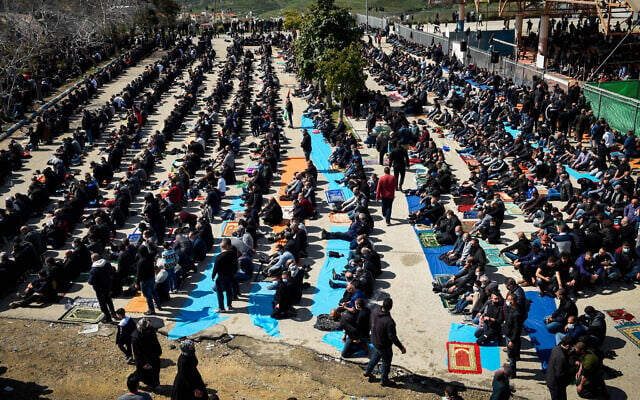
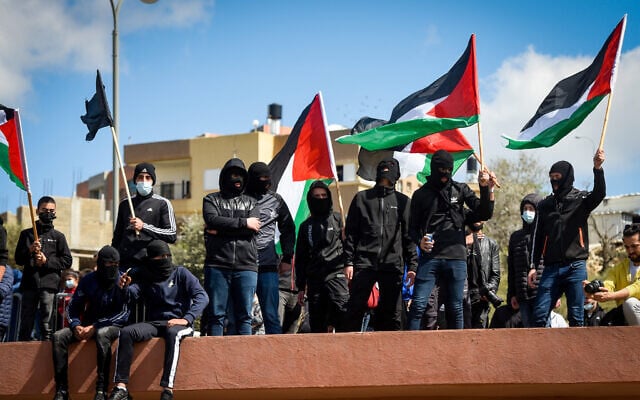
Thousands of demonstrators marched Friday in the northern city of Umm al-Fahm to protest against what they called the police’s failure to stem a rising tide of violence in Arab communities.
The latest weekly protest came after a particularly violent demonstration last week, when police fired rubber-coated bullets, tear gas, stun grenades and water cannons as they dispersed hundreds of demonstrators. At least 35 protesters were injured, including Joint List parliamentarian Yousef Jabareen and the city’s mayor. Arab Israeli officials accused police of racist behavior and using excessive force and have demanded an investigation.
As the demonstration went on, police said some protesters began to launch fireworks and throw stones at officers on the scene. In videos, some demonstrators could be seen shooting firecrackers in the air.
Protesters charged on Friday morning that police had deliberately closed off main roads leading to Umm al-Fahm in order to prevent the demonstration from taking place.
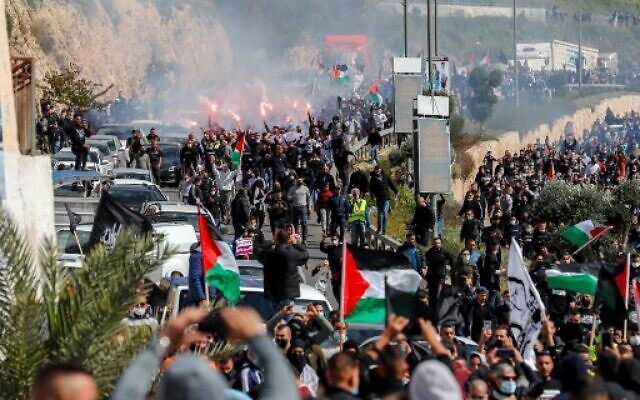
“Police are preventing people from coming to Umm al-Fahm because they are scared by both the protestors and the criminal organizations,” said Joint List head Ayman Odeh, who was at the protest.
In a sign of the widening cracks in Arab Israeli politics, dissident Arab MK Mansour Abbas sought to join the demonstration — only to be rebuffed by dozens of demonstrators calling for him to “get out.” After some scuffles, Abbas’s aides removed him from the scene.
Abbas, who leads the conservative Islamist Ra’am party, has long made passing a plan to fight violence and organized crime among Arab Israelis a central legislative priority. But he has sparked controversy among Arab Israelis due to his stated willingness to cross previously unthinkable red lines, such as voting to grant Prime Minister Benjamin Netanyahu immunity from prosecution and perhaps even to prop up his future coalition.
מפגינים קוראים לגרש את יו"ר רע"מ מנסור עבאס שהגיע להפגנה. כמה מתומכיו הבריחו אותו לחנות קרובה. ראש העיר סמיר מחאמיד ואנשי ציבור התערבו כדי למנוע חיכוך. pic.twitter.com/78HAiF4fMB
— Jack khoury.جاك خوري (@KhJacki) March 5, 2021
Organized crime is largely seen as the engine of the spread of violence in Arab cities and towns. Arab Israelis blame the police, who they say have failed to crack down on powerful criminal organizations. Since the beginning of 2021, 22 Arabs have died violently inside Israel, according to the Abraham Initiatives nonprofit.
Eyewitnesses estimated that around 10,000 demonstrators participated in Friday’s protest, making it one of the largest protests so far this year.
“We will continue to fight in order to live with dignity, and defeat the violence and crime,” Odeh said.
Netanyahu announced last week that his government will funnel NIS 150 million ($45 million) to combating violence in Arab communities. Arab politicians and civil society organizations — who had hoped for billions more — harshly criticized the plan as too little, too late.
“We demand a real plan to eradicate crime instead of Netanyahu’s fake plan, that does not even talk about defeating criminal organizations, and that lacks proper solutions in education, housing and welfare,” Joint List MK Jabareen said at Friday’s protest.
Umm al-Fahm residents have been holding weekly demonstrations against violence and organized crime for nearly a month and a half. But this week’s turnout was notably higher, likely due to the accusations of police brutality following last week’s demonstration.
Investigators at the Justice Ministry on Sunday launched an inquiry into police officers’ conduct during last week’s protest.
The number of homicides among Jewish Israelis since 2016 has remained relatively constant: 38 in 2016, 44 in 2017, 35 in 2018, and 36 in 2019, according to the Israel Police.
Among Arabs, however, it has skyrocketed over that same period: 64 in 2016, 67 in 2017, 71 in 2018, 89 in 2019, and 96 in 2020.







The Times of Israel Community.