

Thousands rally across Israel, urge hostage deal to mark 300 days since October 7
Protesters, hostage families gather in Tel Aviv, Jerusalem and elsewhere; captive’s brother says contract between citizens and state has been ‘breached,’ only deal can restore it
 Add ToI as a Preferred Source on Google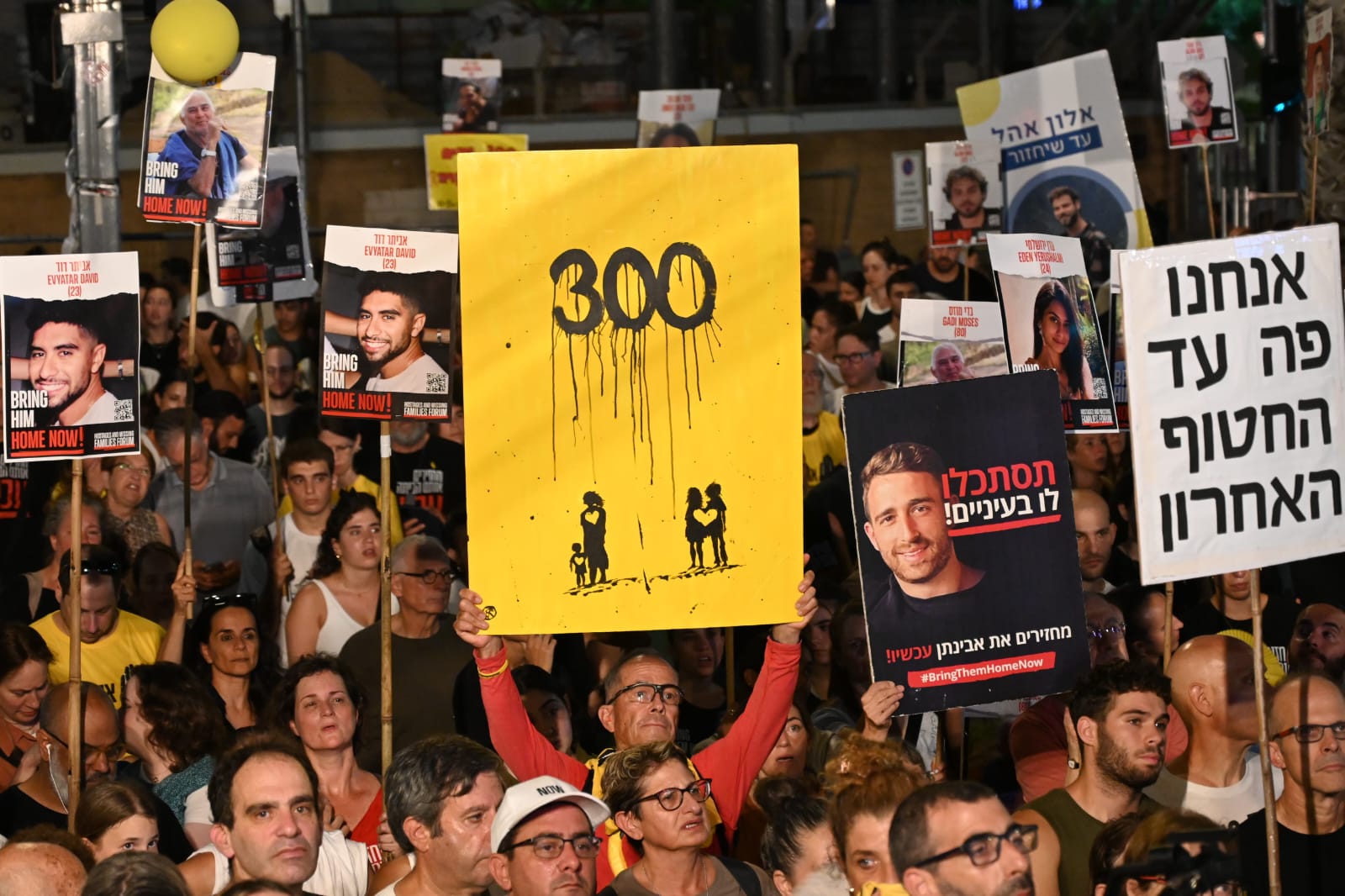
Thousands of protesters, including relatives of hostages held by Hamas in Gaza, demonstrated around the country Thursday evening to mark 300 days since the October 7 massacre, calling on the government to seal a hostage and ceasefire deal.
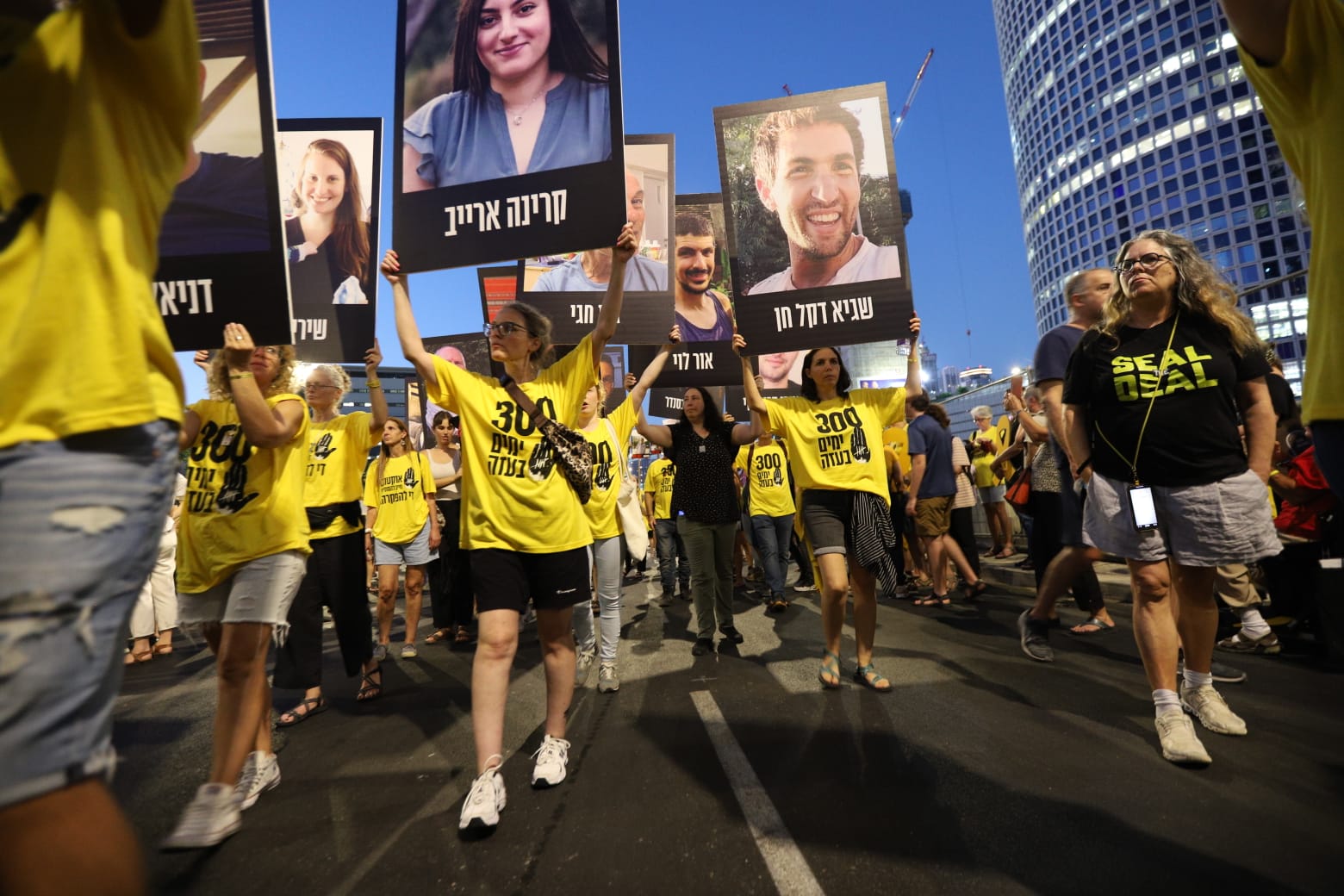
Hundreds marched through Tel Aviv, holding yellow ribbons and photos of hostages, then blocked the Begin intersection near the IDF’s Kirya headquarters before the main rally was held at Tel Aviv’s Hostages Square.
The families bound themselves in chains while walking along the route, representing the suffering of their loved ones in the Gaza Strip, and unfurled a 40-meter-long flag counting the days since the war’s outset.
Similar protests were held around the country, including in Jerusalem, Beersheba and Herzliya.
At the Hostages Square event, the Hostages and Missing Families Forum first displayed a brief video on the main stage from January of this year, when a few dozen hostage families had gathered near the southern border to shout, sometimes cry, through giant loudspeakers in the direction of the Gaza Strip in hopes that their loved ones would hear them.
“We are here today to say out loud: We won’t agree to abandonment, we won’t sit in silence, they need to return home, now,” said actor and comedian Guri Alfi, who emceed the rally. Behind him, people gripped signs with hostages’ names and ages written on them. Many of the hostages’ ages on the posters have been updated, nearly 10 months since Hamas’s brutal massacre on Israel’s southern border.
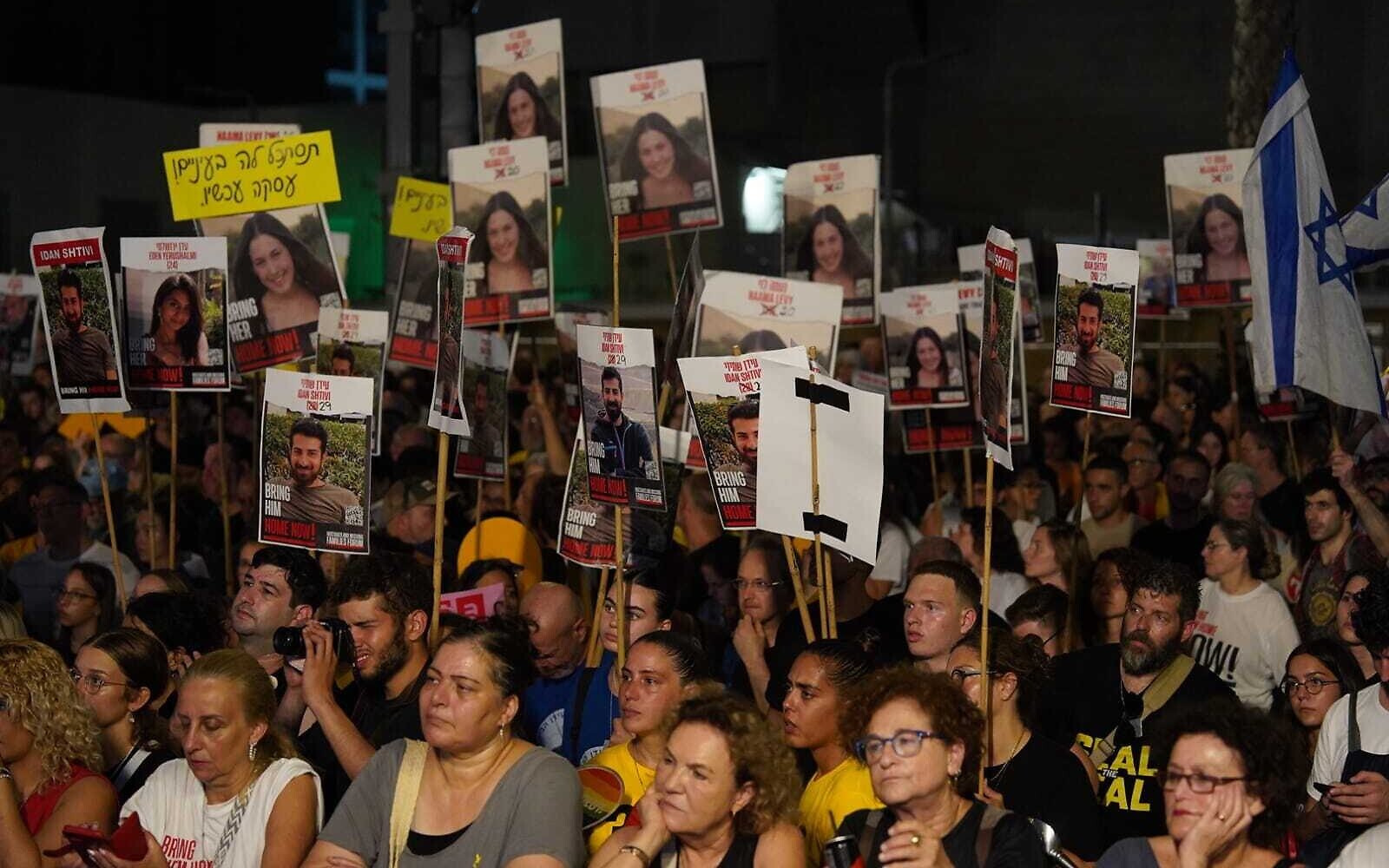
“These are critical days and there is a real chance for the signing of a deal to return them all, and we have to fight for it, we have to demand it,” Alfi continued.
After organizers played a recording of the emergency phone call made by Supernova music festival participant Eden Yerushalmi before Hamas kidnapped her into the Gaza Strip, her sisters Shani and May spoke to the crowd.
“[Eden’s] last words to the police were: ‘Find me, OK?’ Eden is still waiting for us to find her,” said Shani. “It is already 300 days in which our sister has been in captivity, 300 days in which our home has not been the same home.”
Nissan Calderon, who survived the Hamas onslaught and whose brother Ofer Calderon has been held in Gaza ever since, charged that Prime Minister Benjamin Netanyahu has been procrastinating on the signing of a deal.
Calderon spoke incisively against the premier and called on the government to renew the “basic contract between the citizens of the country and the state.”
“The contract has been breached. Close the deal,” he said. “Again and again, you are not doing what you should’ve done 300 days ago, to stop everything and do only one thing, to return 115 citizens of the State of Israel, immediately.”
“A 17-year-old girl shouldn’t have to live her life with this terrible anguish that her father is there,” he shouted. “I want my brother alive, not a sign of life, not a video, alive! And today.”
Ruby Chen, the father of American-Israeli soldier Itay Chen who was killed and his body abducted by Hamas on October 7, similarly urged Netanyahu to return the hostages and bring his son’s body back to Israel to be buried.
“We want a place to grieve, we want a place to come full circle and be able to continue on to the next chapter of our sad lives,” he said.
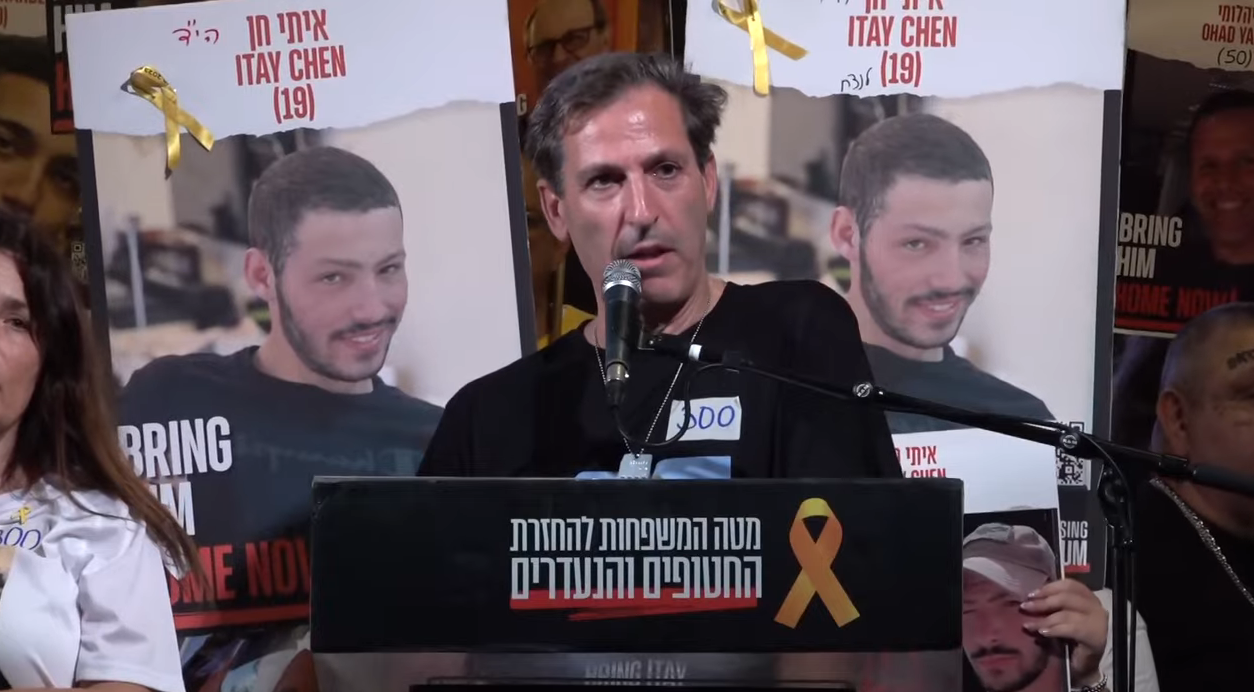
He recalled that last week, he and his wife, Hagit, met Netanyahu in the United States alongside US President Joe Biden. During the meeting, Chen told Netanyahu of a conversation that he had with Biden about his slain son.
“The same day that we received the terrible news, President Biden called us… I told President Biden that we chose not to sit shiva” — the traditional Jewish week of mourning the dead — “because Itay wasn’t there with us,” he said, adding that he had told the president that “we won’t sit shiva so long as he does not return, and the government of Israel doesn’t return him.
“I reminded President Biden of that sentence, and then Biden asked Prime Minister Netanyahu: ‘Bibi, when will [they] sit shiva?'” Chen told the crowd. “The response we got was not a good one.”
“I very much hope that the prime minister, next time we see him, will succeed in giving me a better response and say: ‘I returned all the hostages… and the soldiers to burial, because that is what this nation deserves.”
Solemn assembly in Jerusalem
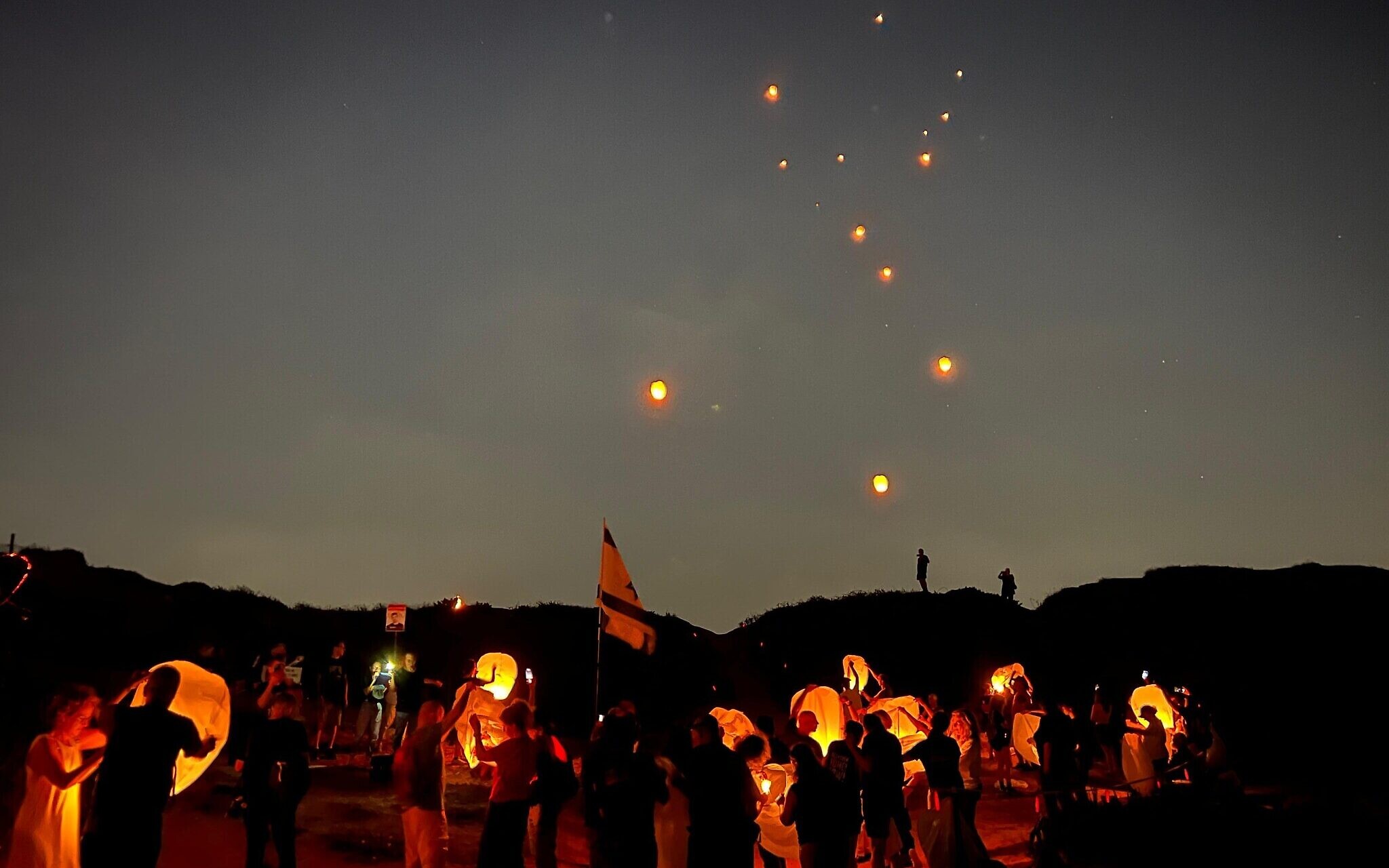
In Jerusalem, hundreds of people marched from the First Station complex to the Great Synagogue, dressed in white and carrying yellow flags, Israeli flags and yellow ribbons.
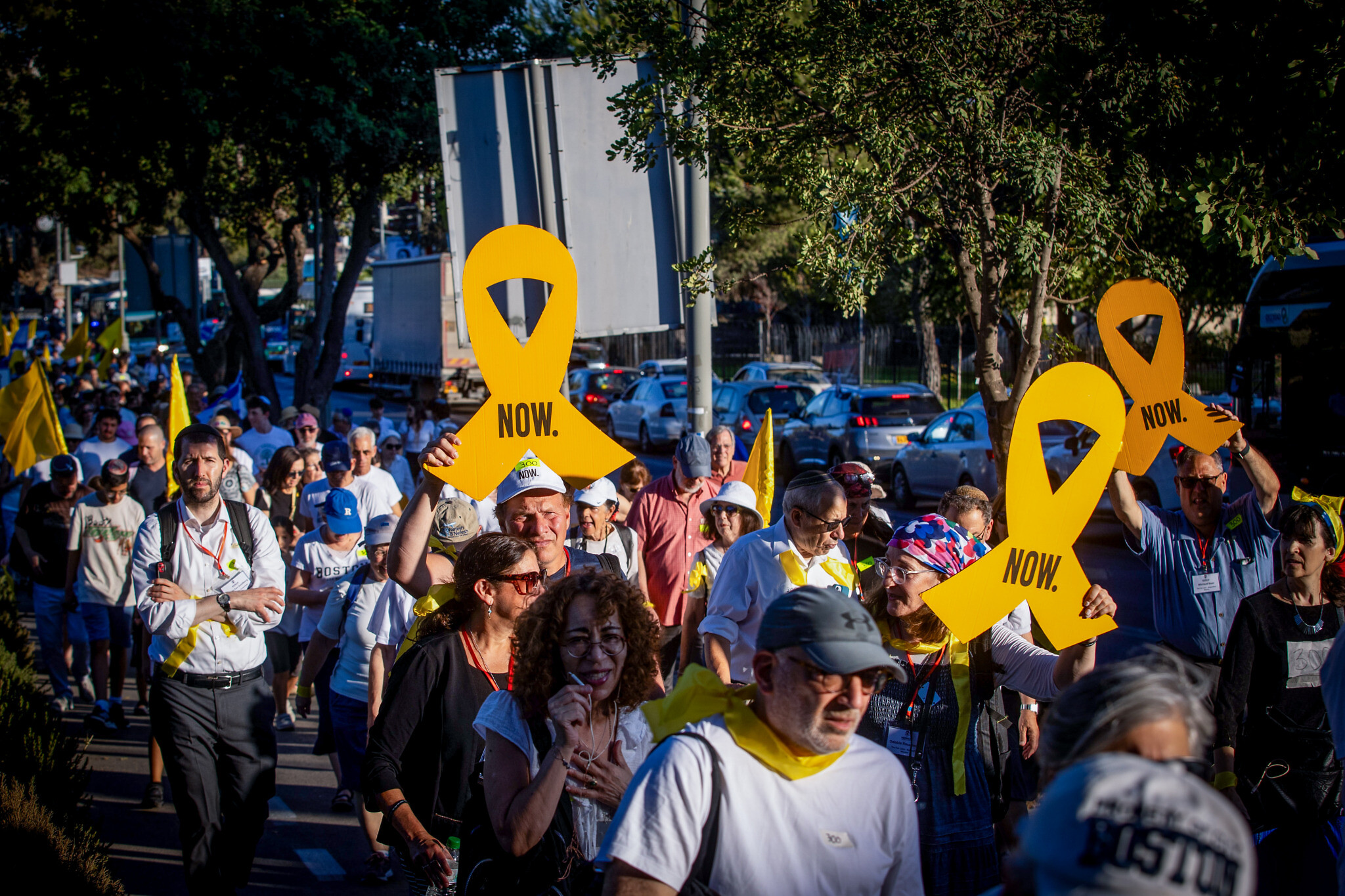
The event was organized by the family of hostage Hersh Goldberg-Polin in support of the hostages, in memory of those killed and in support of their families.
Tzvi Zussman, father of Sgt. First Class Ben Zussman, 22, who was killed on December 3 while fighting in Gaza and was a classmate of Goldberg-Polin, led the event at the open plaza in front of the Great Synagogue, which included the recitation of the afternoon and evening services and singing, but no speeches.
The audience reflected a wide range of Israelis, and the event’s message of togetherness was aimed at Israelis from all sectors of society.
The now-familiar red-and-black banner of Goldberg-Polin hung centrally above the stage, where musician Aharon Razel led the crowd in singing songs of hope and sadness, of returning soldiers and hostages back to their borders, praying for the return of those held captive from sadness to happiness, from darkness to light.
Egypt and Qatar have warned that recent strikes that killed senior terror leaders undermine efforts made by mediators to reach an agreement for hostages to be released and a ceasefire.
It is believed that 111 of the 251 hostages abducted by Hamas on October 7 remain in Gaza, dozens of them thought dead. Some 1,200 were killed in Israel on October 7, mostly civilians, when thousands of terrorists breached the Gaza border and invaded.
Israel and Hamas this week accused each other of hindering the hostage talks. Netanyahu said Wednesday that several leading Hamas figures would not have been eliminated had he bowed to pressure to reach an agreement.
Iran said Wednesday morning that Hamas chief Ismail Haniyeh had been assassinated in Tehran, blaming Israel, which has not commented on the incident. On Thursday, the IDF confirmed that the terror group’s senior military commander Muhammad Deif had been killed in a strike last month.
Emmanuel Navon, a political science professor at the University of Tel Aviv, said the hostages remained a thorny dilemma for the government.
“We do not know if we were really close to an agreement before Haniyeh was eliminated,” Navon told AFP. “We also don’t know if Israeli military pressure is getting us closer to liberating the hostages than the negotiations.”
AFP contributed to this report.



The Times of Israel Community.