

To boldly go where no Israeli woman has gone before
Tamara Baraaz was told she couldn’t hike to the wadi near her West Bank settlement home. So she went to Afghanistan. And Kazakhstan. And Kyrgyzstan, Tajikistan, Oman, Chad, Niger…
 Add ToI as a Preferred Source on Google
Elhanan Miller is the former Arab affairs reporter for The Times of Israel

It was on the rolling hills of the northern West Bank that Tamara Baraaz first started pushing the boundaries of legal and social acceptability six years ago. Before long, the young woman’s insatiable curiosity — some would say reckless adventurism — would lead her to countries which few Israelis have ever set foot in.
Baraaz, the 29-year-old daughter of American immigrants raised in the settlement of Karnei Shomron, had long felt that the security fence surrounding her community was superfluous; that the harsh warnings against hiking in the picturesque wadis of Samaria for fear of terror attacks were exaggerated.
“From a young age they tell you it’s dangerous out there, that there are potentially harmful people wandering around,” she said. “At some point, around age 23, I was sick of living in a bubble.”
The young Israeli began crossing into the Palestinian Authority, slipping through holes in the fence or cutting off from the highway on foot. At first she only traveled the open areas around the settlements, known administratively as Area C, but later started venturing into Palestinian cities, known as Area A.
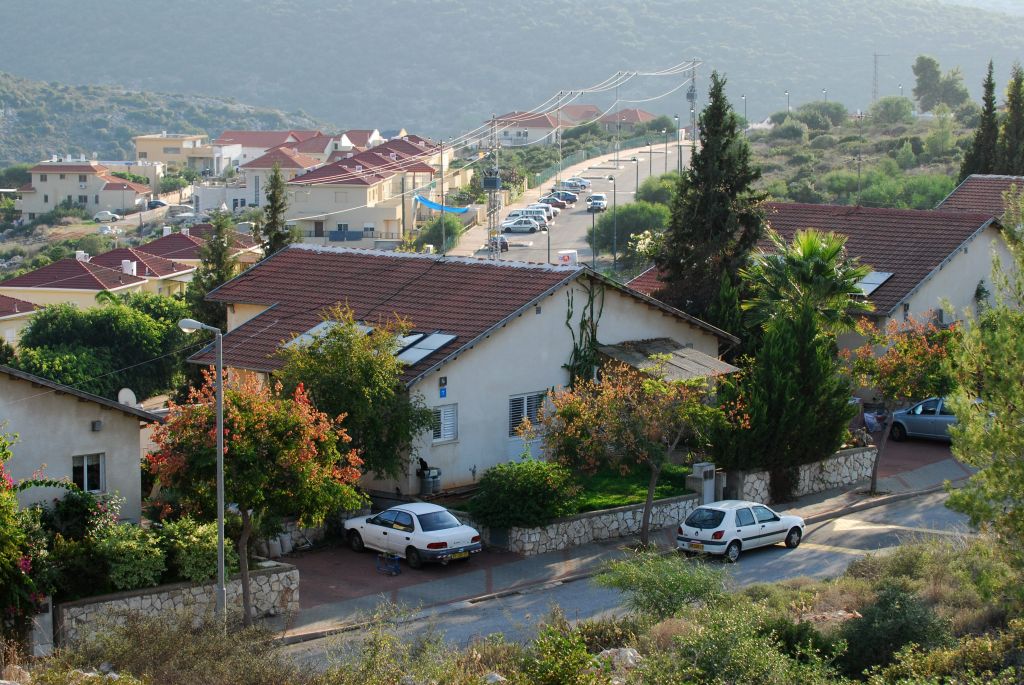
Israeli Jews are banned by law from entering cities controlled by the Palestinian Authority, but Baraaz told The Times of Israel that she was quickly getting addicted to the adrenaline rush of entering cities like Hebron and Jericho and meeting people on the other side of the political divide.
“At first you feel your heart beating, but then you realize the sun is shining, birds are chirping, and people are nice. After that, you stop feeling anything.”
When the excitement tapered off, the former tour operator decided to take it a step further and head for the numerous countries strictly off-limits to Israeli passport-holders.
“Growing up in Judea and Samaria, you’re told it’s dangerous to walk to the stream next to your house. Then you go there and realize it’s not so terrible,” said Baraaz, just days before the murder of Israeli hiker Danny Gonen near the settlement of Dolev on June 19 and the drive-by shooting that killed Malachi Rosenfeld near Kochav Hashachar on June 29. “I was curious to see if the same was true for all those countries that got such a bad rap. I realized it wasn’t as bad as I thought; in some cases it wasn’t bad at all.”
‘At first you feel your heart beating, but then you realize the sun is shining, birds are chirping, and people are nice. After that, you stop feeling anything’
In late April 2014, Baraaz packed her bags, took her American passport, and left for Ethiopia, hoping to enter countries like Sudan and Libya which consider Israel an enemy state. She was unable to enter those two countries — nor was she approved entry to Pakistan or Algeria — but her 11-month trip, which ended in March this year, took her to Somaliland, Iraqi Kurdistan, Turkey, Georgia, Chechnya, Kazakhstan, Kyrgyzstan, Tajikistan, Afghanistan, Oman, Egypt, Chad, Niger, Morocco, Central African Republic and the Democratic Republic of Congo.
“I was debating whether to continue to Lebanon, but I chickened out,” she said.
Despite her adventurous spirit, some of those countries proved too much to take. She planned to spend a month in Afghanistan but fled after five days, scared of endangering her host families who were unaware of her Israeli identity.
On the bus to Kabul, she met Efrouz, who told Baraaz she had showered before the voyage so as to die pure if killed in a terror attack. Efrouz scolded her for traveling alone as an American, risking problems from the Taliban. Later, the young Afghan woman would confide in Baraaz the secret courtship practices of young Afghan women.

Baraaz usually concealed her Israeli identity, but said that in many places that decision turned out to be unnecessary. She recently informed an acquaintance from Chad where she actually lived, learning from him that it was not a problem. But in Egypt, the owner of her guesthouse begged her not to tell anyone where she was from. The same happened in Somaliland, a self-declared state that broke away from Somalia in 1991.
“I would typically tell cab drivers or people on the street that I’m American and people I know well that I’m Israeli. At the end, the entire guesthouse [in Egypt] knew. They laughed at me for hiding it.”
In some places, Baraaz would hear remarks about Jews in passing that “gave her pause.” Not knowing she was an Israeli, her Afghan confidante Efrouz once commented over dinner that she hated Jews. “They’re liars and hypocrites! If I were sitting with a Jew to a meal I wouldn’t touch my fork,” said the young Afghan, who had never knowingly met a Jew before in her life.

Some people reacted angrily to the young Western traveler. On the plane from Morocco to the war-torn Central African Republic, a passenger from Cameroon furiously told her that, if he were her, he would rather shoot himself than land in the country.
“The entire plane was full of aid workers, UN personnel and French soldiers,” she recalled. “They all had good reasons to travel there; they would have never considered it otherwise.”
Baraaz landed in the capital, Bangui, not knowing where she would spend the night. A group of Congolese ex-pats connected her with a local who was meant to escort her from the airplane into town. Instead, the man deposited her with his relative and left. Finding a reasonable hotel proved impossible, so eventually she asked her chaperon for permission to pitch a tent in his back yard.
“He agreed; he couldn’t simply leave me on the street,” Baraaz said. “Turns out he lived in the worst slum in town, a truly scary neighborhood. Groups of men would flock to me on the street, fondle me and try to take my bag.”
She subsequently took refuge in a local Christian mission, where she lived for three weeks before leaving for the countryside.
“There I was really stuck, because the only food they had was yams and manioc, a completely tasteless root,” she recalled. “I had nothing to eat.”

A local soldier guarding the village took care of her, cooking her meals. “I got along,” she reminisced matter-of-factly. “I was simply looking for a dangerous country that would let me in.”
Baraaz rebuffs the criticism of Israeli friends who scold her for risking her life in faraway lands. Once, upon returning from a camping trip in the Palestinian south Hebron Hills, she heard that an African migrant had broken into the apartment of a female friend in south Tel Aviv and raped her.
“I was also living alone in an apartment in south Tel Aviv at the time; things can turn out the opposite of what you expect.”
So what has she learned from the trip? For a start, that the world isn’t as bad as she used to believe.
“[Such a trip] is a way to discover something positive about the world; arriving at a place which you thought was bad and discovering it isn’t so bad … This sense was reinforced with every trip I took.”

But it’s more complicated than that. Most of her friends couldn’t understand her motivation, and she returned deeply confused.
“In Israel we live in a different planet. We have our education, our news, the stories we tell ourselves. Other countries have the stories they tell themselves, and there’s a complete disconnect. When I’m there, I’m somewhat influenced by the stories I hear there, and don’t know how to view us anymore,” she said.
One may have expected Baraaz to return championing the limitless capabilities of the human spirit, of “mind over matter.” But she said her extraordinary voyage made her realize just how fragile she is. As a tour operator, she would secretly mock the anxieties and insecurities of clients leaving on organized trips. But her own journey made her realize she was fallible too.
“I was also insecure, especially in difficult countries where you try to do things and nothing works. That’s a weakness I discovered in myself. I didn’t think that countries where nothing moves would irk me as much as they did. I wasn’t as resilient as I had thought.”
Since returning from her yearlong experience in March, Baraaz has been writing and lecturing about it to small groups. She is trying to save up enough money, and emotional reserves, for the next big trip.
“I’m looking for someone to sponsor or otherwise arrange a visa for Pakistan, Algeria, Libya, Yemen, Sudan… or any other country that doesn’t like us,” she said.




The Times of Israel Community.